Reviewed · PRIVATE
11-Day Private China Tour: Beijing, Lhasa, Xi’an and Shanghai
Beijing, Tibet, and Shanghai in one trip. This 11-day private route strings together iconic UNESCO sites, real cultural stops in Lhasa, and classic Shanghai views with three internal flights built in. I like that your trip includes entrance fees and most meals, so you spend less time playing ticket-juggling games. I also like the pacing choices, from a cable car Great Wall visit to Sera Monastery’s daily debate window.
One thing to plan for: Tibet is high altitude, and the itinerary expects a moderate physical level for temples, walking, and longer sightseeing blocks. If you are sensitive to altitude, take the guide’s pre-car and acclimation tips seriously, since the tour explicitly includes guidance for avoiding altitude reaction.
In This Review
- Key Things You’ll Notice on This Tour
- China in 11 Days: How This Route Fits Together
- Beijing First: Tiananmen, Forbidden City, and Summer Palace
- Mutianyu Great Wall and Hutongs: Cable Car Views Plus Local Alley Time
- Temple of Heaven Then Fly to Lhasa: The Transition Day
- Lhasa Days: Norbulingka, Tibet Museum, and Sera Monastery Debates
- Potala Palace, Jokhang Temple, and Barkhor Street: Pilgrimage in Real Time
- Xi’an Transfer Day: Land, Drop Your Bags, and Reset
- Terracotta Warriors and Tang-Era Stops: A Day With Hands-On Moments
- Xi’an City Wall, Great Mosque, and Muslim Quarter Snacks
- Shanghai Museum, Yu Garden, The Bund, and Tianzifang
- Farewell Day: Airport Transfer Back Home
- Price and Value: What You Are Paying For
- Guide Service and Real-World Help You Can Expect
- Who This Tour Suits Best
- Should You Book This 11-Day Private China Tour?
- FAQ
- What major cities are included in this 11-day tour?
- Are internal flights included?
- How many nights of accommodation are included?
- What is included in the price?
- Do I need a Tibet Travel Permit?
- When does the Sera Monastery debate happen?
Key Things You’ll Notice on This Tour
- Private, name-on-the-arrival setup in Beijing, with a guide meeting you at the airport and helping with check-in
- Mutianyu Great Wall with round-trip cable car, plus a quick Bird’s Nest photo stop and a hutong rickshaw alley ride
- Three full Lhasa days focused on key pilgrimage sites like Potala Palace, Jokhang Temple, and Barkhor Street
- Sera Monastery debate timing set for 15:00 to 17:00 most days (except Sundays)
- Terracotta Warriors close-up time, with a hands-on mini clay warrior activity and a visit connected to the site’s discovery
- Shanghai classics in one sweep, from the Bund and Yu Garden to Tianzifang and an evening river cruise
China in 11 Days: How This Route Fits Together
This tour is built like a greatest-hits circuit, but it avoids the usual mistake of packing too many random stops. You start in Beijing for imperial China sights, shift to Lhasa for Tibetan culture, then head to Xi’an for Tang-era landmarks and the Terracotta Warriors, and end in Shanghai for modern China energy.
The big value is that it handles the heavy lifting. You get round-the-day transportation, a professional guide, and most entry tickets. You also get two bottled waters per person per day, which sounds small until you are doing long days in heat, sun, or at higher elevations.
The other “how it fits” piece is flight sequencing. The itinerary includes three economy flights across the route, so you spend less time staring out bus windows and more time actually seeing places.
A few more Beijing days worth comparing
- From Beijing: Mutianyu Great Wall Tours with Options
★ 4.9 · 9,216 reviews - Beijing: Forbidden City Tour(Group/Private)-Tickets Included
★ 4.8 · 7,974 reviews - Beijing: T-Square & Forbidden City Group or Private Tour
★ 4.8 · 4,446 reviews
Beijing First: Tiananmen, Forbidden City, and Summer Palace
Beijing starts with an airport meet-and-go. A professional guide waits for you in the arrival hall holding a sign with your name, then you are transferred to the hotel and guided through check-in. After that, the day is essentially light, so you can land, reset, and not waste your first hours.
Day 2 is a clean, classic sweep: Tiananmen Square, the Forbidden City (Palace Museum), and the Summer Palace. Tiananmen gives you the scale right away, since it is the huge urban square the city is known for. Then you move inside the Forbidden City, where the guide focuses on both the halls and pavilions and the emperor’s life and governance, along with ancient art treasures you can actually see.
Then comes the Summer Palace, which is a different mood. Instead of hard-edged power displays, you get royal garden views and architectural details meant for leisure and calm. The day includes a welcome lunch at a local restaurant, listed as an a la carte meal valued at CNY 150 per person.
Practical note: this is a walking day. Even with guides and transfers, you will want comfortable shoes because the Forbidden City and Summer Palace are not “sit and snack” stops.
Mutianyu Great Wall and Hutongs: Cable Car Views Plus Local Alley Time
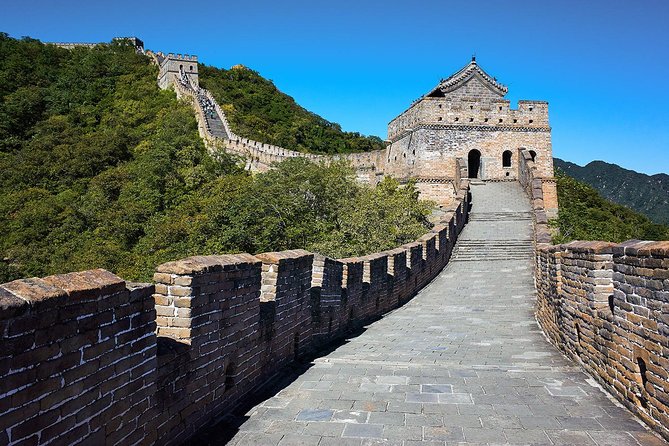
Day 3 is where the tour earns its keep for many first-timers. You go to Mutianyu Great Wall, one of the more visitor-friendly sections, and you get a round-trip cable car. That matters because it lets you focus on the wall views and the walking you want, without turning the day into a full endurance test.
From the wall, you get the iconic perspective of the structure stretching in both directions. Afterward, the itinerary adds a Bird’s Nest photo stop, so you get a quick visual connection to Beijing’s modern architecture without locking your time budget into a long detour.
Then you switch to something more lived-in: a hutong tour by rickshaw. The idea here is simple and smart, you ride through older alley lanes and you get a chance to visit a local family. That part is often the difference between seeing Beijing as a postcard and understanding it as neighborhoods where people still live their daily rhythm.
If you enjoy small, human details, ask the guide questions during the hutong portion. That is where you usually get the most useful context.
Temple of Heaven Then Fly to Lhasa: The Transition Day
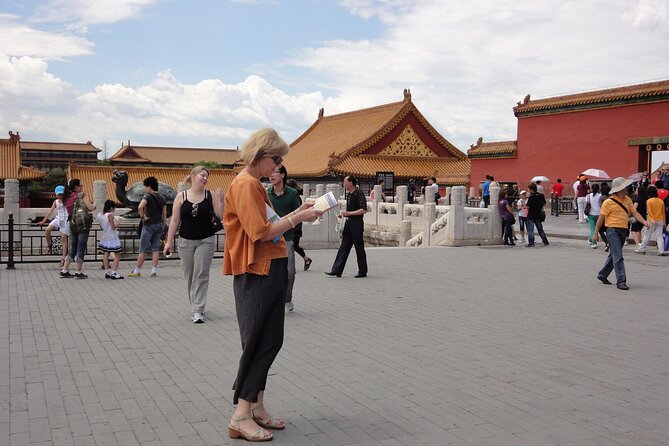
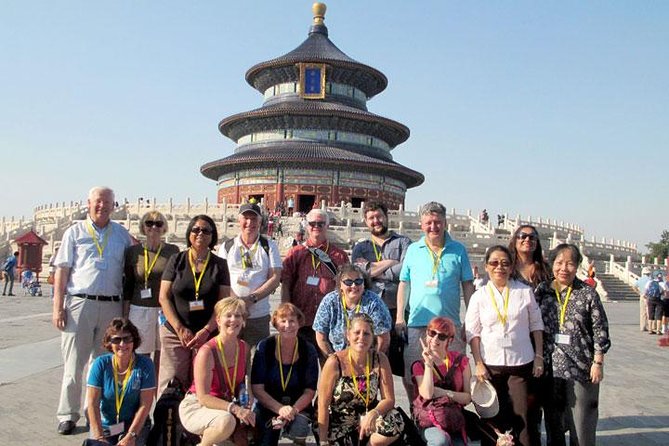
Day 4 keeps Beijing spiritual and ceremonial. You visit the Temple of Heaven, known for its distinctive architecture and the imperial tradition of worship connected to harvest hopes. It is a calmer scene than Tiananmen and a nice counterweight to the day before.
After that, you fly to Lhasa. The tour explicitly notes that your Lhasa guide meets you at the airport, offers a brief city intro, and gives useful tips for avoiding high altitude reaction during the drive downtown. Then it is hotel rest time so you can adapt.
This is not a throw-away day. Transition days are where many multi-city trips fail because they rush you. Here, the structure gives you a chance to settle before the main Lhasa sightseeing begins.
Same city, a very different kind of day:
- Beijing: Mutianyu Great Wall Daily Tour with Ticket & Lunch
★ 5.0 · 3,056 reviews - All-Inclusive Tour: Tiananmen Square, Forbidden City, Great Wall
★ 5.0 · 2,873 reviews - MuBus: Mutianyu Great Wall ENG/ESP/RUS Guided Bus Tour
★ 5.0 · 2,361 reviews - 4-Hour Small Group Tour to Forbidden City with Entry Tickets
★ 5.0 · 1,863 reviews
Lhasa Days: Norbulingka, Tibet Museum, and Sera Monastery Debates
Lhasa Day 5 is built around Tibetan culture, not only famous structures. You start at Norbulingka (Precious Stone Garden), once the summer house for living Buddha generations and now the city’s largest created garden. If you like garden and palace grounds, this stop can slow your pace in a good way before you hit the more intense religious sites.
Next is the Tibet Museum. The stop is described as a practical overview of Tibetan culture and history through artifacts, Buddha figures, handwritten ancient books, Thangka paintings, and ethnic handicrafts. The value here is that it gives you a frame for what you will see later at temples.
The highlight on this day is Sera Monastery. The key detail is the debate schedule: monks debate Buddhist doctrines every day from 15:00 to 17:00 except Sundays. The itinerary notes monks clapping hands to urge quick answers and using Buddha beads during the exchange. That is the kind of living tradition you cannot fake with a photo.
If your time window lines up, try to treat this as the main event of the afternoon, not a quick add-on. You get more from it when you watch closely.
Potala Palace, Jokhang Temple, and Barkhor Street: Pilgrimage in Real Time
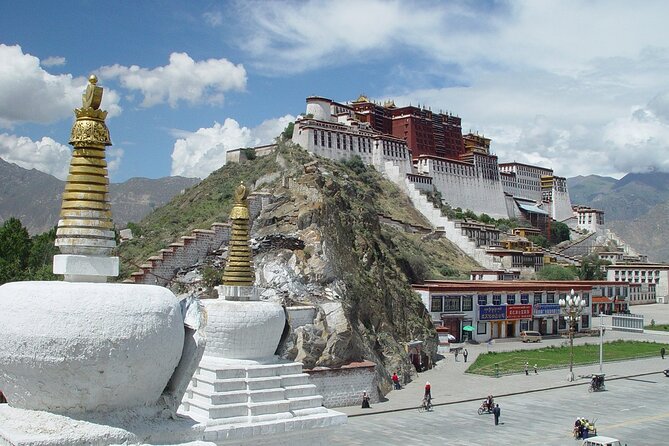
Day 6 is the heavy-duty spiritual day in Lhasa. You begin at Potala Palace, described as built about 1,300 years ago and known for combining Tibetan temple and palace styles. The itinerary sets expectations well here: it is splendor and scale first, then details as you explore.
Then comes Jokhang Temple, described as about 1,370 years old and the ultimate pilgrimage destination for Tibetan pilgrims. This is where faith is not a museum exhibit, it is a daily practice. The tour’s emphasis is on getting close to Tibetan Buddhism and learning from loyal believers.
After that, the route moves to Barkhor Street, where you stroll the stone road and see original-look Lhasa details and delicate handicrafts. The stop also includes time to get close to the lifestyle of Buddhist nuns at a nearby nunnery. Even if you do not know the religious terms, you can still read the rhythm of worship and everyday life.
Practical note: this day mixes big sights with longer wandering time. If you want photos, plan for some waiting and crowds, since these are major pilgrimage areas.
Xi’an Transfer Day: Land, Drop Your Bags, and Reset
On Day 7, you fly to Xi’an and your local guide meets you at the airport, then transfers you to the downtown hotel. After that, the afternoon is free.
This free time matters. It gives you space to handle jet lag, laundry, snacks, and rest before the Terracotta Warriors day. Xi’an in particular can feel more packed once sightseeing ramps up, so I like having a buffer.
If you have questions about what to eat, ask your guide for a couple of practical snack ideas before your evening stroll.
Terracotta Warriors and Tang-Era Stops: A Day With Hands-On Moments
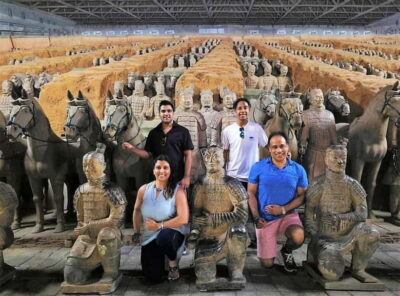
Day 8 is built around the Terracotta Warriors, and it is the kind of stop that earns its reputation. You visit the Museum of Qin Terra-cotta Warriors and Horses, with time to see the soldiers and horses in battle formations, distinct expressions, and related items like bronze chariots, weapons, and horse figures.
A unique detail here is that the itinerary includes a family visit to the home of the first discoverer of the Terracotta Army. That is a human layer many visits skip. You also get hands-on time making a mini clay warrior with a local artisan, which is fun, and it helps you remember the day beyond photos.
After that, you go to Big Wild Goose Pagoda (Dayanta), built in the Tang Dynasty to collect Buddhist sutras from India. It connects the Qin-era excavation focus to a later era tied to cultural exchange.
Then you have free time near Grand Tang Dynasty Ever-Bright City, described as a pedestrian street where you can see people dressed in traditional Chinese clothing. Even with limited time, it is a good “see how the city performs culture” stop.
Xi’an City Wall, Great Mosque, and Muslim Quarter Snacks
Day 9 starts on the Xi’an City Wall. You go to the City Wall Park, where local people do morning exercises, which gives you a glimpse of daily life before you climb. Then you ascend the wall, described as constructed about 600 years ago and the best-preserved existing city wall in China. You can walk on it and explore the city from the wall.
After that, the tour pivots to Islamic heritage in Xi’an with the Great Mosque. The itinerary calls it one of the largest and oldest Islamic mosques in the country. Then you head to the nearby Muslim Quarter for time to explore snacks at the Muslim Bazaar.
This pairing works because it is not only monuments. You get a shift from defensive wall history to a neighborhood with food and street life. If you love trying small bites rather than hunting for one big meal, this is your day.
Later, you fly to Shanghai and check into your hotel with your guide’s help.
Shanghai Museum, Yu Garden, The Bund, and Tianzifang
Day 10 is a strong overview of Shanghai’s old and new. You start at Shanghai Museum, with time for historical collections displayed there. Next is Yu Garden (Yuyuan), one of Shanghai’s famous classical garden areas.
The itinerary also includes a farewell a la carte lunch valued at CNY 150 per person, focused on Shanghai cuisine. That helps you experience the city’s food culture during the sightseeing peak.
After lunch, you take a cruise on the Huangpu River. It passes landmark views like the Oriental Pearl TV Tower, which makes it an easy way to see the city’s skyline without walking nonstop. Then you get the Bund area (Wai Tan), with European-style buildings on the west side and modern skyscrapers across the river in Pudong.
To wrap, your guide takes you to Tianzifang, described as an old street where you can find fun and relaxation. It is also a good moment to slow down and shop casually, since earlier days are more structured.
Farewell Day: Airport Transfer Back Home
Day 11 is straightforward. Your guide transfers you to the airport for your international flight home. The tour keeps it simple so you are not forced into one more timed attraction before you depart.
If you tend to lose track of time, this is the day to keep your packing organized. You will already have enough transitions in the earlier part of the trip.
Price and Value: What You Are Paying For
At $4,089 per person, this tour is not cheap, but it is also not just a sightseeing list. You are paying for internal flights, ten nights of accommodation (twin-sharing), a private guide and driver, transportation, and entrance fees to the included sites, plus Tibet Travel Permit coverage.
For many travelers, the biggest value drivers are the internal economy flights and the inclusion of the Tibet Travel Permit. Add entrance fees across multiple UNESCO World Heritage stops like the Forbidden City, Great Wall section, and Terracotta Warriors, and the total cost starts to make more sense.
Also, note that the tour includes breakfast (10) and a handful of included lunches (4). You may still buy some meals on your own, but the included meals reduce decision fatigue and help on busy days.
Where you may feel cost pressure is the private nature. If you want a more budget setup, this private format will be pricier than group tours. But for people who like a name-on-arrival experience and smooth transfers, it is a trade you are actively choosing.
Guide Service and Real-World Help You Can Expect
The tour emphasizes professional guides and an experienced driver, and the Beijing side in particular has strong signals from past service feedback. Guides named Candy and Celine have been praised for being organized and professional. Another guide named John was mentioned for providing extra support, including help with mobile phone needs.
That kind of practical support matters more than people expect. When you are moving through multiple cities, figuring out how to use your phone for tickets, maps, and messaging can save time and reduce stress. This tour also mentions a mobile ticket and pickup offered, which fits that reality.
Who This Tour Suits Best
This experience is a great fit if you want:
- A private route across four major regions, with guides handling the flow
- UNESCO sights without having to coordinate tickets and timing on your own
- A genuine Tibet portion with multiple key sites and the Sera Monastery debate time included
- A balanced mix of big landmarks and neighborhood life, like hutongs and the Muslim Quarter
It may be less ideal if you want lots of free time every day or you are very sensitive to altitude. The itinerary also asks for moderate physical fitness, which is normal for temple and wall days.
Should You Book This 11-Day Private China Tour?
Book it if you want a guided, structured China trip that does not leave you scrambling. The pairing of Beijing imperial sites, three Lhasa days with major pilgrimage stops, Xi’an’s Terracotta Warriors with a hands-on activity, and Shanghai’s mix of museum, garden, Bund views, and Tianzifang makes the schedule feel purposeful.
Skip it or reconsider if you cannot handle high altitude and long sightseeing days. Also, if you prefer to design your own pace with fewer guided segments, a private, full-schedule format may feel like too much structure.
If you want a smooth multi-flight plan with entrance fees, most meals, and Tibet permit support built in, this is the kind of tour that gives you a clear win: less logistics, more time actually seeing the places you came for.
FAQ
What major cities are included in this 11-day tour?
The tour covers Beijing, Lhasa (Tibet), Xi’an, and Shanghai.
Are internal flights included?
Yes. The itinerary includes three economy-class flights during the trip, covering the routes between Beijing to Lhasa and Lhasa to Xi’an, and Xi’an to Shanghai.
How many nights of accommodation are included?
The tour includes ten nights of accommodation in twin-sharing rooms.
What is included in the price?
Included items are hotel accommodation, one-way economy airfare segments, the Tibet Travel Permit, a professional guide and experienced driver, air-conditioned vehicle, entrance fees to tourist sites, two bottled waters per person per day, and breakfast plus some included lunches.
Do I need a Tibet Travel Permit?
Yes. The tour includes the Tibet Travel Permit.
When does the Sera Monastery debate happen?
The itinerary notes monks’ debating happens from 15:00 to 17:00 every day except Sundays.
Recently added around Beijing
- Private Transfer to Mutianyu Great Wall with professional driver★ 5.0 · 19 reviews
- Wild Great Wall Hikes★ 5.0 · 10 reviews
- camp on the Great Wall overnight with sunrise and sunset on the wall★ 5.0 · 11 reviews
- Beijing: to Xi’an Terracotta Day Tour by Roundtrip Bullet Train★ 5.0 · 9 reviews
- Beijing Airport Layover Tour to Mutianyu Great Wall★ 5.0 · 4 reviews
- Private Wild Great Wall Hiking tour at Simatai (Challenging)★ 5.0 · 16 reviews
- Beijing: Mutianyu Great Wall and Tea House Private Tour★ 5.0 · 11 reviews
- Ultimate Forbidden City and Mutianyu Great Wall Discovery with Airport Transfer★ 5.0 · 25 reviews
Private, compared.
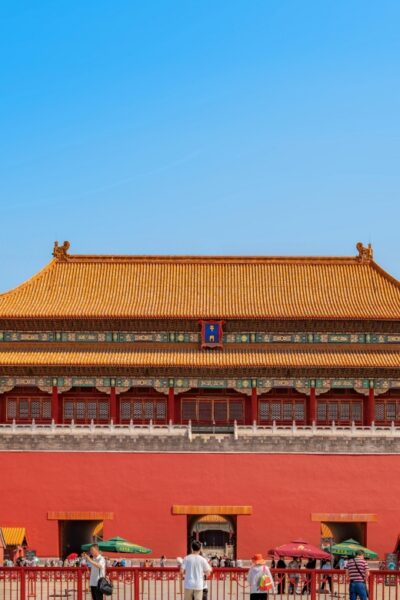
Forbidden City Tour(Group/Private)-Tickets Included
Read our review →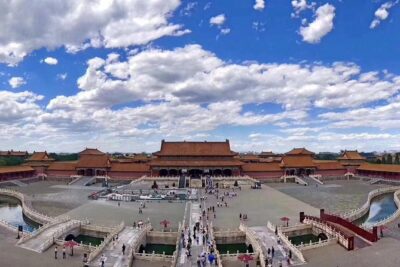
T-Square & Forbidden City Group or Private Tour
Read our review →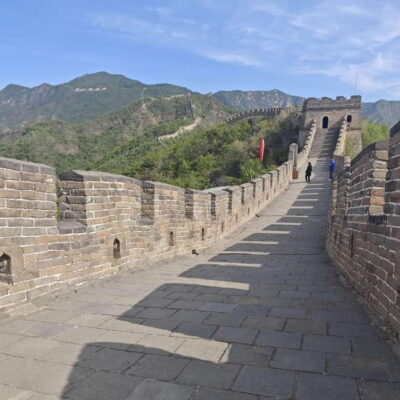
Mutianyu Great Wall Private Trip with English Driver
Read our review →
Zhujiajiao Water Town and Shanghai City Private Day Tour
Read our review →
Private Shanghai Full Day City Tour with Old and New Highlights
Read our review →
Private Mutianyu Great Wall Trip with English-Speaking Driver
Read our review →