Reviewed · TICKETS
Beijing: Confucius Temple and the Impercial College E-ticket
Confucius and exams, all in one stop. This Beijing visit uses an e-ticket QR code plus your passport, and you step into Yuan-era buildings with the kind of layout that makes ancient China feel orderly and real. I especially like the way the Confucius Temple runs along a straight south-to-north axis, moving you from gates to halls in a clear sequence. The one drawback is simple, you need your original passport and electronic ticket ready, or entry gets annoying fast.
What I really enjoy is the Imperial Examination connection. In the courtyard area you’ll see stone tablets with 51,624 Jinshi names and details, and inside there are three focused exhibitions on the Dacheng Hall restoration, Confucius imagery, and the history of this temple in Beijing. If you want one day that teaches you something concrete, not just sightseeing, this is a strong pick.
In This Review
- Key points before you go
- Confucius Temple: how the layout tells you what mattered
- Dacheng Hall exhibits: what to look for inside
- The stone tablets of Jinshi: the imperial exam you can actually see
- Yuan-era architecture: temple on the left, college on the right
- Guozijian (Imperial College): the top school run by the state
- Inside the college grounds: halls, main rooms, and ritual sound
- Price and value: why $7 can feel like more than it sounds
- E-ticket QR code and passport entry: make it smooth
- How long should you spend on each side?
- Who this one-day Confucius and Imperial College visit suits best
- Accessibility and group style, in plain terms
- Should you book this Beijing Confucius Temple and Imperial College e-ticket?
- FAQ
- What do I need to enter the attraction?
- Can I use just an ID instead of a passport?
- How long is the experience?
- What is included with the booking?
- What will I see at Confucius Temple?
- What will I see at Guozijian (Imperial College)?
- Does this skip the ticket line?
- Is it wheelchair accessible?
- Is free cancellation available?
Key points before you go
- QR code entry with passport keeps things quick at the gate
- Stone tablets of 51,624 Jinshi connect Confucian learning to the imperial exam system
- Three exhibition stops inside the temple help you understand what you’re looking at
- Yuan Dynasty layout separates the left-side Temple and right-side College
- Guozijian Imperial College shows the highest state education setup in Yuan, Ming, and Qing eras
- Skip-the-ticket-line is included, so you spend more time walking the courtyards
Confucius Temple: how the layout tells you what mattered
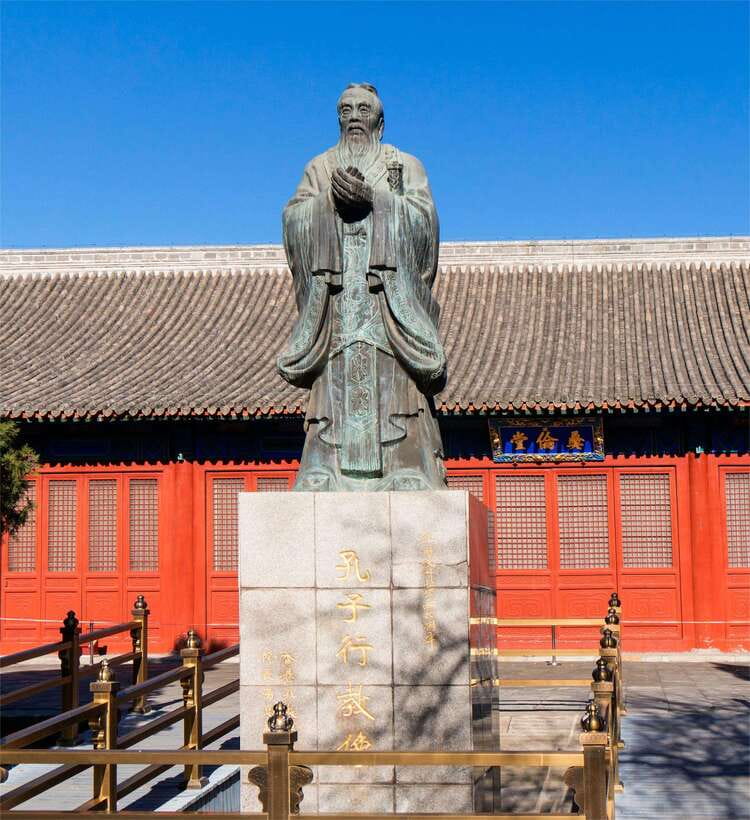
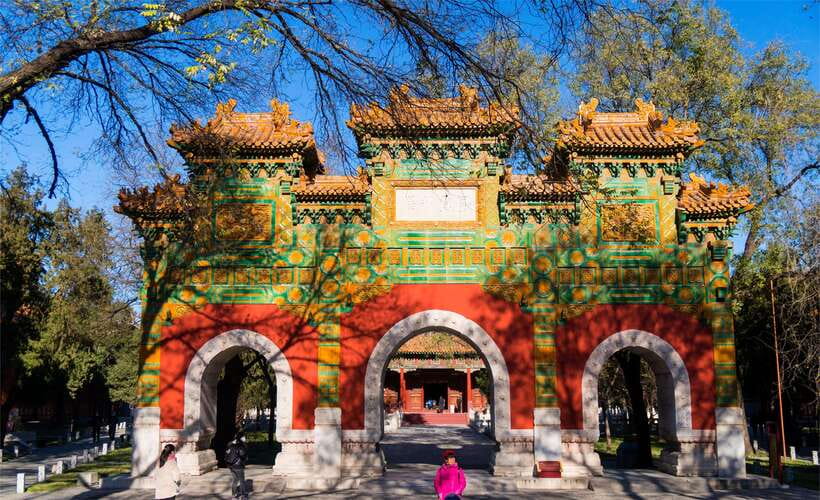
This site is called Beijing Confucius Temple and the Imperial College, but the visit naturally splits into two worlds. The temple side and the college side follow a traditional rule, temple on the left, college on the right, which helps you keep your bearings even if you only have one day.
The Confucius Temple complex was built in 1306 during the Yuan, under Emperor Dade, and it has a long role in memorial ceremonies for Confucius across Yuan, Ming, and Qing. The grounds cover more than 22,000 square meters, with a construction area around 7,400 square meters, and the whole place is organized around three courtyards. When you walk, that size matters, because you are not doing one quick photo stop. You’re moving through spaces that are designed to feel ceremonial.
On the central axis, you’ll pass through a sequence that’s easy to follow: Teacher Gate, Dacheng Gate, Dacheng Hall, and then Chong Sheng Temple. I like this part because it gives you structure. You’re not wandering and guessing, the buildings themselves teach you the order of importance.
A few more Beijing days worth comparing
- From Beijing: Mutianyu Great Wall Tours with Options
★ 4.9 · 9,216 reviews - Beijing: Forbidden City Tour(Group/Private)-Tickets Included
★ 4.8 · 7,974 reviews - Beijing: T-Square & Forbidden City Group or Private Tour
★ 4.8 · 4,446 reviews
Dacheng Hall exhibits: what to look for inside
The Confucius Temple has three exhibitions you can use to decode the space. If you arrive without context, these rooms are the shortcut.
You can expect:
- Exhibition of the Restored Dacheng Hall
- Exhibition of the Great Confucius
- Exhibition of the History of Beijing Confucius Temple
That set of topics is practical. The restored-hall display helps you understand why certain halls look the way they do. The Great Confucius exhibit gives you a visual and interpretive approach to Confucius as a cultural symbol, not just a name you might recognize from school. And the history exhibit connects the temple to Beijing specifically, which is useful because many Confucius sites exist across China.
One extra tip: there’s also the option to buy an audioguide at the entrance. If you like turning your phone off and letting someone else do the explaining, it’s worth considering, especially when you’re moving quickly between courtyards.
The stone tablets of Jinshi: the imperial exam you can actually see
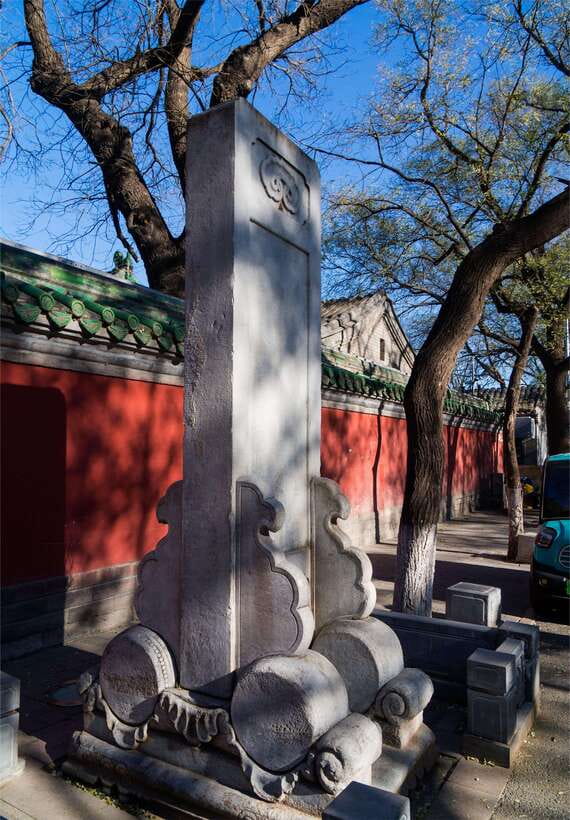
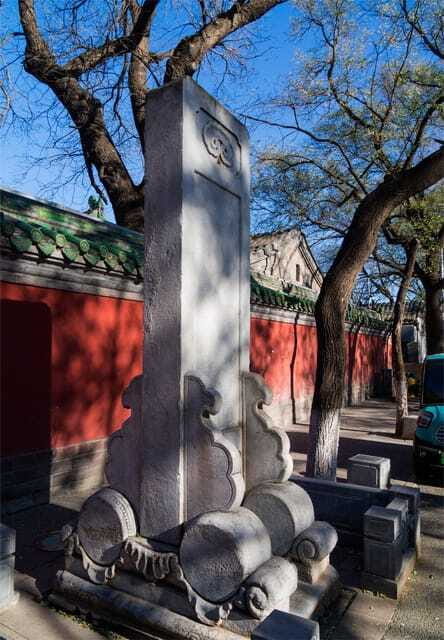
The most memorable part for me is the stone tablet area. Confucius Temple includes 198 stone tables arranged in four groups in the front courtyard space. Each tablet section ties directly to the imperial examination world, because the stone records include names, birthplaces, and ranks of Jinshi.
You’re looking at a huge dataset, 51,624 Jinshi carved into stone. That’s not a small detail. It’s one of those places where you can feel the scale of the exam system in a way that charts never fully capture.
And here’s why this matters for your one-day plan. The imperial exam system is often taught as an idea. In this temple, it becomes physical. You can stand there and read the concept in front of you, then connect it back to the broader Confucian learning tradition that fed the exam pathway.
If you’re the type who likes learning from objects, not just walls, give yourself a slow minute here. It’s easy to walk past stone carvings when you’re in Beijing and there’s so much competing for your attention. This is one of the spots where slowing down actually pays off.
Yuan-era architecture: temple on the left, college on the right
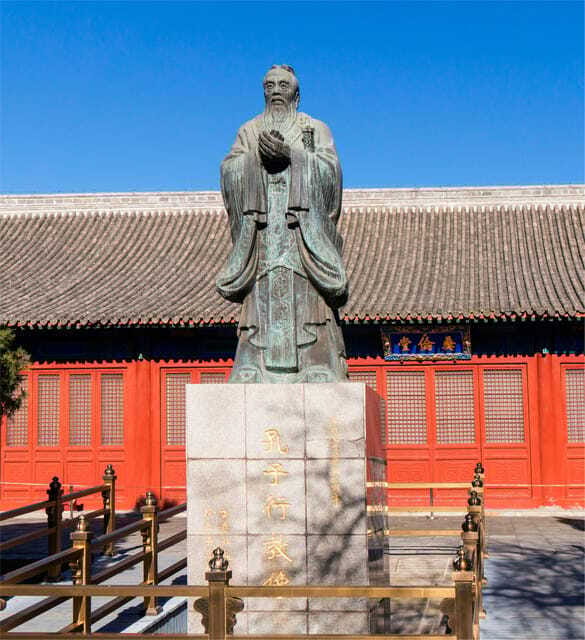
This complex is often described as a “picture scroll” of long development, and the Yuan-era architecture helps make that feel true. Built in the 14th century, the structures are part of a coordinated design that links teaching, ritual, and education.
The left-right arrangement is more than a neat layout. It helps you understand the cultural logic: Confucius worship and moral tradition sit on one side, and state education infrastructure sits on the other. When you see both in one loop, you can connect religion, scholarship, and government function without needing extra explanation.
Also, you’ll notice the axis thinking again on the college side. Chinese imperial planning used symmetry and alignment as a way to signal order, legitimacy, and authority. Even if you’re not an architecture nerd, you’ll feel it as you move through gates, halls, and named buildings.
Same city, a very different kind of day:
- Beijing: Mutianyu Great Wall Daily Tour with Ticket & Lunch
★ 5.0 · 3,056 reviews - All-Inclusive Tour: Tiananmen Square, Forbidden City, Great Wall
★ 5.0 · 2,873 reviews - MuBus: Mutianyu Great Wall ENG/ESP/RUS Guided Bus Tour
★ 5.0 · 2,361 reviews - 4-Hour Small Group Tour to Forbidden City with Entry Tickets
★ 5.0 · 1,863 reviews
Guozijian (Imperial College): the top school run by the state
Now shift to the Guozijian side. Guozijian in Beijing was the highest educational institution and an administering organ of education set up by the state during the Yuan, Ming, and Qing. That’s an important distinction. This wasn’t just a temple-like campus where scholars wandered and wrote poems. It was an official system.
Guozijian was built in the Yuan Dynasty in 1308 during the Zhida reign. The complex covers about 28,000 square meters and, like the temple, it’s organized around three courtyards. Again, the size affects your pace. You’ll likely feel a steady flow, not a single museum room.
On the central axes, you’ll encounter these named gates and halls:
- Jixian Gate
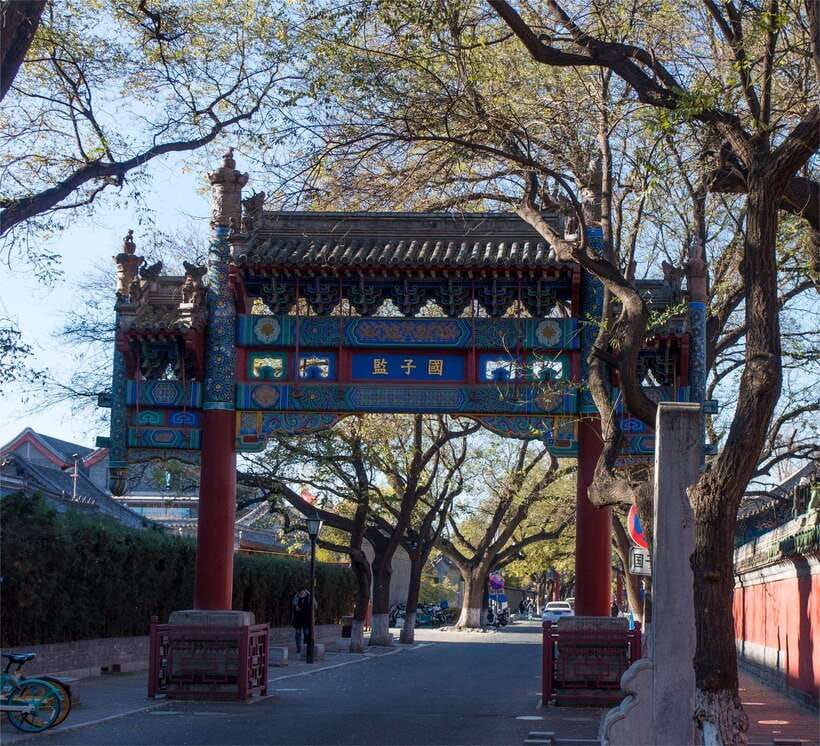
- Taixue (Imperial College) Gate
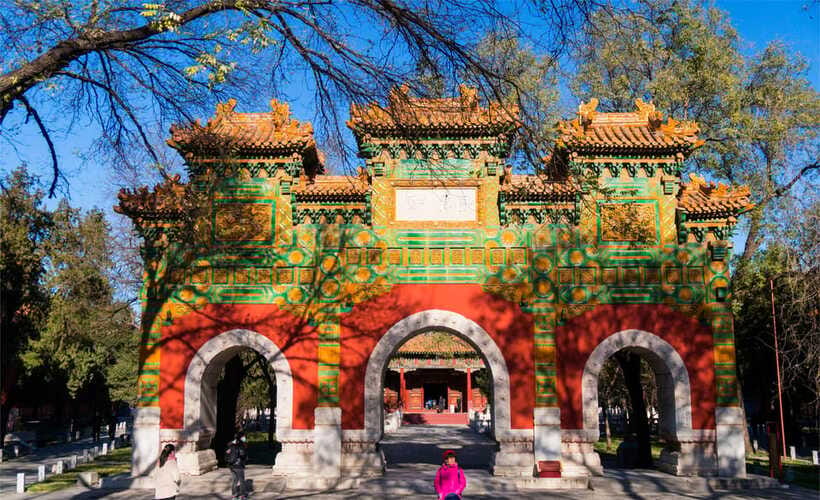
- Glazed memorial Arch
- Biyong Hall
- Yilun Hall
- Jingyi Hall
Even just reading these names gives you a sense of what the place was meant to do. This is education treated as an institution with ceremony, rules, and visible authority.
Inside the college grounds: halls, main rooms, and ritual sound
Guozijian includes two halls and six main rooms, plus additional features aligned along the central axis. Among them are the Imperial tablet Pavilion, and the Bell and Drum Pavilion, placed traditionally and symmetrically beside the central axes.
If you’re trying to get the most out of a one-day visit, this is where your context helps. The bell-and-drum idea is tied to timed routines and official ceremony. Even if you can’t see the sound itself, you can spot the deliberate placement and recognize that daily life here likely had structure.
What I find valuable is the contrast with the temple side. On the Confucius Temple side, the focus points toward memorial tradition and moral learning. On the Guozijian side, the focus shifts to the state’s education apparatus. Seeing both in one day makes the imperial education story much easier to remember.
Price and value: why $7 can feel like more than it sounds
This experience is priced around $7 per person and lasts 1 day. That’s the kind of number that makes you wonder, what am I actually paying for? Here, you’re mainly paying for entry to two major complexes, with meaningful internal exhibitions at the temple side and the larger architectural campus at Guozijian.
The value boost is not just the ticket. The experience includes skip-the-ticket-line, which matters in Beijing when your time gets eaten by basic gate logistics. It also includes a private group format, which can make the visit feel calmer and easier to manage if you’re traveling with family or prefer not to be pushed along.
With a low price like this, I’d also treat it as a “core stop.” If you only have one day to devote to Confucianism and state education in Beijing, this is a focused way to do it without paying museum-level prices for less targeted content.
E-ticket QR code and passport entry: make it smooth
A big practical win here is how you enter. You can use the QR code and your passport to enter. The instructions also emphasize entering with your original passport and electronic tickets. That means you should not plan to arrive with just a screenshot or rely on a phone battery at 5 percent.
Before you leave your hotel, do this simple check:
- QR code is saved and accessible
- Passport is in your bag or pocket you will actually carry
- Electronic ticket is reachable offline if possible
You’ll still spend time walking between courtyards, gates, and halls. But the gateway part should be much less stressful than a standard cash-only ticket line situation.
How long should you spend on each side?
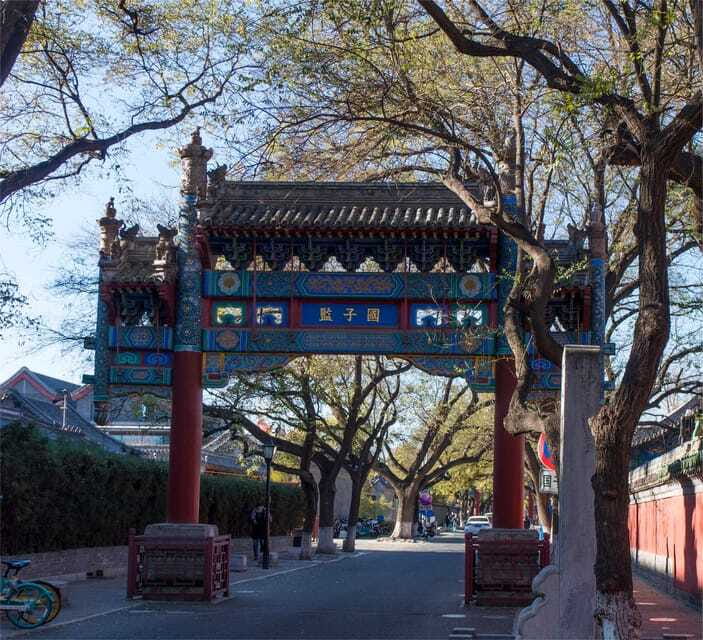
You only have 1 day, so timing matters. Even without a listed minute-by-minute route, you can follow a logic that works.
Start with Confucius Temple first. It has the exhibitions, including the one on Restored Dacheng Hall, which helps you interpret the look of the main hall you’ll see. Then move toward the stone tablets area, because it’s the anchor point for the imperial exam theme. If you save tablets for last, you might feel rushed or mentally tired.
After that, shift to Guozijian. The college side is more about learning infrastructure and institutional space. Give it a steady walk and focus on the named gates and halls along the central axis, plus the pavilion features like the Bell and Drum Pavilion and Imperial tablet Pavilion.
If you’re traveling at a slower pace, you might not finish every indoor element on both sides. The good news is that both areas are designed around an axis and courtyards, so even when you skim, you don’t lose the overall story.
Who this one-day Confucius and Imperial College visit suits best
This works best if you want a day that combines architecture with a direct education theme. You’ll likely enjoy it if:
- You like the imperial exam topic and want something tangible, like the Jinshi stone tablets
- You enjoy ceremonial layouts and axial symmetry
- You want a quieter, more structured cultural stop than the biggest photo hotspots
It might be less satisfying if you’re chasing crowds, street markets, and a lot of fast-changing street life. This is a campus-and-temple environment. Think courtyards, halls, and learning spaces, not a night out.
It also fits well for mixed groups because it’s straightforward. You don’t need special prep beyond having your passport and e-ticket ready.
Accessibility and group style, in plain terms
The experience includes wheelchair accessible entry and facilities. That’s useful to know if you’re traveling with mobility needs.
It also runs as a private group format. Private does not automatically mean silent or exclusive, but it generally means you’re less likely to feel swept along by large group dynamics.
Should you book this Beijing Confucius Temple and Imperial College e-ticket?
If your goal is to see how Confucian tradition connects to the imperial examination system and official education, I think you should book. The biggest reason is that the experience gives you both the ceremonial temple setting and the state education campus, with the Jinshi stone tablets and three temple exhibitions doing the heavy lifting for context.
I’d skip it only if you want a very flexible, casual wander with no museums, no exhibitions, and no interpretation. For a targeted one-day culture stop in Beijing, this is strong value, and the QR code plus passport entry helps you start spending your time inside right away.
FAQ
What do I need to enter the attraction?
You’ll need your original passport and your electronic ticket. You can use the QR code plus your passport to enter.
Can I use just an ID instead of a passport?
The entry requirements mention bringing a passport or ID card, but the instructions also specifically say to enter with your original passport and electronic tickets.
How long is the experience?
The experience is valid for 1 day.
What is included with the booking?
It includes the tourist attraction ticket.
What will I see at Confucius Temple?
You can see the Yuan Dynasty Confucius Temple buildings and three exhibitions: Exhibition of the Restored Dacheng Hall, Exhibition of the Great Confucius, and Exhibition of the History of Beijing Confucius Temple.
What will I see at Guozijian (Imperial College)?
You’ll visit Guozijian, including major gates and halls along the central axes such as Jixian Gate and Taixue Gate, plus halls like Biyong Hall and Yilun Hall, and features like the Imperial tablet Pavilion and Bell and Drum Pavilion.
Does this skip the ticket line?
Yes. Skip the ticket line is included.
Is it wheelchair accessible?
Yes, the experience is listed as wheelchair accessible.
Is free cancellation available?
Yes. You can cancel up to 24 hours in advance for a full refund.
Recently added around Beijing
- Private Transfer to Mutianyu Great Wall with professional driver★ 5.0 · 19 reviews
- Beijing: to Xi’an Terracotta Day Tour by Roundtrip Bullet Train★ 5.0 · 9 reviews
- Wild Great Wall Hikes★ 5.0 · 10 reviews
- camp on the Great Wall overnight with sunrise and sunset on the wall★ 5.0 · 11 reviews
- Beijing Airport Layover Tour to Mutianyu Great Wall★ 5.0 · 4 reviews
- Private Wild Great Wall Hiking tour at Simatai (Challenging)★ 5.0 · 16 reviews
- Beijing: Mutianyu Great Wall and Tea House Private Tour★ 5.0 · 11 reviews
- Simatai Great Wall & Gubei Water Town Private Trip English Driver★ 5.0 · 7 reviews
Tickets, compared.
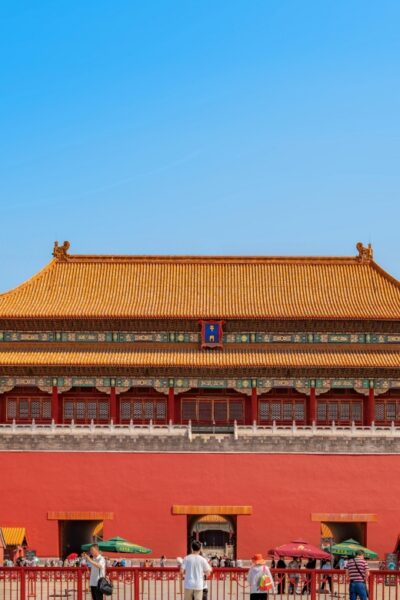
Forbidden City Tour(Group/Private)-Tickets Included
Read our review →
Mutianyu Great Wall Daily Tour with Ticket & Lunch
Read our review →
4-Hour Small Group Tour to Forbidden City with Entry Tickets
Read our review →

Ngong Ping 360: Cable Car Return Tickets & Combos
Read our review →
The Temple of Heaven or Summer Palace Entry Ticket
Read our review →
Beijing Forbidden City Ticket Booking (Optional: guide service)
Read our review →