Reviewed · TICKETS
Beijing: Lama Temple (Yonghe Temple) Admission Ticket
Beijing can feel loud, then you step into a quieter world at Yonghe Temple. This Lama Temple ticket focuses on what you actually care about: getting into one of Beijing’s most important Tibetan Buddhist sites without wasting hours. I love that you’re free to explore at your own pace inside a complex full of incense smoke, prayer, and carefully crafted details.
What I like most is the mix of architecture styles and the real devotional atmosphere. The temple’s halls, archways, and courtyards let you see how Tibetan Buddhism took root in the Qing-era capital, and it is easy to take your time without a rigid group schedule.
One thing to consider: even with fast entry, you still must go through security checks, and on major prayer days the place can be very crowded.
In This Review
- Key highlights worth planning around
- Lama Temple vs Yonghe Temple, and what you’ll actually see
- The ticket that saves time, and where the line still exists
- A self-guided path through the halls, gates, and courtyards
- 1) Start at the archways and settle into the scale
- 2) Yonghe Palace Hall, where the mood shifts from outside to sacred
- 3) Four Learning Halls, why this place feels different from a basic temple
- 4) Exhibition rooms, for when you want context
- The 18-meter sandalwood Maitreya Buddha, and why it hits harder in person
- Incense, prayer crowds, and how to be respectful without missing anything
- Architecture blend and sacred design details to look for
- Price and value: is $10 worth it for a one-day temple stop
- How the PANDA144 service affects your day at the gate
- Best time to go, and how to use a one-day window
- Who should book this fast-entry Lama Temple ticket?
- Should you book this ticket?
- FAQ
- What is the Lama Temple also known as?
- How long does the visit take?
- Is this ticket a real admission ticket or just a QR code?
- Do I get to skip the line completely?
- Is a guided tour or audio guide included?
- What do I need to bring to enter?
- Do I need a real-name booking with my passport details?
- What time should I arrive relative to closing?
- Are there restrictions on items I can bring?
Key highlights worth planning around
- Fast-track entry helps you spend more time inside the halls you came for
- Tibetan Buddhist sights like thangkas and statues in multiple sacred halls
- The 18-meter sandalwood Maitreya Buddha, famous enough to be on the Guinness World Records since 1990
- Four Learning Halls that show how this temple used education, ritual, and scholarship together
- A Han, Manchu, Tibetan, and Mongolian architectural blend that looks different at every turn
- A prayer-driven crowd, especially on holidays, when the atmosphere gets intense
Lama Temple vs Yonghe Temple, and what you’ll actually see
Most people in Beijing call it Lama Temple, but you will also see it labeled Yonghe Temple. The name matters less than the feeling: you’re walking through a Qing-era complex that later became one of the capital’s major Tibetan Buddhist centers.
The site’s origin story is a big part of the experience. The complex was built in 1694 during Emperor Kangxi’s reign, starting as the residence of Yongzheng before he became emperor. It became an imperial palace in 1725, and then, under Emperor Qianlong, it was converted into a Tibetan Buddhist temple in 1744. You feel these layers as you move from gate to halls, because the design is not just religious, it is also political architecture for an imperial capital.
For your visit, that means you’re not only hunting statues. You’re watching history show up in stone, wood, colors, and layout. And because this is a working place of worship, there’s a steady stream of locals praying in the middle of your sightseeing.
A few more Beijing days worth comparing
- From Beijing: Mutianyu Great Wall Tours with Options
★ 4.9 · 9,216 reviews - Beijing: Forbidden City Tour(Group/Private)-Tickets Included
★ 4.8 · 7,974 reviews - Beijing: T-Square & Forbidden City Group or Private Tour
★ 4.8 · 4,446 reviews
The ticket that saves time, and where the line still exists
This is an admission ticket with fast-track entry, plus access to all major temple buildings and cultural exhibitions within the complex. That combination is the practical sweet spot: you get entry that helps with the front door bottleneck, but you’re not locked into a guide’s script.
Important reality check: fast-track does not mean you skip security. You still go through security checks when you arrive. So if your goal is zero waiting at all costs, this won’t deliver that. If your goal is just to avoid the worst of the ticket line, then it works well, and the reviews reflect that smoothness.
Another practical thing: you are expected to enter with proper ID details. This is a real-name ticket situation, and the temple gates accept only genuine ID information. Also, the GetYourGuide QR code is not a ticket by itself. You need to follow the confirmation process sent to you via WhatsApp or email, so plan your arrival with that in mind.
A self-guided path through the halls, gates, and courtyards
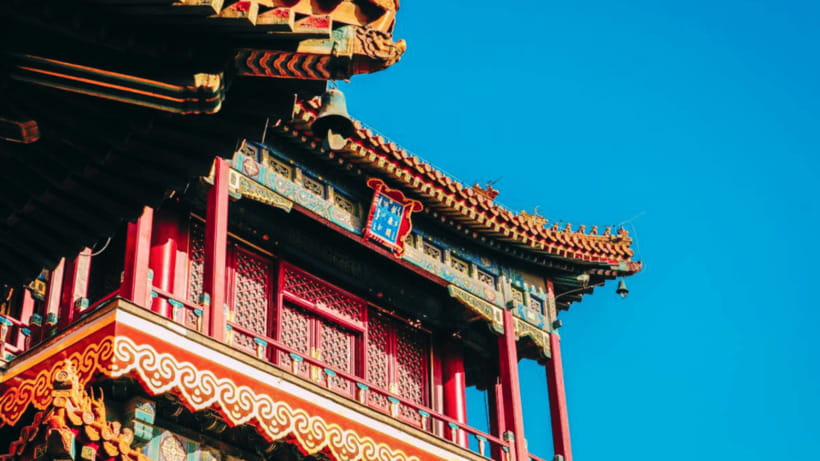
You only have one day for this, so the trick is to use it like a walkable loop. There is no required route on the ticket, but the layout naturally pulls you through the complex in sections: gates first, then the palace-style hall areas, then the learning halls and exhibition spaces.
1) Start at the archways and settle into the scale
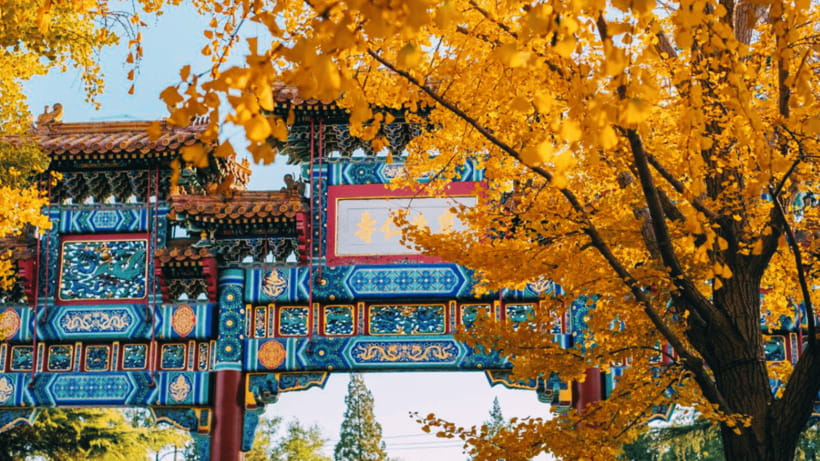
The complex features three main archway areas, including the Yonghe Gate. Even if you think you are just going to pop in and snap photos, pause here. The archways set the tone. The design cues you that this is a temple-palace hybrid, where formality and worship live side by side.
Same city, a very different kind of day:
- Beijing: Mutianyu Great Wall Daily Tour with Ticket & Lunch
★ 5.0 · 3,056 reviews - All-Inclusive Tour: Tiananmen Square, Forbidden City, Great Wall
★ 5.0 · 2,873 reviews - MuBus: Mutianyu Great Wall ENG/ESP/RUS Guided Bus Tour
★ 5.0 · 2,361 reviews - 4-Hour Small Group Tour to Forbidden City with Entry Tickets
★ 5.0 · 1,863 reviews
2) Yonghe Palace Hall, where the mood shifts from outside to sacred
From the gate areas, you move into the grander hall spaces. The Yonghe Palace Hall is where you’ll start to feel the “inside” of the temple, not just the exterior view. The halls are built for visitors to slow down. You’ll see lots of Buddha statues and religious objects, and you’ll notice how the temple keeps a strong visual hierarchy: big central focus, supporting structures, and carefully arranged details.
3) Four Learning Halls, why this place feels different from a basic temple
If you only take one thematic detour, make it the Four Learning Halls. The hall names are:
- Hall of Medicine Buddha
- Mathematics Hall
- Tantric Hall
- Lecture Hall
That set is a hint that this temple wasn’t only about ritual prayer. It also links Buddhist practice with knowledge and training. Even if your understanding of the beliefs is limited, the idea comes through in the way each hall is treated like a specialized space.
This is one of the reasons I like this ticket so much for independent travelers. You are free to spend time in the hall that pulls you in, instead of feeling rushed past everything on a fixed guided route.
4) Exhibition rooms, for when you want context
There are three exhibition rooms as part of the access. You might use them as a short break from standing in courtyards. They also help you connect what you see in the halls to the wider collection of religious artifacts, including precious items on display.
The 18-meter sandalwood Maitreya Buddha, and why it hits harder in person
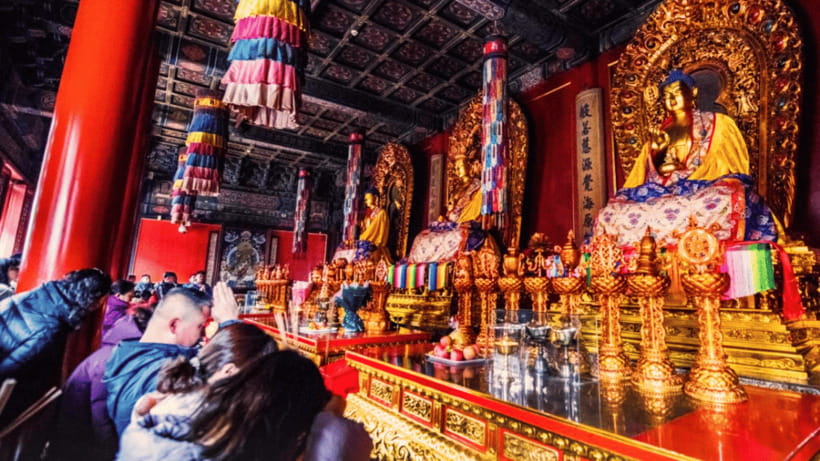
Yes, the 18-meter Buddha is famous. But the reason it matters for your planning is simple: this is the kind of sight that changes your sense of scale.
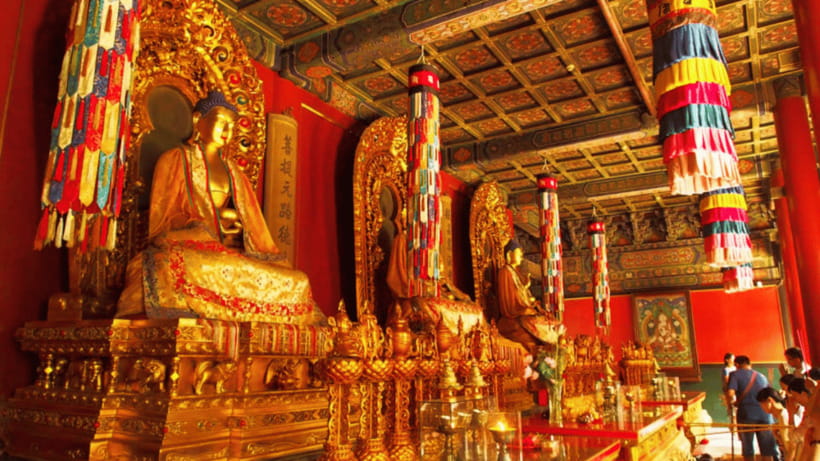
The temple is home to the 18-meter-tall sandalwood Buddha, known as the Maitreya Buddha. It is carved from a single piece of sandalwood and has been listed in Guinness World Records since 1990. When you see it in person, you stop treating the temple as “just another stop.” It feels like a project that took decades of intention.
What’s practical for you: don’t treat this as a quick photo moment. Give yourself a few extra minutes. The reviews and the general experience align on one point, you will see people praying around the same space where you are looking. That shared use makes the experience feel less like a museum and more like lived worship.
Incense, prayer crowds, and how to be respectful without missing anything
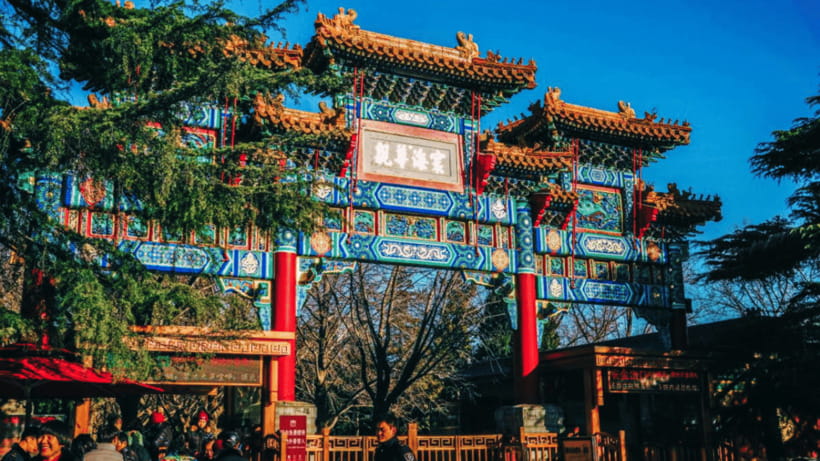
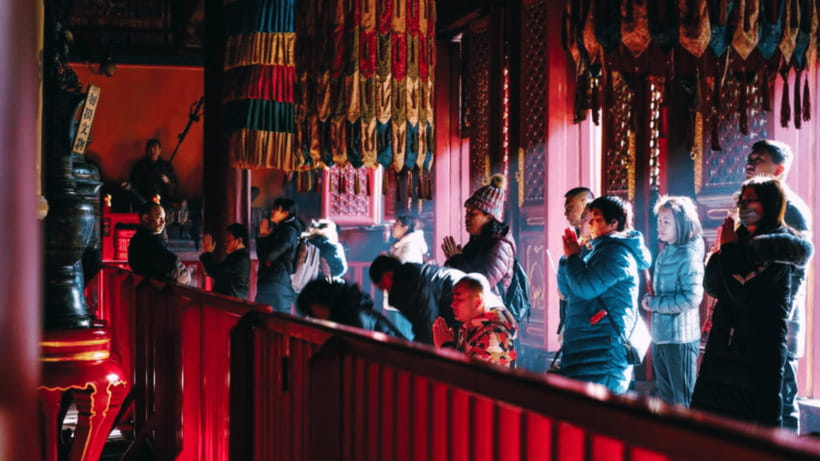
One of the most consistently praised parts of this temple is the devotional atmosphere. On the 1st of January, for example, the temple can be very crowded because people come to pray. If you’re visiting during a busy holiday, arrive with patience.
From what I’ve seen in places like this, crowds can be a mixed bag. Yes, it can slow you down. But it can also make the temple feel real. When you see people praying and when incense smoke drifts through the air, you get the point of the temple immediately, even if you do not read a single sign.
A simple approach works best:
- Watch where people are moving and standing, then follow the flow.
- Keep your camera use considerate, especially near prayer zones.
- Take your time, but don’t block sightlines.
If you want a calmer visit, consider choosing a time that is not a major holiday. The complex is small enough that you can still cover a lot, even if you have to slow down for crowds.
Architecture blend and sacred design details to look for
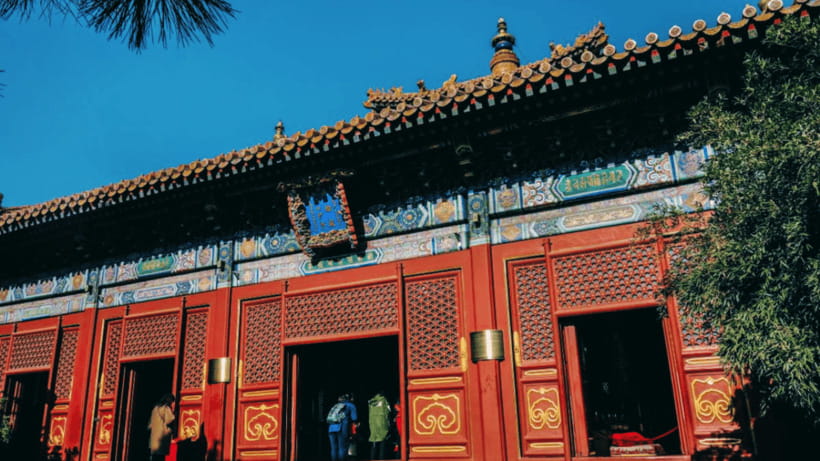
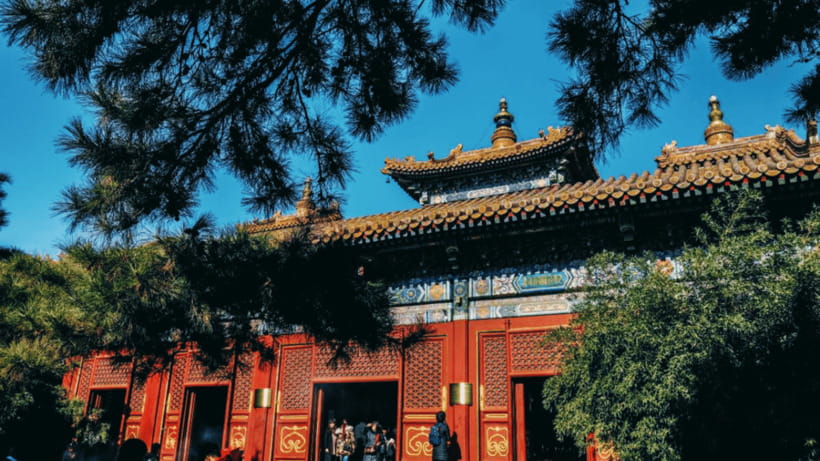
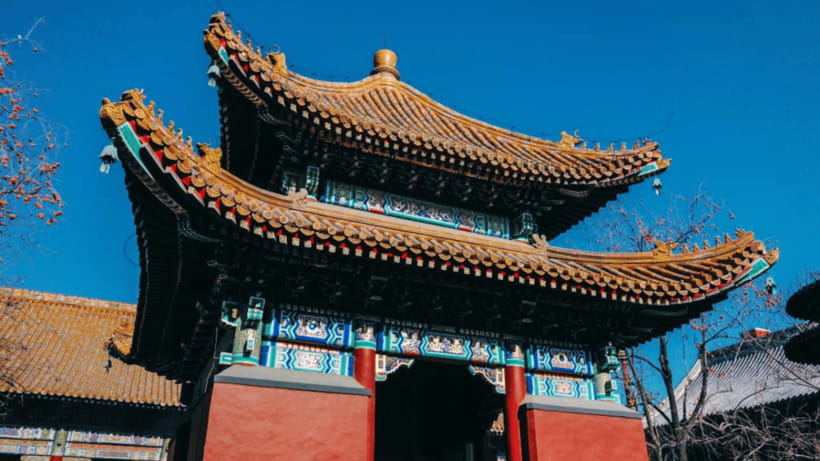
The architectural blend is one of the best reasons to come here instead of picking the most famous building in Beijing and calling it a day. This complex reflects Han, Manchu, Tibetan, and Mongolian styles. That means the temple isn’t uniform. It changes as you move through different courtyards and halls.
Here are a few things to look for as you walk:
- Notice how color and ornamentation shift hall to hall.
- Pay attention to carvings and the way the religious objects are framed.
- Look for thangkas among the interior displays, because they bring Tibetan Buddhism’s visual language into the Qing-era setting.
Also keep an eye out for the overall layout. The three archway areas help organize your movement, and the learning halls give you a structured way to compare spaces.
This is where independent pacing shines. If one hall doesn’t grab you, you can adjust your time and still hit the key buildings without feeling like you wasted your ticket.
Price and value: is $10 worth it for a one-day temple stop
At about $10 per person, this ticket is priced like good value for Beijing. Here’s the math that matters when you’re standing in a line.
You pay for:
- Fast-track entry (so you spend less time queued up)
- Access to major buildings and exhibition rooms
- A reservation fee that helps keep your visit organized
You do not pay for:
- A guided tour
- Audio guide support
So the value depends on your travel style. If you like wandering and reading your way through, it is a great deal. If you need a guide to explain what you are seeing, you may feel a bit on your own inside the halls.
The good news is that the overall experience is still strong without commentary, because the visual focus is intense. That 18-meter sandalwood Buddha and the hall layouts do a lot of teaching on their own.
How the PANDA144 service affects your day at the gate
This ticket experience is sold through PANDA144. Service quality matters here because of how the ticket is delivered and verified.
From the experience notes, communication happens over WhatsApp, and your ticket information gets sent quickly by email or WhatsApp. People also report receiving a small guide with the needed visiting info on the day of the visit. That kind of pre-arrival clarity helps a lot for first-time visitors to Beijing, where the hardest part is often not the destination, it’s the gate process.
Still, remember the rule that the GetYourGuide QR code alone is not valid. The safest plan is to keep an eye on the confirmation message you receive and follow the instructions given. If you do that, the gate experience tends to go smoothly, and you can get on with the part you actually care about, walking through the temple.
Best time to go, and how to use a one-day window
You’re looking at one day for this visit. That’s enough time if you focus on the core sections: gate, palace hall, learning halls, and the big centerpiece sight.
Two timing tips you should build around:
- Final entry is one hour before closing
- You must exit 30 minutes before closing
So don’t show up at the last minute. Even if you are quick, crowds and photo pauses can eat time faster than you think.
If you can, choose a visit time that avoids peak holiday surges. The temple can get busy on prayer days, and that impacts how long you can comfortably linger in front of major sights.
Who should book this fast-entry Lama Temple ticket?
This works especially well if you:
- Want a Tibetan Buddhist temple experience with real on-site worship
- Prefer independent exploration over a structured guided tour
- Care about seeing a major centerpiece like the 18-meter Maitreya Buddha
- Like architectural variety, because the hall styles and decorative approach shift as you move through the complex
It might be less ideal if you:
- Want an English-speaking guide walking you through each hall
- Need an audio commentary to explain symbolism
- Expect to skip security entirely
Should you book this ticket?
Yes, I’d book it. At $10, you’re paying for access to the major temple buildings and exhibition rooms, plus fast entry that cuts down on the most annoying part of the visit. Pair that with the fact that the temple is still an active place of prayer, and you get an experience that feels lived-in, not staged.
One more smart tip: plan around the closing time rules, and confirm your entry information through the WhatsApp or email instructions you receive. If you handle that part cleanly, the day inside Yonghe Temple is exactly the kind of Beijing experience that makes you slow down without even trying.
FAQ
What is the Lama Temple also known as?
The Lama Temple is also known as Yonghe Temple in Beijing.
How long does the visit take?
The duration is listed as 1 day, and you can check availability for starting times.
Is this ticket a real admission ticket or just a QR code?
The GetYourGuide QR code is not a valid ticket by itself. You should communicate via WhatsApp or wait for your confirmation email.
Do I get to skip the line completely?
You get fast-track entry, but there is no skip-the-line for security checks.
Is a guided tour or audio guide included?
No. Guided tours and audio guides are not included.
What do I need to bring to enter?
Bring your passport.
Do I need a real-name booking with my passport details?
Yes. Real-name ticket booking is mandatory, and you need to provide the full name as it appears on your passport and your passport number.
What time should I arrive relative to closing?
Final entry is one hour before closing, and visitors must exit 30 minutes before closing.
Are there restrictions on items I can bring?
Yes. Pets, weapons or sharp objects, and explosive substances are not allowed.
Recently added around Beijing
- Private Transfer to Mutianyu Great Wall with professional driver★ 5.0 · 19 reviews
- Beijing: to Xi’an Terracotta Day Tour by Roundtrip Bullet Train★ 5.0 · 9 reviews
- Wild Great Wall Hikes★ 5.0 · 10 reviews
- camp on the Great Wall overnight with sunrise and sunset on the wall★ 5.0 · 11 reviews
- Beijing Airport Layover Tour to Mutianyu Great Wall★ 5.0 · 4 reviews
- Private Wild Great Wall Hiking tour at Simatai (Challenging)★ 5.0 · 16 reviews
- Beijing: Mutianyu Great Wall and Tea House Private Tour★ 5.0 · 11 reviews
- Simatai Great Wall & Gubei Water Town Private Trip English Driver★ 5.0 · 7 reviews
Tickets, compared.
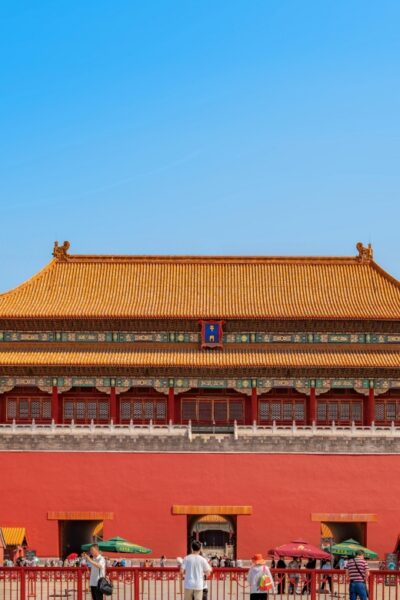
Forbidden City Tour(Group/Private)-Tickets Included
Read our review →
Mutianyu Great Wall Daily Tour with Ticket & Lunch
Read our review →
4-Hour Small Group Tour to Forbidden City with Entry Tickets
Read our review →
Ngong Ping 360: Cable Car Return Tickets & Combos
Read our review →
The Temple of Heaven or Summer Palace Entry Ticket
Read our review →
Beijing Forbidden City Ticket Booking (Optional: guide service)
Read our review →