Reviewed · TICKETS
Beijing: Yonghe Lama Temple Entry Ticket
A Qing era temple with real devotional energy. Yonghe Lama Temple (Yonghe Lamasery) is Beijing’s principal Buddhist site, and it is also one of China’s best preserved complexes. I love how straightforward the entry is, and I also love the historical story you can connect to as you wander the grounds. One watch out: the QR code rules can be a little tricky if you grab the wrong one.
The two biggest wins for me are using just a QR code and your passport for entry, and getting to see a site that is described as the largest and most perfectly preserved lamasery in present day China. Even if your Chinese reading is basic, the ticket process is designed to be simple. The main drawback is that the QR code that looks right might not work, so you need to follow the instructions in your message.
Plan for a calm, focused visit rather than a long stroll fest. This ticket is timed as a 2 hour experience, which is great for a first look but it can feel short if you like to linger. Also, do not ignore the note that your GetYourGuide QR is not valid, because that can turn a smooth entry into a scramble at the gate.
In This Review
- Key points before you go
- Yonghe Lamasery in plain terms: Beijing’s top Buddhist stop
- Price and value: is $9 worth it?
- QR code entry and the gate check you must not mess up
- Getting to Yonghe Temple: subway and bus options that actually work
- By subway
- By bus
- Plan your 2-hour visit: what to do once you’re inside
- 1) Entry and orientation (first part of your visit)
- 2) Explore the lamasery complex as a whole
- 3) Use the historical facts to guide what you notice
- The history connection: Yongzheng, Qianlong, and why this site matters
- Who this is best for, and who may need extra time
- Should you book this Yonghe Lamasery entry ticket?
- FAQ
- How do I enter Yonghe Lama Temple with this ticket?
- The QR code I have looks like it should work. Is the GetYourGuide QR valid?
- How long does this entry ticket experience take?
- What is the price per person?
- How do I get there by subway?
- Is Yonghe Lamasery wheelchair accessible?
Key points before you go
- QR code plus passport is the core entry method, no paper ticket needed
- Largest and best preserved lamasery in present day China makes this a top stop
- Beijing’s principal Buddhist temple means you are seeing a major cultural landmark, not a small detour
- Built in 1694 as part of the city wall for Emperor Yongzheng, then repurposed into a monastery
- 1744 brought Tibetan monks and Chinese students under Emperor Qianlong, shaping the lamasery’s identity
- 2 hours is enough for a meaningful visit, but you may want extra time if you move slowly
Yonghe Lamasery in plain terms: Beijing’s top Buddhist stop
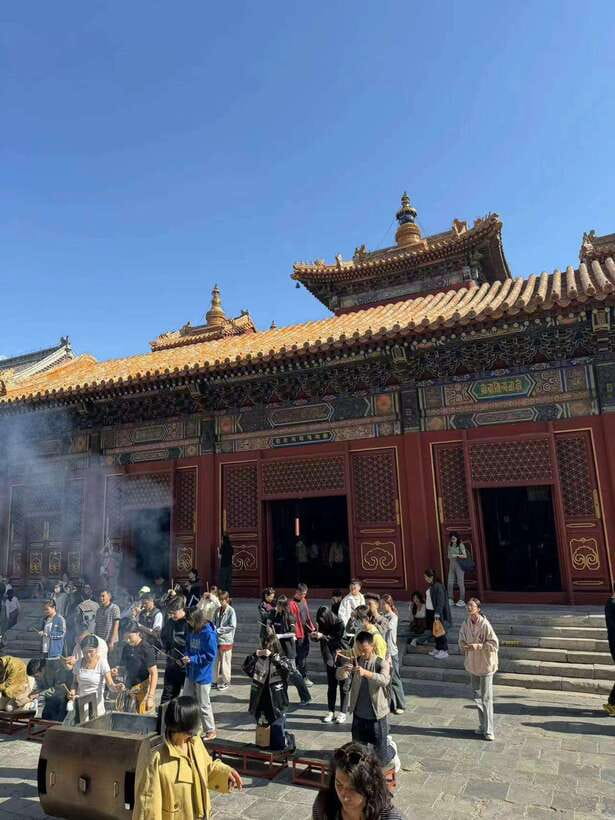
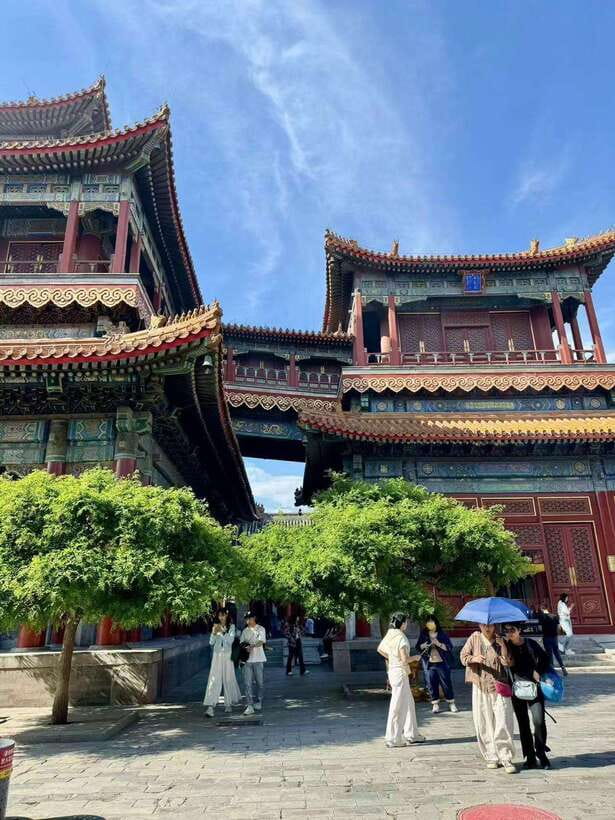
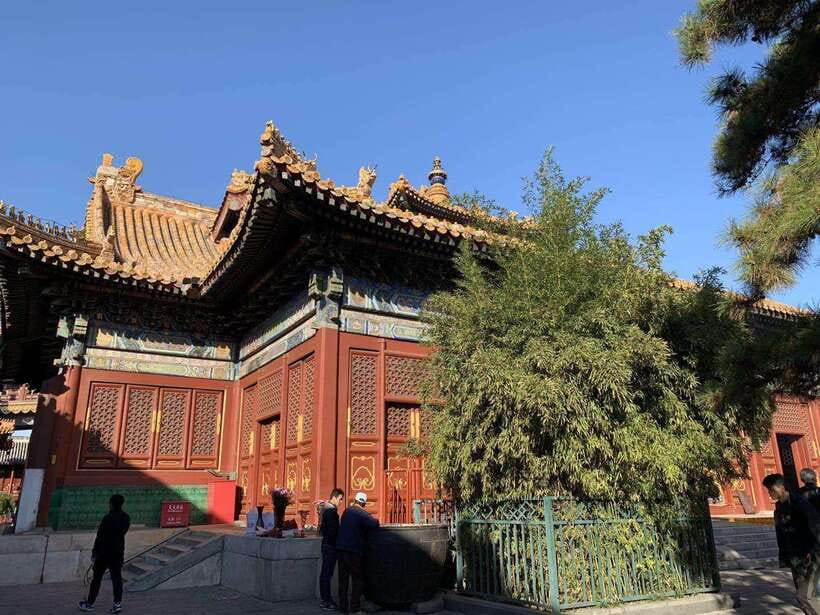
If you want one religious site that feels important in Beijing, this is a strong choice. Yonghe Lama Temple, also known as Yonghe Lamasery, is Beijing’s principal and largest Buddhist temple. That scale matters, because you are not just looking at buildings, you are visiting a center of Buddhist learning and practice that became famous well beyond Beijing.
What I like about this stop is the way the story is built in. The site was built in 1694 as part of the city wall for Emperor Yongzheng, before he rose to the throne in 1722. Later, his son Emperor Qianlong changed the use of the palace, sending for 300 Tibetan monks and 200 Chinese students in 1744, and housing them there. Over time, it became a temple and monastery and is considered one of the greatest centers of Buddhism outside Tibet.
That background helps your visit click into place. You are not only touring a pretty complex. You are walking through a place that changed purpose, attracted scholars, and helped shape a cross cultural Buddhist community.
A few more Beijing days worth comparing
- From Beijing: Mutianyu Great Wall Tours with Options
★ 4.9 · 9,216 reviews - Beijing: Forbidden City Tour(Group/Private)-Tickets Included
★ 4.8 · 7,974 reviews - Beijing: T-Square & Forbidden City Group or Private Tour
★ 4.8 · 4,446 reviews
Price and value: is $9 worth it?
The ticket price is listed at $9 per person, and the included cost also covers the booking services charge. On paper, that sounds simple, but here is the value angle that matters: you are paying for a timed, streamlined entry experience.
The big practical piece is skip the ticket line. If you have limited time in Beijing, cutting down time at the gate helps a lot. Even if you like to plan loosely, having an efficient entry usually means you spend your energy looking around, not waiting.
Also, the whole experience is set for 2 hours. That is a sweet spot for many first-time visitors who want a major landmark without turning the day into temple boot camp. You can see enough to understand why Yonghe Lamasery is famous, then decide if you want to return later for a longer, slower version.
QR code entry and the gate check you must not mess up
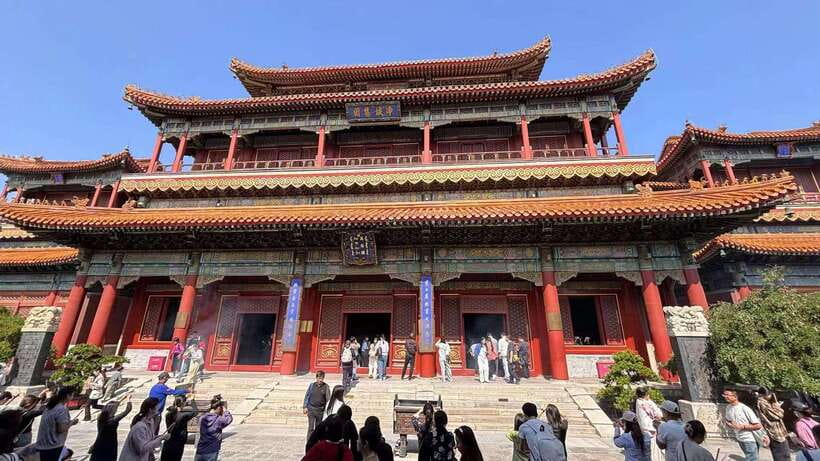
Here is the most important part, and it is worth treating like a checklist.
You enter using a QR code and your passport. That means you need both ready at the moment you approach the ticket area. The whole process is set up to reduce friction, so you are not hunting for paper or standing through an extended line.
Now for the twist: the note says the GetYourGuide QR is not valid. Instead, you should check your email or WhatsApp for the correct QR code. If you skip that step, you might be stuck at the entrance while you try to fix it on the spot.
My practical advice:
- Take a screenshot of the correct QR code, just in case your phone battery is having a bad moment.
- Make sure the QR you use matches the instructions you were given, not the QR you might assume is automatic.
- Keep your passport accessible, since the entry method specifically calls for it.
If you follow that, entry should feel easy. If you do not, you can lose time fast.
Getting to Yonghe Temple: subway and bus options that actually work
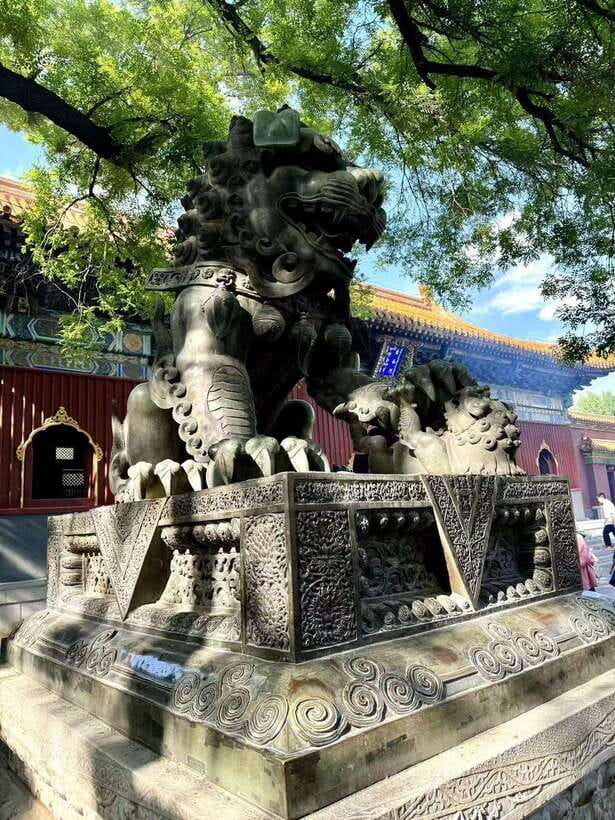
Location matters, because a smooth visit starts with getting there without stress. Yonghe Temple has solid public transit access.
Same city, a very different kind of day:
- Beijing: Mutianyu Great Wall Daily Tour with Ticket & Lunch
★ 5.0 · 3,056 reviews - All-Inclusive Tour: Tiananmen Square, Forbidden City, Great Wall
★ 5.0 · 2,873 reviews - MuBus: Mutianyu Great Wall ENG/ESP/RUS Guided Bus Tour
★ 5.0 · 2,361 reviews - 4-Hour Small Group Tour to Forbidden City with Entry Tickets
★ 5.0 · 1,863 reviews
By subway
Take Subway Line 2 or Line 5 to Yonghegong (Yonghe Temple) Station. Exit at Exit F. Then walk south for a few meters, turn east, and you should reach the temple in about two minutes.
This is a rare kind of clarity that helps. A short walk from a named exit is the best-case scenario in Beijing transit.
By bus
You have several bus choices, so you can pick based on where you are staying:
- Bus 13, 116, 117, or 684 to Yonghegong Station
- Bus 13, 18, 44, 75, 116, 684, Te 2, or Te 12 to Yonghegong Qiao Dong Station
- Bus 117 or 125 to Yonghegong Qiao Bei Station
If you like planning with options, this is great. It means you are not locked into one route if traffic or schedules change.
Plan your 2-hour visit: what to do once you’re inside
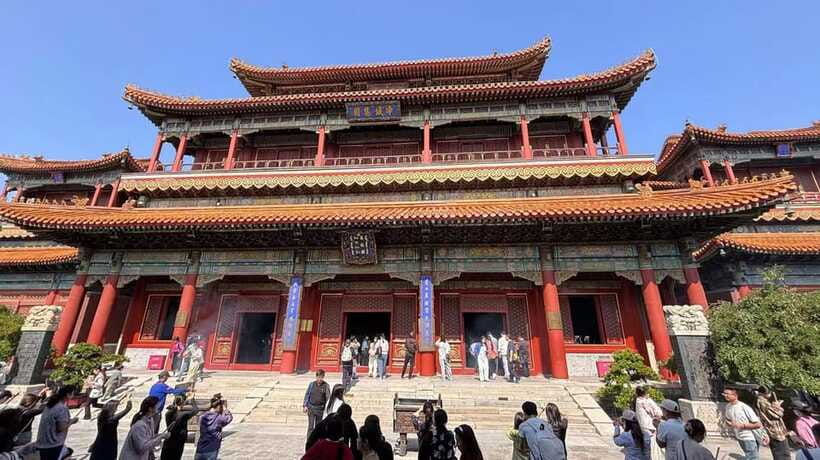
The experience duration is 2 hours, so think of this as a focused circuit. You can use that time to connect the physical experience to the history, rather than rushing.
A simple way to plan it is in three phases.
1) Entry and orientation (first part of your visit)
Your first job is straightforward: scan the QR code and show your passport. Once you are past that step, I suggest you pause for a minute to get your bearings so you are not backtracking.
Because this is a major Buddhist temple, treat it as an active sacred site. Even if you are just a casual visitor, you will enjoy the experience more if you keep your pace respectful and your phone use sensible.
2) Explore the lamasery complex as a whole
This ticket is for the Yonghe Lamasery, and the highlights emphasize that it is the largest and most perfectly preserved lamasery in present day China. That matters because it implies scale and careful preservation. Plan to walk enough to appreciate that the complex has weight, not just one photo spot.
You do not need to force a museum mode. Just take in the overall layout and the feel of the grounds as a complete site. This is also where the building history helps you. Since it was built as part of the city wall before Emperor Yongzheng became emperor, the site’s origins make it more than a standalone temple.
3) Use the historical facts to guide what you notice
The lamasery’s key turning points are clearly described:
- Built in 1694 for Emperor Yongzheng’s era, as part of the city wall
- Emperor Yongzheng rose to the throne in 1722
- In 1744, Emperor Qianlong sent 300 Tibetan monks and 200 Chinese students and housed them in the palace
- The dwelling became a temple and monastery
- It is considered one of the greatest centers of Buddhism outside Tibet
While you are walking, these facts act like a lens. When you sense the site is more than one era’s idea, that is the point. This is what gives Yonghe Lamasery its gravitas. You are looking at a place shaped by political change and cross cultural religious life.
The history connection: Yongzheng, Qianlong, and why this site matters
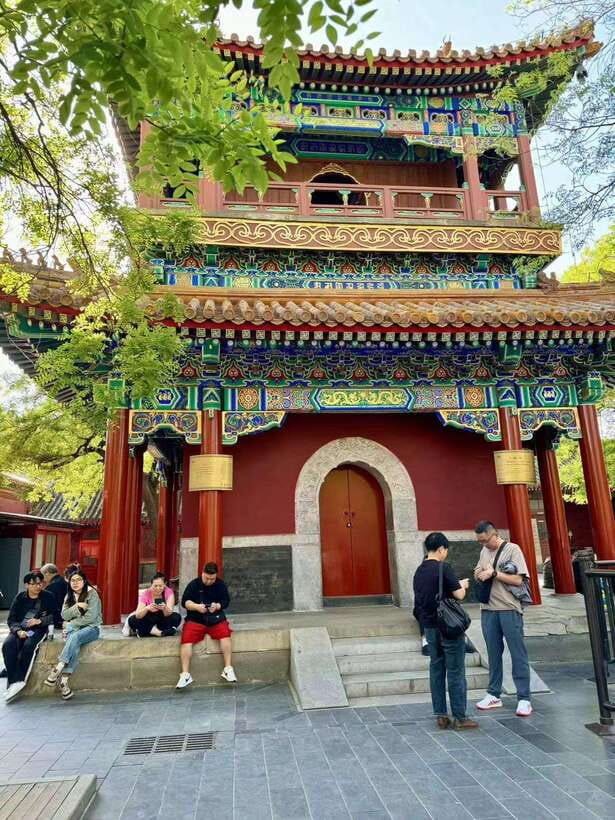
A lot of temple visits feel like viewing one moment in time. Yonghe Lamasery is different because it is tied to a chain of decisions made by emperors.
Start with 1694. The site began as part of the city wall for Emperor Yongzheng, before his rise to the throne in 1722. That origin matters because it explains why this place feels more complex than a simple religious hall. It carries the weight of royal planning, not just later expansion.
Then shift to the Qianlong era. In 1744, Emperor Qianlong brought in 300 Tibetan monks and 200 Chinese students, housed them in the palace, and turned the dwelling into a temple and monastery. That is a big deal, because it helps you understand the lamasery as an educational and spiritual center, not only a worship stop.
Finally, the lamasery’s reputation fits the description you are given: it is considered one of the greatest centers of Buddhism outside Tibet. You are visiting a place that became a hub, shaped by movement of people and ideas.
If you like history without getting stuck in it, this is a great match. Read those facts, then use your 2 hour to look for how the site communicates scale and purpose.
Who this is best for, and who may need extra time
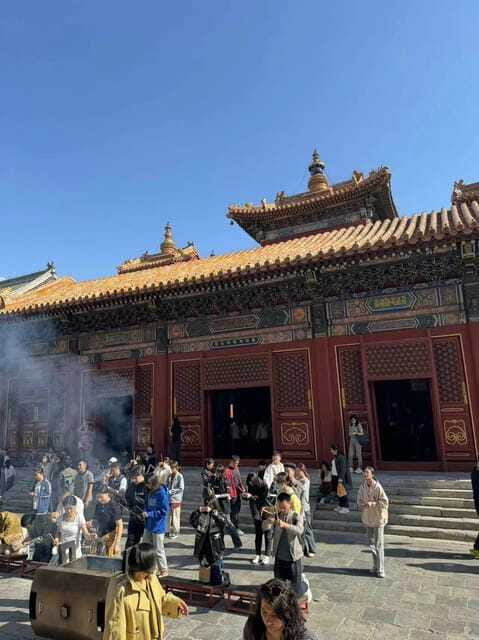
This ticket makes the most sense for you if:
- You want a major Beijing landmark with simple entry using QR code and passport
- You like religious history that ties into real political context
- You are short on time and want a 2 hour experience
- You want a site described as the largest and most perfectly preserved lamasery in present day China
You might want to add more time if you are the type who likes slow walking and long pauses. The tour duration is fixed at 2 hours, so you may feel rushed if you plan to read everything and stop for every detail.
Also, note wheelchair accessibility is listed. That is good to know for planning your routes and pacing, since Yonghe Lamasery is a complex site.
Should you book this Yonghe Lamasery entry ticket?
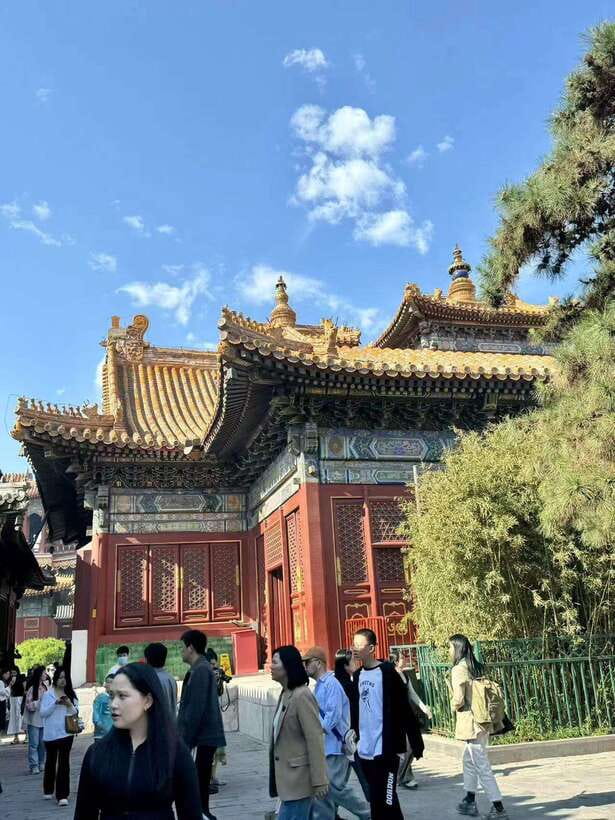
I think it is a solid booking if your main goal is efficient entry to a major Beijing religious landmark. The combination of $9 price, skip the ticket line, and a straightforward entry method (QR code plus passport) gives you good value for time.
The one reason I would hesitate is the QR code caution. If you do not follow the note that the GetYourGuide QR is not valid and you rely on the wrong code, your entry could turn stressful. If you are ready for that and you double check your email or WhatsApp for the correct QR, this becomes a low hassle, high payoff stop.
FAQ
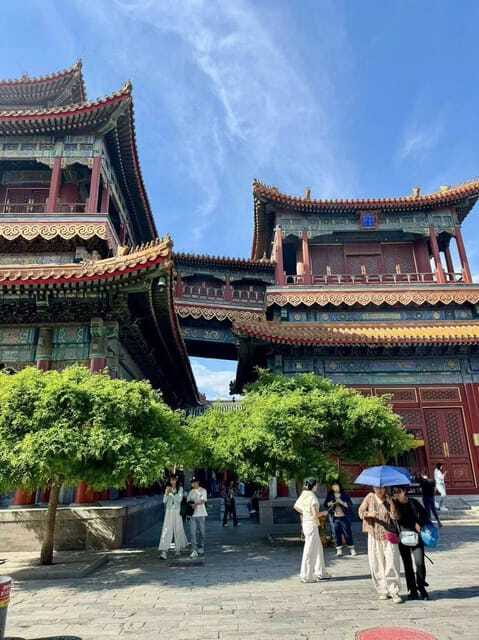
How do I enter Yonghe Lama Temple with this ticket?
You use the QR code and your passport to enter the park.
The QR code I have looks like it should work. Is the GetYourGuide QR valid?
No. The instructions say the GetYourGuide QR is not valid, so you should check your email or WhatsApp for the correct QR code.
How long does this entry ticket experience take?
The duration is listed as 2 hours.
What is the price per person?
The price is $9 per person.
How do I get there by subway?
Take Subway Line 2 or Line 5 to Yonghegong (Yonghe Temple) Station, then use Exit F and walk about two minutes.
Is Yonghe Lamasery wheelchair accessible?
Yes, wheelchair accessibility is listed for this activity.
Recently added around Beijing
- Private Transfer to Mutianyu Great Wall with professional driver★ 5.0 · 19 reviews
- Beijing: to Xi’an Terracotta Day Tour by Roundtrip Bullet Train★ 5.0 · 9 reviews
- Wild Great Wall Hikes★ 5.0 · 10 reviews
- camp on the Great Wall overnight with sunrise and sunset on the wall★ 5.0 · 11 reviews
- Beijing Airport Layover Tour to Mutianyu Great Wall★ 5.0 · 4 reviews
- Private Wild Great Wall Hiking tour at Simatai (Challenging)★ 5.0 · 16 reviews
- Beijing: Mutianyu Great Wall and Tea House Private Tour★ 5.0 · 11 reviews
- Simatai Great Wall & Gubei Water Town Private Trip English Driver★ 5.0 · 7 reviews
Tickets, compared.
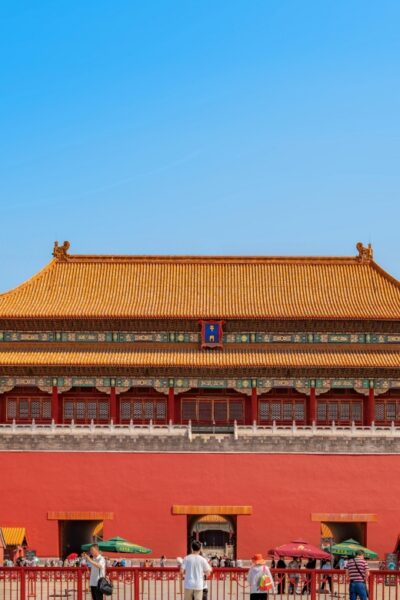
Forbidden City Tour(Group/Private)-Tickets Included
Read our review →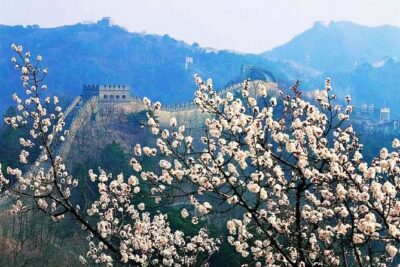
Mutianyu Great Wall Daily Tour with Ticket & Lunch
Read our review →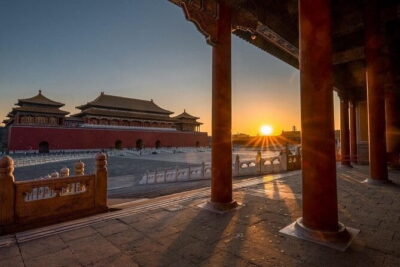
4-Hour Small Group Tour to Forbidden City with Entry Tickets
Read our review →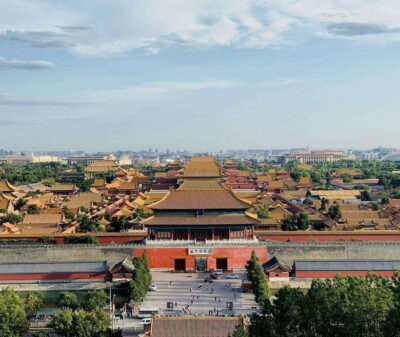
Ngong Ping 360: Cable Car Return Tickets & Combos
Read our review →
The Temple of Heaven or Summer Palace Entry Ticket
Read our review →
Beijing Forbidden City Ticket Booking (Optional: guide service)
Read our review →