Reviewed · GUIDED
Beijing: Yonghe Lama Temple Tickets with guide (optional)
You can feel Beijing’s Buddhist layers fast. The Yonghegong Lama Temple visit is a one-day ticketed walk through Tibetan Buddhism inside a Qing-era Beijing palace layout, and the optional English guide helps you read what you are seeing. It is the kind of stop where the details keep paying off as you move deeper in.
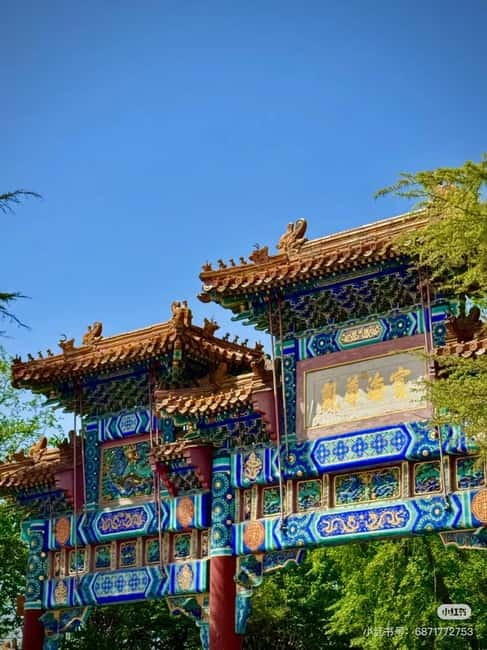
I love the physical storytelling of the complex, especially the three archways and the sequence of five main halls. You get a clear sense of how the grounds narrow from south to north and how hall heights build upward as you go, even if you know little about Buddhism.
One drawback to plan around: the site is not suitable for wheelchair users, and the entry cutoffs can squeeze your time if you arrive late. Bring your passport, and watch the last admission and clearing times.
In This Review
- Key Highlights You Will Feel Immediately
- Why Yonghegong Lama Temple Feels Like a Real Beijing Experience
- Getting There Fast: Yonghe Lama Temple Metro Stop, Line 5
- Prebooked Tickets: The Small Choice That Saves Big Time
- Entering the Complex: From Gates to Courtyards
- Three Archways and the Way the Grounds Guide Your Eyes
- Five Main Halls: What to Look For in Each Stop
- Grand Hall (Hall of Great Buddha)
- Yongyou Hall
- Hall of the Wheel of the Dharma
- Pavilion of Ten Thousand Blessings
- Tibetan Buddhism Meets Traditional Chinese Architecture, and You Can Spot It
- Timing Matters: Opening Hours, Last Admission, and That Entry Cutoff
- Price and Value: Is $12 Worth It?
- What to Bring, and Simple Rules That Affect Your Visit
- Who This Ticket Fits Best in Your Beijing Plan
- Should You Book This Yonghegong Lama Temple Guided Ticket?
- FAQ
- Where is the Yonghegong Lama Temple?
- How do I get there by metro?
- What are the opening hours?
- When does entry stop?
- Is a guide included, and what language is offered?
- What is included in the ticket price?
- What do I need to bring?
- Is the temple accessible for wheelchair users?
- What should I not bring or do?
Key Highlights You Will Feel Immediately
- Three archways and five main halls in one logical, ticketed circuit
- Over 1,000 rooms spread across a huge 66,400 square meter complex
- A clear Tibetan Buddhism plus traditional Chinese architecture mix you can spot as you walk
- English help on site, with small-group pacing that avoids feeling rushed
- A smoother visit with pre-booked entry instead of buying on the spot
Why Yonghegong Lama Temple Feels Like a Real Beijing Experience
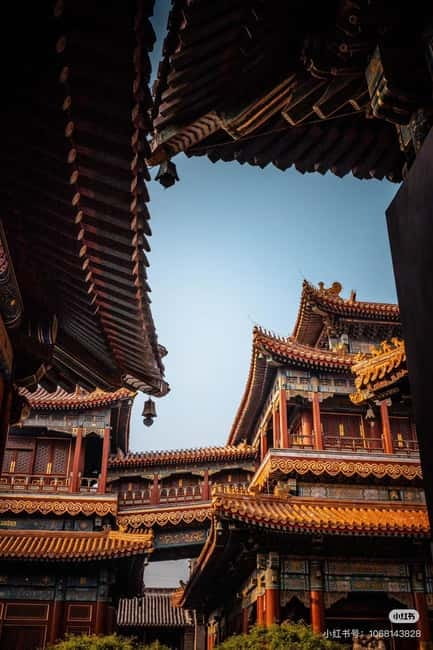
If Beijing is a city of layers, Yonghegong is one of the best places to see that in physical form. This temple grew out of the Qing Dynasty, with major construction beginning in the 33rd year of Emperor Kangxi’s reign, 1694. That date matters because the complex is not a modern museum display. It is an old working-style religious layout, and it still follows a big, ceremonial sense of order.
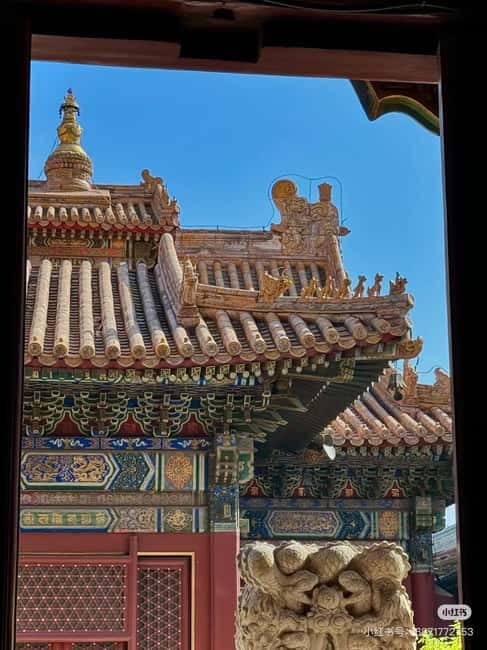
What makes it special is the blend. You are looking at Tibetan Buddhist influence, but it is expressed through traditional Chinese forms and court-style planning. You can see this blend in how the complex is arranged, the way visitors move through gates and courtyards, and the way the halls step upward in size and presence. Add the fact that the temple reflects cultural influences connected with Han, Manchu, Mongolian, and Tibetan groups, and you start to understand why this place has long been viewed as a high-ranking Buddhist temple of the late Qing period.
The ticket-based format also helps. When you have your entry set up in advance, your visit starts as a walk, not a wait. For a one-day stay, that is value.
A few more Beijing days worth comparing
- From Beijing: Mutianyu Great Wall Tours with Options
★ 4.9 · 9,216 reviews - Beijing: Forbidden City Tour(Group/Private)-Tickets Included
★ 4.8 · 7,974 reviews - Beijing: T-Square & Forbidden City Group or Private Tour
★ 4.8 · 4,446 reviews
Getting There Fast: Yonghe Lama Temple Metro Stop, Line 5
Location is No. 12 Yonghegong Street, Dongcheng District. To keep it easy, take metro line 5 and get off at Yonghe Lama Temple station. From there, you are close enough to arrive without a taxi detour, which helps if the city traffic is having a day.
This matters because the temple closes on a schedule. You do not want to burn time commuting. You want that time inside the complex, where you can look at gates, towers, courtyards, and halls at a comfortable pace.
Prebooked Tickets: The Small Choice That Saves Big Time
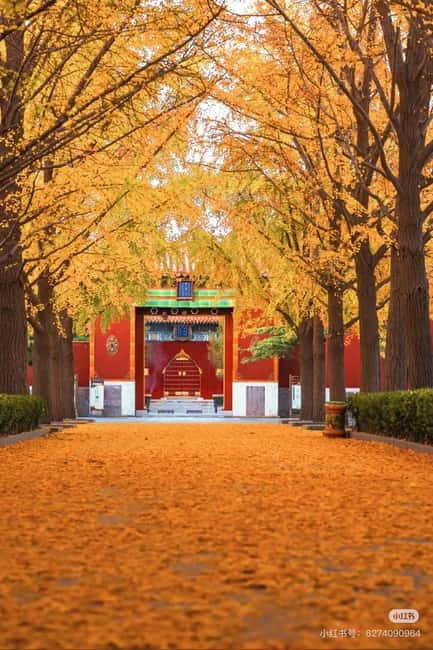
This experience includes your Yonghegong Lama Temple tickets, plus an information service fee. The practical win is simple: you avoid the on-the-spot ticket stress and you roll into the visit with a plan.
Here is how that affects your day. If you arrive and ticket lines are long, you might end up rushing through the parts you care about. With pre-booked entry, you can time your arrival to match the opening window and still take your photos without feeling like you are speed-running.
Also, there is an English live tour guide available. With a small group, the guide can help you focus on what is worth your attention, instead of you spending your visit trying to decode everything on your own.
Entering the Complex: From Gates to Courtyards
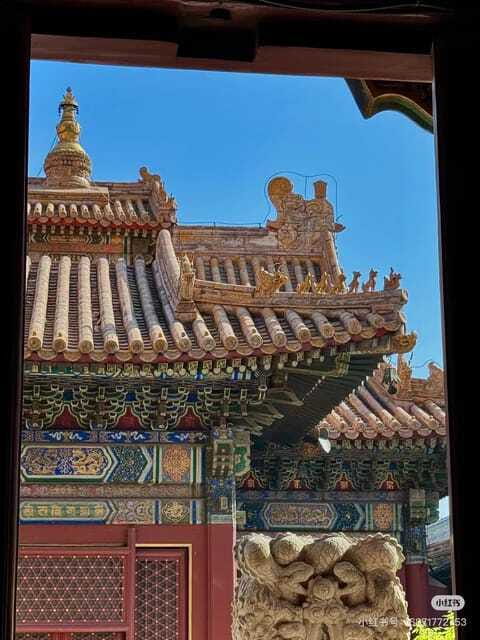
Once you are inside, you are not just sightseeing a single building. You are walking into an organized procession of space.
The temple complex includes three exquisite archways and key structures along the route. Early on, you will run into notable points like Zhaotai Gate, plus the Bell Tower and Drum Tower. Even if you do not know what the bells or drums mean in a ritual sense, you can still appreciate the symmetry and ceremony built into the layout.
Then you move toward Yonghe Gate. This is a good moment to slow down. The complex is designed so courtyards gradually narrow from south to north, and the heights of halls increase in sequence. That means your sense of scale changes as you go. If you rush, you miss that shift.
Tip: I like to treat the first stretch as orientation. You are checking your route, spotting where the main halls are, and learning the rhythm of the space. Once you understand the flow, the rest of the visit becomes much more satisfying.
Same city, a very different kind of day:
- Beijing: Mutianyu Great Wall Daily Tour with Ticket & Lunch
★ 5.0 · 3,056 reviews - All-Inclusive Tour: Tiananmen Square, Forbidden City, Great Wall
★ 5.0 · 2,873 reviews - MuBus: Mutianyu Great Wall ENG/ESP/RUS Guided Bus Tour
★ 5.0 · 2,361 reviews - 4-Hour Small Group Tour to Forbidden City with Entry Tickets
★ 5.0 · 1,863 reviews
Three Archways and the Way the Grounds Guide Your Eyes
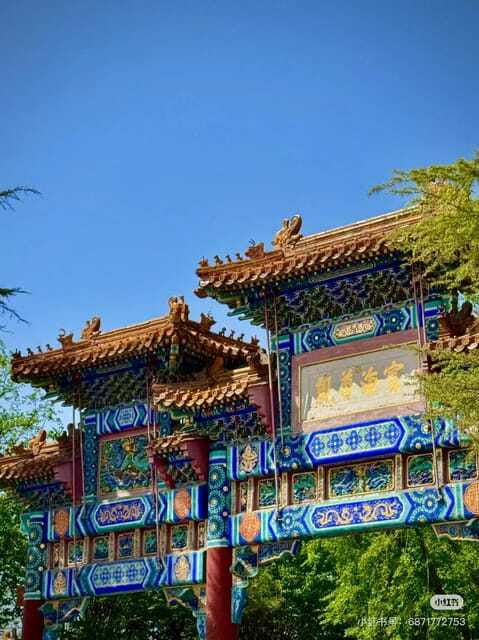
The temple’s archways are not just decorative. They act like visual checkpoints. Think of them as chapters. Each archway frames the next segment of the complex, so you always feel like you are moving forward through something intentional.
As you go deeper, the courtyards narrow. That “tightening” effect is one of the easiest layout clues to notice, even if you are not reading plaques. It compresses your space and keeps your attention on the path and the next major hall.
If you are the kind of person who loves architecture but hates getting lost, you will like this. The design gives you a built-in route. You do not need to hunt for the next place.
Also, remember that this is still tied to Tibetan Buddhism. You might notice symbolism in materials, painted surfaces, and the way the halls are organized around worship. Even when you cannot translate the details, you can feel the purpose in the placement.
Five Main Halls: What to Look For in Each Stop
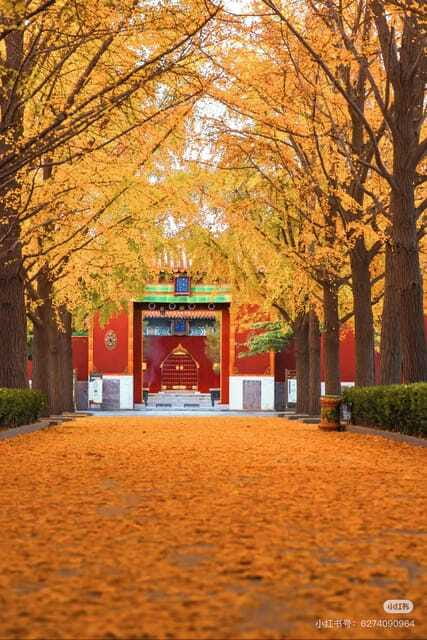
This is where your one-day visit earns its keep. The complex is arranged around five main halls, with several important buildings connected to the main route.
Grand Hall (Hall of Great Buddha)
This is the big anchor. The Grand Hall (Hall of Great Buddha) is the place where you most clearly see the temple’s ceremonial scale. I find these larger spaces do two things at once: they impress you visually, and they also tell you how the rest of the complex functions. In Yonghegong, the halls are staged so later spaces feel taller and more formal as you proceed.
If you want a “main event,” start here once you are warmed up. You will get more out of it if you have already walked through a gate and a courtyard or two.
Yongyou Hall
Next is Yongyou Hall, which sits within the chain of main halls that make up the heart of the visit. This is a good stop to slow down and look around, because hall details often change your impression. In other temples, smaller halls can feel like side rooms. Here, the layout keeps them in the main procession, so you get a more even experience than a quick hit-and-run sightseeing route.
Hall of the Wheel of the Dharma
Then you reach the Hall of the Wheel of the Dharma. Even if you do not know the exact religious meaning, the name points you toward themes tied to teaching and practice. I like stopping here to take in how the hall setting supports the idea of ongoing teaching rather than just a single viewing moment.
It is also a place to pause from the heavy visual impact of the biggest hall, so your brain can reset.
Pavilion of Ten Thousand Blessings
Finally, you arrive at the Pavilion of Ten Thousand Blessings. This is a calmer, more reflective stop in the visitor flow. The complex ends in a way that feels like a completion of the courtyard procession, not a random “finish line.”
If you are visiting as a couple or traveling with family, this is also a nice point to compare what each person thought was most impressive. People tend to remember different halls based on what they were looking for.
Tibetan Buddhism Meets Traditional Chinese Architecture, and You Can Spot It
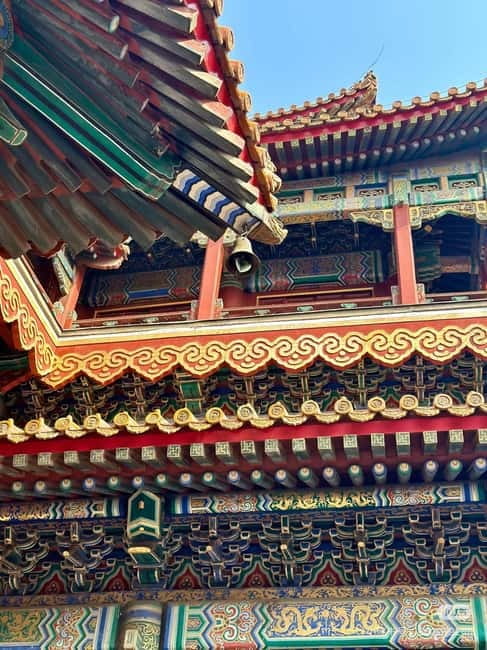
The temple is known for blending Tibetan Buddhism with traditional Chinese architectural features. What does that mean for you while you are walking?
First, it means the design does not behave like a purely Tibetan complex, and it does not feel like a purely Han Chinese courtyard palace either. Instead, the temple’s identity shows up in the combination of layout logic, hall staging, and the kind of ceremonial framing you see through the archways and gates.
Second, you can track cultural influence through the setting. The temple is described as reflecting elements connected to Han, Manchu, Mongolian, and Tibetan ethnic groups. Even when you cannot “prove” each influence visually, you can see the overall effect: this is a state-level kind of temple complex, built with major resources and designed for visitors to move through ceremony in a structured way.
Lastly, the narrowing courtyards and increasing hall heights are not just design tricks. They are part of how the visitor experience builds tension, focus, and scale. You end up with a natural arc, where the complex grows grander as you go.
Timing Matters: Opening Hours, Last Admission, and That Entry Cutoff
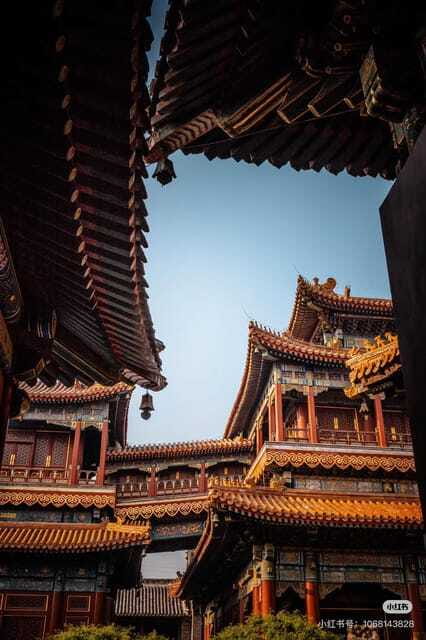
This temple is open on a seasonal schedule.
- Summer and autumn (April 1 to October 31): 9:00 AM to 5:00 PM, last admission at 4:30 PM, and entry ends as the grounds are cleared by 5:00 PM.
- Winter (November 1 to March 31): 9:00 AM to 4:30 PM, last admission at 4:00 PM, and entry ends as the grounds are cleared by 4:30 PM.
One extra note to take seriously: there is a mention that stop entering at 16:00. That means even if you think you are on time, you should treat late afternoon like it is risky.
My advice: aim to arrive around opening time or at least well before the final admission. If you arrive at the edge of the day, you will spend energy checking the clock instead of looking closely at the halls and towers.
Price and Value: Is $12 Worth It?
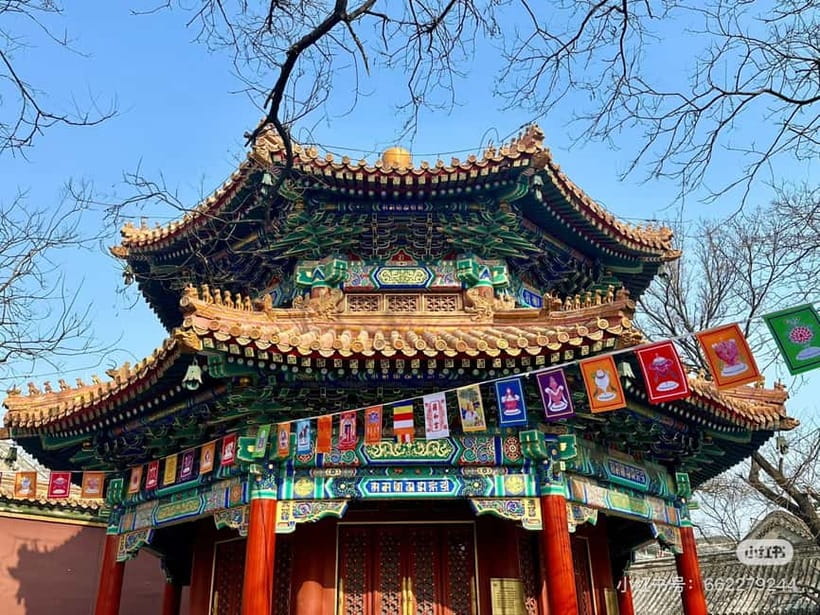
$12 per person for a one-day temple visit sounds almost too easy. Here is why it can be worth it.
You are paying for the Yonghegong Lama Temple ticket plus an information service fee. You are also getting the option of an English live tour guide, and the experience runs with a small group setup. For many visitors, the value is less about “one ticket price” and more about how the ticket removes friction and keeps your time inside the complex.
If you are short on time in Beijing, that matters. Yonghegong is one of those places where taking a little longer improves the experience. Pre-booking helps you do that without getting stuck in administrative delays.
If you are traveling very independently and you do not care about any guided context, you may feel the guide is optional. Still, the ticket value and the structure of the visit are strong reasons this can be a good use of one day.
What to Bring, and Simple Rules That Affect Your Visit
You will need a passport. That is not the usual “carry it just in case” instruction. Plan to have it with you.
There are also clear on-site rules: alcohol and drugs are not allowed, and making fire is not allowed. These rules are straightforward, but they can affect what you pack in your bag. Keep it simple.
Also, note that this experience is not suitable for wheelchair users. The layout and walking needed through courtyards and halls likely make it hard to manage comfortably if you need wheelchair access.
Who This Ticket Fits Best in Your Beijing Plan
This is a solid fit if you:
- Have only one day for a temple stop and want a structured route.
- Like architecture and want to see the Tibetan-Buddhist plus Chinese layout blend in a single visit.
- Appreciate having English interpretation so you spend more time looking and less time guessing.
It may not fit you as well if you:
- Need wheelchair accessibility.
- Are planning an ultra-late afternoon arrival, because the temple has last admission cutoffs and ground clearing rules.
- Prefer completely unguided sightseeing. The tour is designed to be understandable with a guide available.
Should You Book This Yonghegong Lama Temple Guided Ticket?
Book it if you want a smooth, one-day temple visit with less hassle and a clear walking route through gates, archways, towers, and the main halls. For the price, you are getting entry plus the chance to add English context from a live guide, and the complex is big enough that a structured visit really helps.
Skip or reconsider if you are late-day dependent, or if wheelchair access is essential. The temple’s visitor flow is tied to its courtyards and hall sequence, so you will want to match your mobility needs to that reality.
If you are trying to make Beijing feel real, not like a rushed checklist, Yonghegong is one of the best uses of a day. Get in early, bring your passport, and let the courtyards and hall heights do the storytelling for you.
FAQ
Where is the Yonghegong Lama Temple?
It is located at No. 12 Yonghegong Street, Dongcheng District, Beijing.
How do I get there by metro?
Take metro line 5 and get off at Yonghe Lama Temple station.
What are the opening hours?
Summer and autumn (April 1 to October 31): 9:00 AM to 5:00 PM, last admission at 4:30 PM.
Winter season (November 1 to March 31): 9:00 AM to 4:30 PM, last admission at 4:00 PM.
When does entry stop?
Entry ends when the grounds are cleared. Summer and autumn are cleared by 5:00 PM, and winter is cleared by 4:30 PM. There is also a note to stop entering at 16:00.
Is a guide included, and what language is offered?
A live tour guide is available in English. The activity is listed as with guide (optional).
What is included in the ticket price?
It includes Yonghegong Lama Temple tickets and an information service fee.
What do I need to bring?
You should bring your passport.
Is the temple accessible for wheelchair users?
It is listed as not suitable for wheelchair users.
What should I not bring or do?
Alcohol and drugs are not allowed, and making fire is not allowed.
Recently added around Beijing
- Private Transfer to Mutianyu Great Wall with professional driver★ 5.0 · 19 reviews
- Wild Great Wall Hikes★ 5.0 · 10 reviews
- camp on the Great Wall overnight with sunrise and sunset on the wall★ 5.0 · 11 reviews
- Beijing: to Xi’an Terracotta Day Tour by Roundtrip Bullet Train★ 5.0 · 9 reviews
- Beijing Airport Layover Tour to Mutianyu Great Wall★ 5.0 · 4 reviews
- Private Wild Great Wall Hiking tour at Simatai (Challenging)★ 5.0 · 16 reviews
- Beijing: Mutianyu Great Wall and Tea House Private Tour★ 5.0 · 11 reviews
- Simatai Great Wall & Gubei Water Town Private Trip English Driver★ 5.0 · 7 reviews
Guided, compared.

MuBus: Mutianyu Great Wall ENG/ESP/RUS Guided Bus Tour
Read our review →
Beijing Forbidden City Ticket Booking (Optional: guide service)
Read our review →
Forbidden City&T-Square Small GroupTours w/ ticket(Eng/Esp Guide)
Read our review →
Summer Palace Entry Ticket and Optional Guided Tour
Read our review →
Terracotta Army Ticket & Guided Bus Tour with Options
Read our review →
Hidden Gems Guided Food Tour with Beer and Tastings
Read our review →