

Reviewed · GIANT PANDA TOURS
Chengdu:Panda Base Entry Ticket & English PDF Guidebook
Pandas in Chengdu move on their own schedule. This ticket gives you direct passport entry plus an English PDF guidebook to help you find the best viewing flow. The big payoff is timing, because pandas are usually most active early and late in the day.
Your main thing to watch is logistics inside the huge grounds, including lots of walking and the option of paying extra for an internal shuttle bus. If you show up prepared, you’ll turn that sprawl into a great day instead of a chore.
In This Review
- Key points to know before you go
- Entering The Chengdu Panda Base With Passport Ticketing
- The English PDF Guidebook: Your Map, Routes, and Feeding-Time Timing
- Choose Your Time Slot: Morning Panda Action vs Afternoon Pace
- Morning slot: when pandas are more likely to be active
- Afternoon slot: a relaxed pace, sometimes shorter outdoor moments
- Midday reality check (especially in summer)
- What You’ll See Inside the 3.07 km² Base
- Natural-style bamboo areas and streams
- Multiple panda enclosures, plus indoor sections
- Sun and Moon maternity rooms
- Giant Panda Museum
- Panda Tower and other major areas
- Red pandas too
- Feeding Times and Panda Viewing Strategy That Works in Real Life
- Morning strategy: position yourself early
- Summer strategy: follow the pandas indoors
- Quiet behavior rules: small actions that make a difference
- Walking, Shuttle Buses, and How to Pace a Big Day
- Price and Value: Why This $20 Entry Option Can Be Worth It
- Who This Ticket Is Best For
- Should You Book This Chengdu Panda Base Entry Ticket?
- FAQ
- What’s included with the Chengdu Panda Base entry ticket?
- Do I need a paper ticket to enter?
- How long does the experience last?
- Are there morning and afternoon entry options?
- Is an internal shuttle bus included?
- Can I bring pets or a bike?
- What should I bring with me?
- Is there a physical tour guide included?
- Is there free cancellation?
Key points to know before you go

- Passport as your ticket: your original passport is what you show at the entrance to get in fast
- English PDF that actually helps: park map, route suggestions, feeding-time timing, and tips
- Two time slots, two vibes: morning aims for active behavior, afternoon is often calmer
- Crepuscular animals, clear strategy: plan around early morning and late afternoon activity
- Sun and Moon maternity rooms plus more: you’ll pass major panda-focused areas and even the museum
- Bring your ID and skip the extras: pets and bikes are not allowed
Entering The Chengdu Panda Base With Passport Ticketing

Chengdu Research Base of Giant Panda Breeding is about 10 km from the city center, and it is big. The good news is that your ticket workflow is simple. You do not need a paper voucher. With this entry option, your original passport acts as the ticket, so you can go straight to the entrance check and save time versus people hunting for printed passes.
For me, that matters because the base is not one tight museum room where you can lose time and still catch everything. It is a 3.07 km² site with panda enclosures spread out through natural-style bamboo forests and streams. Less time stuck at a ticket line means more time for the part you actually came for.
You will also want your ID ready. The activity data specifically says to bring your passport or ID card. Do not wait until the last second at the gate. Have it in hand, keep it clean and readable, and you’ll move through smoothly.
More Panda Tours in Chengdu & Sichuan
- Chengdu: Giant Panda Breeding Research Base Ticket
★ 4.5 · 580 reviews - Private Half-Day Chengdu Panda Breeding Center Tour with Optional Volunteer
★ 5.0 · 353 reviews - Private Chengdu Day Tour: Giant Pandas and Jinsha Site Museum
★ 5.0 · 142 reviews
The English PDF Guidebook: Your Map, Routes, and Feeding-Time Timing
This experience includes an English PDF guidebook, and that is the real “tour” value. You get practical tools like a park map and suggested routes, plus feeding-time guidance and on-the-ground tips.
Why that helps: panda visiting is a little like wildlife watching and a little like theme park navigation. You are not just strolling and hoping. Your best moments often depend on where the pandas choose to be and what time you arrive.
The PDF is built for that. It is designed to help you:
- follow an efficient path across the grounds
- line up with likely feeding windows
- adjust your route based on what you are seeing
Also, it includes tips that can keep you from accidentally doing the wrong thing at the wrong moment, like staying in the open when you should pivot to shaded indoor enclosures during summer heat.
Choose Your Time Slot: Morning Panda Action vs Afternoon Pace

You get managed entry time slots, with a morning and an afternoon window. The park information you provided lines up panda behavior with human timing, and it is the key to getting the most out of a one-day visit.
Morning slot: when pandas are more likely to be active
Giant pandas are crepuscular, meaning they tend to be more active around dawn and dusk. The best viewing strategy is to aim for the morning, when pandas are waking up and feeding on bamboo and shoots.
Your morning window is roughly 07:30 to 10:00 for active behavior, with a morning session that runs until about 12:00. This is when you are more likely to catch climbing, rolling, and playful moments. If your goal is photos and lively panda behavior, morning is your safest bet.
Practical tip: I’d arrive early, ideally before 9:00 am. That gives you time to orient, walk to the first cluster of enclosures, and still be in position before the day’s activity shifts.
More panda base visits:
- Dujingyan Panda Sanctuary Half day tour option panda volunteer
★ 5.0 · 106 reviews - Visiting Dujiangyan Yaan Wolong Panda Base Optional Volunteering
★ 5.0 · 105 reviews - Leshan Grand Buddha Scenic Area and Panda Park Day Tour
★ 4.7 · 67 reviews - Dujiangyan Panda Volunteering Experience with Lunch
★ 5.0 · 66 reviews
Afternoon slot: a relaxed pace, sometimes shorter outdoor moments
Afternoon visiting centers on a slower flow, with a later session that runs from about 12:00 to 17:00. There is usually a short feeding session around 14:00, and some pandas may come outside briefly.
This can be great if you want a calmer visit, less sprinting, and you prefer to take breaks. It is also useful if you travel with family members who do not love long, early starts.
Midday reality check (especially in summer)
Between 11:00 and 15:00, especially when temperatures climb above 26°C, many pandas rest indoors. That means outdoor activity can drop off. So if you visit in summer, the best approach is to plan around indoor enclosure time during the hottest hours.
In spring, autumn, and mild winter days, you tend to get more outdoor time. Translation: your viewing plan changes by season, even when your ticket does not.
What You’ll See Inside the 3.07 km² Base
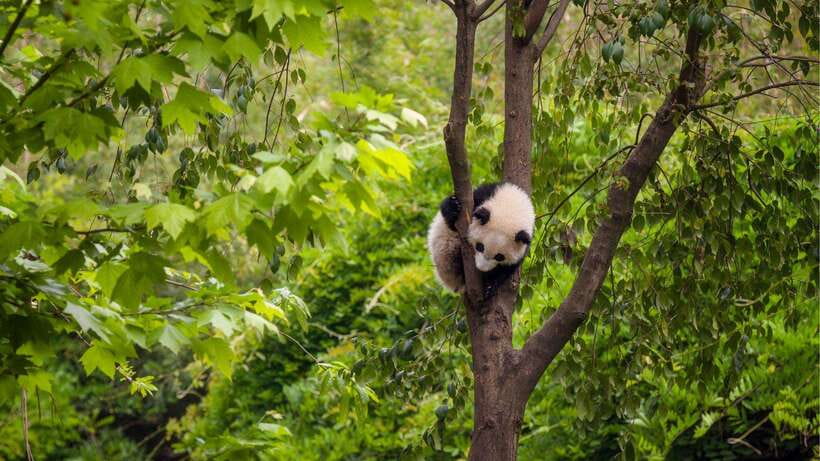
The base is not just pandas in a line. It is a full conservation and research site, established in 1987 and known as the world’s largest panda breeding and conservation center. As of 2024, it houses over 260 giant pandas. That scale shapes your experience, because you are moving through multiple themed zones.
Here are the highlights built into the grounds, based on the information you shared:
Natural-style bamboo areas and streams
The base uses natural-style bamboo forests and streams. That does two things for you. First, it makes the environment feel more like what pandas actually live in, not a sterile zoo setting. Second, it spreads viewing points across walkable sections, which is why route planning helps.
Multiple panda enclosures, plus indoor sections
You can observe pandas across several enclosures. Depending on season and time, you may spend more time outdoors or shift to indoor enclosures. The PDF guidebook is designed to help you make that shift instead of wasting time walking into a heat lull.
Sun and Moon maternity rooms
These maternity rooms are a big draw. They are panda-focused areas tied to breeding and care. Even if you do not catch every moment, they add variety to the day and make the visit feel connected to the conservation work, not just feeding shows.
Giant Panda Museum
If you want context, the museum is there. It gives you a chance to learn about endangered species protection and panda research themes. It is a smart stop when you need a break from walking or when midday weather pushes you indoors.
Panda Tower and other major areas
There is also a Panda Tower, which gives your route another “anchor” so your day does not feel like random wandering. A tower area can also help you regain orientation because you can use it as a landmark.
Red pandas too
One of the fun surprises here is that the base includes other rare animals, like red pandas. That matters because it reduces the chance you feel bored if a particular panda enclosure is quiet at that moment.
Feeding Times and Panda Viewing Strategy That Works in Real Life

The big promise here is “best panda viewing,” and the key is how you time your movement. Giant pandas are not always out and about. The goal is to be in the right place when they are more likely to show up active.
Here’s how I’d apply the plan you were given:
Morning strategy: position yourself early
With morning activity strongest between 07:30 and 10:00, you should not spend your first hour figuring out the map. Use the PDF route guidance to choose where you start, then walk there promptly.
Aim for active behavior. That is when pandas are more likely to climb, roll, and play. If your camera is ready, this is where you’ll get the most satisfying moments.
Summer strategy: follow the pandas indoors
In summer, when temperatures exceed 26°C, pandas often rest indoors during late morning into afternoon. That means your “best view” might be inside, not outside. Your PDF guidebook and route tips help you do that without guessing.
Quiet behavior rules: small actions that make a difference
The base rules you shared are straightforward, and they protect both you and the animals:
- do not make loud noises
- do not use flash photography
- do not feed the pandas
I treat these as part of the viewing experience. When you keep things calm, you are more likely to see normal behavior rather than a sudden retreat.
Walking, Shuttle Buses, and How to Pace a Big Day

A common reality at the Chengdu base is distance. The grounds are huge, and the experience data you provided even notes an internal park shuttle bus that costs 10 RMB, which is not included with the ticket.
So you should plan for one of two styles:
- Walk most of the day and accept longer distances, especially if you love getting steps in and want to keep sightlines flexible.
- Use the shuttle bus when needed if your legs start to protest, or if midday heat makes walking less pleasant.
I like to think of it this way: in a large site, pacing is part of enjoying pandas. If you force nonstop walking, you may arrive at the next enclosure tired, cranky, and less observant. If you use breaks and optional transport strategically, you stay fresh for the moments that matter.
Also, arrive before 9:00 am if possible. Early starts are not just about panda activity. They also reduce the stress of negotiating a big park before you’re hot, hungry, and distracted.
Price and Value: Why This $20 Entry Option Can Be Worth It

This entry ticket is priced at about $20 per person for the entry plus an English PDF guidebook.
What you get for that price is not just a stamp. The value is in two places:
- Skip the ticket line with passport entry, which is meaningful at a busy attraction
- An English PDF guidebook designed around routes and panda timing, not just generic facts
What you do not get is also clear. There is no physical tour guide, no hotel transfer, and meals are not included. The internal shuttle bus is 10 RMB and not included, so factor that in if you think you’ll use it.
So the real value question for you is simple:
- If you can use the PDF to guide yourself, the ticket price feels efficient.
- If you prefer a person-led tour to handle pacing and routing, you might decide you want a different format.
Given the self-guided structure and the time-slot approach, this ticket makes the most sense for travelers who like autonomy but still want a solid plan.
Who This Ticket Is Best For

This entry option fits best when your style matches the format.
You will likely love it if:
- you want panda viewing without paying for a full guided tour
- you prefer to move at your own pace but still want direction
- you care about timing and want help aiming for likely activity windows
- you can bring and present your passport smoothly at the entrance
It may be less ideal if:
- you expect a guide to lead you step by step (there is no physical guide included)
- you dislike managing your own route in a large park
One more practical note: pets and bikes are not allowed, so plan for that if you are traveling with gear or family members who rely on stroller-like setups.
Should You Book This Chengdu Panda Base Entry Ticket?

If you want the easiest path into Chengdu’s panda conservation hub with strong planning support, I think this is a smart choice. The passport-based entry helps you get past one of the least fun parts of popular attractions, and the English PDF is the kind of add-on that saves time when you’re staring at a giant park and trying to decide where to walk next.
Book it if you are going to use the time slots and you will actually follow the route and feeding-time guidance. If you can do that, the day becomes organized around panda behavior, not around random wandering.
Skip it if you want a guided group experience with in-person direction. In that case, you might get more comfort and less thinking from a different type of tour.
In a sentence: this is best for independent visitors who want to see more pandas, with less hassle.
FAQ
What’s included with the Chengdu Panda Base entry ticket?
Your ticket includes entry to Chengdu Research Base of Giant Panda Breeding and an English PDF guidebook.
Do I need a paper ticket to enter?
No. Direct passport entry is part of the experience, meaning you use your original passport at the entrance.
How long does the experience last?
It is listed as a 1-day experience.
Are there morning and afternoon entry options?
Yes. The experience offers morning and afternoon time slots, with different viewing expectations.
Is an internal shuttle bus included?
No. The internal park shuttle bus costs 10 RMB and is not included.
Can I bring pets or a bike?
No. Pets and bikes are not allowed.
What should I bring with me?
Bring your passport or ID card.
Is there a physical tour guide included?
No. This includes entry and an English PDF guidebook, not a physical guide or in-person tour.
Is there free cancellation?
Yes, you can cancel up to 24 hours in advance for a full refund.
Recently added around Chengdu
- Visiting Chengdu Panda Base in a Half Day★ 5.0 · 4 reviews
- Classsic sichuan Opera at sichuan Provincial Theater★ 5.0 · 4 reviews
- Tea Village in lost Town and Buddha 1 day tour★ 5.0 · 32 reviews
- Skip the Line: Sichuan Opera Chengdu Ticket★ 4.0 · 8 reviews
- Sichuan Opera Show with Hotel Pickup★ 5.0 · 3 reviews
- Panda, Leshan, and Emei Mountain 2-day tour★ 5.0 · 4 reviews
- Private Half-Day Tour in Sichuan Culture Show with Hot Pot Dinner in Chengdu★ 4.5 · 15 reviews
- Sichuan Opera with face-changing at Sichuan opera theater★ 4.5 · 6 reviews
Giant Panda Tours, compared.


Private Half-Day Chengdu Panda Breeding Center Tour with Optional Volunteer
Read our review →
Beijing Historical Tour II including Summer Palace, Lama Temple & Panda Garden
Read our review →
Private Chengdu Day Tour: Giant Pandas and Jinsha Site Museum
Read our review →
Dujingyan Panda Sanctuary Half day tour option panda volunteer
Read our review →
Visiting Dujiangyan Yaan Wolong Panda Base Optional Volunteering
Read our review →
Beijing Private Tour to Temple of Heaven, Panda House and Summer Palace
Read our review →Browse the lists this tour appears in