
Reviewed · MUSEUMS
Chengdu: Du Fu Thatched Cottage Museum Ticket for Adult
Tang poetry, in walking distance. The Du Fu Thatched Cottage Museum lets you connect Tang poems to the actual place Du Fu lived in Chengdu, and I love how the story is tied to real locations, not just lines on a page. I also love the peaceful gardens and preserved Ming and Qing halls, because it turns Tang poetry into something you can walk through. One catch: booking and entry require your passport ID, so have it ready.
This is an adult ticket with admission included, and the setup is easy: no physical ticket needed, you show your ID or e-voucher at the main gates, and the visit window runs 09:00 to 18:00. I like that it is limited to a small group of 10 participants, which helps you actually see things instead of being swept along.
Inside, you move along a central axis from the Front Gate and Grand Lobby to the Poetry History Hall, then continue to the Gongbu Shrine and the reconstructed thatched hut area. The grounds cover nearly 300 acres with bamboo groves and streams, so wear shoes that can handle a real day of walking, and bring your passport even if you are using your phone for everything else.
In This Review
- Key things I’d highlight before you go
- Location and what kind of visit this is on Du Fu’s site
- Walking the central axis: gate to hall to shrine
- The Poetry History Hall: where Du Fu becomes a person again
- Recreating Du Fu’s thatched hut: small, but meaningful
- Gardens, bamboo groves, and stream scenery you can actually feel
- Gongbu Shrine: Du Fu honored with fellow poets
- The museum collection: 30,000-plus items, for serious poetry fans
- How much time to plan for a one-day ticket
- Price and value: is $15 a good deal?
- Who this fits best in your Chengdu plan
- Should you book this Du Fu Thatched Cottage Museum ticket
- FAQ
- What is included in the Du Fu Thatched Cottage Museum ticket?
- Do I need a physical ticket to enter?
- What do I need to book and bring for entry?
- What are the entry hours for this museum ticket?
- Where can I enter the museum?
- Is there free cancellation?
Key things I’d highlight before you go
- Du Fu’s Chengdu years in numbers: he arrived in winter 759 AD, lived nearly four years, and wrote over 240 poems here
- Huanhua Stream setting: the thatched hut area is tied to where Du Fu built his home near the stream
- Ming and Qing architectural layers: the site preserves features from Ming-era (1500 AD) and Qing-era (1811 AD) structures
- Poetry History Hall as the centerpiece: a Du Fu statue plus plaques with famous calligraphy
- Gongbu Shrine and a poet circle: Du Fu is honored alongside poets Huang Tingjian and Lu You
- A museum collection that goes deep: over 30,000 items including ancient editions, manuscripts, and translations
Location and what kind of visit this is on Du Fu’s site
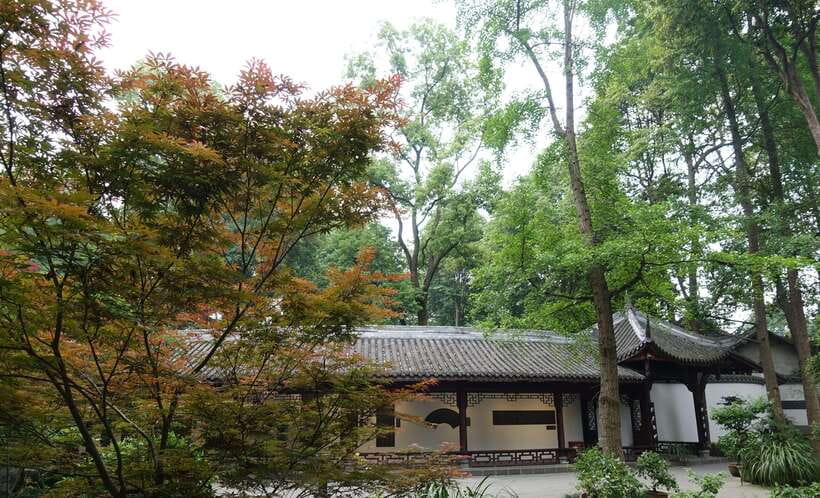
Du Fu Thatched Cottage Museum is at 37 Qinghua Road, in Chengdu’s Qingyang District. This is not a quick “snap a photo and leave” stop. You are touring a poetic legacy site that mixes historic architecture, a classical garden, and a museum with serious holdings.
Think of it as three things at once. First, it is a memorial to Du Fu during his Chengdu stay after he fled the chaos of the An Lushan Rebellion. Second, it is a very classical Chinese garden experience with bamboo and water. Third, it is an exhibition space with artifacts that support what the plaques and halls are trying to teach you.
More museum visits in Chengdu:
- Private Chengdu Day Tour: Giant Pandas and Jinsha Site Museum
★ 5.0 · 142 reviews - Sanxingdui Museum+Chengdu Panda Base or Jinsha Site Tour
★ 5.0 · 10 reviews - Sanxingdui Museum Small Group Tour with Optional Panda Base
★ 5.0 · 3 reviews
Walking the central axis: gate to hall to shrine
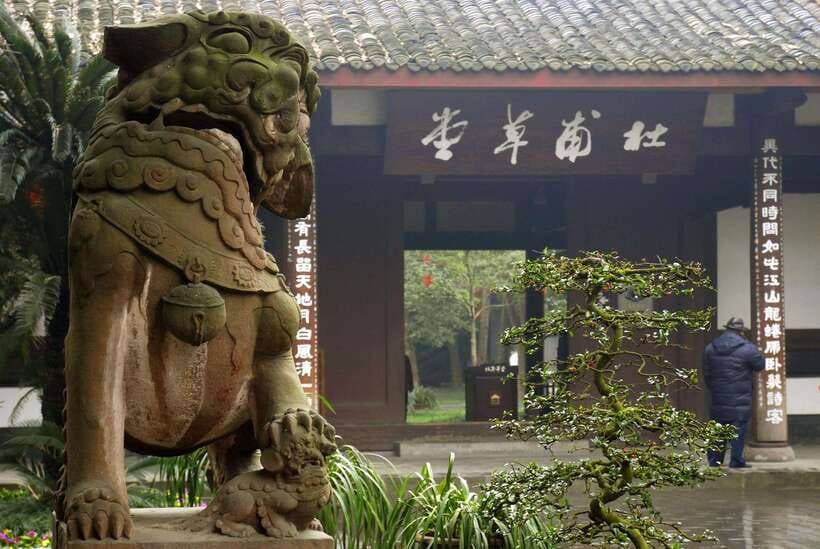
One of the smartest ways to enjoy the grounds is to follow the site’s planning. The main structures are aligned along a central axis, with symmetrical corridors and auxiliary buildings on both sides. That layout is more than pretty geometry. It helps you understand how the site guides your attention from “entry into the story” to “centerpiece of poetry” to “honoring the poet and his peers.”
You start at the Front Gate, then continue into the Grand Lobby. These early spaces are where the site sets the mood. Take a moment here to slow down and notice the staging, because later you will appreciate why the most important stops sit where they do.
From there you head toward the Poetry History Hall, which is the core stop. After that, you continue through the Chaimen Gate and on to the Gongbu Shrine. The reconstructed Thatched Hut Area sits within this overall narrative, so you should not treat it like a random photo spot.
Possible drawback: because everything is laid out in a planned sequence and the grounds are very large (nearly 300 acres), you will cover more distance than you might expect from a “museum ticket.” If you only want a short cultural stop, this can feel like too much walking.
The Poetry History Hall: where Du Fu becomes a person again
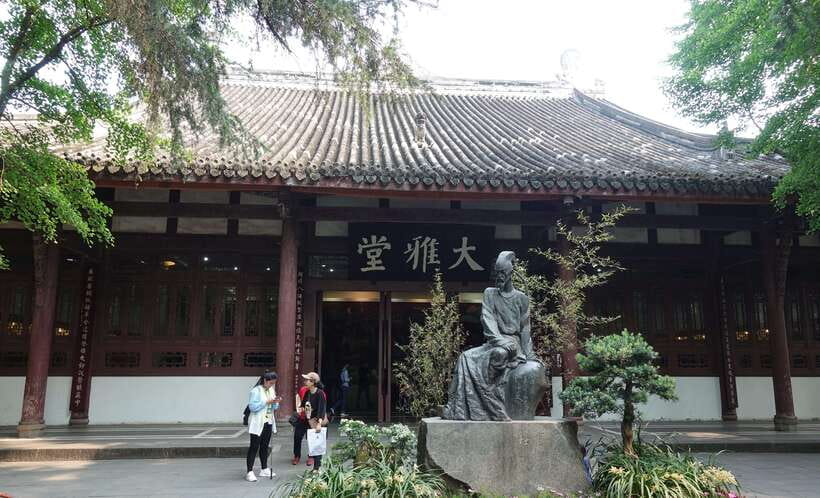
The Poetry History Hall is designed as the emotional and educational anchor. It houses a statue of Du Fu, and it uses plaques inscribed with famous calligraphy to frame his legacy. For me, this is where the “poet historian” title makes more sense. Du Fu is not presented only as a name. He is presented as someone whose writing recorded social reality while also carrying human emotion.
What I like here is the blend of art forms. You are looking at a historical figure, but you are also looking at Chinese calligraphy and the visual language that goes with it. Even if your reading skills are not at full power, you can still connect to the mood and intent through what is presented in the hall.
Tip: plan to spend extra time in this hall and not just rush through it. It is tempting to move fast so you can see everything else, but the Poetry History Hall is where you get the clearest “why this place matters” explanation.
Recreating Du Fu’s thatched hut: small, but meaningful
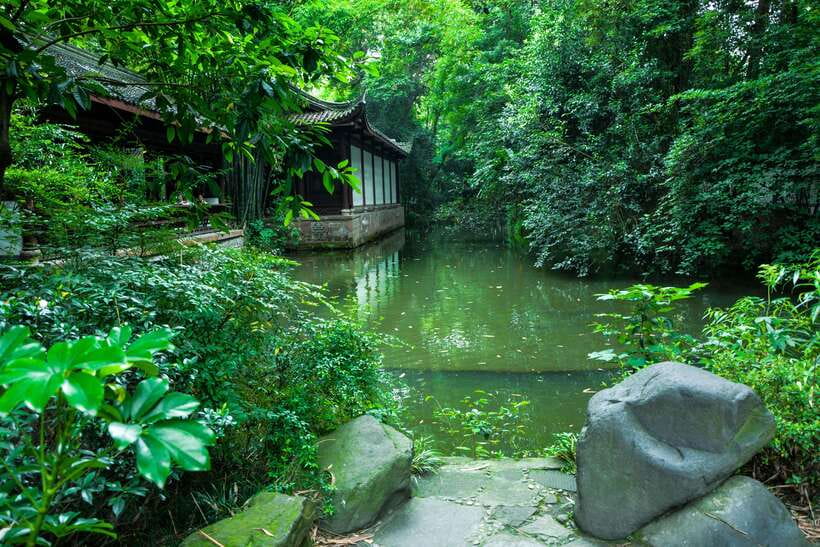
The museum includes a reconstructed Thatched Hut Area that replicates Du Fu’s rustic dwelling. This is the part that can surprise you. The thatched hut space is not about luxury or scale. It is about lived experience, daily routines, and the idea that a famous poet spent years dealing with real hardship.
You also get a direct geographic connection. The story ties the hut to Huanhua Stream, and that matters because gardens and water are doing more than decoration here. They help you visualize how a person might have worked, rested, and watched time pass in Chengdu during that period.
If you want a more grounded visit, this is where you slow down. Look closely. Notice how the hut area contrasts with the more formal halls and shrines. That contrast is part of the message.
A few more Chengdu days worth comparing
- Chengdu: Giant Panda Breeding Research Base Ticket
★ 4.5 · 580 reviews - Half-Day Chengdu Cooking Class with a Local Market Visit
★ 5.0 · 465 reviews - Tuktuk Food Tour Through Chengdu’s Local Eats
★ 5.0 · 435 reviews - Private Half-Day Chengdu Panda Breeding Center Tour with Optional Volunteer
★ 5.0 · 353 reviews
Gardens, bamboo groves, and stream scenery you can actually feel
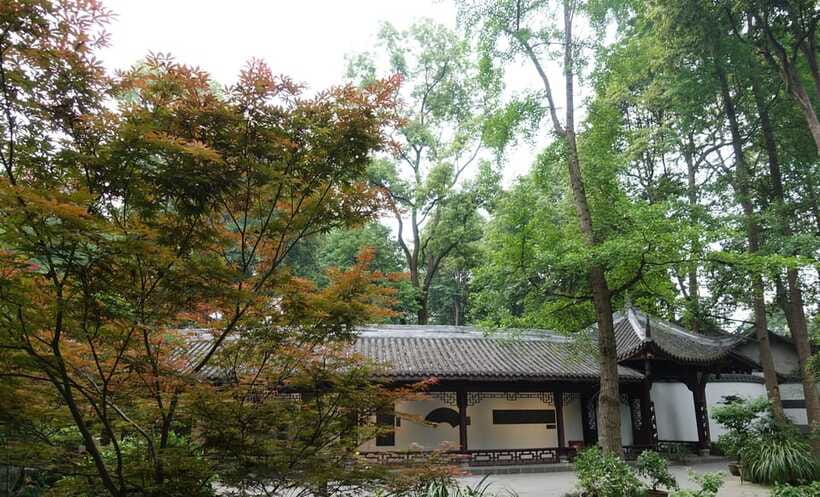
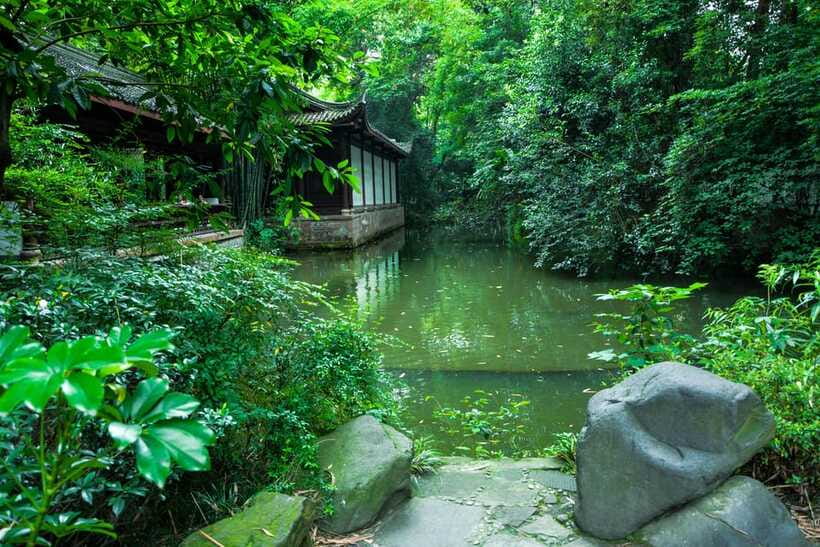
A big reason people remember Du Fu Thatched Cottage Museum is the scenery. The grounds are filled with lush gardens, bamboo groves, and flowing streams. This turns the site into something closer to a calm walk through literature than a hard-core museum day.
Classical Chinese garden design is meant to create a sequence of views. In practice, you will notice it as you move from open space to shaded paths to water-adjacent areas. The garden is not only pretty. It gives your brain a break from reading plaques and studying details, then brings you back refreshed for the next hall.
Practical note: you will be moving around a lot. Bamboo groves and stream paths can be easy to stroll for 10 minutes, then 20 minutes becomes 40. Build in that extra time unless you are determined to do a strict schedule.
Gongbu Shrine: Du Fu honored with fellow poets
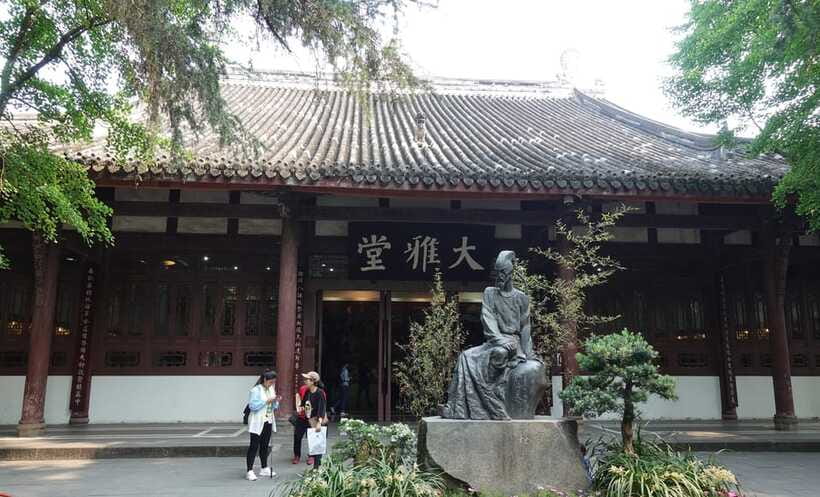
After the central poetry centerpiece, you head to the Gongbu Shrine. This shrine honors Du Fu alongside two other poets, Huang Tingjian and Lu You, who also resided in Sichuan. That pairing is helpful because it places Du Fu inside a broader poetic tradition tied to place.
I like that the shrine moves beyond a solo focus. Instead of treating Du Fu as an isolated legend, it frames him as part of a regional literary world. You are not just touring one man’s life. You are stepping into a network of writers shaped by the same region.
If you are the type who likes context, this stop is worth your time. Even if you cannot read every detail, you can still see how the shrine connects the poet community.
The museum collection: 30,000-plus items, for serious poetry fans
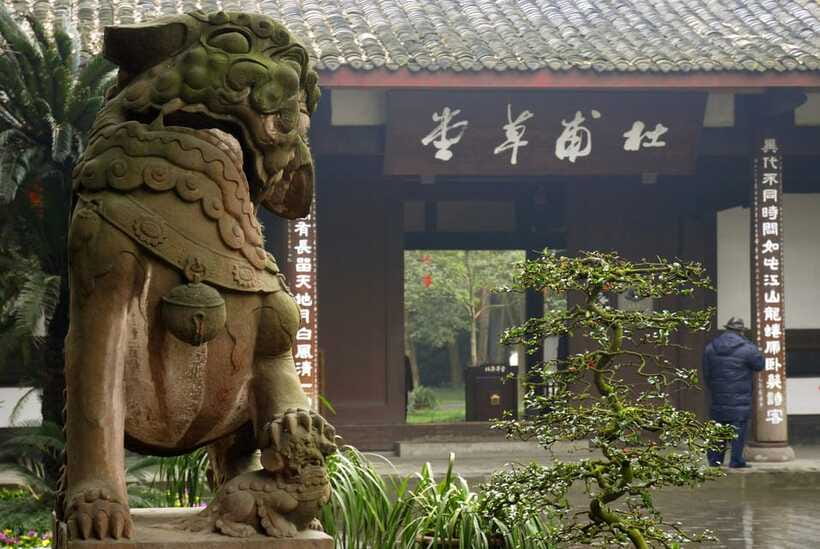
The museum side is substantial. It has over 30,000 items, including ancient editions, manuscripts, and translations of Du Fu’s works. That scale is one of the strongest value points if you care about the “how do we know what we know” side of history.
This is also where the visit can split into two styles.
- If you want atmosphere and story, you can keep it to the main halls, shrine, and garden spaces.
- If you want the scholarship side, you should set time aside to see more of the museum materials.
The reason this matters for your experience is simple: the site does not only show you Du Fu through statues and architecture. It supports the work with physical artifacts. Even if you do not read Chinese texts fluently, translations and presented materials can still help you understand what lines are coming from and why they were preserved.
Possible drawback: if you are not interested in manuscripts, editions, or translations, this part can feel like extra weight. You can still enjoy the grounds, but you might want to keep your museum browsing lighter.
How much time to plan for a one-day ticket
Your ticket is valid for one day, and the usage time is 09:00 to 18:00. The grounds cover nearly 300 acres, and the site is arranged around multiple major structures along the central axis. That combination adds up to a real time commitment.
I recommend treating it as a half-day to full-day visit depending on your pace. If you like slow walking and reading, plan for the longer end. If you want to prioritize the Poetry History Hall, Gongbu Shrine, and the garden highlights, you can cover the essentials without taking breaks every 10 minutes.
Also, wear shoes you trust. The garden paths and stream-adjacent areas are enjoyable, but they are still paths, and you will cover a lot of ground in a day.
Price and value: is $15 a good deal?
The adult price is $15 per person, and admission is included. For that cost, you are getting a lot more than a single indoor exhibit.
Here is the value logic I would use:
- You get a major historic memorial site tied to Du Fu’s real Chengdu years, not just a display.
- You get a classical garden environment with bamboo and water that turns the visit into a comfortable walk.
- You get a museum collection with 30,000-plus items that can reward deeper interest.
If you are a poetry fan, or if you want cultural Chengdu that is more thoughtful than shopping and food stops, this ticket is good value. If you only want a short museum hit, the time you spend walking could feel like the “cost” in effort rather than money.
Who this fits best in your Chengdu plan
This ticket works especially well if you like:
- Chinese literature history and the way place can explain a poem
- Gardens and heritage architecture
- Calm sightseeing that still feels meaningful
It may feel less ideal if:
- You only do fast, checklist-style sights
- You want minimal walking in one day
- You are not interested in Tang-era context or museum materials
Best match: travelers who enjoy slowing down and reading plaques, then taking a break in the bamboo and water scenery before heading to the next hall.
Should you book this Du Fu Thatched Cottage Museum ticket
I think you should book if you want a genuine cultural Chengdu stop that mixes history with a peaceful walk. For $15, you are paying for a full site experience: Du Fu’s Chengdu story, structured historic spaces, a reconstructed hut area, and a museum collection measured in tens of thousands of items.
If you hate walking or only want one or two quick interiors in a day, you might feel stretched by the nearly 300-acre scale. In that case, you could still enjoy the main axis highlights, but plan your pace carefully.
FAQ
What is included in the Du Fu Thatched Cottage Museum ticket?
Admission to the Du Fu Thatched Cottage Museum is included.
Do I need a physical ticket to enter?
No physical ticket is required. You can use your ID or e-voucher for direct verification.
What do I need to book and bring for entry?
Passport details are needed to book, and you should bring your passport.
What are the entry hours for this museum ticket?
The usage time is 09:00 to 18:00.
Where can I enter the museum?
Entry is available at all main gates of Du Fu Thatched Cottage Museum.
Is there free cancellation?
Yes, you can cancel up to 24 hours in advance for a full refund.
Recently added around Chengdu
- Visiting Chengdu Panda Base in a Half Day★ 5.0 · 4 reviews
- Classsic sichuan Opera at sichuan Provincial Theater★ 5.0 · 4 reviews
- Tea Village in lost Town and Buddha 1 day tour★ 5.0 · 32 reviews
- Sichuan Opera Show with Hotel Pickup★ 5.0 · 3 reviews
- Panda, Leshan, and Emei Mountain 2-day tour★ 5.0 · 4 reviews
- Skip the Line: Sichuan Opera Chengdu Ticket★ 4.0 · 8 reviews
- Sichuan Opera with face-changing at Sichuan opera theater★ 4.5 · 6 reviews
- Private Half-Day Tour in Sichuan Culture Show with Hot Pot Dinner in Chengdu★ 4.5 · 15 reviews
Museums, compared.

Tianmen Square, Forbidden City & Royal Museum Tours
Read our review →
Half-Day Mini Group Xian Tour to Terracotta Warriors Museum
Read our review →
Beijing:Jingshan Park (Palace Museum Garden) Ticket
Read our review →
Private Chengdu Day Tour: Giant Pandas and Jinsha Site Museum
Read our review →
Private Xi’an Tour: Terracotta Warriors, Hanyangling Museum, Cave Homes
Read our review →
Beijing Half Day: National Museum of China In-depth Tour with Subway Transfer
Read our review →
Terracotta Warriors Museum Ticket with Professional English-speaking tour guide
Read our review →Browse the lists this tour appears in