Reviewed · TICKETS
Confucius Temple and Imperial College Entrance Ticket
Turn history into a walk you can handle.
This visit to the Temple of Confucius and Guozijian Museum is interesting because it is not just buildings, you get the chance to see how education, power, and Confucian ideals were put on display for centuries. I especially like the easy-to-follow English support on site, and I like the sheer focus on the Imperial Examination through hundreds of stone steles. One thing to consider, if you are unlucky with scanning at the gate, have a moment to double check both QR codes before you step forward, since there can be a hiccup where only one code scans.
You’ll find this complex close to the Lama Temple area, which makes it a smooth add-on to a Beijing day without a lot of logistics stress. If you select the guided option, you get an English-speaking guide, otherwise the museum is set up so you can still make progress at your own pace. Either way, plan on real reading time, because the steles and halls reward you when you slow down.
If you want a compact, meaningful Beijing stop that feels distinctly Chinese and not just “another old temple,” this one is hard to beat for the price.
In This Review
- Key highlights to look for
- Temple of Confucius and Guozijian in one ticket: what you are really seeing
- What I like most about the Temple of Confucius: worship plus names carved in stone
- Guozijian Museum: the imperial college that turned schooling into a system
- How the experience works with or without an English guide
- Time it like a real museum visit, not a quick temple stop
- Price and value: why $8 can feel like a bargain here
- Where this fits in a Beijing day near Lama Temple
- Booking and ticket basics you should know
- Who should book this, and who might skip it
- Should you book Confucius Temple and Guozijian entrance?
- FAQ
- How much does the Confucius Temple and Guozijian Museum ticket cost?
- How far in advance should I book?
- What is the total time for the experience?
- Is an English-speaking guide included?
- Do I need to worry about the ticket QR code timing?
- Is this a private experience?
- Is there free cancellation?
Key highlights to look for
- Stone steles tied to the Imperial Examination, great for understanding how scholars were recorded and honored
- Confucius Temple built in 1302, a direct link to official worship and scholarship
- Guozijian as an imperial college site, used across Yuan, Ming, and Qing dynasties
- Optional English-speaking guide, helpful if you want context beyond the labels
- Pre-paid entrance ticket, designed to reduce friction at the gate
- English exhibits and instructions across the site, so you are not stuck in silence
Temple of Confucius and Guozijian in one ticket: what you are really seeing
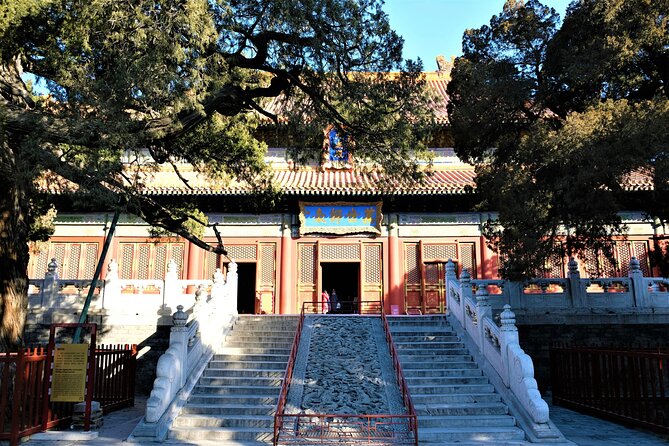
The heart of this experience is simple: you are walking through a Confucian sacred site and then moving into Guozijian, the former imperial college complex. The Temple of Confucius is the second largest of its kind in China, after the famous temple in Qufu. That scale matters, because it signals you are not dealing with a small side chapel, you are entering a major national-level place of learning and ritual.
What makes it feel more than “just another temple” is how strongly it connects belief to bureaucracy. Confucianism here was not only philosophy. It was used to shape how officials were trained and judged, and that idea lands hard when you reach the museum part, where the story becomes education, examinations, and documented scholar names.
If you like cultural sites that explain themselves through objects and layout, you will probably love this format. If you only want sweeping views and quick photos, you might find yourself wishing for a faster pace.
A few more Beijing days worth comparing
- From Beijing: Mutianyu Great Wall Tours with Options
★ 4.9 · 9,216 reviews - Beijing: Forbidden City Tour(Group/Private)-Tickets Included
★ 4.8 · 7,974 reviews - Beijing: T-Square & Forbidden City Group or Private Tour
★ 4.8 · 4,446 reviews
What I like most about the Temple of Confucius: worship plus names carved in stone
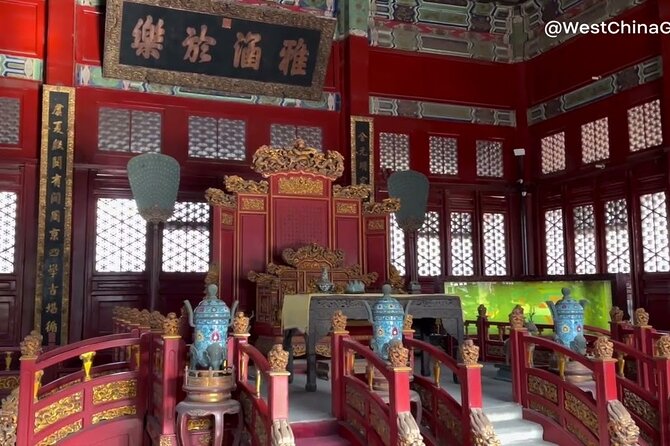
The Temple of Confucius in Beijing was originally built in 1302 for officials to honor and conduct sacrifices to Confucius. That detail is useful because it tells you what to expect when you look around. This is not only about “seeing Confucius.” It is about seeing how the state treated Confucius as a central figure worth formal attention.
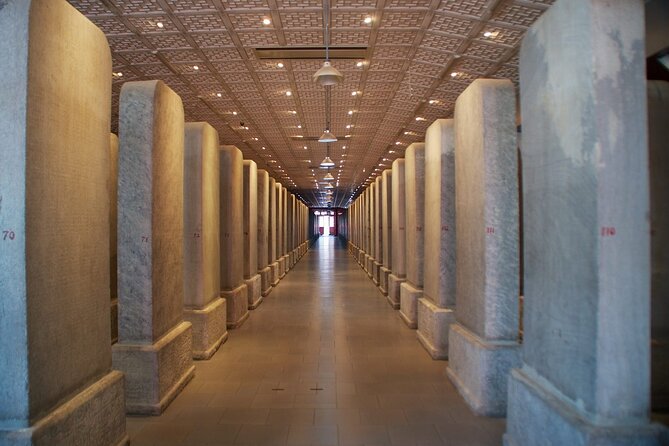
Inside, you will see statues and carvings, plus a major talking point for visitors: hundreds of stone steles tied to the Imperial Examination. Even if you do not read every character at a glance, the concept is powerful. These steles function like records. They connect learning results to official recognition.
If you are the kind of traveler who likes to understand the “why” behind a site, focus your attention on the steles. They are the clue that education here had a public footprint, not just private study.
Possible drawback: stone inscriptions are slow by nature. If you rush, the experience can feel like “more stone.” If you are patient, it turns into one of the most meaningful parts of the day.
Guozijian Museum: the imperial college that turned schooling into a system
Guozijian sits beside the Confucius Temple, and it was constructed in 1306. During the Yuan, Ming, and Qing dynasties, it served as the imperial college. That long timeline is important. It means you are not seeing a one-era experiment. You are seeing an institution that outlasted multiple dynastic shifts, surviving as a model for education tied to the state.
Today, Guozijian Museum uses multiple scholarly halls and stone steles to show the educational system in imperial China. This is where your visit becomes more explanatory. Instead of only worship objects, you get a structured sense of how the system worked, how knowledge was organized, and how official pathways were legitimized.
My practical advice: do not try to “finish” Guozijian like a checklist. Pick one or two hall areas, then linger over the steles and labels. With the English instructions available, you can build meaning as you go, rather than just skimming.
How the experience works with or without an English guide
You have two solid ways to do this: self-guided with on-site English support, or a guided visit with an English-speaking guide if you choose that option.
I like that the museum setup supports independent reading. There are English instructions and exhibits spread across the site, so you can still understand what you are looking at even if you choose not to book a guide. That matters on day trips, because plans can change quickly, and you still do not feel trapped in guessing mode.
If you do choose a guide, you are paying for interpretation. Expect help connecting the symbols and objects to the bigger story of Confucian education and the imperial examination tradition. This is especially useful if you want the “what it meant” part, not just the “what it is” part.
A small consideration: if you are on a tight schedule, a guide can move a bit faster than you would reading alone. So if you are a slow reader, plan to keep extra time for the steles.
Same city, a very different kind of day:
- Beijing: Mutianyu Great Wall Daily Tour with Ticket & Lunch
★ 5.0 · 3,056 reviews - All-Inclusive Tour: Tiananmen Square, Forbidden City, Great Wall
★ 5.0 · 2,873 reviews - MuBus: Mutianyu Great Wall ENG/ESP/RUS Guided Bus Tour
★ 5.0 · 2,361 reviews - 4-Hour Small Group Tour to Forbidden City with Entry Tickets
★ 5.0 · 1,863 reviews
Time it like a real museum visit, not a quick temple stop
This is listed as a roughly 1-day experience, but the best way to enjoy it is to treat it as a 2-3 hour museum-plus-temple flow, with extra time if you enjoy reading. The site is built for strolling through halls and studying carved records, not for a five-minute camera sprint.
If you want to beat the crowds, your advantage is that the ticket is pre-paid, and you can focus on entry rather than negotiations at the gate. Once you are inside, the key move is pacing. Start with the major overview objects, then slow down for the stone steles where the details live.
Practical pacing tip: spend your first part of the visit getting oriented in Guozijian, then return mentally to the Imperial Examination theme while you move back toward the Confucius Temple areas. When the concept clicks, the site makes more sense as a system.
Price and value: why $8 can feel like a bargain here
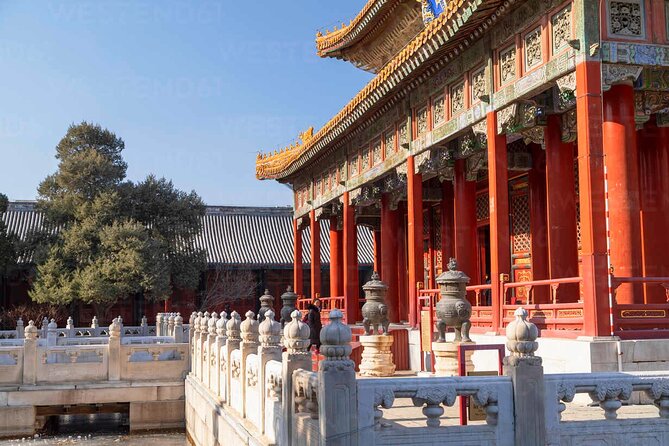
At $8 per person, this ticket can feel like one of the best-cost-to-time ratios for Beijing cultural stops. The value comes from two parts. First, you are buying entrance for a major complex that includes both the Confucius Temple and Guozijian Museum. Second, the exhibits are readable and structured enough that you can use your time well even without a guide.
Even if you add a guided option, it is still aimed at a straightforward experience: you are not paying for a big multi-stop itinerary, you are paying for focused access to one of Beijing’s most education-centered historical sites.
If you are budget-minded, prioritize this if you want something that is culturally specific and not just generic “old city” scenery. If you are a fast mover who hates reading, you might not get full value, because the main attraction is study and records.
Where this fits in a Beijing day near Lama Temple
One reason this works is geography. It is described as a short walk from the Lama Temple area, which means you can build a small cluster of religious and cultural stops without spending your day riding across town.
That matters for value. When you reduce transit time, your entrance tickets feel cheaper, because you get more actual experience hours. Also, this kind of routing helps you see Beijing in layers. You get Buddhist cultural presence at Lama Temple, then pivot to Confucian ritual and imperial education at Confucius Temple and Guozijian.
If your ideal Beijing day includes a mix of philosophy, art, and historical institutions, this location pairing makes sense.
Booking and ticket basics you should know
This experience is provided by Unique Beijing Tours. It is a private activity, meaning only your group participates. You also get group discounts, which is worth checking if you are traveling with friends or family.
If you book, note the ticket timing detail: tickets are sent about 5 days before your travel date. Plan around that so you have what you need before you show up. Confirmation is received at booking, and the site is near public transportation, which helps if you are building a flexible route day.
One more logistics note based on a real scanning issue that can happen at entrances: if your group has multiple QR codes, it is smart to keep an eye on both. If one fails to scan, you want someone to resolve it quickly so you do not waste time standing around once the gate is open.
Who should book this, and who might skip it
Book this if:
- You want an education-and-ritual focused Beijing experience, not just another scenic temple.
- You like museum reading time and objects that explain systems, like stone steles and scholarly halls.
- You want a ticket-based visit that works both with and without a guide.
You might skip it if:
- You want mostly photos and quick stops, with minimal reading.
- You are extremely time-limited and cannot spare a couple of hours on your feet and at exhibit areas.
Should you book Confucius Temple and Guozijian entrance?
Yes, if your goal is meaningful cultural context in a manageable chunk of time. The $8 price is strong because you are getting two linked sites in one go, and the English support makes the experience accessible for independent visitors.
If you care about story and background, add the English-speaking guide option for quicker understanding, especially around the imperial education theme. And if you are booking multiple tickets in one order, do yourself a favor and be ready to confirm both QR codes work at the entrance right away.
FAQ
How much does the Confucius Temple and Guozijian Museum ticket cost?
The price is $8.00 per person.
How far in advance should I book?
On average, this is booked about 15 days in advance.
What is the total time for the experience?
It is listed as approximately 1 day.
Is an English-speaking guide included?
Entrance fee is included. An English-speaking tour guide is included if you select the related guided option.
Do I need to worry about the ticket QR code timing?
Tickets are sent around 5 days before your travel date.
Is this a private experience?
Yes, it is private, and only your group participates.
Is there free cancellation?
Yes. You can cancel up to 24 hours in advance for a full refund.
Recently added around Beijing
- Private Transfer to Mutianyu Great Wall with professional driver★ 5.0 · 19 reviews
- Wild Great Wall Hikes★ 5.0 · 10 reviews
- camp on the Great Wall overnight with sunrise and sunset on the wall★ 5.0 · 11 reviews
- Beijing: to Xi’an Terracotta Day Tour by Roundtrip Bullet Train★ 5.0 · 9 reviews
- Beijing Airport Layover Tour to Mutianyu Great Wall★ 5.0 · 4 reviews
- Private Wild Great Wall Hiking tour at Simatai (Challenging)★ 5.0 · 16 reviews
- Beijing: Mutianyu Great Wall and Tea House Private Tour★ 5.0 · 11 reviews
- Simatai Great Wall & Gubei Water Town Private Trip English Driver★ 5.0 · 7 reviews
Tickets, compared.
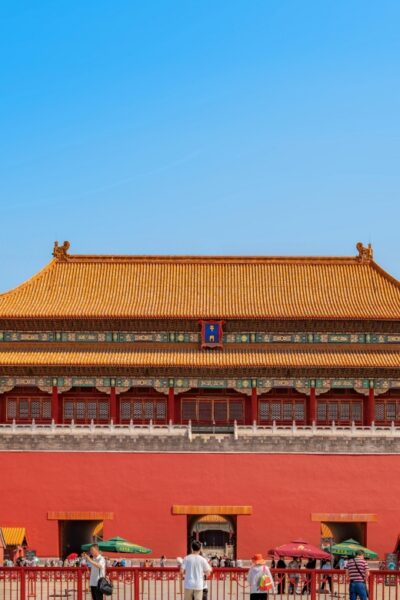
Forbidden City Tour(Group/Private)-Tickets Included
Read our review →
Mutianyu Great Wall Daily Tour with Ticket & Lunch
Read our review →
4-Hour Small Group Tour to Forbidden City with Entry Tickets
Read our review →

Ngong Ping 360: Cable Car Return Tickets & Combos
Read our review →
The Temple of Heaven or Summer Palace Entry Ticket
Read our review →
Beijing Forbidden City Ticket Booking (Optional: guide service)
Read our review →