
Reviewed · GUIDED
Discovery more Dujingyan Mt Qingcheng with private guide tour
Two UNESCO sites, one Taoist training day. I love how the Dujiangyan irrigation system turns river physics into something you can actually see and walk through, then Mount Qingcheng delivers misty forest temples and a real sense of place. One heads-up: you should expect real walking, and rain or heat can make the day feel longer.
The private setup is the point here. You get a hotel pickup in Chengdu, an English-speaking guide if you select that option, and a structured day that connects Taoist ideas to daily life, health habits, and martial arts.
The biggest practical consideration is what you do not pay for up front. Entrance tickets are handled onsite, and lunch is not included, so you’ll want a simple plan for food and water before the mountain part starts.
In This Review
- Key points worth knowing before you go
- Dujiangyan Irrigation System: Ancient water engineering you can experience up close
- Erwang Temple, Anlan Suspension Bridge, and the fish-mouth and bottle-neck sections
- Lidui Park and bonsai time: a calmer finish to the waterworks
- Mount Qingcheng: Taoist birthplace vibes with electric kart, cable car, and temple pavilions
- Shangqing Palace area and the ancient ginkgo tree
- Taoist training moment: tai chi, qigong, kung fu forms, and breathing practice
- Timing, walking pace, and what to bring for a 5 to 8 hour day
- Price and value: what $320 buys you in Chengdu
- Language expectations: when the guide is English, and when you need backup
- Who this private Qingcheng and Dujiangyan day is best for
- Book it or pass: my decision guide for Chengdu
- FAQ
- How long is the private tour from Chengdu?
- What are the two main stops on the tour?
- Are entrance tickets included in the price?
- Is hotel pickup included?
- Does the tour include kung fu training?
- Is lunch included?
- What is the maximum group size?
- What happens if weather is bad?
- Is there an English-speaking guide?
Key points worth knowing before you go
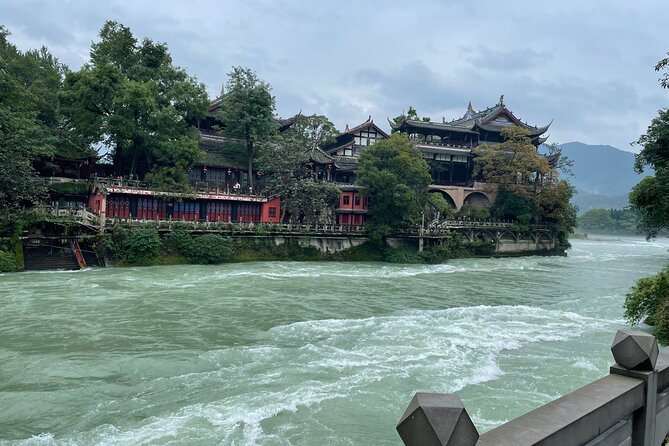
- Dujiangyan irrigation in action: See how the Fish Mouth Weir and Bottle-Neck Channel shape the flow of the Minjiang River
- UNESCO-level history without museum vibes: Walk through Lidui Park and bonsai gardens after the waterworks
- Mount Qingcheng is forested and temple-heavy: You’ll ride transport up, then do steady trekking to Moon City Lake area
- You get Taoism-to-practice context: The tour links Taoist core principles to tai chi, qigong, kung fu, and breathing
- A private day capped at 9 people: Small group feel, with room for your guide to slow down when needed
Dujiangyan Irrigation System: Ancient water engineering you can experience up close
Your day starts with Dujiangyan, a UNESCO-listed highlight and, as the guide frames it, the world’s oldest and only surviving non-dam irrigation system. The story is simple but powerful: this 3rd-century BC project still channels water from the River Minjiang into surrounding farmland.
I like that the focus stays on the mechanics, not just the dates. You’ll learn how the design solved problems of water distribution without building a traditional dam, and that makes the site feel less like a relic and more like living infrastructure.
You also have a nice flow to the visit. After the irrigation focus, you continue to the Two Kings Temple area and then walk along viewpoints and bridge crossings, so you’re not stuck only looking from one spot.
A few more Chengdu days worth comparing
- Chengdu: Giant Panda Breeding Research Base Ticket
★ 4.5 · 580 reviews - Half-Day Chengdu Cooking Class with a Local Market Visit
★ 5.0 · 465 reviews - Tuktuk Food Tour Through Chengdu’s Local Eats
★ 5.0 · 435 reviews
Erwang Temple, Anlan Suspension Bridge, and the fish-mouth and bottle-neck sections
After you understand the system at a high level, the tour moves you into the human layer of the story. Erwang Temple, also called Two Kings Temple, is a grand wooden complex on the banks of the Minjiang. It exists to honor the designers tied to the irrigation system, which gives you a fuller picture of why this project mattered to people, not only to engineers.
Then comes the fun part for anyone who likes seeing patterns in real space. You’ll walk across the Anlan Suspension Bridge for views of two of Dujiangyan’s best-known sections: the Fish Mouth Weir and the Bottle-Neck Channel.
This is where the imagery becomes practical. The fish-mouth-shaped levee helps guide how the river behaves, and the bottle-neck channel is meant to funnel the flow. Even if you are not an engineer, you can still read what’s happening by watching how water is directed and how the banks and channel walls shape it.
If you hate slippery railings or strong winds, use common sense on the bridge. It’s still a walk, and your footing matters, especially if it’s wet.
Lidui Park and bonsai time: a calmer finish to the waterworks
Once you’ve seen the iconic parts of the irrigation system, the day shifts to a slower pace with Lidui Park and beautiful bonsai gardens. I like this because it breaks the heaviness of technical history with something more relaxed and visual.
It’s also a good moment to reset if you are sensitive to heat. Dujiangyan involves time outdoors, and you can easily work up a sweat in Chengdu’s weather. Use this park stop to drink water, take photos, and let your feet recover before the mountain portion.
A practical tip: if you plan to take lots of photos, bring tissues or a small towel. Even on clear days, temple areas and paths can get dusty, and you’ll appreciate being able to wipe lenses quickly.
Mount Qingcheng: Taoist birthplace vibes with electric kart, cable car, and temple pavilions
After the Dujiangyan portion, you travel by private, air-conditioned vehicle up to Mount Qingcheng. The pickup is early in Chengdu, and you’ll spend some time in transit with your guide, which helps keep the day organized.
Mount Qingcheng is one of China’s most important Taoism centers, and the mountain is densely forested. It’s also a site with modern pop-culture connections. It appeared in the 2016 Kung Fu Panda 3, which influenced the makers of the Panda Village look. The mountain is also linked with Kung Fu film imagery, so you’ll likely notice how the cinematic aesthetic matches real views.
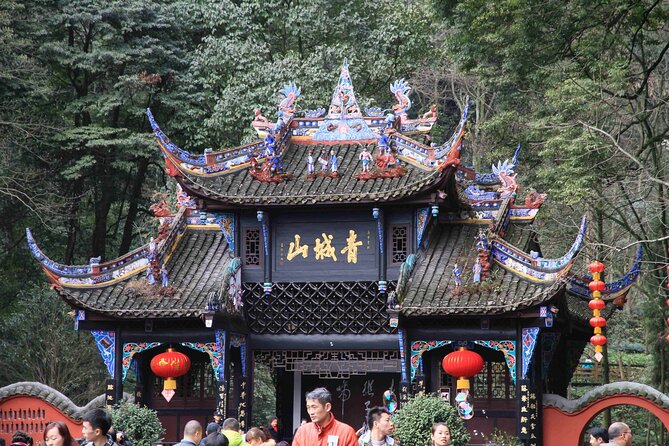
When you arrive, you can take an electric kart to the entrance. That’s a smart choice for energy management, because once you start walking, Qingcheng is temple-and-stairs territory.
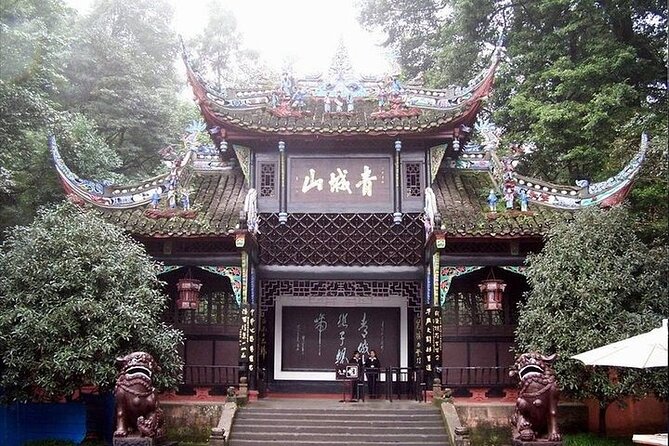
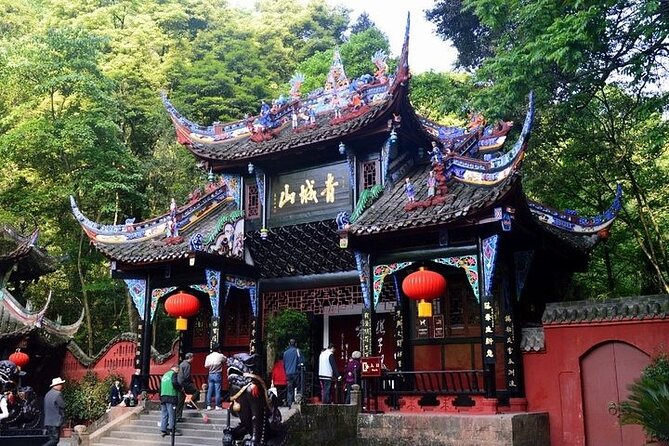
You’ll explore highlights like temples and pavilions, then trek toward Moon City Lake. After that, you ride a cable car to Shangqing Palace, which your guide points out as the must-see building.
Same city, a very different kind of day:
- Private Half-Day Chengdu Panda Breeding Center Tour with Optional Volunteer
★ 5.0 · 353 reviews - Chengdu: Sichuan Opera Shu Feng Yan Yun Evening Show Ticket
★ 4.7 · 185 reviews - Private Chengdu Day Tour: Giant Pandas and Jinsha Site Museum
★ 5.0 · 142 reviews - Dujingyan Panda Sanctuary Half day tour option panda volunteer
★ 5.0 · 106 reviews
Shangqing Palace area and the ancient ginkgo tree
Shangqing Palace is perched at about 3,280 feet (1,000 meters). The complex traces back to the Jin Dynasty period (265 AD to 420 AD), and it was rebuilt in the 1800s. What you’re looking at today is a mix of long Taoist tradition and later restoration, which is often how these Chinese historical sites survive.
The tour also calls out a particular detail worth slowing down for: an ancient gingko tree. It’s the kind of feature you remember later, because it anchors the site in time. Buildings can blur when you visit multiple temples, but trees like this create a personal memory.
Keep your expectations realistic. Even with cable car help, you will still walk on uneven surfaces and do steps. Rain can make paths slick. If you’ve got any knee issues, plan for careful pacing.
Taoist training moment: tai chi, qigong, kung fu forms, and breathing practice
The included Kongfu Experience is not just a performance. You get a guided practice session built around Taoist martial arts and health principles.
The training style you can expect focuses on fluid movement and energy cultivation, which connects the philosophy to the body. You’ll also do tai chi and qigong practice led by Taoist martial arts masters, with attention to how movement flows rather than snapping into stiff positions.
Then comes the traditional kungfu techniques. The tour’s framing emphasizes softness overcoming hardness, and you’ll do hands-on training in self-defense forms inspired by Taoist philosophy. This is one of the best reasons to choose a guided day like this, because without context it can be hard to understand what you are practicing and why.
Finally, there’s meditation and breathing. Even if you’re not into mindfulness, the breathing exercises are usually the part that helps you feel refreshed for the walk ahead or for the ride back down.
Practical note: wear comfortable clothes that you can move in. Temple visits are often calm, but practice sessions require flexibility.
Timing, walking pace, and what to bring for a 5 to 8 hour day
This is listed as a 5 to 8 hour experience, with the two big segments that line up as Dujiangyan time plus Qingcheng time. In real life, your pace will depend on weather and how often you pause for photos and explanations.
The biggest variable is conditions. The experience needs good weather, and rain is common enough on mountains that you should prepare for it. If it turns into a wet day, the walking feels longer because surfaces get slippery and you need slower steps.
Here’s what I’d pack for comfort and sanity:
- Shoes with traction for temple steps and wet paths
- A light rain layer (not just an umbrella, because paths and bridges need two hands sometimes)
- Water and a small snack since lunch is not included
- A hat and sunscreen if the day is clear between temple stops
- A small towel or tissue for quick wipe-downs
If you’re a fast walker and the weather is kind, the day can feel smooth. If you like slow exploring, build in extra time, especially around Moon City Lake and temple corridors.
Price and value: what $320 buys you in Chengdu
At $320 per person, you are paying for three things that are hard to replace with solo planning: transportation, an organized storyline, and guided practice.
You get a private van or driver service, plus an English-speaking guide if you choose that option. The private setup matters on a day that combines two UNESCO sites, temple walking, and a practice session. It saves the “how do we get from here to there” time, and the guide helps you understand why specific sections matter.
Entrance tickets and lunch are not included, so factor in extra onsite costs. That said, the core value is still solid if you want more than sightseeing. The connection between Taoist ideas and kung fu training is the kind of context that makes the day stick with you.
Also, the group maximum is 9 travelers, which keeps it from turning into a large herd. You’ll have a better chance to ask questions and adjust pace compared with bigger group tours.
Language expectations: when the guide is English, and when you need backup
There’s an option for an English-speaking guide. That’s great if you want deeper explanations of Taoist principles and the meaning behind architectural details and the irrigation design.
One practical consideration is simple: if you do not select the English-speaking guide option, you may end up with limited English. That can still work if you mainly care about the sights, but it will reduce how much you can absorb about Taoism and kung fu philosophy.
My advice: before you go, decide what matters most. If you want interpretation, pick the English guide option. If you mostly want a smooth route and less logistics stress, you can tolerate less language support.
Who this private Qingcheng and Dujiangyan day is best for
I’d recommend this tour if you fit at least one of these:
- You want a Taoism-centered day that links temples to tai chi, qigong, and breathing
- You like UNESCO sites but prefer practical, on-foot explanations over reading alone
- You want a private guide to manage timing across two major areas
- You appreciate a smaller group feel, with a hard cap of 9
It’s less ideal if:
- You dislike long walking days, especially on wet ground
- You need a guaranteed lunch stop (since lunch is not included)
- You prefer a strictly low-activity itinerary with minimal stairs and trekking
One more note from a past guest’s experience is that some versions of this broader set of activities can include a dressing-up and photo moment with support from people named Poy, Mai, and Today. That kind of add-on is not clearly stated as standard in your core tour summary, so treat it as a possible extra rather than a guaranteed part of every booking.
Book it or pass: my decision guide for Chengdu
If you want the most value from your day in Chengdu, I’d book this when you care about meaning, not just photos. Dujiangyan is easier to appreciate with a guide who can explain how the system directs river flow, and Mount Qingcheng becomes more memorable when you understand Taoism’s ideas and how they connect to movement and breath.
I would pass or consider a different option if your knees do not handle stairs well or if you cannot deal with rain and extra outdoor time. Also, if you hate planning snacks, remember that lunch is not included, so you’ll want your own food plan.
If you’re flexible, this is a strong private day: two UNESCO highlights, temple walking, and an included practice that gives you something you can take home with you.
FAQ
How long is the private tour from Chengdu?
The experience is listed as 5 to 8 hours (approx.).
What are the two main stops on the tour?
You visit the Dujiangyan Irrigation System area and then Mount Qingcheng, including Shangqing Palace.
Are entrance tickets included in the price?
No. Entrance tickets are paid onsite.
Is hotel pickup included?
Yes, pickup is offered from downtown Chengdu.
Does the tour include kung fu training?
Yes. A Kongfu Experience is included.
Is lunch included?
No. Lunch is not included.
What is the maximum group size?
The tour has a maximum of 9 travelers.
What happens if weather is bad?
The experience requires good weather. If it’s canceled due to poor weather, you’ll be offered a different date or a full refund.
Is there an English-speaking guide?
An English-speaking guide is included if you select the English guide option.
Recently added around Chengdu
- Visiting Chengdu Panda Base in a Half Day★ 5.0 · 4 reviews
- Classsic sichuan Opera at sichuan Provincial Theater★ 5.0 · 4 reviews
- Tea Village in lost Town and Buddha 1 day tour★ 5.0 · 32 reviews
- Skip the Line: Sichuan Opera Chengdu Ticket★ 4.0 · 8 reviews
- Sichuan Opera Show with Hotel Pickup★ 5.0 · 3 reviews
- Panda, Leshan, and Emei Mountain 2-day tour★ 5.0 · 4 reviews
- Private Half-Day Tour in Sichuan Culture Show with Hot Pot Dinner in Chengdu★ 4.5 · 15 reviews
- Sichuan Opera with face-changing at Sichuan opera theater★ 4.5 · 6 reviews
Guided, compared.
MuBus: Mutianyu Great Wall ENG/ESP/RUS Guided Bus Tour
Read our review →
Beijing Forbidden City Ticket Booking (Optional: guide service)
Read our review →
Forbidden City&T-Square Small GroupTours w/ ticket(Eng/Esp Guide)
Read our review →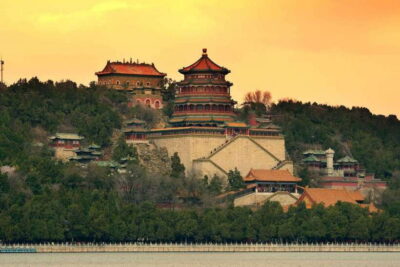
Summer Palace Entry Ticket and Optional Guided Tour
Read our review →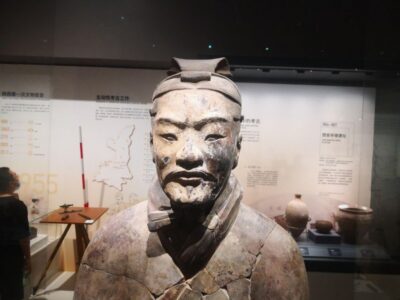
Terracotta Army Ticket & Guided Bus Tour with Options
Read our review →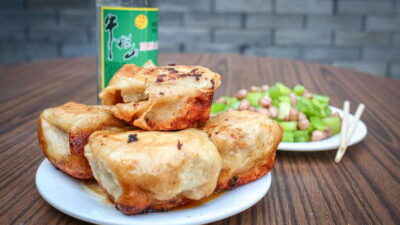
Hidden Gems Guided Food Tour with Beer and Tastings
Read our review →
Browse the lists this tour appears in