
Reviewed · HALF-DAY
Guangzhou: Textile Hub and Garment Factory Half-day Tour
Textile speed has a real address. What makes this tour click is how it turns the buzzword China Speed into something concrete, you walk the lanes of Zhongda Textile Hub and track how a job can move from fabric to finished garments in 48 hours. I especially like the small-group setup, it keeps the conversations practical instead of just sightseeing.
My second favorite part is the direct access to the people who run the work, including the order takers and factory owners who explain how fast coordination happens without top-down magic. In one factory-style stop, the guide Ceciliaye breaks down the workflow in plain terms, and you might even get to see how patterns are handled before sewing starts. One drawback to plan for, this is a lot of walking in a busy area with e-scooters, so it helps to be comfortable in tight, fast-moving urban streets.
In This Review
- Key things I think you’ll care about most
- Why Guangzhou’s textile speed feels different on foot
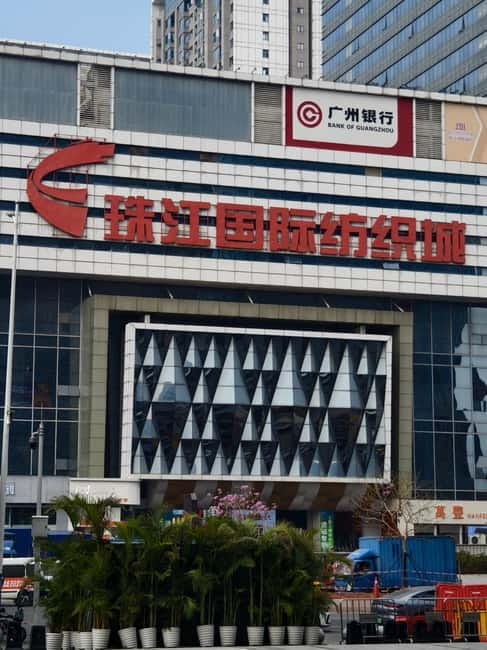
- Getting oriented at Zhujiang International Textile City Area A
- The two “secret stops” and what they usually teach you
- Secret stop block 1: seeing the supply web, not just products
- Secret stop block 2: meeting order takers and understanding how jobs get shaped
- Zhongda Textile Hub: the cluster that makes coordination possible
- Urban village live-work: what “flexible labor” looks like
- Factory viewing: from fabric choices to sewing the pieces
- Who should book this tour (and who should skip it)
- Price and time: is $89 for a 2-hour tour worth it?
- How to get the most out of your guide and your questions
- Should you book this Guangzhou Textile Hub Tour?
- FAQ
- How long is the Guangzhou Textile Hub and Garment Factory half-day tour?
- What is the tour price per person?
- Where do I meet the guide?
- How do I get there by Didi?
- How do I get there by subway?
- Is a meal included?
- What should I bring and what rules apply?
Key things I think you’ll care about most
- Zhongda Textile Hub street-level context so you can picture how an order routes through the cluster
- 48-hour garment logic explained in terms of real decisions, fabric selection, and timing
- Meet order takers and owners for the supply-chain story you cannot get from a website
- Urban village live-work reality that shows how flexible labor adapts to orders
- Factory-floor viewing that makes the bulk production process easier to understand
- Small group size (up to 10) for questions that go beyond basics
Why Guangzhou’s textile speed feels different on foot
Guangzhou is famous for manufacturing, but this tour is built around how the system works at ground level. The big idea is that textile and garment businesses do not operate like separate islands. They cluster tightly, so components, fabric choices, sample adjustments, and production capacity can shift faster than if everyone were spread out across town.
That is where China Speed becomes more than a slogan. Instead of thinking only about machines and factories, you start thinking about routing and coordination. Who takes the order, how requirements get clarified, how fabric options are matched, and how quickly work can be scheduled when demand changes.
I also like that the tour is designed for sourcing and supply-chain people, not just fashion tourists. You are encouraged to ask industry-style questions, and the visit includes time to interact with the people who actually handle orders.
A few more Guangzhou days worth comparing
- Guided Cycle Tour of Guangzhou
★ 5.0 · 164 reviews - Customised Private Guangzhou City Tour with Flexible Itinerary
★ 5.0 · 107 reviews - Gulong Gorge Skywalk Glass Bridge and Waterfall View Private Tour
★ 5.0 · 103 reviews
Getting oriented at Zhujiang International Textile City Area A
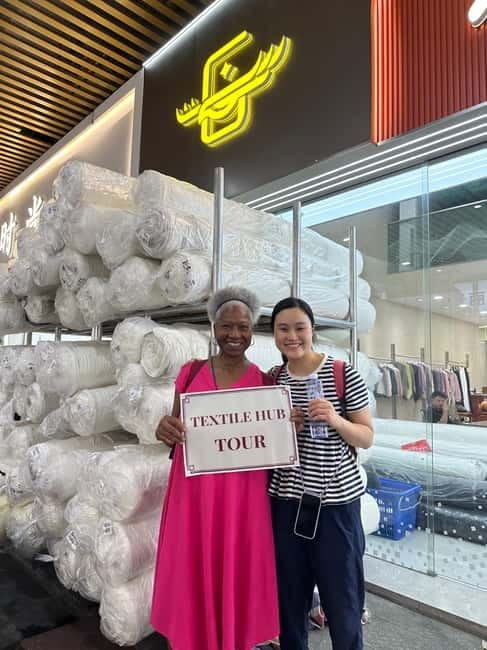
Your tour starts at 珠江国际纺织城A区正门, the main entrance of Zhujiang International Textile City Area A, at a traffic-light intersection. The meeting approach is straightforward but a little specific, look for a shop called 恒泰超泓. Your guide will be in front of that shop holding a sign that says Textile Hub Tour, with Authentic Tour Asia noted.
If you are using Didi, set the destination to 海珠合生新天地, a mall directly across the street from the meeting point. If you are coming by subway, take Line 11 to 逸景路站. Use Exit C, then walk west for about 10 minutes, with your back to the morning sun, along the main road.
Why this matters: textile districts can feel maze-like fast. A solid meeting point and a guide standing out in front of a known shop help you avoid the stress tax that can ruin the first 20 minutes of a tight schedule.
Practical tip: wear shoes that handle uneven pavement and sudden walking spurts. There will be lots of e-scooters around, so keep your head up and step with purpose.
The two “secret stops” and what they usually teach you
The itinerary keeps the exact flow flexible, but you should expect two guided one-hour blocks before returning to Zhujiang International Textile City Area A. Think of these as the tour’s information spine, where your guide connects the dots between fabric sourcing, garment production, and the people who make the cluster work.
Here is what I think you’ll get from those blocks based on how the experience is described and how the factory-style parts tend to run:
Secret stop block 1: seeing the supply web, not just products
In the first hour, you are typically looking at the textile side of the chain. You walk stalls and corridors with an industry expert, and you learn how dense networks of shops create speed. You might see different fabric types and how sellers relate fabrics to what the garment factories can actually produce on time.
The main value here is mental mapping. You start to understand why suppliers benefit from being close together. If an order needs adjustment, someone can quickly confirm fabric availability or redirect to a nearby supplier rather than waiting days for shipping and paperwork.
Potential drawback: the area can be chaotic, and it moves quickly. If you plan to take photos, do it intentionally and keep your questions short and specific.
Same city, a very different kind of day:
- Private Guangzhou Full Day City Tour with Old and New Highlights
★ 5.0 · 62 reviews - Reputable Private Guangzhou Tour Guide Service by Xaq
★ 5.0 · 60 reviews - Custom Private Guangzhou Tour with Local Guide and Private Car
★ 5.0 · 39 reviews - Guangzhou Pearl River Night Cruise and Canton Tower Private Tour
★ 5.0 · 39 reviews
Secret stop block 2: meeting order takers and understanding how jobs get shaped
The second one-hour block shifts toward the order mechanics. This is where you get direct interaction with order takers and factory owners, and you learn how self-driven collaboration works in a system that does not depend on one central controller.
In practical terms, you learn what gets negotiated early: fabric selection, labeling requirements, and how the order gets translated into production instructions. In one factory-related visit described during past tours, the owner walked participants through sewing steps and showed how patterns are handled after designers send them in, with patterns laid out so fabric cutting can proceed.
That kind of detail matters if you are sourcing. You start to see where delays usually happen and what questions prevent confusion. For example, if you do not clarify fabric specs or labeling expectations early, speed can vanish.
Zhongda Textile Hub: the cluster that makes coordination possible
Zhongda Textile Hub is one of the densest textile clusters in Guangzhou, and this tour uses it as the living classroom. The point is not to admire merchandise. The point is to watch how proximity reduces friction.
You are guided through the cluster so you can notice a few realities that shape the fast supply chain:
- Many small businesses depend on constant communication and quick re-sourcing.
- Specialized units can handle different parts of the workflow, from fabric sourcing to garment assembly.
- Workers and shop owners can flex labor and tasks based on current orders.
This is where the tour’s emphasis on efficiency clicks. When you are physically in a tight network, you can grasp how a new order might translate into rapid changes, for instance switching fabric sources or adjusting production timelines.
It also helps you understand why this style of manufacturing can feel both impressive and intense. You are seeing an environment built for throughput, not a relaxed retail pace.
Urban village live-work: what “flexible labor” looks like
One of the tour’s most eye-opening components is time spent in urban village areas. The description highlights a live-work lifestyle and flexible labor that adapts to orders.
You will not just hear about it in theory. You get a sense of how workers’ day-to-day routines tie into production schedules. That can change how you interpret lead times. When labor is embedded in the same neighborhoods as workstations, changes in demand can trigger faster scheduling than in a model where everyone commutes from far away.
This part is valuable for supply-chain thinking because it reframes speed. The fastest systems are not only fast machines. They are fast communications, proximity, and the ability to reorganize work when an order shifts.
Consideration: this is an active urban environment. Expect tight spaces, busy streets, and lots of movement around e-scooters.
Factory viewing: from fabric choices to sewing the pieces
A key promise of this tour is seeing how small garment factories deliver finished clothing orders efficiently. You visit garment factories to witness rapid production firsthand, and you meet owners so you can ask how they run work on tight timelines.
What you should look for during the factory-style portion:
- How the factory connects the order requirements to fabric selection
- How patterns and cutting instructions move from design to fabric layout
- How sewing is organized piece by piece in bulk production
In one example shared by a previous participant, the factory owner took the group into the room where patterns are received by the factory and laid out on fabric. That kind of glimpse helps you understand the translation step between design intent and actual production output.
Even if you are not a garment maker, you’ll probably leave with better questions for your next vendor conversations. You will also understand why certain details matter early, like material composition, seam types, and labeling requirements.
Who should book this tour (and who should skip it)
This tour is a strong fit if you are in fashion, retail, manufacturing, or supply chain, or if you are trying to break into the industry. It is also a good choice if you want to build real context for sourcing decisions, like where fabric options come from and how they connect to garment production capacity.
It is especially useful for:
- Sourcing professionals who want to understand how orders route
- Supply chain managers trying to reduce confusion and delays
- Fashion entrepreneurs who need a realistic picture of factory workflow
- Anyone who wants direct dialogue with order takers and factory owners
Skip it if you:
- Need a very slow, comfortable pace
- Have mobility constraints that make uneven, crowded walking difficult (the tour is not suitable for wheelchair users)
- Expect a museum-style experience with minimal street friction
Price and time: is $89 for a 2-hour tour worth it?
The price is $89 per person, and the duration is about 2 hours. At first glance, it can sound short, but the structure makes sense for how manufacturing education should work. You get expert guidance, time inside the textile cluster, and the chance to see how garment production runs quickly.
The value question is really about access. This tour is built to give you contact with the people who handle orders and run production. If you are trying to source or build partnerships, that access can save time and prevent costly misunderstandings. One reason earlier participants rated it highly is that it provides direct visibility across the supply chain, something you simply cannot replicate through online photos and vague vendor descriptions.
Also, because meals and private transportation are not included, you should plan to eat before or after. Bring only what you need and focus on using the guide time efficiently.
How to get the most out of your guide and your questions
With a small group limited to 10, you’ll have a better chance of getting answers. But you will benefit more if you go in prepared with focused questions.
Here are question styles that fit this kind of tour, based on what the experience is designed to explain:
- How does an order move from order taker to fabric sourcing to production?
- What details cause the most delays, and how do you prevent them?
- If fabric options change, what is the fastest way to re-route?
- What does quick turnaround require from the customer side?
- How do factories handle patterns and label requirements when orders arrive close together?
If you ask broad questions, you may get broad answers. If you ask targeted ones, you’ll learn how the workflow really functions under pressure.
Should you book this Guangzhou Textile Hub Tour?
Book it if you want practical supply-chain understanding in a short time, and you value talking directly with people who manage orders and production. You are paying for access, context, and on-the-ground clarity around how garments can move fast when the right cluster conditions exist.
Skip it if you mainly want shopping or casual browsing, or if you are not comfortable with a fast, chaotic environment full of e-scooters and tight walking routes.
If you do book, wear comfortable shoes, plan to focus during the two guided blocks, and come ready with a few sharp questions. That is the recipe for turning a short tour into something you can use in your next sourcing or manufacturing conversation.
FAQ
How long is the Guangzhou Textile Hub and Garment Factory half-day tour?
The tour duration is 2 hours.
What is the tour price per person?
The price is $89 per person.
Where do I meet the guide?
Meet at the main entrance of Zhujiang International Textile City Area A (珠江国际纺织城A区正门), at a traffic light intersection. Look for a shop called 恒泰超泓, and your guide will be standing in front holding a sign that says Textile Hub Tour with Authentic Tour Asia.
How do I get there by Didi?
Set the destination to 海珠合生新天地, a shopping mall directly across the street from the meeting point.
How do I get there by subway?
Take Line 11 to Yijing Lu Station (逸景路站). Use Exit C, then walk west for about 10 minutes with your back to the morning sun, along the main road.
Is a meal included?
No, meals and beverages are not included.
What should I bring and what rules apply?
Bring comfortable shoes. Smoking is not allowed. The tour involves a lot of walking, and the area can feel fast and chaotic with many e-scooters.
Recently added around Guangzhou
- Big Buddha Mountain Martial Art Culture Countryside Private Tour★ 5.0 · 31 reviews
- Hong Kong One Day Private Tour from Guangzhou by Bullet Train★ 5.0 · 3 reviews
- Seven Star Crags Karst Cave Mirror Lake Bird Islands Private Tour★ 5.0 · 30 reviews
- Private Tour to Gulong Canyon with Glass Bridge and Water Falls from Guangzhou★ 5.0 · 20 reviews
- Seven Star Crag and Dinghu Mountain private day tour from Guangzhou★ 5.0 · 5 reviews
- Glass Bridge and Water Falls Private Car Service from Guangzou★ 4.5 · 3 reviews
- Buffet Dinner at Canton Tower Revolving Restaurant with Pearl River Night Cruise★ 3.0 · 5 reviews
- Private flexible Guangzhou City Sightseeing Tour with Dim-Sum Tasting★ 5.0 · 5 reviews
Half-Day, compared.
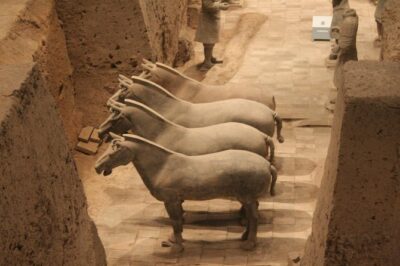
Half-Day Mini Group Xian Tour to Terracotta Warriors Museum
Read our review →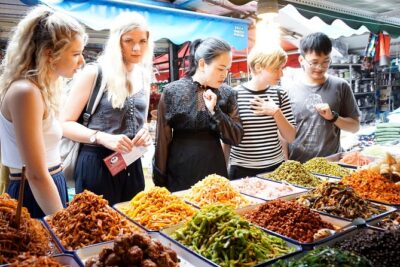
Half-Day Chengdu Cooking Class with a Local Market Visit
Read our review →
Private Half-Day Chengdu Panda Breeding Center Tour with Optional Volunteer
Read our review →
Half-Day Bike Tour of Shanghai Old Town with Food Tasting
Read our review →
Private Half-Day Tour of Xi’an Terracotta Warriors
Read our review →
Half-Day Private Zhujiajiao Water Town Tour with Boat Ride from Shanghai
Read our review →Browse the lists this tour appears in