
Reviewed · CITY TOURS
Historia and Entertain Tour of the Youngest City of China
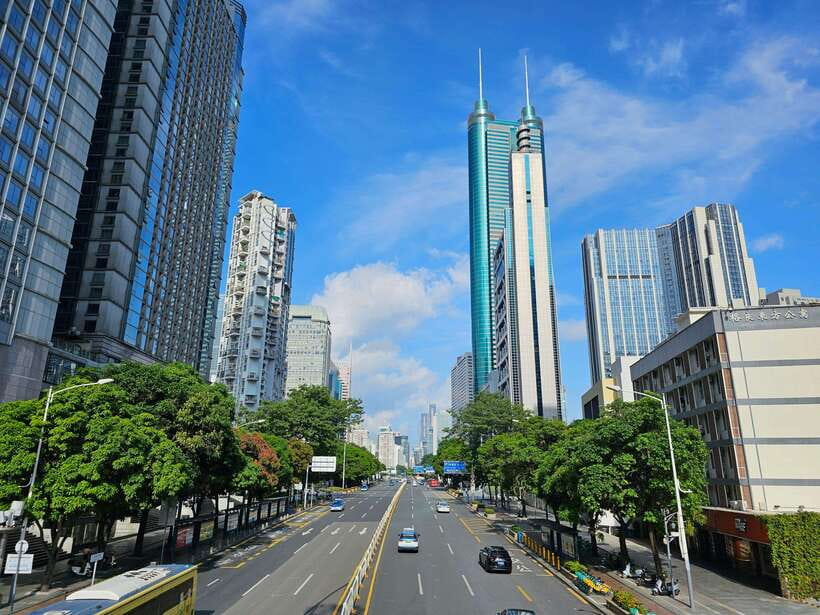
Two hours, one Shenzhen time machine. This tour is interesting because it treats Shenzhen like a story you can walk through, starting at Luohu Port where the city’s modern chapter began and ending with viewpoints that help it all click.
I love the way Timo XU connects everyday streets to big-picture change, from Shenzhen’s early border days to the links it has with Hong Kong and Beijing. I also love that you get a local snack stop when timing and weather cooperate, not a hard sell on shopping. The one drawback to consider is simple: food is not included, so budget a little extra beyond the $40.
In This Review
- Key things I’d pencil in before you go
- Luohu Port to the Shenzhen you thought you knew
- What you’ll likely notice right away
- Plaza of Citizens and Fu Tian’s 40-year transformation
- A practical consideration
- Hua Qiang District: where the value per square meter becomes the story
- What to do if you’re also a shopper
- Skyline views and the hilltop that explains the city axis
- The best photo angle (and the fastest way to get it)
- Food timing, snack stops, and how to plan your budget
- The Timo XU factor: English storytelling that stays practical
- What you might miss if you hate questions
- Price and what you truly get for $40
- Who should book this Shenzhen “time machine” walk
- Should you book this tour?
- FAQ
- Where is the meeting point?
- How long is the tour?
- What does the tour cost?
- Is the tour in English?
- Is there a group size limit?
- Are food and souvenirs included?
- What is included in the price?
- Can I get a refund if I cancel?
- Can I pay later?
Key things I’d pencil in before you go
- Luohu Port as the starting point: a place tied to Shenzhen’s first major role as a land border gateway.
- Plaza of Citizens perspective: how this area looks now, and how it used to be fields and lakes about 40 years ago.
- Hua Qiang District, explained with numbers and context: where high lease costs and daily value come up in conversation.
- A short hill climb for an “axis” view: not a strenuous hike, but enough elevation to understand how the city lines up.
- Political and historical connections, made practical: Hong Kong and Beijing ties explained in plain language.
- Small group format: limited to 7 participants, so questions stay part of the walk.
Luohu Port to the Shenzhen you thought you knew
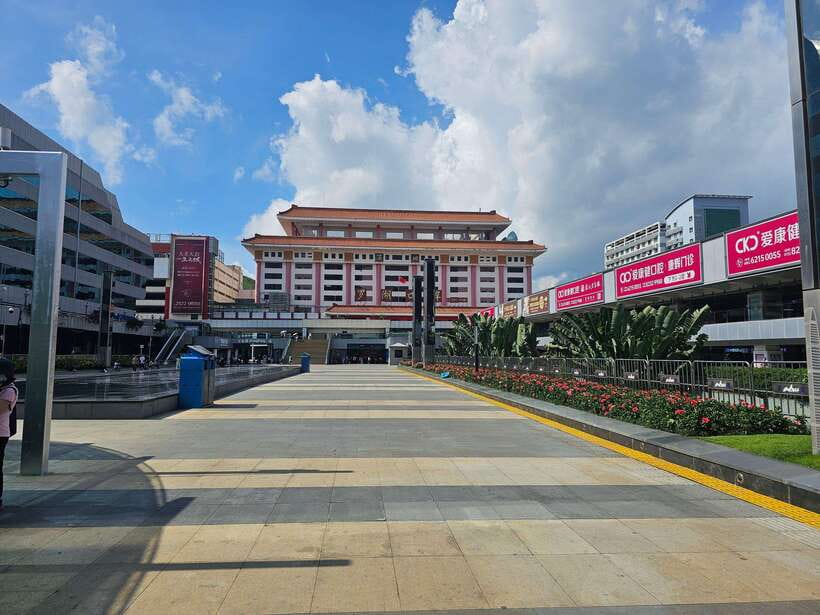
If you only know Shenzhen as glass towers and fast business news, this tour gives you a different first impression. You’ll meet Timo XU at Starbucks Cafe (China Bank Garden), No. 1006 Fuzhong 1st Road in Futian District (深圳市福田区 福中一路1006号 星巴克(中银花园店)), then head toward the Port of Luo Hu, the place where Shenzhen’s story is commonly traced to its early border role.
What makes this start work is the way it frames the city. You’re not just looking at buildings, you’re watching the logic of location take shape. Luohu Port matters because it was once one of China’s only two land ports, which helped turn this side of the border into a practical hinge between places, ideas, and movement.
Timo also sets the tone early with that mix of engineer-like structure and human storytelling. He shares why certain sites feel shocking when you compare past and present. Instead of calling it history, he talks about what changed, why it changed, and what that means when you look at the skyline now.
A few more Shenzhen days worth comparing
- Customizable Private Shenzhen Tour with Local guide and Car
★ 5.0 · 48 reviews - Shenzhen Private Flexible Day Tour with Guide and Driver Service
★ 5.0 · 41 reviews - Shenzhen History , Culture & Scenic + (Drone Delivery) tour
★ 5.0 · 26 reviews
What you’ll likely notice right away
The group moves at a pace that’s more walking tour than museum tour. You’ll spend time looking outward, then turn back to the “why.” That’s the difference between memorizing facts and understanding momentum.
Plaza of Citizens and Fu Tian’s 40-year transformation
After the port area, the route pushes you into Futian, where modern Shenzhen concentrates fast. One stop that sticks in your head is the Plaza of Citizens, because the contrast is the whole point. When you stand there today, it’s hard to imagine that only around 40 years ago the area was wild field and lakes. That single detail makes the city’s growth feel less like a magic trick and more like a decision that got repeated and scaled.
The tour’s value here is that it treats place names as clues. Timo talks about how the names of neighborhoods connect to older landscapes, then he helps you see how those original shapes get replaced by finance, transit, and dense development. Even if you’ve walked through Futian before, you’ll start noticing different layers in the same street.
You’ll also hear why this part of Shenzhen is such a strong base for the city’s identity. Futian is where the skyline looks like a corporate brochure, but it’s also where you can trace how the city organizes itself once it gets serious about growth.
A practical consideration
This section is strong for people who like interpretation, not just photos. If you want endless landmark time, note the overall tour is only 2 hours. It moves through key areas with meaning, not with slow, lingering stops.
Same city, a very different kind of day:
- Gen-Z Private Tour: Shenzhen Tech Marvels
★ 5.0 · 22 reviews - ShenZhen: Tallest Building with Luxury Meal on Highest Floor
★ 4.7 · 7 reviews - Iconic Shenzhen Skyscraper – Ping An Finance Center
★ 3.4 · 6 reviews - Shenzhen:8h City Walk & Future Experience Highlights Trip
★ 4.4 · 6 reviews
Hua Qiang District: where the value per square meter becomes the story
Hua Qiang District is the part of the tour that feels like a live economics lesson. You’ll wander streets where the pace is clearly built for business, and you’ll get explanations for why the area is so tightly linked to commerce, supply chains, and high-stakes leasing.
Timo points out the scale of the stakes in a way that’s easy to repeat back later. He describes it as a place where each square meter can create value of millions a day, and where lease prices are among the most expensive in China. You can see the results, but the tour makes sure you understand how the economics shape what you experience on the ground.
You’ll also pick up on traces of companies, entrepreneurs, and famous people connected to the area. Even when specific names are not the main focus, the takeaway is clear: Hua Qiang isn’t just a district you pass through, it’s a symbol of how Shenzhen became a manufacturing and innovation powerhouse.
What to do if you’re also a shopper
This isn’t a shopping tour. If you love to browse, you’ll probably enjoy the atmosphere around Hua Qiang, but the emphasis is on how the city got its reputation. Plan to come hungry for conversation and context, not for a retail checklist.
Skyline views and the hilltop that explains the city axis
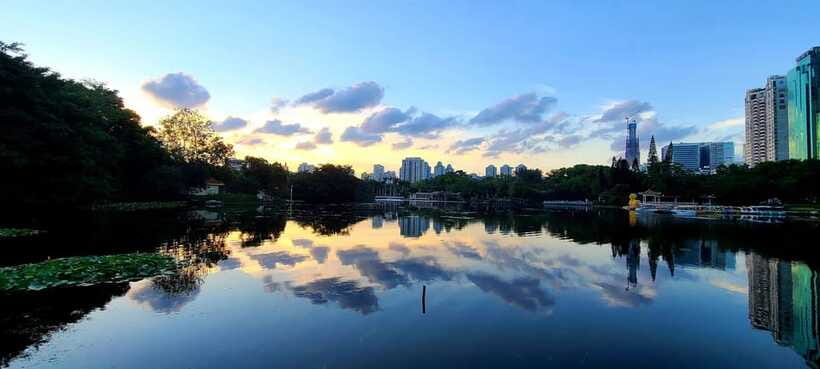
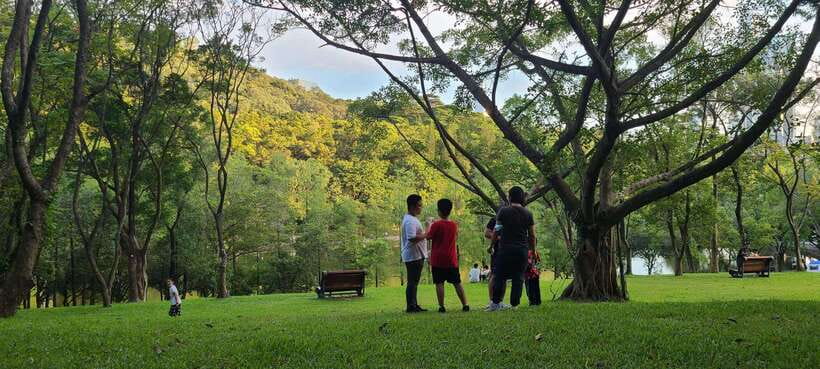
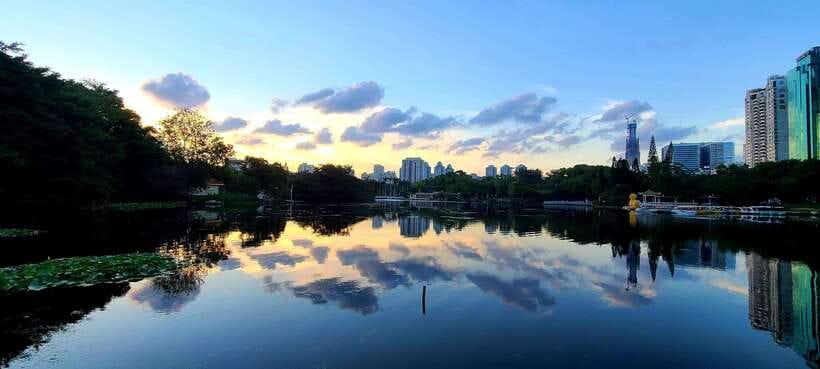
The tour includes a hike on a park and hill that is not very high. It’s designed to give you a bird’s-eye view without turning into a workout. That matters in Shenzhen, because the city can look like a grid of towers from street level. From above, you can start seeing the structure in a more logical way.
Timo uses this viewpoint to talk about the city axis, which is a simple phrase that helps you decode what you’re looking at. You’ll connect the skyline lines to how the city plans space and movement, and you’ll understand why certain corridors feel more important than others.
This is also where the earlier facts click into place. You’ve heard about Luohu Port, the early transformation near the Plaza of Citizens, and the commercial intensity around Hua Qiang. From the hilltop, those pieces stop being separate stories and start feeling like a single system.
The best photo angle (and the fastest way to get it)
Even without special equipment, a high vantage point helps you frame the city layers. If you’re the type who likes to take photos, keep your phone accessible, but don’t lose the storyline while you’re shooting. The view is great, yet the explanation is the real payoff.
Food timing, snack stops, and how to plan your budget
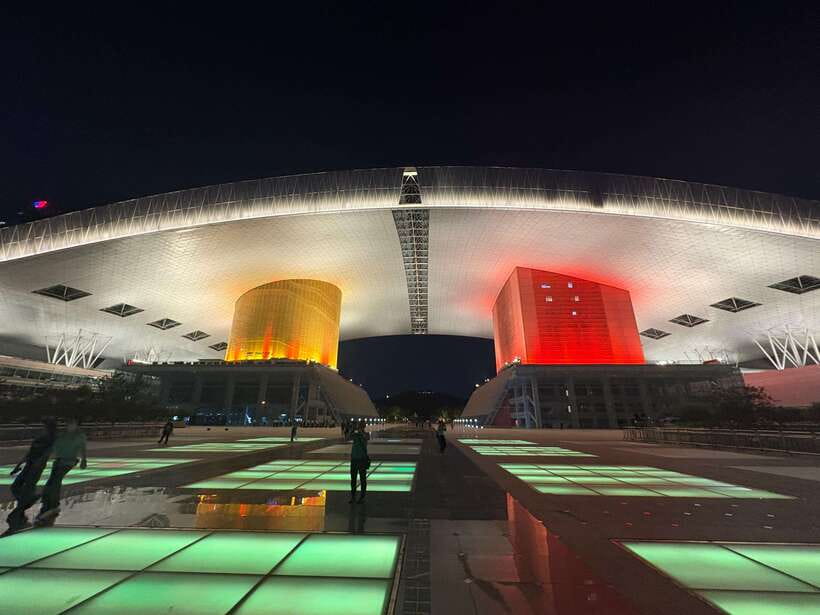
One reason this tour feels human is that it includes a stop for a delicious snack along the way. The catch is that the exact timing depends on weather and how the route goes. Food is not included in the $40 price, so you’ll pay for snacks yourself.
That’s actually part of the value equation. You’re paying for guide time, transportation fees, and restaurant recommendations for later, not a forced meal. If you want to try one local bite without turning the tour into a long lunch, this format works well.
A good way to prepare is to think of this tour like a guided orientation, then use the recommendations list after. If you end up eating before or after the tour, you’ll still get the benefit of understanding what you’re ordering and why it fits the city.
The Timo XU factor: English storytelling that stays practical
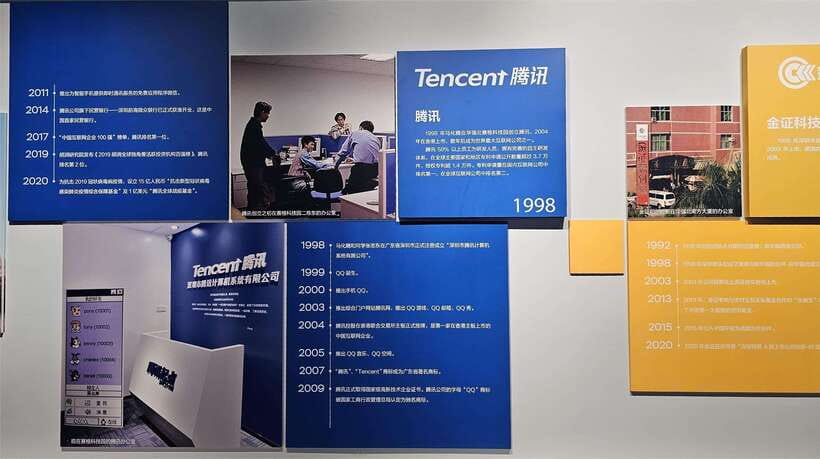
Timo XU is central to why this tour gets such strong feedback. He brings both engineering and finance training, and he uses that mindset to make complicated change feel orderly. At the same time, he talks like a real person who enjoys the city, including the layers most short visits miss.
The best part is the conversation. He doesn’t just recite. He builds a connection between historical developments and the current political situation, especially the relationship links between Shenzhen and Hong Kong and Beijing. You’ll hear it explained in a way that’s designed to be understood on a walk, not in a lecture hall.
And because the group is limited to 7 participants, you’re more likely to ask questions and get answers that fit your interests. People who like history will get it. People who prefer city planning and politics will also get it. You don’t need a background in China studies, but you do need curiosity.
What you might miss if you hate questions
If you prefer a tour where the guide talks and you just follow silently, this may feel a bit interactive. Timo’s style is more about discussion and personal stories, so you’ll get the most from it if you engage.
Price and what you truly get for $40
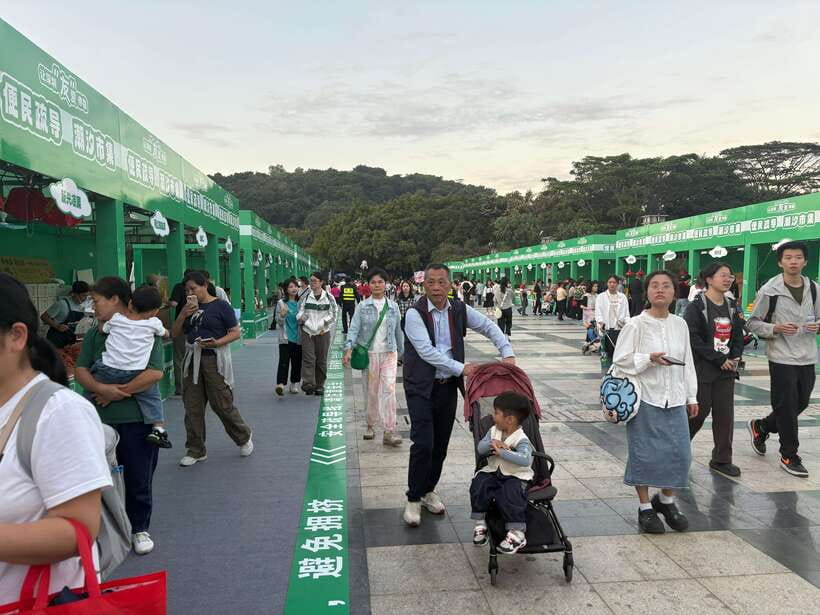
At $40 per person for 2 hours, you’re not buying a big-ticket attraction ticket. You’re buying a structured way to understand Shenzhen in a short window.
Here’s the value breakdown that matters for decision-making:
- You get a live English guide for the full 2 hours.
- You get transportation fees covered as part of the experience.
- You get a list of carefully-researched recommendations for restaurants, plus suggestions for bars, cocktails, and live music venues.
Food and souvenirs are not included, so the real cost can be a little higher if you snack during the tour. Still, for many people, this is one of the smarter ways to spend a couple of hours in Futian because it improves how you’ll enjoy the rest of your day.
Two-hour tours can sometimes feel rushed, but this one is built around a clear narrative arc. Luohu Port gives the origin point, Plaza of Citizens shows scale of change, Hua Qiang District explains economic intensity, and the hilltop viewpoint ties it together visually.
Who should book this Shenzhen “time machine” walk
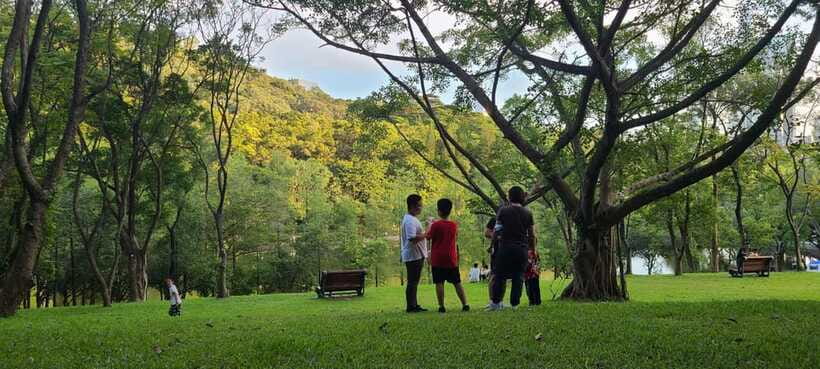
This tour is a strong match if you want:
- history and politics explained in everyday language
- a focused route through major Shenzhen areas in a short time
- a guide who talks with you, not at you
- local snack time without a heavy meal commitment
It’s not the best fit if you want:
- long stays at one museum or a deep dive into a single site
- a shopping-focused itinerary
The small group size also makes it easier to get your questions answered, especially if you’re traveling solo or want more conversation than a big bus format allows.
Should you book this tour?
If you like cities with fast change, and you want to understand Shenzhen beyond the surface, I’d book it. The combination of Luohu Port origin story, the Plaza of Citizens contrast, Hua Qiang District economics, and a hilltop viewpoint gives you a complete mental map in just 2 hours.
Skip it only if you dislike guided storytelling, or if you’re unwilling to add a bit of extra money for the snack. Otherwise, this is great value for people who want to leave Shenzhen with context you can actually use.
FAQ
Where is the meeting point?
You’ll meet at Starbucks Cafe (China Bank Garden), No. 1006 Fuzhong 1st Road, Futian District. The Chinese address is 深圳市福田区 福中一路1006号 星巴克(中银花园店).
How long is the tour?
The tour lasts 2 hours.
What does the tour cost?
The price is $40 per person.
Is the tour in English?
Yes, the tour is given in English.
Is there a group size limit?
Yes. The group is small, limited to 7 participants.
Are food and souvenirs included?
No. Food and souvenirs are not included.
What is included in the price?
The price includes the guide, transportation fees, and a list of recommendations for restaurants and also some bars, cocktails, and live music venues.
Can I get a refund if I cancel?
You can cancel up to 24 hours in advance for a full refund.
Can I pay later?
Yes. The option is reserve now and pay later, so you can book a spot and pay nothing today.
Recently added around Shenzhen
- Iconic Shenzhen Skyscraper – Ping An Finance Center★ 3.4 · 6 reviews
- ShenZhen: Tallest Building with Luxury Meal on Highest Floor★ 4.7 · 7 reviews
- Shenzhen: Dapeng Peninsula Day Tour with Hotel Pickup★ 3.6 · 4 reviews
- Shenzhen:8h City Walk & Future Experience Highlights Trip★ 4.4 · 6 reviews
- Huaqiangbei Insider Tour: Explore Shenzhen’s Tech Wonderland★ 5.0 · 6 reviews
- 1 day Car Hire in Shenzhen with Driver (10 hours)★ 3.0 · 5 reviews
- Gen-Z Private Tour: Shenzhen Tech Marvels★ 5.0 · 22 reviews
- Shenzhen History , Culture & Scenic + (Drone Delivery) tour★ 5.0 · 26 reviews
City Tours, compared.
Forbidden City Tour(Group/Private)-Tickets Included
Read our review →
T-Square & Forbidden City Group or Private Tour
Read our review →
All-Inclusive Tour: Tiananmen Square, Forbidden City, Great Wall
Read our review →
4-Hour Small Group Tour to Forbidden City with Entry Tickets
Read our review →Beijing Full Day Tours: Tiananmen Sq, Forbidden City, Great Wall
Read our review →
Mini Group Xian Day Tour to Terracotta Army, City Wall, Pagoda and Muslim Bazaar
Read our review →Tianmen Square, Forbidden City & Royal Museum Tours
Read our review →
Beijing Forbidden City Ticket Booking (Optional: guide service)
Read our review →Browse the lists this tour appears in