
Reviewed · CITY TOURS
Private Customized Harbin City Day Tour by Public Transportation
Harbin gets easier fast once you know the routes. This private customized day tour shows you the big sights with help using local buses and metro, so you are not stuck in a taxi bubble. I like that it is built for flexibility, with an itinerary you can shape around your interests instead of a fixed checklist.
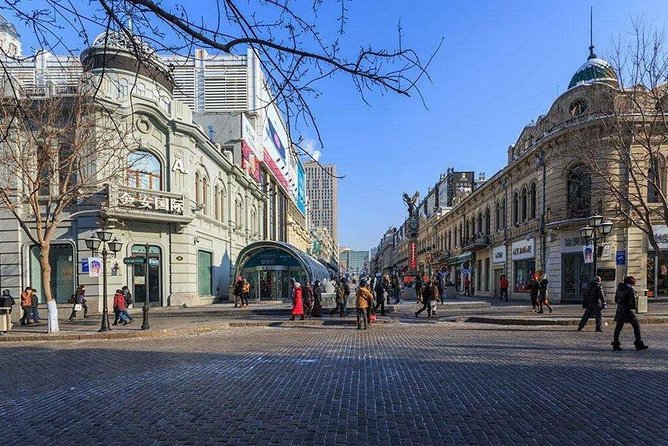
The two things I most like are the public transportation coaching and the mix of “photo stops” with real city texture. You get to see places like Zhongyang Pedestrian Street and the Songhua River area, while your guide also helps you understand how to get there, which is gold if you want to keep exploring after the tour ends.
One possible drawback to plan for: attraction tickets are not included, and one temple entry is specifically listed as 10 CNY. Also, if you come on a Monday, you will want to swap museum time because Harbin museums are closed that day.
In This Review
- Key things to know before you go
- Price and logistics: is this tour worth $250 per person?
- Your flexible day plan (how the itinerary really works)
- Getting around Harbin by public transportation, with a guide who explains it
- Heilongjiang Museum: a calm start with free entry time
- Hongbo Square: a simple transfer square with historical flavor
- Zhongyang Pedestrian Street: the classic Harbin walking spine
- Songhua River Bridge: river views and a summer-friendly stroll
- Laodaowai: baroque-style street energy on a historic lane
- Jile Si, Temple of Bliss: a meaningful stop with a ticket
- Saint Sophia Cathedral: the Eastern Orthodox highlight
- Children’s Park of Harbin: a local hangout, not a tourist set
- Sun Island (Tai Yang Dao): greenery and a scenic reset
- Flood Control Memorial Tower and the Songhua riverfront squares
- Who this tour fits best
- The guide factor: English support and real enthusiasm
- What to watch for on the day
- Should you book this Harbin public transit private tour?
- FAQ
- How long is the Harbin city day tour?
- What is included in the tour price?
- Are attraction entry tickets included?
- Can I customize the itinerary?
- What is the overtime fee if the tour runs long?
- Are museums open every day?
- What is the cancellation policy?
Key things to know before you go
- Public transit, not taxis: you get a guided, practical lesson in getting around
- A route you can shape: you choose some stops from a list, not all of them
- Top Harbin icons + local streets: cathedral, river views, and baroque-style lanes
- Fares and pickup are included: less decision fatigue, fewer small payments
- Plan for walking time: the day runs 8 hours, with optional overtime at 150 CNY per hour
Price and logistics: is this tour worth $250 per person?
At $250 per person for an 8 to 9-hour private day, this is not a budget add-on. It is priced like a guide plus transportation convenience, and that is how you should judge it: you are paying to avoid the two hardest parts of independent sightseeing in Harbin, getting around smoothly and deciding what order makes sense.
The value comes from what is included. You get hotel pickup and drop-off, a private guide, and the transportation fee is covered. That combination matters because fares and repeated solo navigation add up fast, especially when you are moving between Central Street, the riverfront, and Sun Island-style park areas.
The other practical detail is timing. Your core day is set at 8 hours, and if you run longer there is an overtime fee of 150 CNY per extra hour. If you like a relaxed pace, you will probably want to plan your must-sees first, then keep the rest flexible.
More City Tours in Harbin
- 2-Day Harbin City Private Tour in Your Way in Winter Season
★ 5.0 · 26 reviews - 3-Day Harbin City Private Tour in Your Way in Winter Season
★ 5.0 · 14 reviews - 2-Day Group City Tour Package with Harbin Ice and Snow Festival
★ 5.0 · 13 reviews
Your flexible day plan (how the itinerary really works)
This tour is a private experience, so your guide can steer the schedule based on what you care about. The stops you see are options, not a promise that every listing item will happen in one day. That is a good setup if you want to build a “greatest hits” route, but it does mean you should arrive with a short priority list.
For example, you might pair historic architecture with river walks, then finish in a park area. Or you might keep the day more museum and culture heavy. Either way, your guide also helps you handle the public transit steps so you do not just survive the day, you learn enough to keep going afterward.
One planning note that can change your day: Harbin museums are closed on Monday, so if Heilongjiang Museum is on your list, you will want to confirm a swap in advance.
Getting around Harbin by public transportation, with a guide who explains it
The best part of this tour is not any single landmark. It is the way you move. I like tours that teach you what to do next, and this one does that by helping you use the transit system while you are actively sightseeing.
You will get local eyes guidance on how to get from one area to the next, and that makes a big difference in a city where people outside China often underestimate how quickly you can get off track. Even if you later choose to wander on your own, you come away with a mental map and a better sense of direction.
Also, you are not paying transit fare separately at each step. Having the transportation fee included removes a bunch of small friction, which keeps the day feeling smooth.
And yes, you still want to wear comfortable walking shoes. A day that includes pedestrian streets, riverfront walking, and park areas adds up.
Heilongjiang Museum: a calm start with free entry time
Your day can begin at Heilongjiang Museum for about an hour. The big win here is that admission is free, so it is a low-risk way to get context for Harbin’s place in the north.
This stop is best when you want a cultural baseline before you head into the city’s architectural highlights. If you are short on time or you prefer spending more hours outside, you can also treat it as a quick orientation stop rather than a deep museum session.
Potential drawback: if you are visiting on a Monday, this is one of the stops that can become a problem since museums are closed on Monday. Plan to swap it early in the conversation with your guide.
A few more Harbin days worth comparing
- 1-Day Harbin Private Tour
★ 5.0 · 22 reviews - Harbin Winter Warm Clothing Rental
★ 5.0 · 15 reviews - Private Full Day Transfer Service to Harbin Top Winter Attractions
★ 5.0 · 8 reviews - Full Day Private Tour to Harbin Ice and Snow Festival
★ 5.0 · 8 reviews
Hongbo Square: a simple transfer square with historical flavor
Hongbo Square is a quick one, around 30 minutes, and it has a long background as a transfer square dating back to around 1900. This is not the kind of place where you spend all day, but it works well as a breather between longer walks.
I like it for the same reason I like many old squares in big cities: you get a sense of the urban rhythm without needing to buy anything. You also get a place to regroup, check your bearings, and reset before the next big corridor.
Since the time is short, you should use it to notice street patterns and how the flow of people moves. Your guide can help connect this area with what comes next.
Zhongyang Pedestrian Street: the classic Harbin walking spine
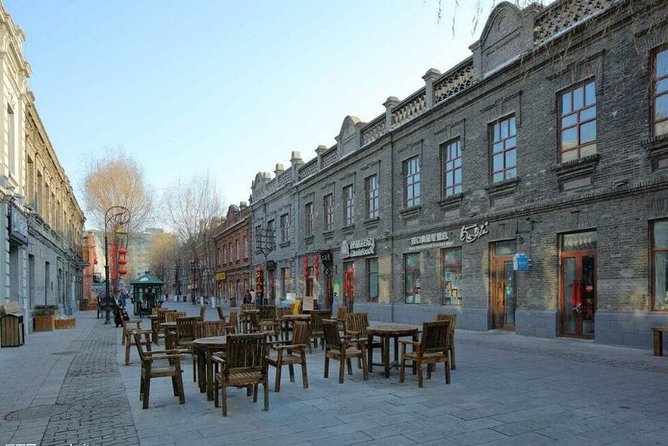
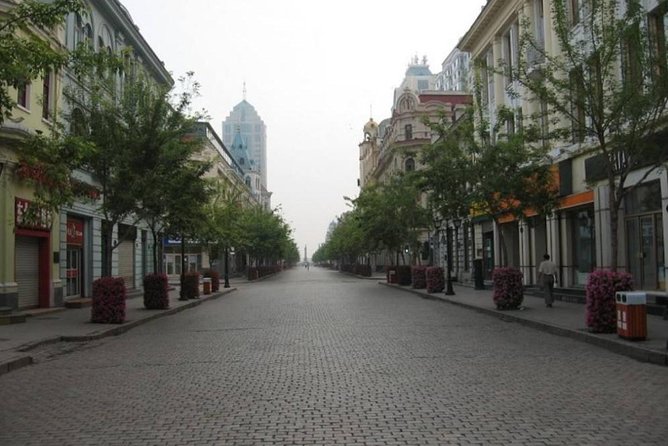
If Harbin has a headline street, it is Zhongyang Pedestrian Street. You get about an hour here, with about 100 years of history and origins dating back to 1923.
This is where Harbin feels most like a show-and-story city: long pedestrian stretches, architectural details, and an easy place to take photos because everyone is walking the same line.
The practical tip is to go with a plan for how you will use that time. If you want shopping, build in a slower walk. If you want photos and architecture only, keep moving so you do not lose momentum when the rest of the day includes cathedral and riverfront.
Also, because it is pedestrian-focused, it can get crowded. A good guide matters here because they can suggest the simplest routes and timing.
Songhua River Bridge: river views and a summer-friendly stroll
Next comes the Songhua River Bridge, where you get about 30 minutes. The appeal is the walk and views, especially in warmer weather, with seasonal details like flowers and willow trees and a backdrop of large towers.
This is a great “pause stop.” Even if you are not a die-hard river person, the riverfront is where the city changes mood. You are trading tight streets for open air and a wider horizon.
One consideration: your time is limited. If you want extra river time, ask your guide to adjust the order or build in a little breathing room later, rather than trying to squeeze in too much here.
Laodaowai: baroque-style street energy on a historic lane
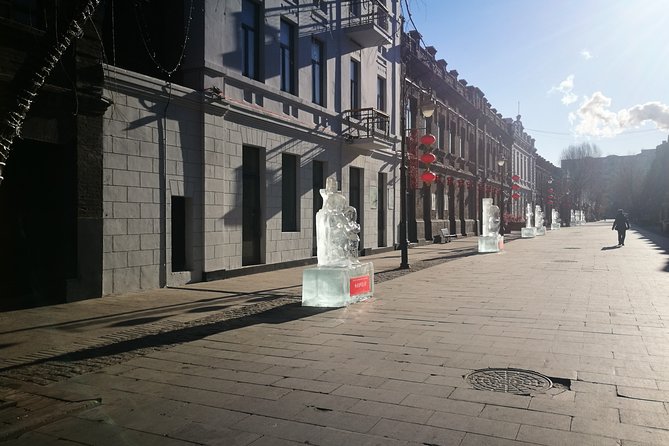
Laodaowai is another walk-focused stop, about one hour, described as a Chinese baroque-style street with an origin around the 1920s. This area works well if you like architecture and street atmosphere more than museum labels.
I like mixing this stop between larger landmarks. It gives you a change of pace: instead of a single big site, you get a street-level feel of Harbin’s style.
The practical downside is that it can feel repetitive if you do not care about facades, details, and the overall streetscape. If you do care, this is one of the more rewarding stops because you can look slowly without needing to commit to a long ticketed attraction.
Jile Si, Temple of Bliss: a meaningful stop with a ticket
Temple of Bliss (Jile Si) is listed as a one-hour visit, and here tickets are not free. The entry is 10 CNY per person, so you should plan for that extra cost.
This stop is worth it if you want Harbin to be more than architecture and river walks. A Buddhist temple adds a different kind of energy, quieter and more local, and it also helps break the rhythm of European-style and street-heavy sightseeing.
Potential drawback is budget-related. Since tickets are not included in the tour price, you need to have some cash or payment method ready for this and any other paid entry you choose.
Saint Sophia Cathedral: the Eastern Orthodox highlight
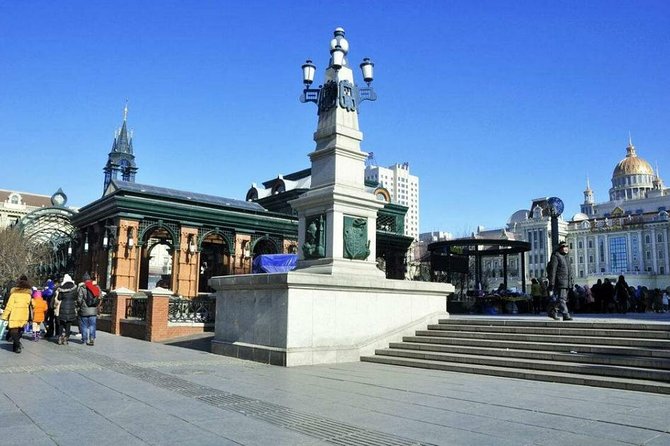
Few places are as visually striking in Harbin as Saint Sophia Cathedral. Your time here is about 30 minutes, and the attraction is listed as not included for ticketing, so you will pay your entry separately if you go inside.
The description matters: it is presented as the largest Eastern Orthodox Church in the far east and a protected cultural relic. The fact that it was restored by the city adds another layer, because you are seeing something that survived political and historical changes and still functions as a major landmark.
I recommend treating this as both a photo stop and a moment to slow down. Even at 30 minutes, the exterior is a must, and if your schedule allows, going inside is usually where you get the real payoff.
This is also the stop that tends to stick with people, and it makes sense. The cathedral gives Harbin its instantly recognizable silhouette.
Children’s Park of Harbin: a local hangout, not a tourist set
Children’s Park of Harbin is about 30 minutes and is described as a place where local people relax and do sports. This is a small change from the big-name sights, but I genuinely like it for that reason.
When you include a local park, the day stops feeling like a museum circuit. You get to see everyday life, which can make the whole trip feel more human.
The only drawback is that it might feel too simple if you are expecting major attractions and paid performances. Approach it like a breather, a place to regroup, and maybe people-watch for a few minutes.
Sun Island (Tai Yang Dao): greenery and a scenic reset
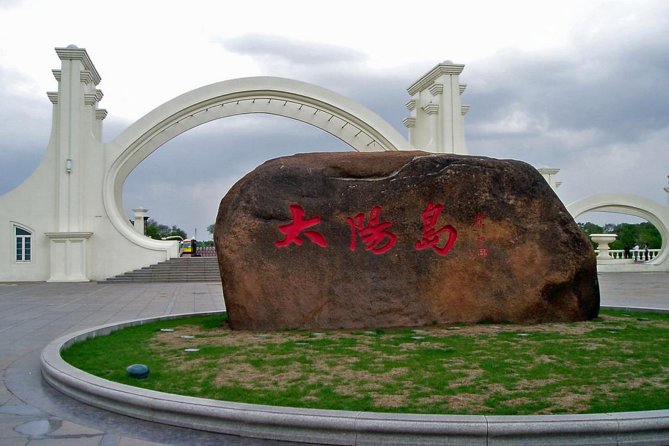
Sun Island is your longer park stop, about one hour. It is described as a beautiful park with flowers and trees, which makes it a solid choice if you want the day to cool down after urban corridors.
This stop is a good match for travelers who like walking, scenic photo breaks, and open space. It also balances the day because you are not only consuming architecture and historic sites.
The trade-off is time and weather. Parks are weather-dependent. If it is cold or rainy, you might want to be flexible with how much outdoor time you plan and what shoes and layers you bring.
Flood Control Memorial Tower and the Songhua riverfront squares
You can wrap part of the riverfront experience with Harbin Flood Control Memorial Tower, around 30 minutes. It is described as near the river side, with the area framed as the biggest square by the Songhua River.
This is one of those stops that can surprise you. A memorial tower plus open square space can be more than a quick viewpoint if your guide gives you the city context for why it matters.
Then there is Stalin Park, also about 30 minutes, described as the river side biggest park in China. It sounds grand, and even with a quick visit, it gives you that big-open-city feeling near the water.
These two stops are ideal if you want your day to end with a less structured vibe, even while still staying on a guided route.
One consideration: naming and themes here can be politically loaded, depending on your own interests. If you want careful context, ask your guide how they explain the history and naming choices.
Who this tour fits best
This day tour is a strong fit if you:
- want a private guide but still prefer public transit over taxis
- like a mix of major landmarks and “look closer” street areas like Laodaowai and pedestrian lanes
- care about learning how to move through Harbin, not just collecting stamps
- want to keep things flexible, choosing some stops instead of committing to every stop on a list
It might not fit as well if you dislike walking, hate transit navigation, or want every paid attraction time included in the same price. Also, if you only want indoor experiences, you will need to plan your stops because the route has multiple outdoor river and park blocks.
The guide factor: English support and real enthusiasm
In Harbin, the guide makes the difference between a chaotic day and a confident one. The English-speaking guides connected to this tour are known for being friendly and prepared, with long experience guiding visitors around Harbin’s key sights.
One example from guide messaging: Samantha shared that she has worked as a local English-speaking guide for about 13 years, and her focus is getting visitors to enjoy Harbin and make the day memorable. That kind of experience usually shows up in small ways, like explaining the best way to move between areas, keeping the pace comfortable, and making the landmarks make sense instead of feeling random.
What to watch for on the day
Here are the practical things that help your day run smoothly:
- Bring payment for ticketed stops like Temple of Bliss (10 CNY) and any other paid entry you choose.
- Wear comfortable walking shoes, because you will do real walking on pedestrian streets and riverfront areas.
- Decide early whether you want museums. If you are visiting on Monday, museums close, so build your plan around that.
- If you have longer interests, you can extend the day. Overtime is 150 CNY per hour, so think in blocks of time.
Should you book this Harbin public transit private tour?
I would book this tour if you want a smart mix of iconic Harbin and local movement, with hotel pickup, a private guide, and transportation fees included. The chance to learn the public transit system while you are still on a structured day is the part that pays off most, because it gives you confidence beyond the tour hours.
I would skip or adjust it if your priority is only paid indoor attractions, or if you are traveling with very limited walking ability. Since tickets are not included for attractions, also make sure you are comfortable with adding a few costs on top of the $250.
If you are the kind of traveler who likes planning, but also likes room to change your mind on the ground, this is a great way to see Harbin in one day without turning it into a stress test.
FAQ
How long is the Harbin city day tour?
The tour lasts about 8 to 9 hours.
What is included in the tour price?
It includes a private guide service, a private tour, transportation fees, and hotel pickup and hotel drop-off.
Are attraction entry tickets included?
No. Entry tickets are not included, except some stops listed as free admission.
Can I customize the itinerary?
Yes. The itinerary is fully customizable, and you choose some stops you like from the options provided.
What is the overtime fee if the tour runs long?
If your private tour runs longer than the planned 8 hours, an overtime fee of 150 CNY is charged for each additional hour.
Are museums open every day?
No. Harbin museums are closed on Monday.
What is the cancellation policy?
You can cancel for free up to 24 hours in advance for a full refund.
Recently added around Harbin
- Private Tour to Ice and Snow Festival in Harbin★ 5.0 · 3 reviews
- Private Half Day Tour to Unit 731 Museum and Sites in Harbin★ 5.0 · 6 reviews
- Private Half Day City Tour including Russian Town and Harbin Ropeway Ride★ 5.0 · 3 reviews
- Private Full Day Transfer Service to Harbin Top Winter Attractions★ 5.0 · 8 reviews
- Harbin Airport (HRB) : Private Arrival Transfer with Meet & Greet Service★ 5.0 · 3 reviews
- 4-Day Harbin City Private Tour with Ice and Snow Festival with Lunch★ 5.0 · 4 reviews
- Harbin Winter Warm Clothing Rental★ 5.0 · 15 reviews
- Full Day Private Tour to Harbin Ice and Snow Festival★ 5.0 · 8 reviews
City Tours, compared.
Forbidden City Tour(Group/Private)-Tickets Included
Read our review →
T-Square & Forbidden City Group or Private Tour
Read our review →
All-Inclusive Tour: Tiananmen Square, Forbidden City, Great Wall
Read our review →
4-Hour Small Group Tour to Forbidden City with Entry Tickets
Read our review →Beijing Full Day Tours: Tiananmen Sq, Forbidden City, Great Wall
Read our review →
Mini Group Xian Day Tour to Terracotta Army, City Wall, Pagoda and Muslim Bazaar
Read our review →Tianmen Square, Forbidden City & Royal Museum Tours
Read our review →
Beijing Forbidden City Ticket Booking (Optional: guide service)
Read our review →Browse the lists this tour appears in