
Reviewed · YANGTZE RIVER CRUISES
11 Days 10 Nights Leisure China Tour with Yangtze River Cruise
Two cities, one unforgettable river week. This tour is interesting because it pairs classic China must-sees with a slower rhythm on the water, so you are not just sprinting from ticket to ticket. I especially like how the plan delivers Forbidden City level history and also builds in proper Yangtze River cruise time.
You’ll see big names, but you also get practical support: airport transfers, a driver and guide, included entrance tickets for most key sights, and even bottled water. One possible drawback: not every gorge-area stop is included in the ticket price, and some shore excursions show admissions as not included, so you should keep a little extra budget for add-ons.
In This Review
- Key highlights to look for
- Beijing arrival and first tickets: Tiananmen, Forbidden City, Temple of Heaven
- Tip that matters
- Great Wall at Mutianyu plus Olympic Park: two Beijing styles in one day
- Hutong lanes and the Summer Palace: where you feel daily Beijing
- Xi’an Terracotta Warriors to the Bell Tower: the big-hitter history day
- Xi’an City Wall and Big Wild Goose Pagoda: a walking rhythm for your final Xi’an day
- Transition to the Three Gorges: Fengdu and the river mindset
- Qutang Gorge and Baidicheng scenic time: the gorge views you came for
- Three Gorges Dam Site: engineering facts with real-scale context
- Shanghai finale done right: Jade Buddha Temple, Oriental Pearl, Yu Garden, and the Bund
- Day 11 free in Shanghai: how to spend it with less stress
- Is $2,484 worth it for Beijing to Shanghai with Yangtze cruise?
- Who this tour suits best
- Should you book this Yangtze River cruise tour?
- FAQ
- What cities does this tour cover?
- Is the Yangtze River cruise included in the price?
- Are entrance fees included?
- What meals are included?
- Are all shore excursions included on the Yangtze portion?
- Does the tour end with a free day?
- What is the cancellation window for a full refund?
Key highlights to look for
- Yangtze River cruise time that slows the pace so the trip feels like a break, not a blur
- All-the-classics access with included tickets for places like the Forbidden City, Great Wall, and Temple of Heaven
- Two strong regional contrasts: imperial Beijing, then Xi’an, then Shanghai’s skyline and riverfront
- Cruise-side views tied to the Three Gorges including Qutang Gorge and major dam-area viewpoints
- Old-city texture in Beijing via hutong lanes plus a full Summer Palace garden day
- Local market style time in Xi’an’s Muslim Quarter for snacks and shopping
Beijing arrival and first tickets: Tiananmen, Forbidden City, Temple of Heaven
Day 1 is a clean reset day. You land in Beijing, meet the guide at the airport, and get transferred to your hotel. After check-in, you have free time to stretch your legs, grab dinner nearby, and set your rhythm for the big days ahead.
Then the trip hits one of Beijing’s core power zones in a tight sequence. Tiananmen Square is the world’s largest city-center square, laid out with specially processed light-colored granite. You’re also tied into a major cultural moment, because the flag-raising and flag-lowering ceremonies happen each day at set times.
From there, you move into the Forbidden City, also called the Palace Museum. This is not just a pretty palace. It is a huge imperial complex, built in the early 1400s, with thousands of rooms and more than 9,000 buildings across an enormous area. The practical value for you is simple: since the entrance is included, you can focus on seeing, not lining up or budgeting extra.
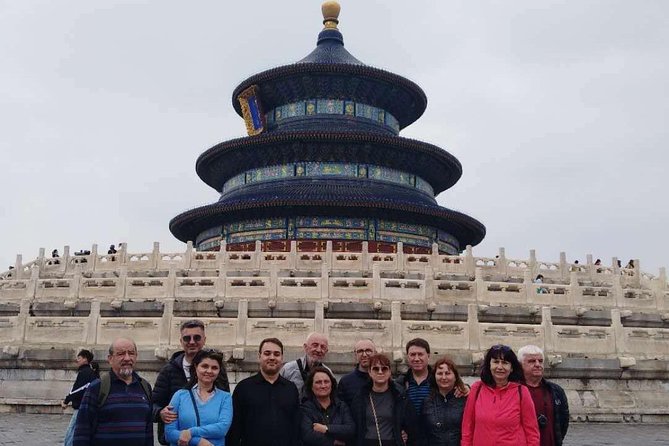
The day rounds out at the Temple of Heaven, where Ming and Qing emperors worshiped the god of heaven and prayed for good harvests. If you like understanding how power and belief shaped daily life, this stop gives you that angle. It also helps balance the Forbidden City, because it shifts from palace politics to ritual and the outdoors.
More Boat Tours in Beijing
- Water-Great Wall Odyssey: Hike & Cruise One Day Tour
★ 5.0 · 94 reviews - Water-Great Wall Odyssey: Scenic Bus & Cruise Day Tour
★ 5.0 · 91 reviews - Longqingxia Gorge Cruise and Guyaju Cave Dwellings Private Day Tour
★ 5.0 · 60 reviews
Tip that matters
Tiananmen, Forbidden City, and Temple of Heaven are all outdoor-heavy and walking-heavy. Wear shoes you trust, and plan to slow down when you feel yourself rushing. The trip gives you time blocks, but your feet will still notice the pace.
Great Wall at Mutianyu plus Olympic Park: two Beijing styles in one day
Day 3 is a smart “contrast day.” First up is Mutianyu Great Wall, one of the best-preserved and most well-known sections. The scenery here is dramatic, and it tends to draw fewer crowds than some other popular wall areas, which makes it a better pick if you want time to enjoy views instead of just moving through them.
Then you shift to a totally different Beijing identity: Olympic Park, including the Water Cube. The Water Cube is the National Aquatics Center, an iconic venue from the Beijing 2008 Games. Even if you do not care about sports architecture, it is a useful change of pace from imperial stone and courtyard walls.
For you, this pairing works because it stops the trip from feeling repetitive. One moment you are climbing ancient defensive walls, the next you are standing near modern, designed geometry.
Hutong lanes and the Summer Palace: where you feel daily Beijing
Day 4 leans into “how people actually live.” You start with a hutong tour, which focuses on the old lanes shaped in Ming and Qing eras. The value is not only shopping or dining, it is the chance to understand how neighborhoods work. In hutongs, Beijing becomes smaller. You see everyday rhythms rather than trying to force an imperial script onto the city.
Then you get a full day at the Summer Palace. It is widely considered one of the best-preserved imperial gardens and is huge for an imperial site still in existence. It can feel like a different world from Beijing’s city bustle because the palace and gardens are designed for water, views, and long strolls.
This day is a good fit if you like slow travel within a structured schedule. A 6-hour block at the Summer Palace gives you room to wander rather than snap photos and hurry out.
More Yangtze and Three Gorges cruises:
- 14-Day Small-Group China Tour: Beijing, Xi’an, Guilin, Yangtze Cruise, Shanghai
★ 5.0 · 15 reviews - 14-Day Small-Group Tour to Beijing, Xi’an, Chengdu, Yangtze, Chongqing, Shanghai
★ 5.0 · 8 reviews - 15-Day Classic China Tour with Yangtze Cruise
★ 5.0 · 6 reviews - 16-Day Private China Essence Tour with Yangtze River Cruise
★ 5.0 · 6 reviews
Xi’an Terracotta Warriors to the Bell Tower: the big-hitter history day
On Day 5, the tour pivots from Beijing to Xi’an, and it wastes no time. The Museum of Qin Terracotta Warriors and Horses is one of the world’s most important archaeological finds. You are looking at troops, horses, and battle formation details tied to the Qin era. The included time matters because this place rewards attention. You cannot really rush it if you want the “wow” to be more than a quick glance.
After the museum, you head to Xi’an’s Bell Tower area. The Bell Tower sits in the center of the ancient city. It dates back to the late 1300s, and the timing and setting make it an easy cultural anchor for your afternoon. You also get a break from “big museum mode” here, because it is more about city feel and layout.
Then you finish with a visit to the Muslim Quarter. This is where the trip gives you a more local, market-style experience. You get shopping time, which is perfect for grabbing snacks, trying street food, and picking up small gifts without turning everything into a formal tour.
Xi’an City Wall and Big Wild Goose Pagoda: a walking rhythm for your final Xi’an day
Day 6 continues Xi’an with a long-view perspective. You visit the Xi’an City Wall, one of the oldest and best-preserved Chinese city walls. You can go around by bicycle or sightseeing car, which is a practical way to cover ground without draining your entire day.
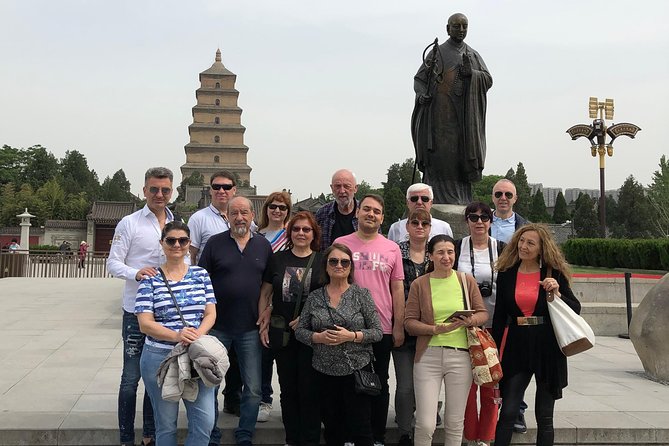
Then you go to the Big Wild Goose Pagoda (Dayanta). It is a Buddhist holy place with a history of more than 1,300 years. If Terracotta Warriors gave you the ancient “state” story, this stop adds a different layer, faith and learning tied to the region.
If you are the type who likes a city to feel complete, this day closes the loop nicely. You see defensive walls, then religious center points.
Transition to the Three Gorges: Fengdu and the river mindset
Day 7 is where the trip really changes gears. You have a shore excursion tied to Fengdu, with Jade Emperor mentioned for the morning option. If you want to go deeper into the area, there is also an optional shore excursion to Fengdu Ghost City, but admissions are not included.
This is the start of the “river mindset” for the whole trip. Even on shore, you are moving through areas connected to myths and traditional beliefs. It’s also a useful moment to rest, because river cruises typically give you a slower daytime pace compared to full-on city days.
Lunch is served on board with a buffet. That matters because it reduces decision fatigue. When you are bouncing cities and sights, having meals handled for you keeps the day from feeling like constant planning.
Qutang Gorge and Baidicheng scenic time: the gorge views you came for
Day 8 is gorge-focused. You visit Baidicheng Scenic Area, also described as Fengjie White Emperor City. It sits on the north shore in the Qutang Gorge area, surrounded by water and waterfalls, and it is known for imposing views.
You also get time tied to Qutang Gorge itself, the shortest of the Three Gorges at about 8 kilometers. It is considered one of the most dramatic by many visitors, with steep cliffs and the Meng Liang staircase from the Song Dynasty referenced in the area. Even if you are not a history nerd, gorge topography is hard to fake. The cliffs and narrow river feel instantly more intense than flat-water cruising.
The key thing for you to know: admission for Baidicheng Scenic Area is marked as not included. So if you are counting on every stop being fully covered, set aside some cash for this day.
Three Gorges Dam Site: engineering facts with real-scale context
Day 9 adds a modern chapter to a mostly ancient itinerary. You visit the Three Gorges Dam Site, located upstream from Yichang, at Sandouping Town.
This stop gives you context for why the Yangtze River cruise experience looks the way it does today. It is easy to understand the dam as something abstract from photos. On site, it is harder to dismiss because you see the scale and the way it interacts with the river corridor.
If you like your travel to include “how the world works,” this is a strong addition. It also helps the cruise feel like more than scenery, because you get a clear idea of the river’s current reality.
Shanghai finale done right: Jade Buddha Temple, Oriental Pearl, Yu Garden, and the Bund
Day 10 brings you into Shanghai, and it’s a lineup of landmark intensity without going entirely “high-rise only.”
Start at the Jade Buddha Temple, first built in 1882. It features a 1.9-meter-high white jade Buddha that was brought to the region after a monk retrieved it from Burma to Zhejiang. If you like calm interiors after big outdoor days, this is a good reset.
Next comes the Oriental Pearl Tower. At 468 meters, it is a signature skyline structure and a recognizable Shanghai icon. The visit is long enough to feel like you did more than point at the tower from the street.
Then you slow down again at Yu Garden, the only fully restored classical Chinese garden in Shanghai. You get pavilions, corridors, small hills, rocks, lotus ponds, bridges, winding paths, and carefully placed trees and shrubs, all within a relatively compact area. This stop is ideal if you want a “designed” Shanghai moment, not just modern glass and steel.
After that, Nanjing Road gives you the commercial pulse. It is described as a major shopping center and an early commercial street since Shanghai opened to the outside world. And then you end with the Bund along the Huangpu River, with major skyline landmarks across the water.
Even without museum-level detail, this day works because it maps Shanghai’s identity in layers: faith, architecture, garden design, shopping street energy, then the riverfront skyline views.
Day 11 free in Shanghai: how to spend it with less stress
Day 11 is a free day, which is smart. A trip like this stacks a lot of major sites, and that last day is your chance to choose based on energy level.
If you still have stamina, you might revisit a favorite area from Day 10, shop for gifts you did not find earlier, or simply sit with a drink and people-watch. If you feel worn out, use the day to do laundry, catch up on sleep, and plan your departure day calmly.
Is $2,484 worth it for Beijing to Shanghai with Yangtze cruise?
At $2,484 per person for 11 days and 10 nights, the real question is what portion of your travel budget the package handles. Here, it covers entrance fees for many named sights and includes the Yangtze cruise, plus driver and guide services and hotel accommodation.
Food is also partially handled: breakfast is included for 10 days, lunch for 9 days, and dinner for 2 days. Bottled water is included as well. That combination matters because it reduces two common trip drains: finding meals between timed entries and worrying about what costs will pop up midday.
Where you should expect extra spending is where the itinerary explicitly marks admission as not included, especially around the Fengdu and Baidicheng side activities. Optional shore excursions can also add cost.
If you value having hotels and key tickets handled, and you want a smooth route from Beijing to Shanghai without planning each leg, the price can feel fair. If you are the type who prefers independent travel and you want total control over each stop, you might feel boxed in by included structure.
Who this tour suits best
This fits you well if:
- You want a single, organized route covering Beijing, Xi’an, the Three Gorges area, and Shanghai.
- You like seeing major monuments, but you also want a genuine break built in through cruise time.
- You prefer having entrance tickets and guides arranged so you can spend your brain on what you are actually seeing.
It may be less ideal if:
- You hate packed days and long walking.
- You want every single shore stop to be fully included with no extra admissions.
Should you book this Yangtze River cruise tour?
I’d say book it if your dream trip includes both high-importance sights and real downtime on the Yangtze. The structure is built around a practical flow, with included tickets for many of the hardest places to schedule smoothly, plus the cruise portion that gives your trip a natural pause.
Before you commit, double-check any gorge-related admissions that are marked not included, and plan for at least one add-on choice so you do not feel surprised later. If you get a guide like Hannah Liang, the tour’s coordination is described as tight and organized. If you are paired with someone like Maurizio, you can also expect attentive explanations and careful handling of requests.
If that sounds like your style, this is a solid way to experience China across big regions without turning the whole trip into a checklist.
FAQ
What cities does this tour cover?
It includes stops in Beijing, Xi’an, the Yangtze River Three Gorges area (including Fengdu and gorge-related stops), and Shanghai.
Is the Yangtze River cruise included in the price?
Yes, the tour includes the Yangtze Cruise.
Are entrance fees included?
For many listed sights, yes. The tour includes entrance fees for specific stops such as Tiananmen Square, the Forbidden City, Temple of Heaven, Mutianyu Great Wall, Summer Palace, Terracotta Warriors, and several Shanghai attractions. Some items are marked as admission not included.
What meals are included?
Breakfast is included 10 times, lunch is included 9 times, and dinner is included 2 times, plus bottled water.
Are all shore excursions included on the Yangtze portion?
Not all. For example, an additional Fengdu Ghost City shore excursion is optional and is noted as having admission not included.
Does the tour end with a free day?
Yes. Day 11 is a free day, and the tour can arrange Maglev train to Pudong airport or drive you directly to the airport.
What is the cancellation window for a full refund?
You can cancel up to 6 days in advance for a full refund. Changes within 6 days are not accepted.
Recently added around Beijing
- Private Transfer to Mutianyu Great Wall with professional driver★ 5.0 · 19 reviews
- Wild Great Wall Hikes★ 5.0 · 10 reviews
- camp on the Great Wall overnight with sunrise and sunset on the wall★ 5.0 · 11 reviews
- Beijing: to Xi’an Terracotta Day Tour by Roundtrip Bullet Train★ 5.0 · 9 reviews
- Beijing: Mutianyu Great Wall and Tea House Private Tour★ 5.0 · 11 reviews
- Beijing Airport Layover Tour to Mutianyu Great Wall★ 5.0 · 4 reviews
- Private Wild Great Wall Hiking tour at Simatai (Challenging)★ 5.0 · 16 reviews
- Simatai Great Wall & Gubei Water Town Private Trip English Driver★ 5.0 · 7 reviews
Yangtze River Cruises, compared.
Two Rivers Night Cruise- Yangtze & Jialing Rivers
Read our review →
14-Day Small-Group China Tour: Beijing, Xi’an, Guilin, Yangtze Cruise, Shanghai
Read our review →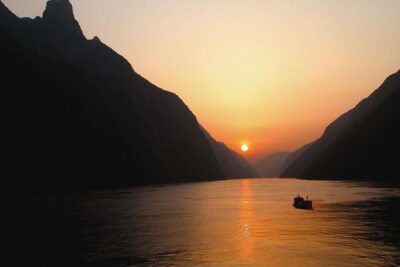
Yangtze River Cruise from Yichang to Chongqing Upstream in 5 Days 4 Nights
Read our review →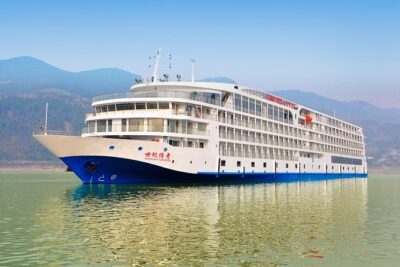
4D3N Yangtze River Cruise: Chongqing to Yichang by Century Cruise
Read our review →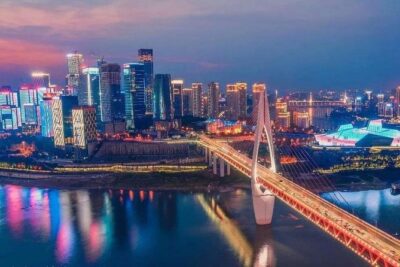
Chongqing Yangtze River Cruise and Illuminated Night Tour
Read our review →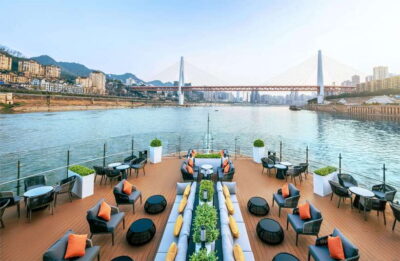
4D3N Yangtze River Victoria Cruise: Chongqing to Yichang
Read our review →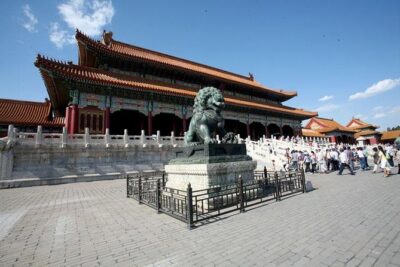
14-Day Small-Group Tour to Beijing, Xi’an, Chengdu, Yangtze, Chongqing, Shanghai
Read our review →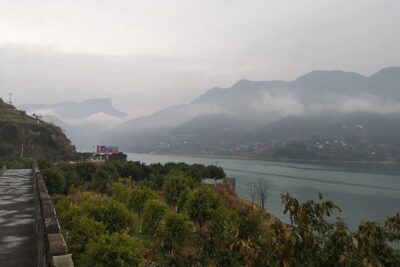
Yangtze River Cruise from Chongqing to Yichang Downstream in 4 Days 3 Nights
Read our review →Browse the lists this tour appears in