
Reviewed · HUTONG TOURS
Beijing Hutongs Walking Tour
Hutongs feel like Beijing backstage. This walking tour takes you from the Bell and Drum Towers area into traditional lane life, with a laid-back pace and real stories about what happened here and who lived nearby. You’ll move through courtyard neighborhoods most people miss once they focus only on the big imperial sights.
I like two things a lot. First, the walk stays relaxed for about 1 hour 30 minutes to 2 hours, so you can actually look at the lanes and buildings instead of rushing past them. Second, the guide experience is strong, especially with Roy Li Tours Beijing, who shares context about courtyard homes and even the last emperor’s fate through stops along Mao’er Hutong.
One thing to consider: since it’s a small group (max 15), you should plan to arrive early at the exact meeting point. If you’re late or at the wrong exit, the tour may move on without you.
In This Review
- Key highlights to look forward to
- Trading speed for hutong reality
- Price and logistics, what $30 really buys
- Meeting point near Nanluoguxiang, metro Line 6 or 8
- Bell and Drum Towers start: history you can feel
- Nanluogixiang lanes and courtyard houses
- Mao’er Hutong: architecture plus character stories
- Empress’s Mansion photo stop, linked to Puyi and Wanrong
- Walking toward the Houhai area and the water channel
- Why the guide matters on this route
- What to do with your time during the 1.5 to 2 hours
- The relaxed hutong pace, and why it’s a good first-day plan
- Who this tour suits best
- Should you book this Beijing hutong walking tour?
- FAQ
- How much does the Beijing Hutongs Walking Tour cost?
- How long is the tour?
- Where do I meet the guide?
- How many people are in the group?
- What is included in the price?
- Can I cancel for a full refund?
Key highlights to look forward to

- Small group pace for about 1.5 to 2 hours, not a marathon
- Bell and Drum Towers to Nanluogixiang for a fast start into traditional lanes
- Nanluogixiang courtyard houses with the look and feel of older Beijing architecture
- Mao’er Hutong stories, including a photo stop at Empress’s Mansion
- Empress Wanrong connection tied to Puyi, the last Chinese emperor
- Houhai area finale, including a narrow channel connection between Qianhai and Houhai
Trading speed for hutong reality
Beijing can be intense. One minute you’re staring up at grand structures, the next minute you’re in a city of walls, doors, and narrow lanes. This tour is built for that second side of Beijing, the hutong world where daily life once happened in courtyard homes.
What makes it work is the tempo. A lot of tours rush you from one photo stop to the next. Here, you get time to slow down, notice how lanes bend and funnel foot traffic, and understand why getting lost in a hutong maze is part of the adventure. The guide’s job is to keep it fun, not frustrating.
You’ll also get details you won’t pick up from a quick guidebook glance. The tour format focuses on human stories, including references to Chinese time-keeping and the fate of China’s last emperor, Puyi, as you walk through the lanes where the architecture and old connections still shape the scene.
More Walking Tours in Beijing
- Beijing Hutong Walking Food and Beer Tour at Hidden Restaurants
★ 5.0 · 1,132 reviews - Private Beijing Walking Tour of the Forbidden City with 7 Options
★ 5.0 · 675 reviews - Forbidden City Private Walking Tour with Optional Sights
★ 5.0 · 400 reviews
Price and logistics, what $30 really buys
The cost is $30.00 per person, and the experience runs about 1 hour 30 minutes to 2 hours. For that length, the value is mostly the guide and the routing. Hutongs are not obvious at a glance, and walking with someone who can connect what you see to what it means saves you real time and avoids aimless wandering.
Also, the tour uses a mobile ticket, which tends to be easier than paper when you’re moving between metro stations and street corners.
One more practical note: the tour summary says an admission ticket is not included. So think of this as a street-and-courtyard experience where you’re learning and observing in the neighborhood, not doing a big-ticket museum day.
Meeting point near Nanluoguxiang, metro Line 6 or 8
The tour starts at 10:00 am. You meet at Nanluoguxiang station, with the guidance to use Line 8 or Line 6, specifically Nan luo gu xiang station exit E.
The named meeting area is South Luogu Lane, Nan Luo Gu Xiang (Dongcheng District). Since the meeting point is tied to a specific metro exit, arrive a little early, like 10 minutes, and use your phone to match the street and signposts. In hutong zones, one wrong turn can feel like a different city.
This is small-group touring, max 15 people, so timing matters more than it does on huge bus tours. If you miss the window, you could be left trying to catch up on your own.
Bell and Drum Towers start: history you can feel
The first stop is the Bell and Drum Towers area. Even if you don’t go inside for tickets, this is a good starting point because it gives you a landmark to orient around before the lanes get narrow.
A key idea the guide brings to the walk is how Beijing once measured time through public rhythms, not just personal devices. As you move into Nanluogixiang and the surrounding hutong network, the “time-keeping” story helps you connect the neighborhood’s layout to how life moved through the city.
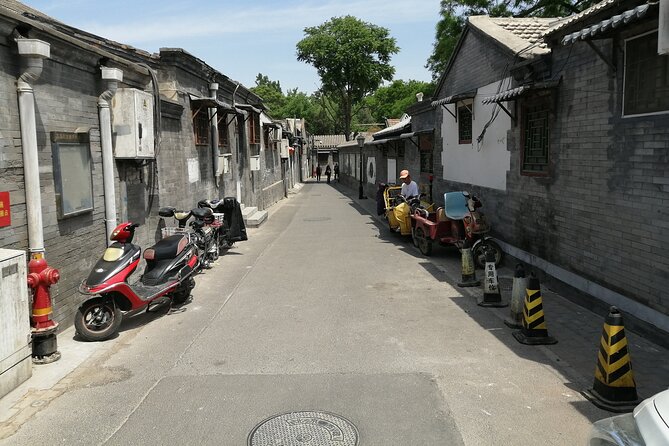
You’ll also get a sense of why Beijing’s lanes are not random. They’re structured corridors shaped by courtyards, gates, and household layouts, and the guide keeps you from getting overwhelmed.
More hutong walks in Beijing:
- Temple Heaven, Summer Palace, Lama Temple, Hutong Bus Tour
★ 4.7 · 319 reviews - Temple of Heaven, Summer Palace, Lama Temple, Hutong Tours
★ 5.0 · 311 reviews - Beijing Private Hutong Food Walking Tour
★ 5.0 · 299 reviews - The Hutong Experience by Bike
★ 5.0 · 163 reviews
Nanluogixiang lanes and courtyard houses
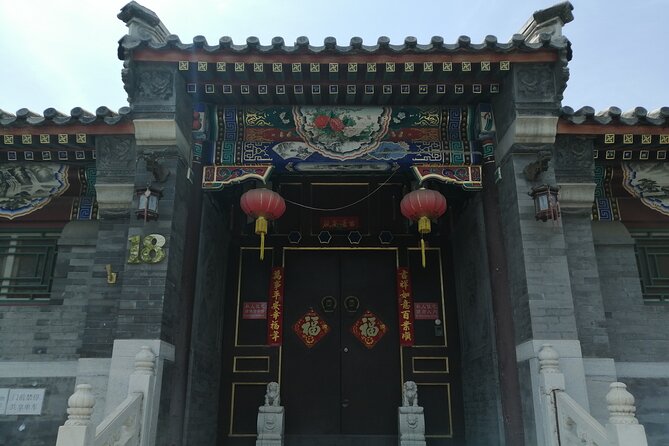
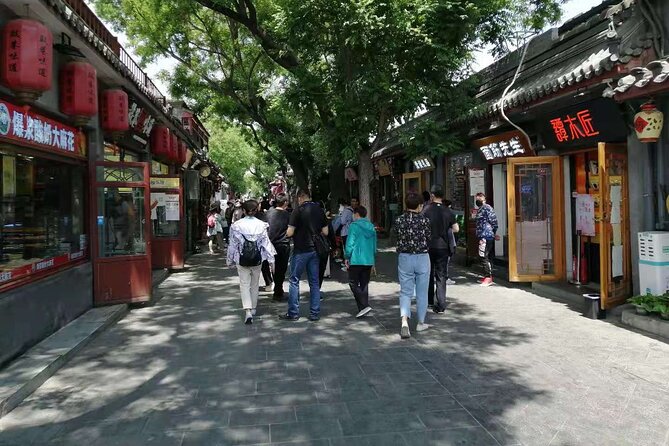
Next comes a stretch around Nanluogixiang, a lane that functions like a doorway into older architectural textures. The tour describes it as bringing you back toward the Yuan Dynasty atmosphere, with vernacular courtyard houses and a grey-toned look, along with old trees that make the whole place feel settled and lived-in.
This is where you’ll start noticing what makes courtyard neighborhoods different from broad-city streets:
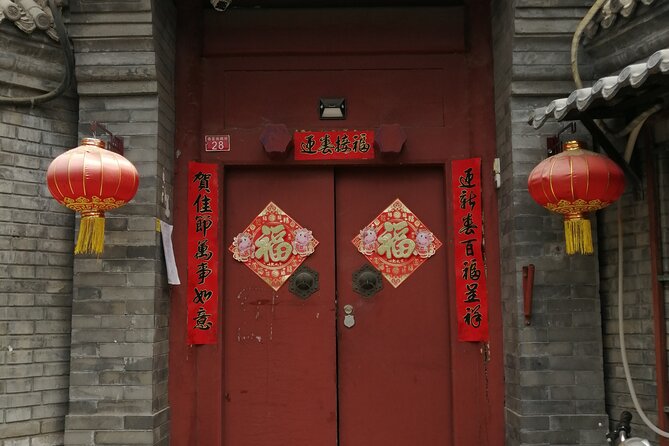
- Gates and doorways feel like strong boundaries between public lane and private home space.
- Courtyards create light and air inside, so you get framed views rather than open street panoramas.
- The lanes themselves act like corridors, often shaping sound and movement.
For photos, don’t just aim at the street scene in front of you. Try angles that include the lane lines and the courtyard walls fading back. That’s usually what makes hutong photos look like Beijing, instead of just another narrow alley shot.
Also, Nanluogixiang can be a lively area. The value of this tour is that you’re not only seeing the busy front. You’re learning how the courtyard layout and lane network create the neighborhood experience.
Mao’er Hutong: architecture plus character stories
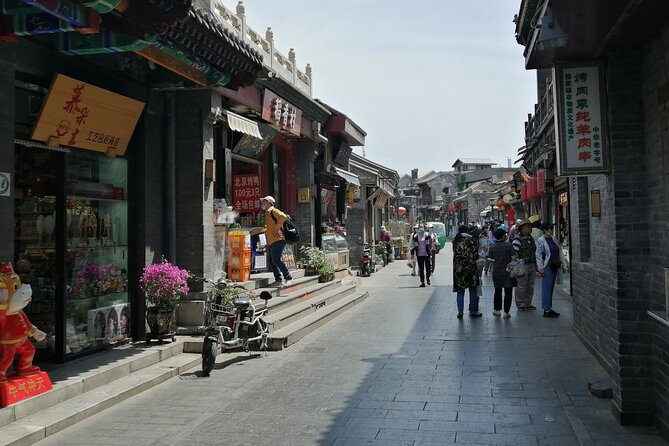
After Nanluogixiang, you continue into Mao’er Hutong, described as having famous buildings and character stories. This stop is where the tour starts feeling more like a walking narrative.
The guide connects the architecture to people and events, and that’s what turns the lane view into something memorable. You’re not just looking at old walls. You’re learning why they mattered, and who is linked to the place.
This part of Beijing rewards slow walking. The streets are narrow enough that you notice details like how walls turn corners, how gates sit back from the lane, and how old trees can anchor the atmosphere. If you rush, you’ll miss that.
Empress’s Mansion photo stop, linked to Puyi and Wanrong
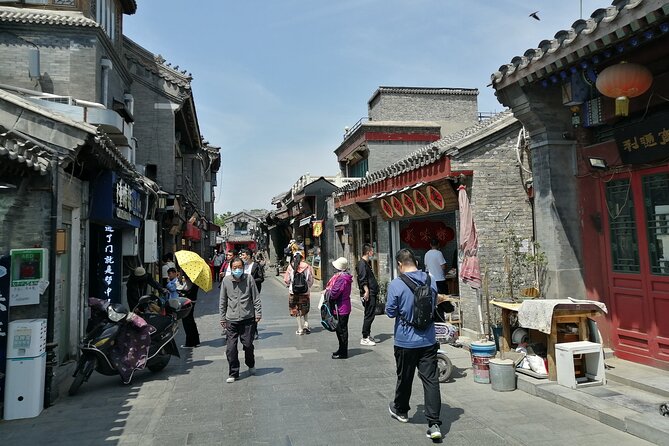
One of the most specific and interesting moments is the stop at Empress’s Mansion, the former residence of Puyi’s empress, Wanrong. Even if you’ve never studied the late Qing and early Republican transition before, the tour gives you a human thread to follow.
Here’s why that matters: hutongs are not only charming old streets. They’re also places tied to political shifts and personal lives. When you connect Wanrong to a real residential site, the history stops being a timeline in a book and becomes something you can point to while walking.
For your visit mindset, keep it simple. Use the stop for:
- a few photos that show the lane perspective around the site
- a moment to absorb the story before you move on
- a respectful watch-and-learn approach if you see daily life continuing around you
You won’t get this kind of location-based context from simply passing by on your own.
Walking toward the Houhai area and the water channel
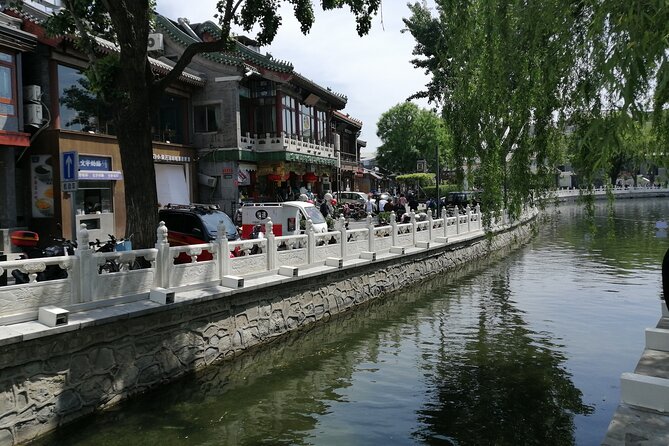
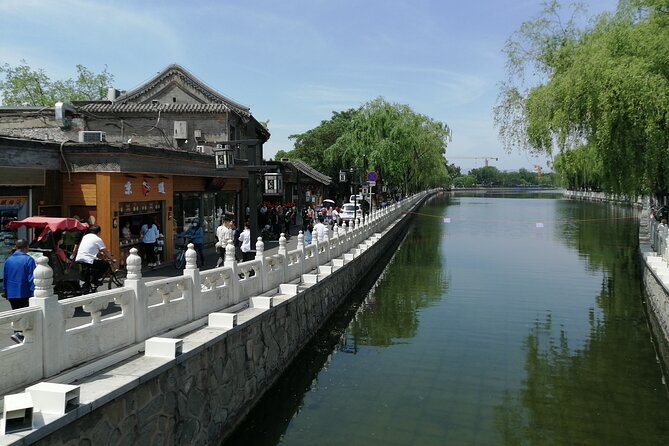
As the tour progresses, you head toward the Houhai area, with a visit to a narrow channel that joins Qianhai Lake and Houhai Lake.
Water changes everything in a hutong neighborhood. It softens the lines, adds open space, and gives you a different sense of where the city’s energy goes. The narrow channel also creates a natural pause in the walk, a spot where you can reset your eyes after lanes and walls.
This is a good place to take a breath and check your bearings. If you plan to continue your day, you’ll have a logical next neighborhood reference point, since Houhai is a well-known area for strolling and evening atmosphere.
Why the guide matters on this route
This is not a tour where you can easily “wing it” and still get the full payoff. The hutong network is confusing, especially if it’s your first time in central Beijing. That’s exactly why the guide experience is the core value.
The tour includes an English-speaking guide, and based on feedback, Roy tends to be engaging and prepared, with English that’s easy to follow. One thing I like about guides who use quick check-ins is that it keeps you from tuning out when history gets abstract. The pace here feels interactive, not lecture-style.
Also, the tour caps at 15 people. That small number matters because you’re more likely to get individual attention if you have questions, and you’re less likely to get stuck behind a large crowd in narrow lanes.
What to do with your time during the 1.5 to 2 hours
Since the route is short but dense, treat it like a focused orientation session. Here’s how I’d handle it if you want to make the most of your money and energy:
- Wear shoes you can walk in comfortably. Hutong lanes are not rough like hiking trails, but they’re still uneven in places.
- Carry water, especially if you’re walking in warm months. You’ll be outside for most of the experience.
- Keep your phone charged enough for a few photos. Courtyard lanes reward camera angles.
- Ask questions when they come up. If the guide mentions Chinese time-keeping or Puyi and Wanrong, that’s prime material you’ll want to connect to what you’re seeing.
The big win is that you leave with mental maps. Even if you don’t remember every street name, you’ll understand how hutongs flow from lane to lane and how the water areas fit into the city.
The relaxed hutong pace, and why it’s a good first-day plan
If it’s your first full day in Beijing, this kind of tour is a strong move. It gives you context early, so when you later visit museums or bigger sights, you can place them in the broader human geography of the city.
A hutong walk also changes how you read Beijing streets. After a good guide session, you start noticing:
- which walls and gates signal courtyards
- which lanes feel like they were designed for neighborhood movement
- how landmark areas like Bell and Drum Towers connect to the lane web
You don’t need to be a history buff to enjoy this. You do need a willingness to slow down and pay attention to the small scale. If you’re expecting big set-piece monuments around every corner, you might feel like it’s too low-key.
Who this tour suits best
This experience is a great match if you want:
- a guided look at hutong life without getting lost
- courtyard architecture and neighborhood stories
- an English-speaking guide on a short timeline
- a small group format
It’s also a good choice if you’re trying to balance your Beijing day between landmarks and real local textures. You’ll still be in central areas, but the vibe shifts quickly from imperial scale to everyday lanes.
You might want to think twice if:
- you dislike walking through narrow streets
- you need lots of museum-style indoor time
- you show up late or hate being on a set meeting schedule
Should you book this Beijing hutong walking tour?
Book it if you want the city’s quieter, more human side early in your trip. The combination of Bell and Drum Towers, Nanluogixiang, Mao’er Hutong, and the Houhai area gives you a clean hutong story arc in under two hours.
I’d especially recommend it if you care about understanding what you see, not just photographing it. The Wanrong and Puyi connection, plus the guide’s explanations about time-keeping and neighborhood life, turns ordinary lanes into meaningful stops.
My final practical advice: arrive early at the exact metro exit, Line 6 or Line 8 exit E at Nanluoguxiang. With a small group, punctuality is part of the deal. Get that right, and you’ll come away with a Beijing you can actually navigate on your own.
FAQ
How much does the Beijing Hutongs Walking Tour cost?
It costs $30.00 per person.
How long is the tour?
The tour lasts about 1 hour 30 minutes to 2 hours.
Where do I meet the guide?
You meet at South Luogu Lane near Nanluoguxiang. The guidance is to use Nanluoguxiang station on Metro Line 8 or Line 6, exit E.
How many people are in the group?
The tour has a maximum of 15 travelers.
What is included in the price?
An English-speaking guide is included.
Can I cancel for a full refund?
Yes. You can cancel up to 24 hours in advance for a full refund.
Recently added around Beijing
- Private Transfer to Mutianyu Great Wall with professional driver★ 5.0 · 19 reviews
- Wild Great Wall Hikes★ 5.0 · 10 reviews
- camp on the Great Wall overnight with sunrise and sunset on the wall★ 5.0 · 11 reviews
- Beijing: to Xi’an Terracotta Day Tour by Roundtrip Bullet Train★ 5.0 · 9 reviews
- Beijing Airport Layover Tour to Mutianyu Great Wall★ 5.0 · 4 reviews
- Private Wild Great Wall Hiking tour at Simatai (Challenging)★ 5.0 · 16 reviews
- Beijing: Mutianyu Great Wall and Tea House Private Tour★ 5.0 · 11 reviews
- Simatai Great Wall & Gubei Water Town Private Trip English Driver★ 5.0 · 7 reviews
Hutong Tours, compared.
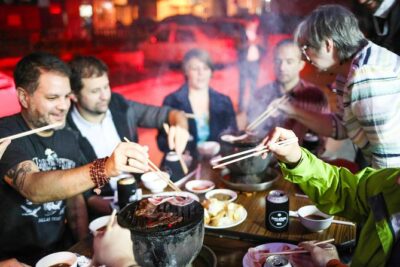
Beijing Hutong Walking Food and Beer Tour at Hidden Restaurants
Read our review →
Temple Heaven, Summer Palace, Lama Temple, Hutong Bus Tour
Read our review →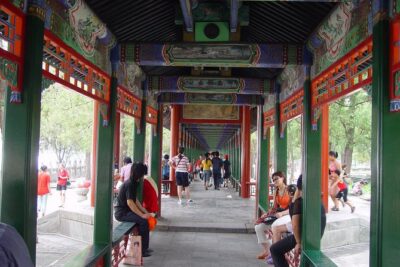
Temple of Heaven, Summer Palace, Lama Temple, Hutong Tours
Read our review →



Browse the lists this tour appears in