
Reviewed · CITY TOURS
Chongqing 4-hour Hidden City Walking Tour with Local Guide
Streets here go up, not out. This 4-hour walk is a smart way to understand Chongqing’s vertical neighborhoods, starting at Tongyuan Gate and ending along the riverside plank road. I love how the route turns abandoned and hard-to-reach corners into something you can actually navigate, and I also love the people-watching moments at the Chongqing Auditorium square. The main drawback is simple, there’s a lot of walking plus stairs, so you really need comfortable shoes.
You’ll follow a local guide through hillsides, overpasses, and sky-bridge connections that most visitors never find on their own. The tour blends big-history stops, like the WWII era street, with everyday Chongqing scenes, including senior square dancing. If you have limited mobility, this is likely not the best match, since the path is built for legs, not wheels.
You also get language support from an English, Russian, or Chinese live guide, which matters in a city where directions and local context can be tough. In particular, I liked the way guides such as Percy and Sophie have used personal stories and clear explanations to make the city feel less confusing and more human. If a storm hits, some guides have even adjusted on the fly, like taking a tea break while rain clears.
In This Review
- Key things you’ll notice on this hidden-city route
- Chongqing’s real city map: stairs, sky bridges, and hill logic
- Tongyuan Gate, and why this spot still matters
- Huayi and Linhua lanes: the “front door at 8th floor” effect
- The Chongqing Auditorium square: where locals actually spend time
- Zhongshan Fourth Road: tree shade and WWII context
- Riverside plank road: views, greenery, metro, and shelter secrets
- The abandoned train station stop: why it fits the theme
- Price and value: is $70 worth 4 hours in Chongqing?
- How to prepare so the stairs do not ruin your day
- Who this Chongqing hidden-city walk is best for
- Should you book the Hidden City Walking Tour?
- FAQ
- Where does the tour meet?
- How long is the Chongqing Hidden City Walking Tour?
- What is included in the tour?
- What is not included?
- What languages are available for the live guide?
- What should I bring?
- Is the tour suitable for people with mobility impairments?
Key things you’ll notice on this hidden-city route
- Tongyuan Gate gives you the origin story for Chongqing’s old boundaries and how the city spread
- Vertical neighborhoods with hillside stairs, sky bridges, and 8th-floor doors you have to see to believe
- Chongqing Auditorium square as a real community hangout, with local square dancing and kids playing
- Zhongshan Fourth Road with WWII-era context along a tree-lined walk
- Riverside plank road for views, greenery, passing metro, and quieter air away from streets
- Abandoned train station that fits the theme of layers, change, and hidden spaces
Chongqing’s real city map: stairs, sky bridges, and hill logic
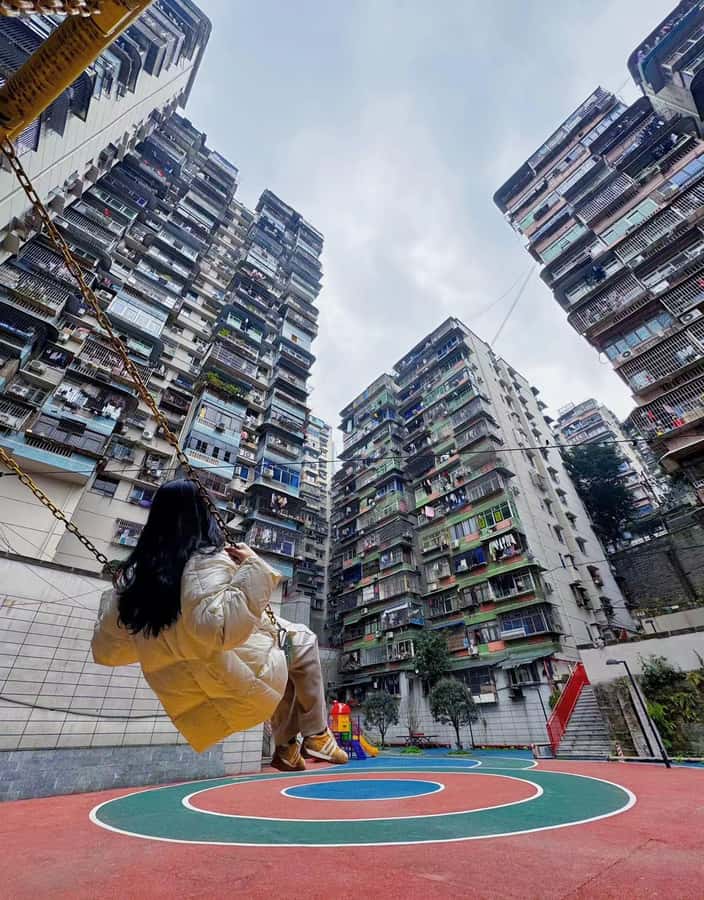
Chongqing can feel like a puzzle at first. Buildings stack on slopes, roads jump levels, and “going a few streets over” might mean climbing, crossing, then descending. This tour helps you build that mental map fast, so you stop feeling lost.
I like that the walk isn’t just about showy landmarks. You spend real time in the everyday structure of the city, where 15-story apartment blocks can still have front doors at the 8th floor and connections happen via sky bridges and exterior stairs. Once you see that pattern, Chongqing starts making sense.
More City Tours in Chongqing
- Chongqing: 1-day Essential Guided City Tour without Car
★ 5.0 · 44 reviews - Chongqing Cyber City in 1 Day
★ 4.9 · 24 reviews - Chongqing Private City Tour: Must-Sees All-in-One
★ 5.0 · 14 reviews
Tongyuan Gate, and why this spot still matters
You start near Tongyuan Gate, the oldest city gate in Chongqing. Historically, it marked a dividing line between Chongqing and the surrounding areas, but the city has expanded many times since then. Standing there, you can understand how a former boundary becomes an inner anchor as the city grows upward and outward.
This first stop is more than a photo moment. It gives you a baseline for what you’re about to walk through, especially the way Chongqing expanded into hillsides instead of staying flat and linear like many cities. If you’re the type who likes history that you can tie to geography, this works well.
Practical tip: plan to warm up slowly. The tour’s pace ramps once you head downhill through quiet lanes like Huayi and Linhua, where the views are subtle until you start noticing the layout.
Huayi and Linhua lanes: the “front door at 8th floor” effect
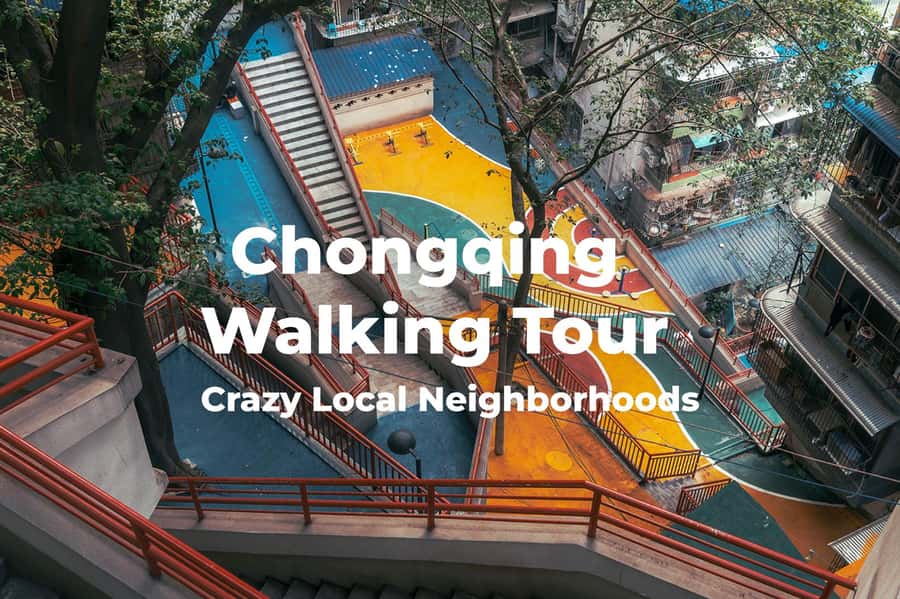
After Tongyuan Gate, the route drops into neighborhood streets that feel calmer, then gets more complex in the best way. You’ll pass blocks where the terrain forces buildings to relate to the hillside, not the street. In some places, the main entry can be at the 8th floor, and access depends on exterior staircases and connections above street level.
This is where the tour becomes truly useful for navigating. You see how sky bridges link sections of the city, and you learn that routes are often defined by what connects rather than what’s closest on a map. Once you recognize those patterns, you’re more likely to find shortcuts later on your own.
The tour also highlights abandoned or neglected areas without making it feel gloomy. The vibe is more about layers of use, old infrastructure, and how people adjust when the terrain stays fixed and the city keeps changing.
The Chongqing Auditorium square: where locals actually spend time
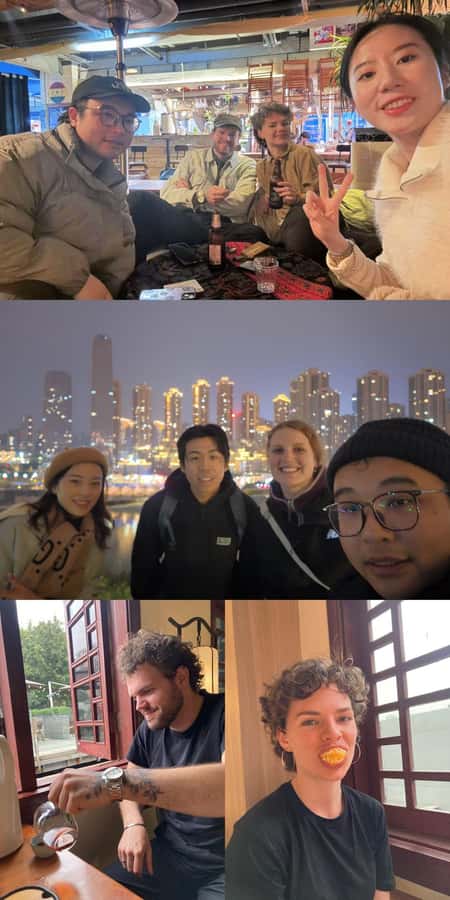
Next comes the Chongqing Auditorium, a major Chinese-style building with a big presence. The plaza beside it often feels like one of the largest flat areas you’ll find in the central city, which makes it a natural gathering point.
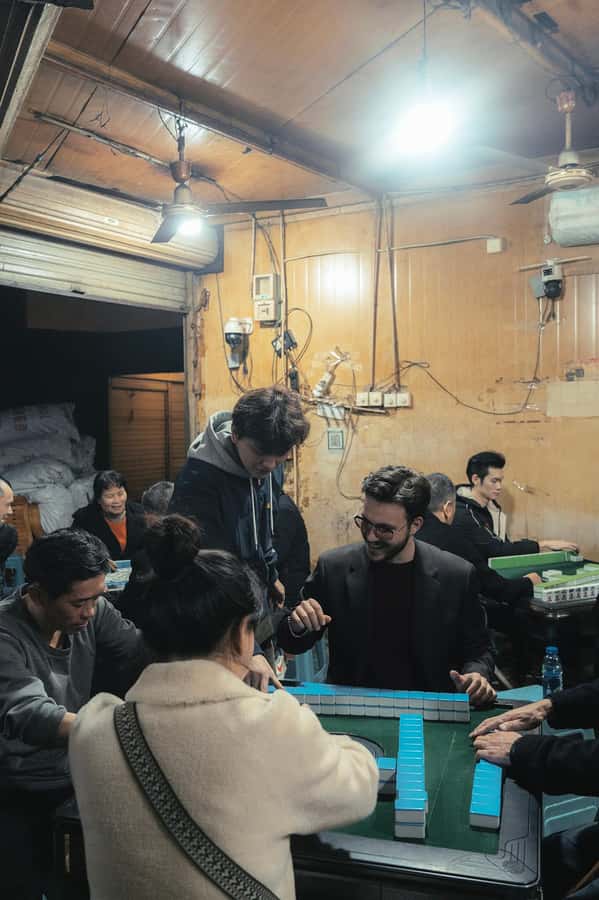
This stop is one of the most “lived-in” on the walk. You can watch senior citizens square dancing and see children playing in the same open space. It’s not staged, and that’s the point, you’re witnessing a daily routine that’s part of Chongqing’s social rhythm.
If you’re traveling with kids, this is also a strong moment. There’s open space to move, and the activity is easy to observe without needing deep language skills. For adults, it’s a reminder that Chongqing isn’t only about dramatic buildings, it’s also about how people share public space.
More walking tours in Chongqing:
- 1 Day Chongqing Megacity Walking Tour
★ 5.0 · 12 reviews - Beijing Hutong Walking Food and Beer Tour at Hidden Restaurants
★ 5.0 · 1,132 reviews - Private Beijing Walking Tour of the Forbidden City with 7 Options
★ 5.0 · 675 reviews - Dark Side of Hong Kong – Kowloon Caged Homes Walking Tour
★ 5.0 · 418 reviews
Zhongshan Fourth Road: tree shade and WWII context
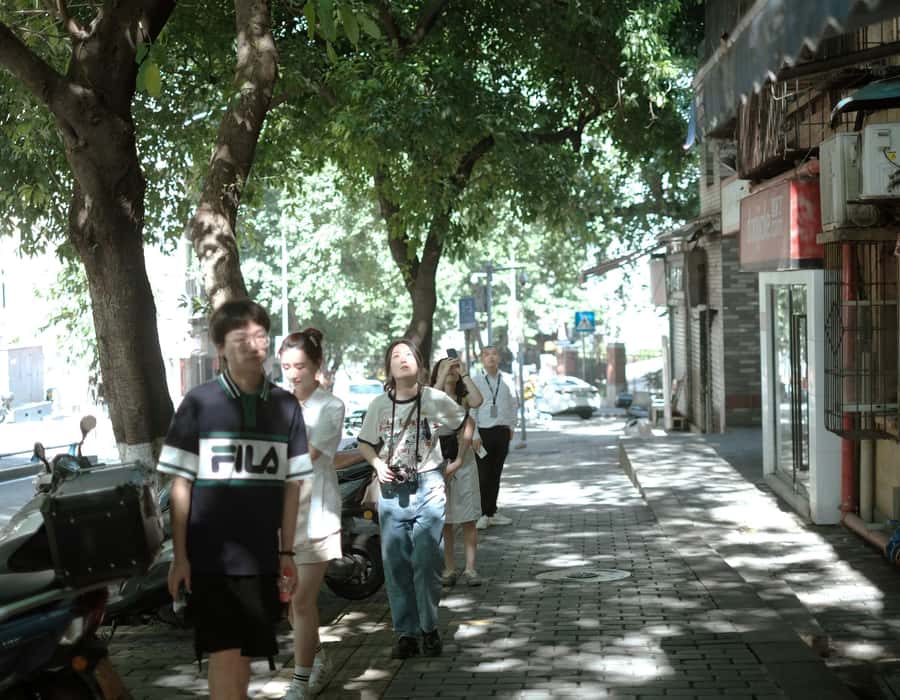
From the Auditorium area, the route continues to Zhongshan Fourth Road, a tree-lined path that connects modern street life to Chongqing’s WWII period. During World War II, Chongqing served as a temporary capital, and that historical role shaped many parts of the city.
Even if you’re not a history buff, you’ll feel the value because the street has a kind of calm that makes the past easier to picture. You’re walking a corridor that once hosted important movements, then you’re watching everyday Chongqing happen along the same route.
I like that this isn’t heavy-handed. The guide’s job is to connect what you see in front of you to why the city developed the way it did. When the explanation clicks, the street stops being just another road.
Riverside plank road: views, greenery, metro, and shelter secrets
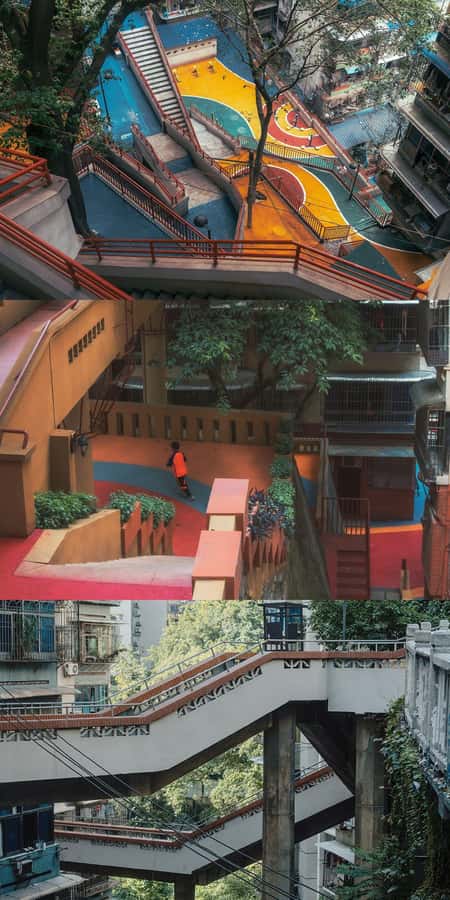
Ending on the riverside plank road is a great palate cleanser. The river edge brings a different pace, less pressure from traffic and the stair-heavy terrain behind you. Along the plank walkway, you get views out over the water while the metro slips by in the background.
You’ll also notice the natural details that make Chongqing feel unusual. Lush plants grow close to the walkway, roots twist through the greenery, and abandoned air-raid shelters can appear where you don’t expect them. These aren’t just trivia facts, they reinforce how the city has layers of survival built into the landscape.
Bring your camera, but also bring patience for small scenes. The plank road is where you’ll likely slow down without forcing it. It’s the kind of walk that helps your brain reset after steep climbs.
The abandoned train station stop: why it fits the theme
The tour includes a visit to an abandoned train station. That might sound like a single-purpose detour, but it actually supports the larger idea of Chongqing as a city in layers.
A hillside city builds, changes routes, and repurposes space as needs evolve. Seeing an older transportation site, then shifting to today’s public life, gives you a fuller sense of how the city has transitioned over time. It also helps you understand why guides keep pointing out structural connections, like overpasses and elevated routes.
Price and value: is $70 worth 4 hours in Chongqing?
At $70 per person for about 4 hours, the value depends on what you want out of Chongqing. If your goal is just to check a few highlights, you can probably do parts solo. But if your goal is to understand the city’s layout, this tour earns its price.
You’re paying for three things that are hard to replicate on your own: a local guide, interpretation of the terrain and history, and access to areas you might not find without a map that understands hills. The route also includes multiple major stops, including Tongyuan Gate, Chongqing Auditorium, WWII-relevant street context, riverside plank views, and the abandoned train station.
Another reason the cost feels fair is pacing. Four hours in a vertical city is a lot of ground covered, but not so long that it becomes a marathon. It’s enough time to form that mental map, then still enjoy the riverside landing.
One more detail: the tour is a private group. That often means the guide can tailor explanations, slow down for questions, or adjust when conditions change.
How to prepare so the stairs do not ruin your day
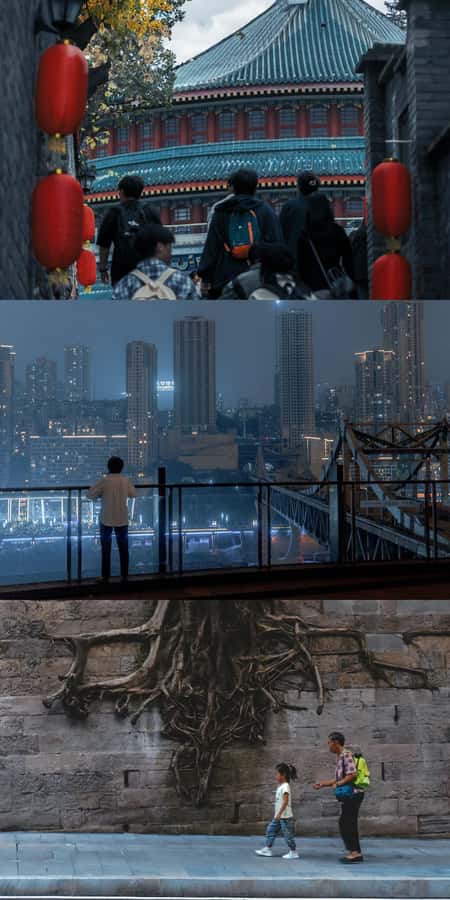
The tour involves a lot of walking and stairs. That’s not optional information, it’s the core of the experience. If you want the highlights without suffering, treat shoe choice like a travel decision, not an afterthought.
Here’s what I’d do:
- Wear comfortable shoes with real grip
- Carry water so you’re not rationing sips halfway through
- Plan for a camera break at major viewpoints, then keep moving
If weather turns, you may see flexibility from the guide. Some guides have taken a moment for tea when rain rolled through, which is a nice reminder that the tour can adapt while keeping the main story moving.
Also note what’s not allowed, alcohol and drugs. And electric wheelchairs aren’t permitted, which is another reason this is best suited for able walkers.
Who this Chongqing hidden-city walk is best for
This is a strong fit if you want a guided route through neighborhoods that make Chongqing feel like a vertical city. It’s also a good choice if you enjoy history, because Tongyuan Gate and WWII-era context on Zhongshan Fourth Road connect the dots in a way that feels grounded, not textbook.
It’s especially good for people who like city social life. The square dance viewing at the Auditorium plaza gives you a window into daily Chongqing culture without needing a separate ticket or extra transport.
If you have mobility impairments, consider skipping this one. The route’s stair-heavy terrain is part of the design, not a side effect.
Should you book the Hidden City Walking Tour?
Book it if you want more than postcards. This tour helps you understand how Chongqing works, from Tongyuan Gate to hillside neighborhoods with sky bridges, then into public life at the Auditorium square, and finally to a calmer ending on the riverside plank road.
Skip it if you hate stairs, if your legs are already tired from long travel days, or if you know you cannot handle uneven hillside walking. In that case, you might enjoy a more level, vehicle-based sightseeing day instead.
If you do book, pick shoes first and plan to move slowly at the start. The payoff is worth it, because you’ll leave with a mental map you can reuse the next time you wander Chongqing.
FAQ
Where does the tour meet?
Meet near the 4A exit, Qixinggang metro station, Chongqing.
How long is the Chongqing Hidden City Walking Tour?
The tour lasts about 4 hours.
What is included in the tour?
It includes a guided walking tour, visits to the oldest city gate (Tongyuan Gate), old neighborhoods, Chongqing Auditorium, Zhongshan Fourth Road, the riverside plank road walk, and an abandoned train station visit.
What is not included?
The tour does not include meals or transportation to the starting point.
What languages are available for the live guide?
The guide is available in English, Russian, and Chinese.
What should I bring?
Bring comfortable shoes, a camera, and water.
Is the tour suitable for people with mobility impairments?
No. It is not suitable for people with mobility impairments, and the tour involves a lot of walking and stairs.
Recently added around Chongqing
- Yangtze River Cruise from Chongqing to Yichang Downstream in 4 Days 3 Nights★ 4.5 · 8 reviews
- Private Chengdu Highlights Day Trip: Panda Base and City from Chongqing by Train★ 4.5 · 9 reviews
- Dazu Ancient Rock Carvings Private Tour Extension★ 5.0 · 24 reviews
- Private Customized Tour: Chongqing City Highlights in One Day★ 5.0 · 11 reviews
- 2Day Wulong Karst Park+Dazu Carvings World Heritage Private Tour★ 5.0 · 4 reviews
- Chongqing to Yichang: 3-Night Luxury CENTURY GLORY Yangtze River Cruise Tour★ 5.0 · 3 reviews
- Chongqing Wulong Exploration Private Day Tour With the Lunch★ 5.0 · 6 reviews
- Private Day Tour to Ciqikou, Liziba, Jiefangbei etc. in Chongqing★ 4.5 · 5 reviews
City Tours, compared.
Forbidden City Tour(Group/Private)-Tickets Included
Read our review →
T-Square & Forbidden City Group or Private Tour
Read our review →
All-Inclusive Tour: Tiananmen Square, Forbidden City, Great Wall
Read our review →
4-Hour Small Group Tour to Forbidden City with Entry Tickets
Read our review →Beijing Full Day Tours: Tiananmen Sq, Forbidden City, Great Wall
Read our review →
Mini Group Xian Day Tour to Terracotta Army, City Wall, Pagoda and Muslim Bazaar
Read our review →Tianmen Square, Forbidden City & Royal Museum Tours
Read our review →
Beijing Forbidden City Ticket Booking (Optional: guide service)
Read our review →Browse the lists this tour appears in