
Reviewed · FOOD & DRINK
Hong Kong’s Tin Hau Hidden Eats Food Tour with 7+ Local Tastings
Tin Hau runs on food, not shortcuts. On this 3 hour walk, you sample 7+ local tastings and learn why the neighborhood eats the way it does. I love the small group feel, and I love how the guide ties each bite to a real place you can point at. One heads up, there is a wet market stop, so if raw meat handling makes you squirm, go in prepared.
I also like that the tour is led by guides who know how to explain Hong Kong life in clear, friendly English. Guides like Sandy, Sonya, Michael, Roger, Bessy, and Katie show up in recent experiences, and the common thread is energy plus lots of practical context.
At $107, the value comes from what is included, not just the price tag. You get multiple tastings plus Chinese tea and water, and the small group format means you are not stuck watching from the back. Wear comfortable shoes, because you will walk.
In This Review
- Key things to know before you go
- Tin Hau in 3 Hours: the route, the pace, and the payoff
- Food lineup: brisket noodles, roast goose, dim sum, and the secret dish
- The temple and park stops: why the sightseeing matters to your stomach
- Wet market reality check: how to handle it and why it is worth seeing
- How the guide makes it work: small group, clear English, real context
- Price and value: what $107 buys you in real food time
- Who should book this Tin Hau Hidden Eats tour
- My booking call: should you book it?
- FAQ
- How long is the Tin Hau Hidden Eats Food Tour?
- Where does the tour start?
- What food is included in the tour?
- Is hotel pickup included?
- How many people are in the group?
- Can the tour accommodate dietary needs?
- Is free cancellation available?
Key things to know before you go
- 7+ tastings across classic Hong Kong comfort food like brisket noodles, roast goose, and fresh dim sum
- Tea and water are included, so you can focus on eating instead of calculating costs
- A local wet market stop gives you a peek at how ingredients actually arrive before they land on plates
- Temple and neighborhood stops (Tin Hau Temple, Victoria Park, schools, and libraries) turn eating into a place-based story
- Small group size, max 12, keeps the tone personal and questions answerable
Tin Hau in 3 Hours: the route, the pace, and the payoff
This is a half-day style food walk based around Tin Hau and the nearby Causeway Bay area. The tour starts in Tin Hau, Causeway Bay, and it ends back near the same meeting point. Since Tin Hau is tied to the Tin Hau Temple and even named through the MTR stop, you get an easy geographic anchor for the day, and it is simple to plug into before or after the rest of your Hong Kong plans.
The pacing is designed for “eat, walk, learn, repeat.” Expect frequent short walks between stops, plus time sitting down for tastings. The good part is that you are not trekking across the whole island. You are moving through a tight web of streets where food feels normal, not staged.
You should plan around comfort first. Comfortable shoes are a must, because the itinerary naturally layers walking with sightseeing. Bring water too, even though water is included, because Hong Kong humidity can hit fast, and you will appreciate extra hydration when you are on your feet.
Also, keep your expectations realistic. This is a food-focused tour, so you will get highlights and context, not a museum-class deep dive into every stop. For most people, that mix is exactly right, especially if you want a fast way to build food confidence for the rest of the trip.
More Food Tours in Hong Kong
- Small-Group Hong Kong Island Food Tour
★ 5.0 · 343 reviews - Hong Kong Food Tour: Central and Sheung Wan Districts
★ 5.0 · 333 reviews - Hong Kong Street Food Tour with Locals – Dim Sum, Wonton & more
★ 5.0 · 226 reviews
Food lineup: brisket noodles, roast goose, dim sum, and the secret dish
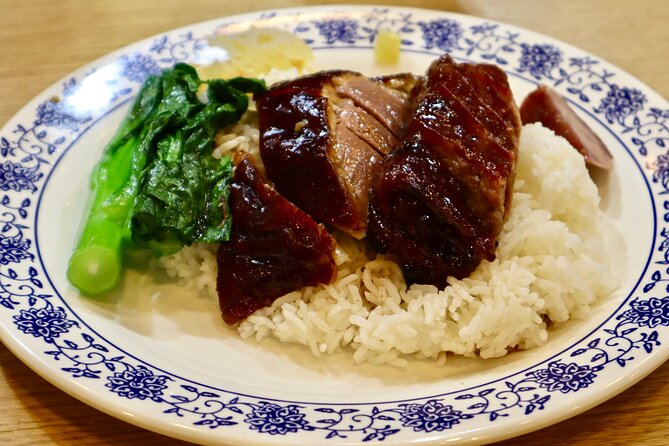
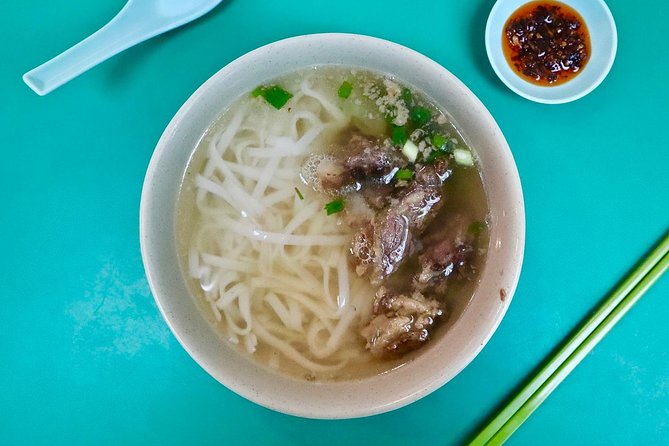
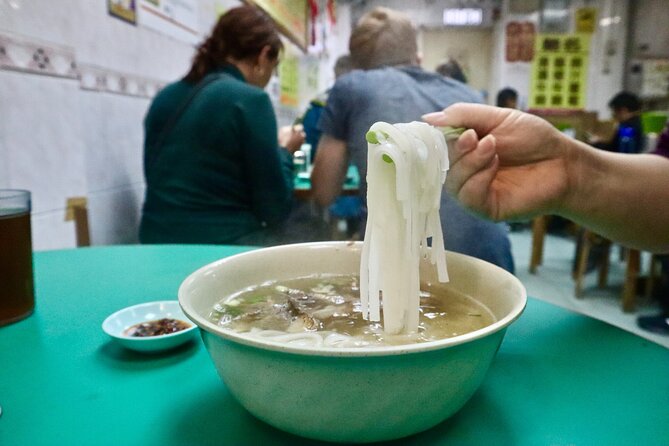
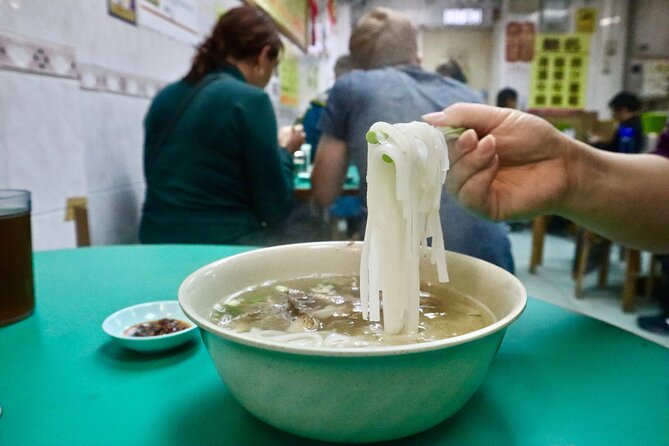
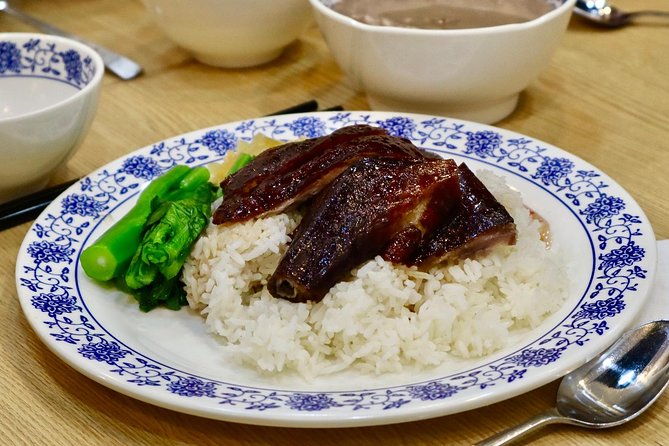
The included menu hits multiple “Hong Kong comfort” lanes. You will taste things like beef brisket soup with rice noodles, plus roasted goose with rice and plum sauce. If you like flavorful Cantonese classics, this part alone usually makes the tour worth it.
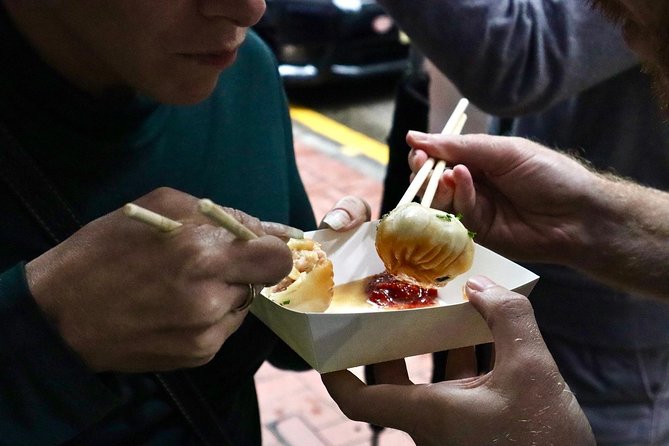
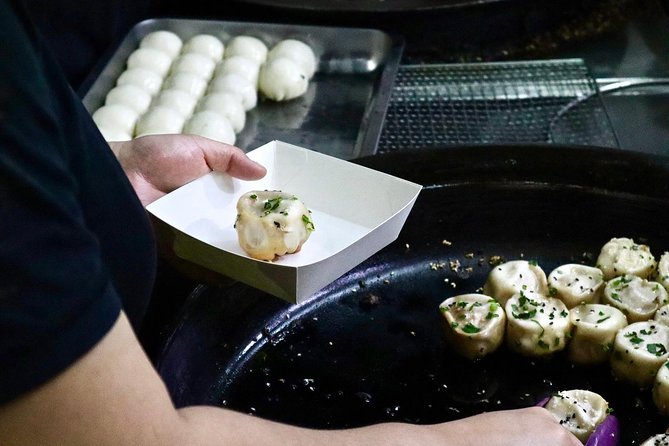
Then you shift into variety. The tour includes fresh seasonal fruits and local sweets, plus fresh baked dim sum. That dim sum stop matters because fresh-baked is where Hong Kong street-level eating often feels special. You are tasting something at peak warmth, not a reheated version meant for the road.
You also get a surprise element called the Secret Dish. That word can sound gimmicky, but in practice it is a useful way to keep you flexible. It nudges the day away from predictable tourist choices and toward what locals actually snack and order.
One extra detail that pops in real experiences is that the dessert and tea side can include items like pineapple bun and milk tea, and some tastings lean into an afternoon-tea style moment with Hong Kong French toast. Since the exact lineup can vary, treat these as examples of what the tour can serve rather than a guaranteed script.
A practical tip: come hungry. Multiple guide experiences point out that people who eat a full breakfast often feel stuffed before the best bites land. If your tour is in the morning, plan a light breakfast or skip it. For an afternoon slot, go easy on lunch until you know what you are walking into.
The temple and park stops: why the sightseeing matters to your stomach
This tour does not only point at food. It uses landmarks to explain why certain foods and habits make sense in this part of the city.
You start with the Tin Hau Temple area, tied to the Tin Hau MTR station and the neighborhood name. Tin Hau is associated with seafaring protection and community tradition, and the temple setting gives you a sense of how long locals have anchored life around shared places. Food culture grows around those same gathering rhythms.
From there you work through other Causeway Bay and Tin Hau-adjacent landmarks. You will pass Victoria Park, a public park named after Queen Victoria of the UK. Even if you do not care about imperial-era naming, the park stop is useful because it gives a mental reset between heavier tastings.
In the Tai Hang area, the itinerary includes a temple at the end of Lin Fa Kung Street, named after the temple. That kind of street-and-temple relationship is common in Hong Kong, and seeing it helps you understand why “where people go” and “what people eat” often line up.
You also get educational stops, including Queen’s College. It is noted as the first public secondary school founded in Hong Kong by the British colonial government, with the present name dating to 1894. Whether you care about the colonial history or not, the point of including this is the same as the parks and temples. It keeps you grounded in the actual neighborhood layer, so the food choices do not feel random.
Finally, you visit the largest library in Hong Kong. The description notes a huge collection size within the public libraries system. Again, you are not going in for a quiet reading session. This stop is about local institutions and how daily life in this area moves past street food and into more formal public spaces.
Wet market reality check: how to handle it and why it is worth seeing
One stop you cannot ignore is the local wet market. The tour includes a market visit where you can pick up fresh produce and meat. That is the basic fact, but the experience has a big emotional component too.
Some people like this stop because it makes the food story feel real fast. You see ingredients before they are turned into soup, roast, or dim sum. You understand why certain flavors and textures are common here. And you learn why ordering in Hong Kong often feels like working from what looks best today.
But there is also a consideration. One common concern in experiences is that the wet market can be uncomfortable if you do not like thinking about end-to-end processes, especially around meat. If that is you, do not force it. You can still enjoy the rest of the tour, and you can mentally frame the market as a food sourcing snapshot, not a personal choice you must debate.
If you want to reduce discomfort, focus on the practical side. Watch the stalls, notice how people shop, and treat it like a culinary information stop. Do not make it a moral or medical lesson in your head. A wet market is a working marketplace. It is meant to move quickly, feed families, and keep ingredients fresh.
More food tours in Hong Kong SAR:
- Small Group Kowloon Michelin Rated Street Food and Culture Tour
★ 5.0 · 170 reviews - Hong Kong Food Tour: Sham Shui Po District
★ 5.0 · 167 reviews - The 10 Tastings of Hong Kong With Locals: Private Street Food Tour
★ 4.5 · 124 reviews - Hong Kong: Kowloon Street Market & Food Culture Walking Tour
★ 5.0 · 105 reviews
How the guide makes it work: small group, clear English, real context
This tour wins points because it is small. The max group size is 12 travelers, which makes a difference in how the tour feels. You can ask questions without feeling like you are interrupting, and you get explanations that connect food to neighborhood logic, not just ingredients on a plate.
The “language barrier” angle is built in. Hong Kong has plenty of street-level food that you could technically find on your own, but the hard part is knowing what to order, how to ask, and what to expect once it arrives. The guides are there to translate that uncertainty into confidence.
You can see this in guide experiences. Sandy is mentioned again and again for being energetic and for keeping the information easy to follow. Sonya comes up for being super helpful with both food and neighborhood knowledge. Michael is described as personable, with strong explanations about the people and history around what you eat. Roger is praised for taking people to places they would not have tried alone. Bessy is described as courteous and helpful, especially for first-timers. Katie is noted for knowing Tin Hau through years of going, which helps when the tour needs to adapt on the street.
The bottom line is simple: you get a guide who helps you order with less guesswork, and who gives you the “why” behind what you are tasting.
Price and value: what $107 buys you in real food time
$107 is not a bargain price, but this tour is also not a token snack stop. You are paying for a few things that cost money and time if you do them on your own.
First, you are getting multiple sit-down tastings that include key dishes like brisket noodles and roasted goose, plus dim sum and sweets. Second, you get drinks included, including Chinese tea and water. Third, the tour includes walking between major landmarks, so you are not only paying for food, you are also buying guided neighborhood context.
A DIY approach would mean scouting eateries, deciding what to order, and potentially repeating wrong choices. Here, the tour reduces that trial-and-error tax. You get a sequence designed to give you a balanced flavor map of Tin Hau and nearby Causeway Bay.
Also, group discounts and a mobile ticket are part of the deal. I like seeing those small operational details, because they reduce friction and help you focus on the day.
So the real value question is: do you want to eat your way through Hong Kong food culture with less planning? If yes, this price often starts to make sense.
Who should book this Tin Hau Hidden Eats tour
This tour fits best if you want a practical introduction to Hong Kong Island eating patterns without doing homework for weeks.
You will probably like it if:
- You are a first-timer who wants a strong food foundation for the rest of your trip
- You like a combo of food plus real neighborhood stops, like temples, parks, schools, and the library
- You enjoy small groups where you can ask questions
- You want to sample more than one dish, not just a single standout plate
You should think twice if:
- You dislike wet markets and the sight and smell of raw meat and fish handling
- You are not comfortable with walking for a full 3 hour block
- You only want one or two light bites and do not want to be stuffed
My booking call: should you book it?
I would book this tour if you are trying to get your footing fast in Hong Kong. The mix of 7+ tastings, drinks included, and neighborhood landmark stops makes it a smart first move, especially if you want more than food trivia. It also helps you understand what to look for when you go off on your own later.
Do book it if you can show up hungry, wear good shoes, and are okay with seeing a working wet market. If you are sensitive to market scenes, consider whether you can handle that one segment and still enjoy the rest.
One last practical idea: tell the team about dietary requirements in advance. That is specifically recommended so they can cater as best as possible.
FAQ
How long is the Tin Hau Hidden Eats Food Tour?
The tour lasts about 3 hours.
Where does the tour start?
It starts at Tin Hau, Causeway Bay, Hong Kong, and ends back at the meeting point.
What food is included in the tour?
The tour includes beef brisket soup and rice noodles, roasted goose with rice and plum sauce, fresh seasonal fruits, local sweets, fresh baked dim sum, a Secret Dish, Chinese tea, and water.
Is hotel pickup included?
No, hotel pickup and drop-off are not included.
How many people are in the group?
The tour has a maximum of 12 travelers.
Can the tour accommodate dietary needs?
You are asked to contact the tour in advance with any dietary requirements so they can cater for you as best as possible.
Is free cancellation available?
Yes. You can cancel up to 24 hours in advance for a full refund, and you will get a refund only if you cancel at least 24 hours before the experience’s start time.
Recently added around Hong Kong SAR
- Tai Mo Shan Waterfall Adventure Hike★ 5.0 · 16 reviews
- Small-Group Tour: Temples & Markets Discovering [PROMOTION]★ 5.0 · 6 reviews
- Small-Group Tour: The best bites of Hong Kong Island★ 5.0 · 3 reviews
- Small-Group Tour: Hidden Gems of Old Hong Kong island★ 4.5 · 3 reviews
- Small Group Hiking Day Tour to Lamma Island Hong Kong★ 5.0 · 3 reviews
- Private tour of Hong Kong – First timers★ 5.0 · 10 reviews
- Hong Kong Pub Crawl at Lan Kwai Fong (LKF)★ 4.5 · 40 reviews
- Private tour of Hong Kong – customized layover – 5 hours★ 5.0 · 8 reviews
Food & Drink, compared.
Authentic Local Food Tour in Central Shanghai
Read our review →
Beijing Hutong Walking Food and Beer Tour at Hidden Restaurants
Read our review →
Hong Kong Food Tour: Central and Sheung Wan Districts
Read our review →Browse the lists this tour appears in