
Reviewed · FOOD & DRINK
Small-Group Hong Kong Island Food Tour
Food in Hong Kong makes sense fast. This small-group tour threads Cantonese and British influence through old shops and side streets.
I like the way it feeds you in a smart order, starting with yum cha and ending with an iconic egg tart. You’ll also get a guide who keeps the pace easy and the explanations clear, with folks like Ivy, Andy, Mel, Sinclair, and Alex repeatedly praised for making the history and food click.
My other favorite part is the route, you cover a lot of Hong Kong Island without needing to plan a thing. The food focuses on classics you’d miss if you only stuck to mainstream areas, and it’s designed so you’re not stuck waiting around between tastings.
One consideration: this is not a safe bet if you need vegetarian meals, gluten-free options, or if you have seafood allergies. Plan on bringing your appetite, because the tour expects you to arrive ready to eat.
In This Review
- Quick takes before you book
- A 4-hour Hong Kong Island food loop built for locals’ pace
- Sheung Wan yum cha breakfast on a trolley
- The dried seafood lane, soy sauce stops, and preserved candies
- Graham Street Market and the oldest wet market feel
- Milk tea and British influence you can taste
- Ding Ding tram ride and English-style char siu
- Wan Chai char siu fan and the end-of-tour payoff
- Dan tat at the 60-year bakery that ties to a former governor
- What I like about the guide approach: history that actually lands
- Price and logistics: what $115.52 really buys you
- Who this tour suits best, and who should skip it
- Should you book this Hong Kong Island food tour?
- FAQ
- How long is the Small-Group Hong Kong Island Food Tour?
- What is the meeting point and start time?
- Where does the tour end?
- What’s included in the tour price?
- Is hotel pickup and drop-off included?
- Is the tour suitable for vegetarians or gluten-free diets?
- What languages is the tour conducted in?
- How large is the group?
- Do I need to eat breakfast before the tour?
- Is free cancellation available?
Quick takes before you book
- Small group (max 9): easier questions, better pacing, and less time herding people through tight streets.
- Local-only style spots: you’re guided into neighborhood restaurants where you’re likely not the center of attention.
- Trolley yum cha start: breakfast dim sum served by trolley is a great way to learn the basics fast.
- English influence snacks: Hong Kong milk tea and dan tat show how Western flavors got adapted locally.
- Tram ride included, but check your ticket: the Ding Ding ride is part of the experience, and your confirmation will tell you if anything extra applies.
A 4-hour Hong Kong Island food loop built for locals’ pace
This is a straightforward half-day plan: start in Sheung Wan, work across Hong Kong Island, and finish in Wan Chai. The whole thing runs about 4 hours, with a 9:30 am start, so it fits well at the beginning of a trip when you still need to learn your way around.
The tour is small, up to 9 people, and you’ll get a professional English-speaking guide. That matters in Hong Kong because a lot of menus and ordering rhythms move quickly, especially in older family-run places. The guide’s role is not just storytelling, it’s helping you navigate language barriers and get seated, ordered, and served without stress.
I also like that it pushes you to learn by tasting. Instead of getting a lecture and a single bite, you sample multiple dishes across different neighborhoods, then connect them to the city’s culinary history.
More Food Tours in Hong Kong
- Hong Kong’s Tin Hau Hidden Eats Food Tour with 7+ Local Tastings
★ 5.0 · 352 reviews - Hong Kong Food Tour: Central and Sheung Wan Districts
★ 5.0 · 333 reviews - Hong Kong Street Food Tour with Locals – Dim Sum, Wonton & more
★ 5.0 · 226 reviews
Sheung Wan yum cha breakfast on a trolley
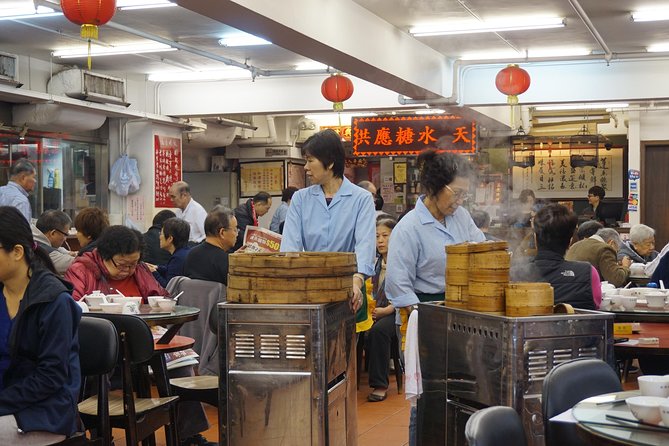
Sheung Wan is the kind of district that rewards wandering, with old streets, everyday businesses, and a mix of locals shopping and eating. The tour starts here at 28號 Des Voeux Rd W in Sheung Wan, where you meet your guide and head into a tea house-style restaurant.
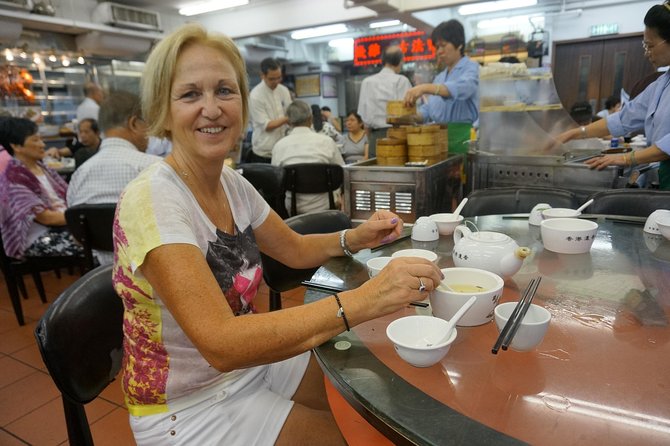
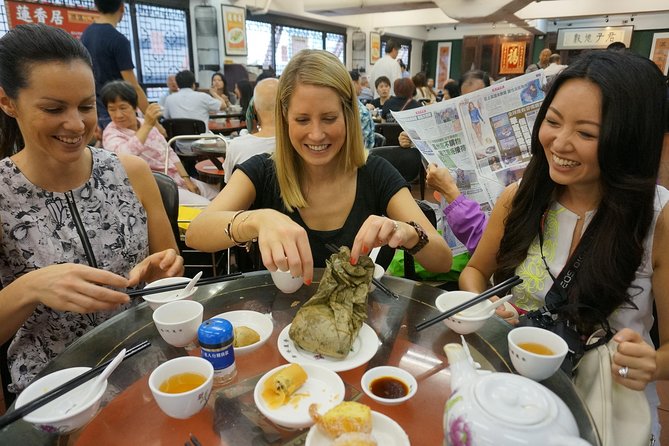
Stop one is yum cha, also known as dim sum breakfast. You’ll see the classic trolley service, which is one of those small Hong Kong details that makes the whole thing feel real, not staged. It’s lively and crowded, and that’s part of the learning. You’ll get your bearings on what dim sum looks like, how it’s served, and how the meal flows.
A practical tip: the tour says to arrive hungry, so don’t eat breakfast first. Yum cha alone can be filling, and you’ll keep eating after that.
The dried seafood lane, soy sauce stops, and preserved candies
As you move through Sheung Wan, the tour shifts from meals to ingredients and old-school food culture. You spend time around the area known for dried seafood, clustered along Des Voeux Road West. This is where Hong Kong’s love of traditional pantry items shows up clearly.
You also make stops connected to other classic flavors:
- a tea shop with preserved sweets and traditional fruit-based candies
- a family-run soy sauce producer
- a dried seafood shop
- a Chinese medicine shop from the 1940s
Even if you don’t buy anything, it’s worth seeing how these shops operate. Hong Kong food is not just what’s on a plate, it’s the long-lived infrastructure behind the flavors, like preserved ingredients, sauces, and tonics.
One thing I appreciate is that these stops help you understand why Hong Kong tastes a certain way. Once you’ve seen soy sauce makers and candy sellers up close, milk tea and roast meats hit differently later in the tour.
Graham Street Market and the oldest wet market feel
You also pass through the Graham Street Market area, a sloped street lined with food stalls for a very long time. It’s described as having more than a century’s history, with street-level life happening right in front of you.
This isn’t about a food court vibe. It’s about watching how locals shop and graze, and how fresh produce and seafood culture stays embedded in everyday routines. The tour ties this into Hong Kong’s older market tradition, including time at the city’s oldest wet market.
If you enjoy people-watching and small-scale food commerce, this kind of stop is a highlight. You’ll get context for what the restaurants are drawing from and why Cantonese cooking can feel both simple and deep at the same time.
More food tours in Hong Kong SAR:
- Small Group Kowloon Michelin Rated Street Food and Culture Tour
★ 5.0 · 170 reviews - Hong Kong Food Tour: Sham Shui Po District
★ 5.0 · 167 reviews - The 10 Tastings of Hong Kong With Locals: Private Street Food Tour
★ 4.5 · 124 reviews - Hong Kong: Kowloon Street Market & Food Culture Walking Tour
★ 5.0 · 105 reviews
Milk tea and British influence you can taste
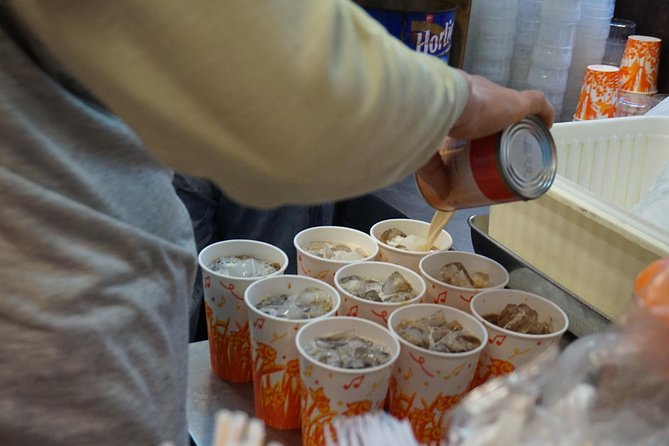
Hong Kong milk tea is one of those foods that sounds like a gimmick until you taste it and realize it’s a daily habit for many locals. Here, you’ll stop for a cup of Hong Kong milk tea, framed as one of the city’s strongest British-era leftovers.
The story is not just about Britain arriving, it’s about Hong Kong adapting. Tea culture becomes its own Hong Kong product, and milk tea becomes a bridge between older Chinese tea traditions and Western-style milk and sweetness. Once you’ve had it on the tour, it’s easier to notice the same adaptation pattern across other dishes.
This is also where the guide’s storytelling becomes useful. The tour explains culinary history from Cantonese roots to Western influences that arrived through the 1950s, so you’re tasting the result while you’re hearing the reason.
And yes, milk tea is a drink, not a palate cleanser. It’s part of the meal. Expect it to sit in your stomach while you keep going.
Ding Ding tram ride and English-style char siu
One of the most fun moments is the Ding Ding tram ride, a classic double-decker tram system tied to Hong Kong’s British-era public transport history. It’s a proper change of pace from walking, and it also keeps the route from draining your legs too early.
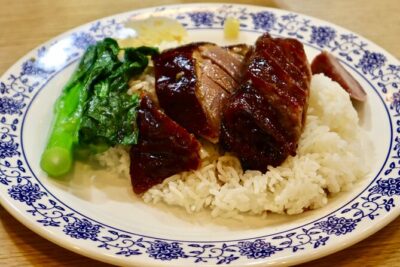
After the tram, you’ll eat at family-run places with reputations that go back far. One roast meat stop is known for English char siu, which is Hong Kong’s take on roast pork with flavors and methods that reflect Western-era influence.
You’ll taste roasted meats served with rice and homemade sauces. This is one of those meals where the simplicity is the point. The magic is in the roasting and the balance of sweet, savory, and seasoning.
A small practical note: the tour details mention the tram ride experience, and the included list also names Ding Ding. Still, details can differ by ticket type, so it’s worth checking your mobile confirmation for whether the tram fare is fully covered. Either way, the tram ride is clearly part of what makes the experience feel like Hong Kong Island, not just a sequence of restaurants.
Wan Chai char siu fan and the end-of-tour payoff
As you reach Wan Chai, the tour continues with another roast pork rice style dish, described as char siu fan at a family-run restaurant that’s Michelin Guide recommended. Wan Chai is a great zone for a finish because it blends old and new, office energy and street-level food life.
This stop reinforces what you learned on the roast meat earlier. Same ingredient DNA, different presentation and sauce style. It’s a smart way to teach taste differences without requiring a complicated meal.
The pace also matters here. Guides are repeatedly praised for making sure everyone is fed and watered enough, and for taking care of the group. That’s exactly what you want on a food tour, because half the fun disappears if everyone is scrambling or falling behind.
Dan tat at the 60-year bakery that ties to a former governor
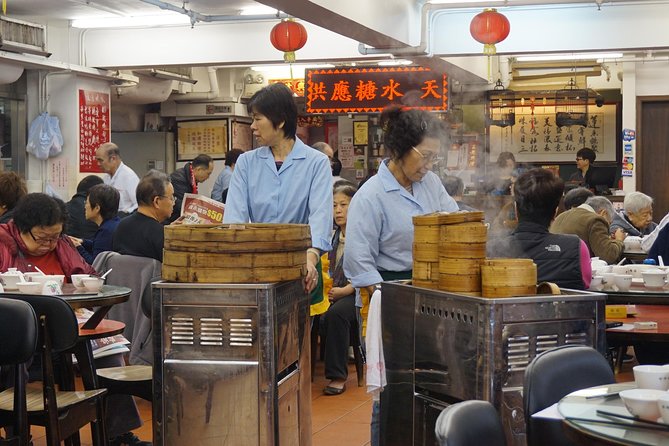
The final food note is dan tat, Cantonese for egg tart. You’ll end at a well-established bakery on Hong Kong Hennessy Road, famous for egg tarts. The tour description highlights that the bakery has around a 60-year history and is a favorite of a former Hong Kong governor.
This is a good closer because egg tart is both familiar and distinct. It’s the Chinese take on a Western custard tart, and the contrast is part of the fun. The crust and custard combination is delicate, so it also feels different after savory meals.
Bring your phone camera energy here. The tart is small enough to finish quickly, but it’s the kind of treat you’ll want to remember later when you’re comparing Hong Kong food memories to other cities.
What I like about the guide approach: history that actually lands
A good food tour doesn’t just hand you plates. It helps you connect the dots.
This one explains culinary history from traditional Guangzhou roots through Cantonese development, then into Western influence that arrived in the 1950s. You’re hearing the story while you’re eating:
- yum cha at an old tea house, showing deep Cantonese food culture
- wonton noodle soup, framed as a Hong Kong specialty perfected by locals
- milk tea as a British-era carryover
- English char siu and dan tat as adaptations of Western-style dishes into Hong Kong favorites
The guides in the feedback I read, including names like Ivy, Andy, Mel, Sinclair, and Alex, are repeatedly credited for clarity and pacing. One detail that comes up is that guides go beyond food, offering helpful practical tips. Even bathroom recommendations pop up in the kind of reviews you want to see for a long walking tour.
Price and logistics: what $115.52 really buys you
At $115.52 per person for about 4 hours, you’re paying for three things:
- a guide who can move you through older local places without friction
- multiple tastings that cover big Hong Kong classics
- neighborhood access across Hong Kong Island, including the Ding Ding tram ride
Let’s itemize the food inclusions listed for the tour:
- dim sum / yum cha experience
- wonton noodle soup
- Hong Kong milk tea
- egg tart (dan tat)
- traditional dried fruit sweets
- char siu (BBQ pork)
Plus the Ding Ding tram ride is part of the experience.
That’s a lot for one morning, especially because the tour also includes ingredient-focused stops, like dried seafood and preserved candies. The value is not only the number of dishes, it’s that you get the context and the local navigation that would be annoying to DIY.
Logistics are straightforward: you’ll use a mobile ticket, meet near public transportation, and the tour is conducted in English. The group limit is 9, which keeps it manageable.
One more practical angle: the tour ends in Wan Chai, so you can roll right into lunch plans afterward without feeling stuck back at the start.
Who this tour suits best, and who should skip it
This is best for you if you want a fast, high-impact introduction to Hong Kong Island food. It’s also a great pick if you like older neighborhoods and you’d rather spend your time eating and asking questions than building a day-by-day itinerary.
It’s not a match if:
- you’re vegetarian
- you need gluten-free meals
- you have seafood allergies
The tour also isn’t suitable for ages 5 and below, with private food tours suggested instead for younger kids.
If you’re traveling solo, a small group can feel welcoming. If you’re traveling with friends, it’s easy to share and compare bites. Either way, the guide’s job is to keep the group moving and fed, so you don’t end up standing around waiting for your turn to order.
Should you book this Hong Kong Island food tour?
Yes, if you want a guided sampler that teaches you Hong Kong through food you’ll actually remember. The combination of yum cha trolley service, wonton noodles, milk tea, roast meat, and dan tat gives you a clean overview of Cantonese classics plus British-era adaptations. Add in the tram ride and the neighborhood stops, and you get more than dinner, you get a sense of how the city eats.
No, if your dietary needs are strict or you want a vegetarian-friendly route. Also skip it if you hate walking, because the tour moves across several areas and includes market walking and escalator-adjacent scenery.
If you’re deciding last minute, my advice is simple: book it when you arrive hungry and ready to be guided. This tour works best as your first food education on Hong Kong Island, then you can explore on your own later with a stronger sense of what to order.
FAQ
How long is the Small-Group Hong Kong Island Food Tour?
The tour is about 4 hours.
What is the meeting point and start time?
The meeting point is 28號 Des Voeux Rd W, Sheung Wan, Hong Kong. The start time is 9:30 am.
Where does the tour end?
The tour ends in Wan Chai, Hong Kong.
What’s included in the tour price?
Included items are dim sum or yum cha, wonton noodle soup, Hong Kong milk tea, egg tart, traditional dried fruit sweets, Ding Ding tram ride, and char siu (BBQ pork). A professional guide is also included.
Is hotel pickup and drop-off included?
No, hotel pickup and drop-off are not included.
Is the tour suitable for vegetarians or gluten-free diets?
No. The tour is not suitable for vegetarians or gluten-free travelers, and it is also not suitable for people with seafood allergies.
What languages is the tour conducted in?
The tour is conducted in English.
How large is the group?
The maximum group size is 9 people per booking.
Do I need to eat breakfast before the tour?
It’s recommended that you do not eat breakfast before the tour, since you’re expected to arrive hungry.
Is free cancellation available?
Yes. You can cancel up to 24 hours in advance for a full refund, based on the tour’s local time.
Recently added around Hong Kong SAR
- Tai Mo Shan Waterfall Adventure Hike★ 5.0 · 16 reviews
- Small-Group Tour: Temples & Markets Discovering [PROMOTION]★ 5.0 · 6 reviews
- Small-Group Tour: The best bites of Hong Kong Island★ 5.0 · 3 reviews
- Small-Group Tour: Hidden Gems of Old Hong Kong island★ 4.5 · 3 reviews
- Small Group Hiking Day Tour to Lamma Island Hong Kong★ 5.0 · 3 reviews
- Private tour of Hong Kong – First timers★ 5.0 · 10 reviews
- Hong Kong Pub Crawl at Lan Kwai Fong (LKF)★ 4.5 · 40 reviews
- Private tour of Hong Kong – customized layover – 5 hours★ 5.0 · 8 reviews
Food & Drink, compared.
Authentic Local Food Tour in Central Shanghai
Read our review →
Beijing Hutong Walking Food and Beer Tour at Hidden Restaurants
Read our review →
Hong Kong’s Tin Hau Hidden Eats Food Tour with 7+ Local Tastings
Read our review →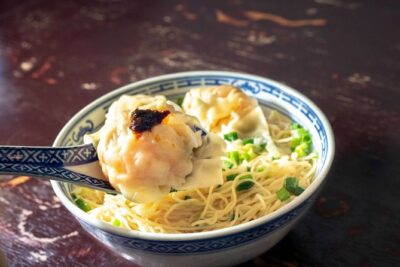
Hong Kong Food Tour: Central and Sheung Wan Districts
Read our review →Browse the lists this tour appears in