
Reviewed · COOKING CLASSES
2.5hrs Chinese Kitchen Cooking Class: Art Steamed Dumplings
Steamed dumplings can be art. In this Shanghai class, you learn the folds and fillings that usually show up at formal banquets, not ordinary takeout, and you get to make them yourself. I love the hands-on shaping practice, and I love sipping included tea while you cook. The only real drawback is that the class includes culture talk and demo time, so it is not a nonstop, hands-only cooking marathon.
You meet on Guangyuan Road in Xuhui and spend about 2.5 hours working through dough, wrappers, filling, and steaming. The group is capped at 15 people, so you are not shouting across a big kitchen. You will also get a recipe to take home, which helps if you want to repeat this later.
This is a great choice if you enjoy learning by doing. You will likely leave with dumpling confidence, even if your first folds look a little lopsided.
In This Review
- Key things you’ll notice
- Why art steamed dumplings in Shanghai feel different
- Guangyuan Road meeting and the small-group setup that actually helps
- Kneading dough and rolling wrappers the Chinese way
- Marinate pork and choose veg, without losing the dumpling vibe
- Folding techniques, dumpling names, and why your seal matters
- Steaming timing and the dipping sauce that pulls it together
- Eating together, getting the recipe, and leaving with momentum
- Price and value: is $109.88 worth it?
- Who should book this Shanghai dumpling class
- Should you book this dumpling-making experience?
- FAQ
- Where is the class meeting point, and when does it start?
- Is hotel pickup or drop-off included?
- How long is the cooking class?
- Can I choose vegetarian dumplings instead of pork?
- What is included in the experience?
- What is the group size limit?
- Is this experience refundable or changeable after booking?
Key things you’ll notice
- Small group, max 15 people, so the chef can correct your technique without rushing you
- Tea included as you prep, fold, and wait for steaming time
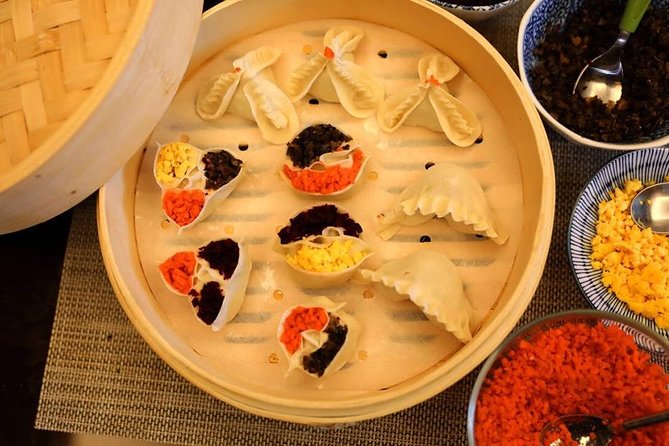
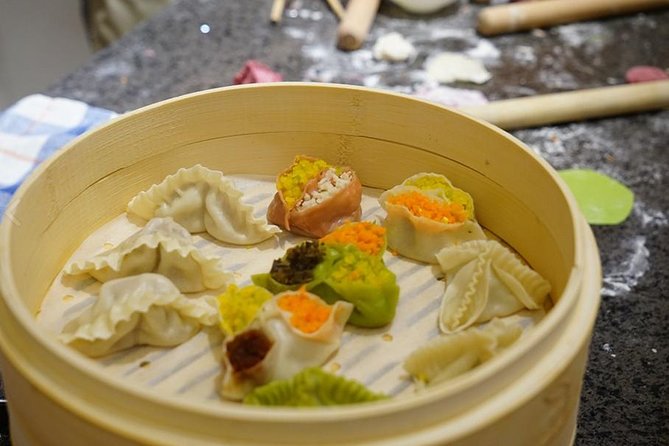
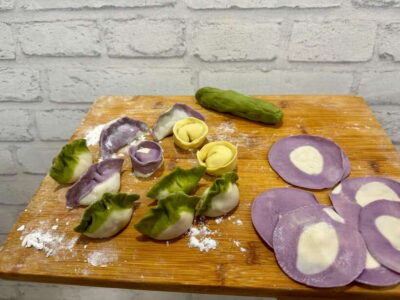
- Color-forward dumplings, including chopped colorful vegetable bits added to the top
- Pork marination plus a vegetarian option, so you can match your dietary needs
- Multiple folding styles, taught with clear guidance on what to aim for
- Recipe at the end, so you are not relying on memory
Why art steamed dumplings in Shanghai feel different
A lot of Shanghai dumpling experiences focus on eating. This one focuses on making a specific style of steamed dumplings where the shape matters, and the finished results can look like something you would see in more formal settings.
The big idea is that shape is not just decoration. How you fold, how you seal, and how you steam all affect the final texture and the way the filling stays put. If you’ve ever had dumplings that split open or tasted unevenly, this workshop gives you the hands-on reasons why.
You also get a peek at the language and meaning around dumplings. You will learn Chinese names for different dumplings and how they connect to symbolism, which makes the whole experience feel grounded in culture, not just cooking.
More Cooking Classes in Shanghai
- Shanghai-Cooking Dumpling & Meal in Local Family-w/Vegan
★ 4.9 · 36 reviews - Private Cooking Class: Make Your Own Dim Sum In Shanghai
★ 5.0 · 27 reviews - Private Home Cooking Class with Shanghai Mama
★ 5.0 · 14 reviews
Guangyuan Road meeting and the small-group setup that actually helps
The class meets near public transportation on Guangyuan Road in Xuhui. Plan to arrive a little early because the flow is built around a quick start, with a meet time listed at 2:00 pm and the main start time given as 2:30 pm.
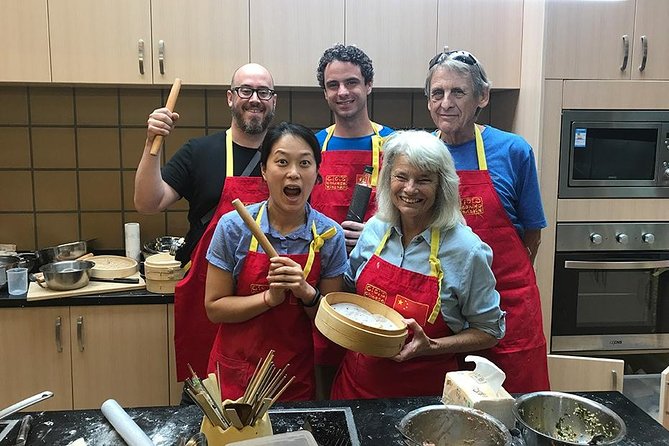
With a maximum of 15 people, the chef can move around. That matters for dumpling classes, because you need help in the exact moment your wrapper tears, your seal looks thin, or your filling seems too wet.
You do not get hotel pickup or drop-off, so factor in simple local transit. This is the kind of class where the location being convenient helps more than you might think, since you want to show up rested and ready to work with dough.
Kneading dough and rolling wrappers the Chinese way
Early on, you tackle the wrapper basics. You will learn how to knead dough by hand, and you will practice making the wrap using a rolling pin in a style that is described as distinctly Chinese.
This part is where you learn the feel. The goal is not just to copy a shape, it is to get dough with the right elasticity so it rolls without snapping back and seals without cracking.
If you are worried you are not a cooking person, this is still a fair bet. The class framing is that the dumplings seem difficult, but the steps are taught in a way that makes them manageable. And because the group is small, you can ask quick questions instead of waiting for a pause.
A practical note: keep your workspace tidy. Dumpling dough and flour mess can spread fast, especially if you are still learning how thin the wrapper should be. Ask for a quick pointer on flour level, because too much can dry the edges and make sealing harder.
Marinate pork and choose veg, without losing the dumpling vibe
You’ll work with a filling that is primarily pork, with a vegetarian version available if you prefer. The chef teaches a marination method described as easy but focused on keeping it flavorful and healthier.
You will likely hear about local ingredients as you go. That’s not just trivia, it helps you understand why the filling tastes the way it does, and why certain textures matter for steamed dumplings.
One interesting detail in this class is the color approach. You will fill and then add chopped vegetables on top, described as four or five colorful vegetable bits. Even if you are used to plain dumplings, the visual layer makes the dumplings feel more intentional and less generic.
If you choose vegetarian or vegan applicable options, you still get the same dumpling process framework. You are not just swapping ingredients and calling it a day. You should expect guidance on how to keep the filling consistent and workable for shaping and steaming.
Same city, a very different kind of day:
- Authentic Local Food Tour in Central Shanghai
★ 5.0 · 1,382 reviews - Zhujiajiao Water Town and Shanghai City Private Day Tour
★ 5.0 · 1,016 reviews - Private Shanghai Full Day City Tour with Old and New Highlights
★ 5.0 · 995 reviews - Shanghai: 3-Hour Local Food Tasting Tour
★ 4.9 · 806 reviews
Folding techniques, dumpling names, and why your seal matters
This class is very much about folding. You’ll learn different ways to shape dumplings, including how to fold them so they hold together when steamed.
The class also teaches Chinese names of dumplings and includes the symbolic meaning tied to them. I like this because it turns the folding into something you can remember, not just replicate. When you know what a dumpling type is called and why it is made in a particular way, you naturally pay more attention to the method.
Seal quality is the quiet make-or-break factor. If the seal is thin or uneven, you risk leaks in the steamer. If you overfill, the wrapper can stretch and tear. The instructor guidance helps you hit that sweet spot, the one where your dumplings stay closed and cook evenly.
You may meet an instructor who is especially patient. One past participant specifically praised an instructor named Yin for being very nice and patient, even with beginners. Another review highlighted chef Cici as helpful and kind. If that’s the tone of the teaching team for your session, you’re in good hands.
Steaming timing and the dipping sauce that pulls it together
Once the dumplings are shaped, steaming becomes the next lesson. You’ll learn how long it is best to steam, which is key because timing affects both wrapper texture and filling doneness.
You are also taught an authentic dipping sauce to go with the dumplings. This is one of those details that can make a class feel complete. Dumplings are great, but a strong sauce is what makes the flavor feel finished rather than flat.
Here’s the practical takeaway for you: steaming is not just waiting. It is controlled heat plus correct timing. If you over-steam, wrappers turn soft or chewy. If you under-steam, filling can be dense and wrappers can feel underdone.
When the sauce is taught, focus on how it balances. You want something that complements the marinated filling without drowning it. Ask questions if the sauce seems strong. A tiny change in mixing ratio can make a big difference when you’re eating your own dumplings right after they come out.
Eating together, getting the recipe, and leaving with momentum
At the end, you enjoy the dumplings as a group. This is not a side event. It is where all the earlier effort pays off, because you can directly connect what you did with what you taste.
The final part includes ending the class with a recipe. That matters for real life, because dumpling dough and folding steps are easier to repeat when you have a clear checklist.
A subtle benefit of eating right away is confidence. You can taste your results while the techniques are still fresh in your mind. If you want to practice later, you’ll know which step to adjust next time, wrapper thickness, filling amount, or sealing pressure.
Also, the class’s tea moments help the pacing. Cooking can feel slow when you are waiting for steam, and tea gives you something pleasant to do while you watch dumplings transform.
Price and value: is $109.88 worth it?
At $109.88 per person, this is not the cheapest thing on your Shanghai list. But you are paying for a focused skill-building experience, not just a dinner.
Here’s what you get for the money based on the experience details:
- Hands-on instruction in dough, wrapper rolling, filling, and folding
- Pork or vegetarian/vegan applicable option based on your preference
- Steaming guidance and sauce instruction
- Small group size (max 15 people), which improves quality of coaching
- Tea included and a recipe at the end
If you love food workshops and want a repeatable skill, the price starts to feel reasonable. If your goal is purely eating and sightseeing, you might choose a cheaper meal instead. But if you want to bring home something practical, dumpling folding and steaming technique can last way longer than a single restaurant visit.
A good value test for you: think about how many times you realistically would cook dumplings afterward. If you see yourself making them a couple times a year, this class becomes less like a one-time splurge and more like a lasting experience.
Who should book this Shanghai dumpling class
This fits best if you:
- Want a hands-on Chinese cooking class focused on steamed dumplings
- Enjoy learning technique, not just tasting
- Are comfortable with a small-group workshop pace
- Need a vegetarian or vegan applicable option
- Like the idea of dumplings with colorful, more formal-looking presentation
It is less ideal if you:
- Want a long, sit-and-eat meal with minimal work
- Expect nonstop cooking with little explanation
- Dislike having some parts of the session dedicated to ingredient and cooking culture introductions
Should you book this dumpling-making experience?
I think it is a smart booking if you want a grounded, practical Shanghai food skill. You get real technique, a manageable small-group size, and enough structure to help you succeed even if you are new to dough.
Book it if you care about the process, especially wrapper making, folding styles, steaming timing, and the sauce pairing. Skip it if you mostly want a restaurant-style experience or if you’re hoping for a class that focuses only on hands-on cooking with zero culture or demo time.
If you decide to go, arrive a bit hungry but not frantic. Dumpling classes reward calm. When you stay relaxed, your wrappers seal better, your folds improve faster, and the final meal tastes even better.
FAQ
Where is the class meeting point, and when does it start?
The meeting point is on Guangyuan Road in Xuhui, Shanghai. The experience lists a start time of 2:30 pm, and it also notes meeting at 2:00 pm before the introduction begins.
Is hotel pickup or drop-off included?
No. Hotel pickup and drop-off services are not included, and the activity ends back at the meeting point.
How long is the cooking class?
It runs for about 2 hours 30 minutes (approx.).
Can I choose vegetarian dumplings instead of pork?
Yes. The class is vegetarian-friendly, and vegan or vegetarian options are applicable depending on what you select at booking. Pork is the standard filling otherwise.
What is included in the experience?
You get the cooking class, complimentary tea, and a friendly English-speaking chef. A recipe is provided at the end.
What is the group size limit?
The class has a maximum of 15 people.
Is this experience refundable or changeable after booking?
No. The experience is non-refundable and cannot be changed for any reason.
More Workshops in Shanghai
- 2-Hour Private Chinese Ink and Brush Painting Workshop in Shanghai
★ 5.0 · 15 reviews - 2.5hrs Chinese Kitchen Cooking Class: Xiaolongbao Soup Dumplings
★ 5.0 · 12 reviews - Online Cooking Class Fried Rice by Sunflower Li
★ 4.5 · 5 reviews - Private Wet Market Visit with Cooking Class in Shanghai
★ 3.0 · 4 reviews
Recently added around Shanghai
- Zhujiajiao with Private Customized Shanghai City Highlights★ 5.0 · 14 reviews
- Zhujiajiao & Shanghai:Private Day Tour Water Town to Skyline★ 5.0 · 12 reviews
- Zhujiajiao Water Town Private Tour with Night River Cruise★ 5.0 · 9 reviews
- Zhujiajiao Water Village: Private Tour from Shanghai★ 4.9 · 43 reviews
- Zhujiajiao & Shanghai:Small Group Tour Water Town to Skyline★ 5.0 · 4 reviews
- Yu Garden Shanghai Entry Tickets Booking And Trip★ 3.6 · 9 reviews
- Shanghai: Xintiandi, CCP Museum and French Concession Tour★ 5.0 · 9 reviews
- Water Town Zhujiajiao Shanghai: Boat Ride,Sights,Bites&Sips★ 5.0 · 7 reviews
Cooking Classes, compared.
Half-Day Chengdu Cooking Class with a Local Market Visit
Read our review →
Online Cooking Class Beijing Dumplings and Cuisine by Sunflowerli Renowned Chef
Read our review →
Half-Day Xi’an Biang Biang Noodles Cooking with a Market Visit
Read our review →
Cooking Class with Fresh Market Half Day Experience
Read our review →
Private Cooking Class: Make Your Own Dim Sum In Shanghai
Read our review →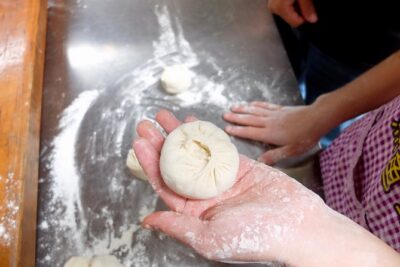
Half-Day steamed Buns Cooking Class with a Local Market Visit
Read our review →Browse the lists this tour appears in