
Reviewed · SILK ROAD TOURS
9 – Day Private Trip Gansu Exquisite Hexi Corridor from Lanzhou
Hexi Corridor feels like a living roadmap. This private Gansu trip is interesting because you move through real Silk Road strongholds, with Danxia geology and Buddhist grottoes side by side, plus Great Wall sections that feel far from the crowds. The big tradeoff: it is a packed route with long drives between cities, so your comfort depends on how well you handle day-to-day travel time.
What I like most is the combination of iconic sights with practical pacing, and the fact that you travel in a private setup with an air-conditioned vehicle and a local guide who can handle language help. Another plus is that your key logistics are handled for you, including port pickup and drop-off, bottled water, and most meals. One consideration: you should plan for desert weather swings, and if you go in colder seasons you might run into very chilly mornings and short daylight, so packing matters.
In This Review
- Key highlights worth getting excited about
- Why the Hexi Corridor route feels different from typical China tours
- Starting in Lanzhou: Yellow River bridge and an easy first day
- Day 2 on the road to Zhangye: Wuwei museums and early Buddhist sculptural art
- Zhangye and the canyon day: hiking Pingshanhu Grand Canyon
- Zhangye Danxia Geopark and the Horse Hoof Temple Grottoes
- Jiayuguan day: Giant Buddha, wine spring folklore, and an underground art gallery
- Great Wall time: Jiayuguan Pass and Overhanging Great Wall
- Dunhuang day 1: Mogao Caves plus Jade Gate Pass and the Han Great Wall
- Dunhuang day 2: Crescent Moon Lake, Singing Sand Dunes, and a camel ride
- Day 9: Fly onward
- What the included meals and hotels mean for your real trip experience
- Air-conditioned vehicle, bottled water, and why private is worth it here
- Price and value: $3,599 per person, what you are really paying for
- Who this tour suits best
- Should you book this 9-day private Hexi Corridor tour?
- FAQ
- FAQ
- How long is the trip?
- Does the tour include pickup and drop-off?
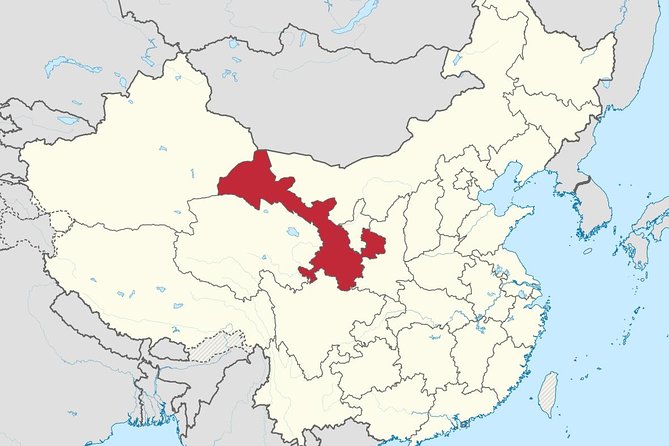
- What cities and main areas does the route cover?
- What are the biggest attractions on the itinerary?
- Are meals included?
- Is accommodation included?
- Can the tour accommodate vegetarian diets?
- Do I need a passport?
- Is there a guide and will there be language help?
Key highlights worth getting excited about
- Private, guide-led pacing through Lanzhou, Zhangye, Jiayuguan, and Dunhuang, so you are not stuck waiting around
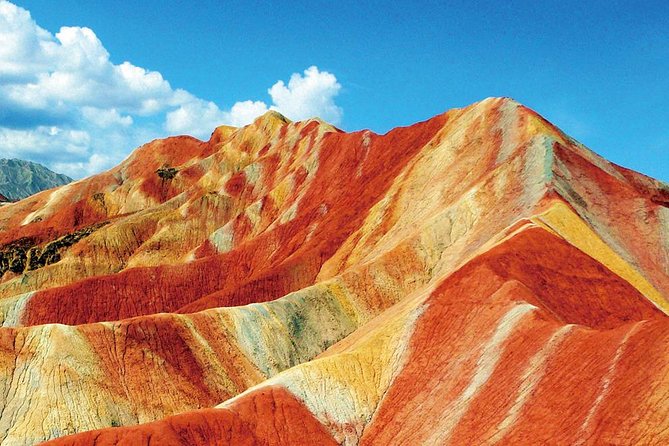
- Danxia Geopark and Pingshan Grand Canyon for dramatic rock forms plus a real hiking stretch
- Mogao Caves with the Digital Film Center plus a full Dunhuang culture day that does not feel rushed
- Jiayuguan and Han Great Wall segments for a Great Wall look at the frontier, not just city walls
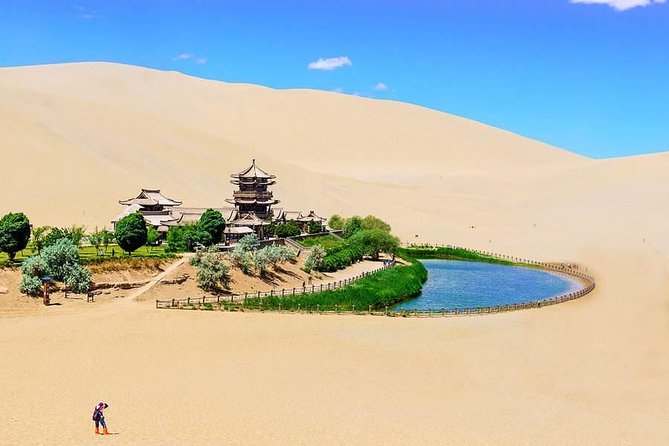
- Desert classics in one day: Crescent Moon Lake, Singing Sand Dunes, and a camel ride
- A guide like Steven Kang (康錦新) has been noted for season-aware planning and English support
Why the Hexi Corridor route feels different from typical China tours
The Hexi Corridor is not just one famous place. It is a strip of history where trade, religion, and empire-building collided across wide distances. That is why this kind of route works so well: you are constantly switching settings, from river history in Lanzhou to cave murals in Dunhuang, then out to desert dunes and lakes.
On a private itinerary like this, you can also slow down where it counts. A local guide helps you connect the dots between Buddhist art sites and frontier-era architecture, so you are not just collecting stamps in a passport.
A few more Silk Road days worth comparing
Starting in Lanzhou: Yellow River bridge and an easy first day
Day 1 keeps things sensible. Your guide meets you at Lanzhou airport or train station and transfers you to a comfortable hotel. After you settle, you visit the Iron Bridge of the Yellow River, described as the oldest bridge above the Yellow River. The visit is short and focused, about 45 minutes.
This is a smart way to begin. If you arrive with jet lag or a busy travel day behind you, you want an opening stop that gives you a sense of place without draining you.
Practical note: the listing shows a “Lanzhou” stop with free admission and a separate iron bridge entry. If you care about exact tickets for Day 1, ask the operator to confirm what is covered for your date.
Day 2 on the road to Zhangye: Wuwei museums and early Buddhist sculptural art
The route moves from Lanzhou to Zhangye via Wuwei, about 500 km, with a 5 to 6 hour day. The plan includes two stops along the way, which matters on a long desert-edge drive. After lunch and local time in Wuwei, the day turns toward Buddhism.
You visit the Wuwei Museum, where you see Buddhist sculptures connected to grotto traditions in the region. Then you head to the South Gate of the old town and visit Kumarajiva Temple. Kumarajiva is a key name for Buddhist translation history, and this stop gives you a cultural anchor before you start seeing the region’s cave art in full force.
Why this day is valuable: it prepares your eyes. By the time you reach the bigger grotto sites later, you will have a better sense of what you are looking at, especially the styles, themes, and the way religious art was carried along trade routes.
Zhangye and the canyon day: hiking Pingshanhu Grand Canyon
Next is a shorter travel leg to Zhangye, around 3 hours by expressway. Then the itinerary shifts into outdoors mode with Pingshan Grand Canyon. The hike inside the park is about 2.5 hours, and the description frames it as one of the top grand canyons in the world.
What makes this stop more than a quick photo stop is the variety packed into the park: grand canyon views, stone wonders, desert and snow mountain references, primitive forest feel, and scenic value. You might not see everything equally depending on season and weather, but you are getting a broader “Gansu in one day” feel than you would at a single lookout point.
Potential drawback: this is the kind of day where pace matters. If you hate hikes or you have limited mobility, you should ask how strenuous the walking is on your exact date and route.
Same city, a very different kind of day:
- Private Day Trip to Turpan from Urumqi including Bezklik Grottoes
★ 5.0 · 7 reviews - Dunhuang Private Day Tour Mogao Grottoes, Singing Dunes and Crescent Moon Spring
★ 4.5 · 6 reviews - 3 Days Urumqi Heavenly Lake and Turpan Tour
★ 5.0 · 4 reviews - Dunhuang Day Tour: Mogao Grottoes, Singing Sand Dunes and The Silk Road Show
★ 5.0 · 4 reviews
Zhangye Danxia Geopark and the Horse Hoof Temple Grottoes
Day 4 is a standout pairing: you visit Horse Hoof Temple Grottoes first, then head to Zhangye Danxia Geopark.
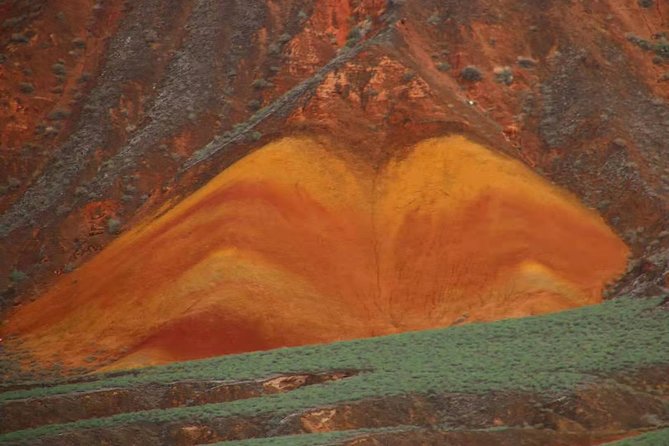
The grotto stop is described as a way to see original Buddhist grotto elements from the region’s history. Danxia landforms then take over, with the park described as both the largest and most typical arid Danxia area in China. The outing is a full day, about 8 hours, with admission included.
If you like geology, this is where the trip rewards you. Danxia formations look almost unreal, with rock layers and color bands shaped by wind, rain, and time. Even if you are not a science person, these views can make Buddhist and frontier-era sites feel even more grounded, because the environment is part of the story.
Tip for your comfort: bring a hat and something for sun protection. The route includes desert-edge days, and even if it is not scorching, you will still feel exposure.
Jiayuguan day: Giant Buddha, wine spring folklore, and an underground art gallery
Day 5 brings you into Jiayuguan territory, and it mixes big-ticket icons with surprising side stops.
First you visit the Giant Buddha Temple, described as home to the biggest sleeping Buddha in Asia. Then you travel by bus to Jiayuguan, around 3 hours. Lunch is in Jiuquan city, where you can see the Wine Spring that dates back to the Western Han dynasty and is still visible today.
After lunch, the itinerary turns into a culture detour that many people love because it is not the most obvious choice. You visit the Wei and Jin Tomb, especially the painting bricks. The listing describes the colored bricks inlaid on four walls and calls the site an “Underground Art Gallery,” covering politics, economy, military, and culture themes.
Why this set works: you get frontier-era religion (Buddha), ancient narrative around resources and legends (Wine Spring), then a rare look at how art was used to record ideas and status underground.
Evenings here are practical. After checking into the hotel, dinner is at a local restaurant near where you stay, which is helpful on a day that starts early and runs long.
Great Wall time: Jiayuguan Pass and Overhanging Great Wall
Day 6 is another long travel day, split between a Great Wall segment and the transfer to Dunhuang. You start with Jiayuguan Pass & Museum of the Great Wall, focusing on the Overhanging Great Wall, described as the western end of the Ming Dynasty’s Great Wall.
Then you transfer to Dunhuang, about 5 hours on the expressway.
This is a good structure. You get the most “wow” monument before you settle into the Dunhuang cave and desert rhythm. The pass area also helps you understand why walls mattered here. The Hexi Corridor was a passage, and the Great Wall was not just defense, it was a political statement about who controlled movement and trade.
One consideration: if you are sensitive to crowds, go into the pass with a patient mindset. This is a famous site, and timing can affect how smooth it feels.
Dunhuang day 1: Mogao Caves plus Jade Gate Pass and the Han Great Wall
Dunhuang is where the trip truly clicks. Day 7 stacks two major historical anchors plus an evening performance.
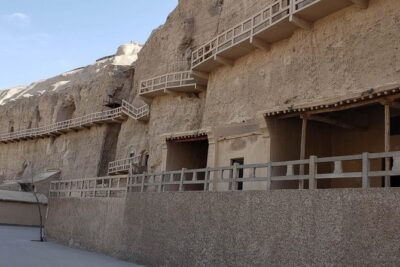
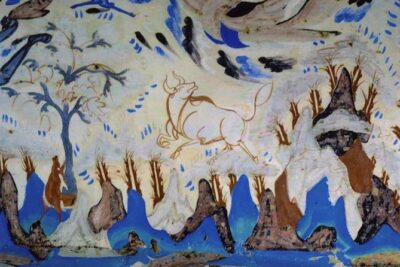
First up is Mogao Caves & the Digital Film Center. The listing lays out the scale: 492 grottoes, 45,000 square meters of murals, 2,400 painted statues, and over 250 residential caves remaining. You also get the Digital Film Center, which helps you understand context and artwork before you face the caves themselves.
Then the itinerary continues with the Jade Gate Pass and the Great Wall of Han Dynasty. The key detail here is construction method. Instead of piling up stones or bricks, the Han Dynasty Great Wall described in the listing used local sand and weed, which is a reminder of how engineering adapted to frontier conditions.
After dinner, you end with an evening performance called Ancient Sound of Dunhuang. This adds a cultural “soundtrack” to everything you are seeing. Even if you do not understand every lyric or story, performances like this often help you feel the mood of the Silk Road period: the sense of movement and spiritual life.
Practical note: Dunhuang days can feel intense because you are mentally processing cave art and then switching to outer frontier sites. The private guide format helps keep that manageable.
Dunhuang day 2: Crescent Moon Lake, Singing Sand Dunes, and a camel ride
Day 8 turns toward desert scenery and outdoor fun.
You visit Crescent Moon Lake and then the Singing Sand Dunes, with time to enjoy a camel ride in the dunes. The listing also includes a stop at a Photovoltaic power plant in Dunhuang’s modern industry park.
That modern stop might surprise you, but it is actually a good counterbalance. After days of ancient walls and murals, you see how the same region is now connected to modern energy and development.
If you book this trip, this is the day that gives your camera a break from caves. It is also a day where you will feel the environment more directly, so plan for wind and sun. Desert weather can change quickly.
Day 9: Fly onward
Day 9 is straightforward. You take a flight to your next destination. The listing keeps it open-ended, which gives you flexibility for onward connections.
If you have a connecting city in mind, check timing early. With a private trip, you usually have more control than on group tours, but your flight schedule still sets the finish line.
What the included meals and hotels mean for your real trip experience
This is not a “bring your own everything” kind of route. The package includes 7 nights accommodation and a lot of meals: breakfast is listed as 8, lunch as 7, and dinner as 8.
That matters in western China travel because meal hunts can eat your best daylight. When meals are handled, you can spend your energy on sights, not logistics.
Also, there is a vegetarian option available if you advise in advance. The operator asks for dietary requirements during booking, so if you have restrictions, send them early rather than hoping on the day.
Air-conditioned vehicle, bottled water, and why private is worth it here
The route is long. You have a 500 km day between Lanzhou and Wuwei, and another 5 hour transfer into Dunhuang. Even where the drive is shorter, you are doing it in stretches across wide space.
An air-conditioned vehicle and bottled water are not small details. In hot or dry weather, comfort affects your mood and your stamina, especially when you later hike in a canyon and spend daylight time outside.
Private also helps you match your pace to the day. If you want more time at a grotto stop or you need more breaks, the guide can usually adjust better than a group schedule.
And in past runs, guides such as Steven Kang (康錦新) have been praised for planning around the season, including timing and practical care. One traveler described a colder season with temperatures around minus 10 degrees and short daylight, yet still found popular sites like Mogao to feel more private on those days.
Price and value: $3,599 per person, what you are really paying for
At $3,599 per person, this is not a budget sightseeing bus tour. You are paying for a full private guide, the vehicle, covered accommodation for 7 nights, many meals, bottled water, and included admissions where marked on the itinerary.
Here is the value logic I use:
- If you would otherwise pay separately for driver plus guide plus hotels plus multiple entry tickets, the package starts to make sense.
- You also get fewer wasted hours. Time is expensive on the Hexi Corridor, because distances add up fast.
- The private approach can be worth it just to reduce decision fatigue. You get a route with planned stops, rather than building one yourself from scratch across multiple cities.
Where the price might feel heavy is if you already plan to travel independently with your own driver, or if you are comfortable juggling tickets, hotels, and language support without a guide.
Who this tour suits best
This private trip is ideal if:
- You want a structured Hexi Corridor circuit without the stress of organizing transportation across multiple cities
- You care about Silk Road culture and want to see Mogao Caves, Danxia Geopark, and Great Wall segments with context
- You prefer comfort, including air-conditioned travel and pre-arranged meals
It can also work for families, as the listing says children must be accompanied by an adult and that most travelers can participate. Still, because there are hiking hours and long drive days, check your group’s mobility needs before you go.
If you love off-the-beaten-path moments, there is a plus. One traveler, doing a 9-day northwestern China trip of this type, described time in a small village and helping locals herd yaks and sheep. That is not guaranteed by every itinerary, but it is the kind of request you can ask about for your dates if you want more village-level life rather than only big sights.
Should you book this 9-day private Hexi Corridor tour?
Book it if you want a high-impact, low-stress route through Lanzhou, Zhangye, Jiayuguan, and Dunhuang, with a private guide and comfort built in. The combination of Danxia geology, Mogao Caves scale, and Great Wall frontier stops is exactly the kind of multi-site experience that benefits from interpretation and careful timing.
Pass or rethink if you hate long travel days, you do not enjoy hiking (there is a 2.5 hour canyon hike), or you are the type who wants total freedom to wander without a set sequence.
FAQ
FAQ
How long is the trip?
It runs about 9 days, based on the provided itinerary.
Does the tour include pickup and drop-off?
Yes. Port pickup and drop-off are included, and your guide meets you at the Lanzhou airport or train station.
What cities and main areas does the route cover?
The route includes Lanzhou, Wuwei, Zhangye, Jiayuguan, and Dunhuang, with final departure by flight from Dunhuang.
What are the biggest attractions on the itinerary?
Key highlights include Iron Bridge of the Yellow River, Zhangye Danxia Geopark, Horse Hoof Temple Grottoes, Great Wall Jiayuguan Pass and Overhanging Great Wall, Mogao Caves, Jade Gate Pass, Han Great Wall, Crescent Moon Lake, and the Singing-Sand Dunes.
Are meals included?
Yes. Breakfast is included (8 breakfasts), along with lunch (7) and dinner (8), as listed in the inclusions.
Is accommodation included?
Yes. The package includes 7 nights of accommodation.
Can the tour accommodate vegetarian diets?
Yes. A vegetarian option is available, and you should advise the operator when booking.
Do I need a passport?
Yes. Passport name, number, expiry, and country are required at booking, and you need a current valid passport on the day of travel.
Is there a guide and will there be language help?
Yes. The tour includes a local guide. Past tours have mentioned an English guide by name, Steven Kang (康錦新), and the guide’s language skills are part of the value.
Recently added around Silk Road
- 2-Day Zhangye Private Tour: Binggou Danxia, Zhangye Danxia Geo Park, Mati Temple Grottoes★ 5.0 · 3 reviews
- Private Day Tour: Horse Hoof Temple Grottoes and Zhangye Danxia Landform★ 5.0 · 3 reviews
- Private Full-day Xining City Tour with Lunch★ 4.5 · 3 reviews
- Full-Day Private Guided Tour to Heavenly Lake of Tianshan★ 5.0 · 3 reviews
- 3 Days Urumqi Heavenly Lake and Turpan Tour★ 5.0 · 4 reviews
- Lanzhou Private Day Tour: Binglingsi Grottoes and Liujiaxia Gorge★ 5.0 · 3 reviews
- Xinjiang Best Classic Silk Road Tour with Locals★ 4.5 · 3 reviews
- Best of Kashgar tour with Karakoram Highway★ 4.5 · 3 reviews
Silk Road Tours, compared.
8-Day Silk Road Trip of Dunhuang, Jiayuguan, Zhangye with Accommodation
Read our review →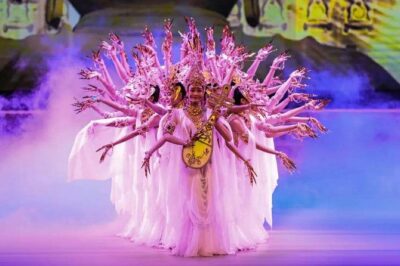
3-Day Private Silk Road Tour of Dunhuang: Mogao Grottoes, Yulin Grottoes, Crescent Moon Pool
Read our review →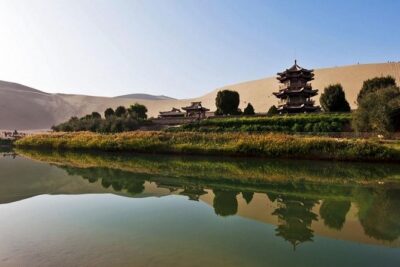
Dunhuang Private Silk Road Day Tour: Mogao Caves, Crescent Spring
Read our review →
Private Day Trip to Turpan from Urumqi including Bezklik Grottoes
Read our review →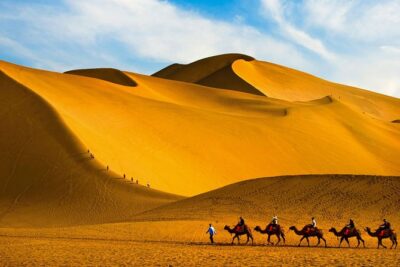
Dunhuang Private Day Tour Mogao Grottoes, Singing Dunes and Crescent Moon Spring
Read our review →
Dunhuang Day Tour: Mogao Grottoes, Singing Sand Dunes and The Silk Road Show
Read our review →
Browse the lists this tour appears in