
Reviewed · SILK ROAD TOURS
Best of Kashgar tour with Karakoram Highway
Kashgar plus the Karakoram Highway equals jaw-drop views. I love the Karakoram Highway road-trip scenery, and you will love how Kashgar old town meals bring you right into everyday life. One thing to keep in mind is the pace, you will spend long stretches in the vehicle at high elevation.
This is a 5-day, start-to-finish in Kashgar trip with a private vehicle, an English-speaking guide, and the key pieces handled for you, including highway permits and attraction admissions. You also get practical extras like pickup from the airport or train station and a night-market stop on arrival day.
The value angle here is simple: you are paying for more than sightseeing. You are buying access to the road section that most people cannot self-organize, plus time in Kashgar when it actually feels like a Silk Road city.
In This Review
- Key things I’d watch for on this tour
- The Karakoram Highway, why this road feels different
- Day 1 in Kashgar: arrival ease, night food market, and getting your bearings
- Day 2: Sunday livestock market, Id Kah Mosque, and Abakh Hoja Tomb
- Kashgar livestock market (only on Sundays)
- Abakh Hoja Tomb, Uyghur architecture at scale
- Id Kah Mosque and old-town walking time
- Day 3 to Tashkurgan: lakes, sand dunes, and the high-mountain feel
- The road stops that break up the drive
- Tashiku’erganzhen, stone forte, and Pamir grassland
- Day 4: Tashkurgan Fort, then the Dragon Road return toward Kashgar
- Day 5: one last Kashgar stop and smooth departure
- Price and value: what $925 really buys you
- Guide support in the real world, not just on paper
- Who should book, and who should think twice
- Should you book this Best of Kashgar tour with Karakoram Highway?
- FAQ
- Where does the tour start and end?
- How long is the Best of Kashgar tour?
- Is pickup included?
- Is there an English-speaking guide?
- Are admissions included?
- Are meals included besides breakfast?
- Does the livestock market always happen?
- What kind of vehicle do you use?
- What is the hotel arrangement?
- What if the weather is bad or the minimum number of travelers is not met?
- Final thought: is this the right mix for you?
Key things I’d watch for on this tour
- Karakoram Highway permits are included, so you are not stuck doing paperwork
- Sunday timing can make the Kashgar livestock market special, if your date lines up
- Id Kah Mosque and Abakh Hoja Tomb give you major Uyghur architecture in one focused day
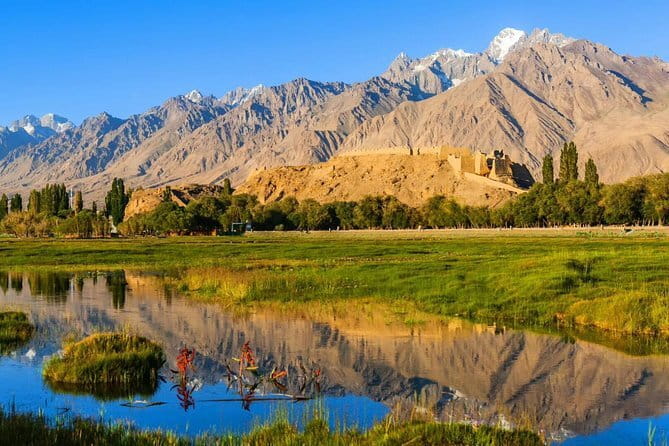
- Karakul Lake and 3,600 m altitude make the “drive” part feel like a destination
- Long views, short stops means the itinerary favors scenic roads over slow museum time
The Karakoram Highway, why this road feels different
The big headline is the Karakoram Highway segment that connects China to Pakistan via the Kunjirap area and the Karakoram Highway route. On the China side, the driving portion is about 430 km, and it threads through major mountain regions like the Pamirs, Karakoram, and Hindu Kush.
What I like about this kind of routing is that you get variety without changing hotels every day. You start in Kashgar, then the scenery steps up fast as you head toward Tashkurgan, with glaciers and high peaks lining the horizon when weather cooperates.
You should also know what you are signing up for. Even when the schedule is efficient, this is an out-and-back style road trip with substantial drive time, so bring snacks, water, and a comfortable mindset for sitting and looking out the window.
A few more Silk Road days worth comparing
Day 1 in Kashgar: arrival ease, night food market, and getting your bearings
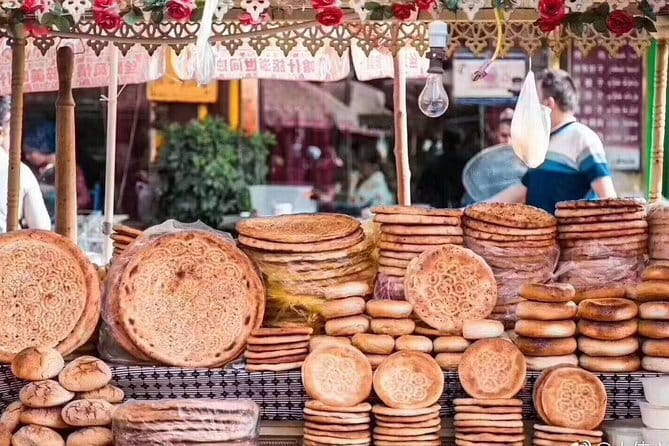
Arrival day is built for low stress. Your guide and driver meet you at the train station or airport, transfer you to the hotel, and then you step straight into Kashgar life with the night food market.
This matters more than it sounds. After a long travel day, a night-market walk is an easy way to orient yourself, see how the city moves, and taste local flavors without needing a full day of planning.
The night market stop is about 2 hours, and the admission ticket is listed as free. That makes it a nice value add, since you get a real first impression of Kashgar without extra costs or complicated reservations.
Day 2: Sunday livestock market, Id Kah Mosque, and Abakh Hoja Tomb
Day 2 is where Kashgar’s religious sites and markets show up in full color.
Kashgar livestock market (only on Sundays)
The Kashgar Live Stock Market is an open-field agricultural market held every Sunday. If your travel dates hit Sunday, you will see a very local, business-first scene centered on animals like sheep, yaks, goats, donkeys, cows, camels, and horses.
If it is not Sunday, the market will not run, so your guide will pivot to other included stops. That is why I treat the market as a timing bonus rather than a guarantee.
The market is scheduled for about 2 hours, with admission included. It is also described as a major draw, with huge crowds coming from nearby areas and even Central Asia.
Same city, a very different kind of day:
- Dunhuang Private Silk Road Day Tour: Mogao Caves, Crescent Spring
★ 4.5 · 7 reviews - Dunhuang Private Day Tour Mogao Grottoes, Singing Dunes and Crescent Moon Spring
★ 4.5 · 6 reviews - 3 Days Urumqi Heavenly Lake and Turpan Tour
★ 5.0 · 4 reviews - Dunhuang Day Tour: Mogao Grottoes, Singing Sand Dunes and The Silk Road Show
★ 5.0 · 4 reviews
Abakh Hoja Tomb, Uyghur architecture at scale
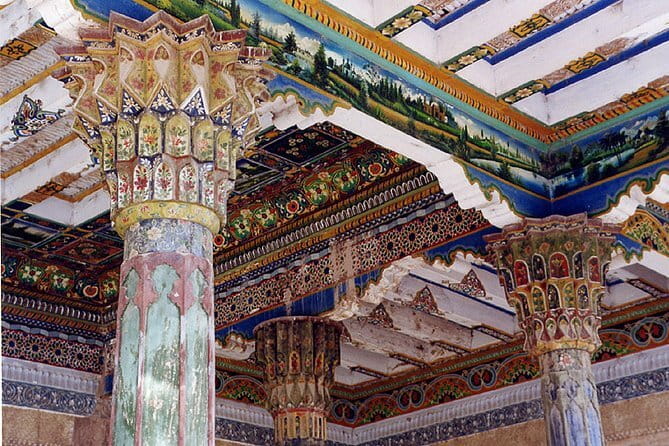
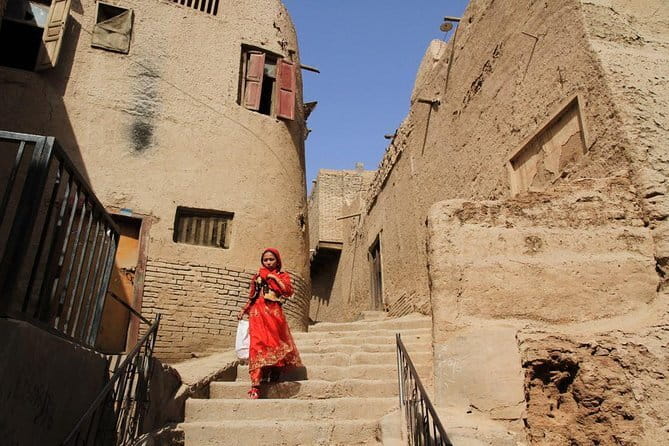
Next comes Abakh Hoja Tomb, described as one of the finest examples of Uyghur architecture in China. The central dome is about 17 m and sits surrounded by four corner minarets, with floral pattern work and strip details.
The tomb dates back to the 1640 period, and it is linked to Apak hoja and five generations of relatives. Even if you do not focus on architecture deeply, you will feel the intention behind the design, scale plus symmetry plus ornament.
Admission is included, and this stop is longer than a quick photo stop, giving you a real chance to slow down.
Id Kah Mosque and old-town walking time
Then you move to the Id Kah Mosque, listed as the largest mosque in China and among the largest in the world by capacity. It is known as one of the best-preserved Uyghur architectural mosque examples, and it can hold more than thousands during prayer time.
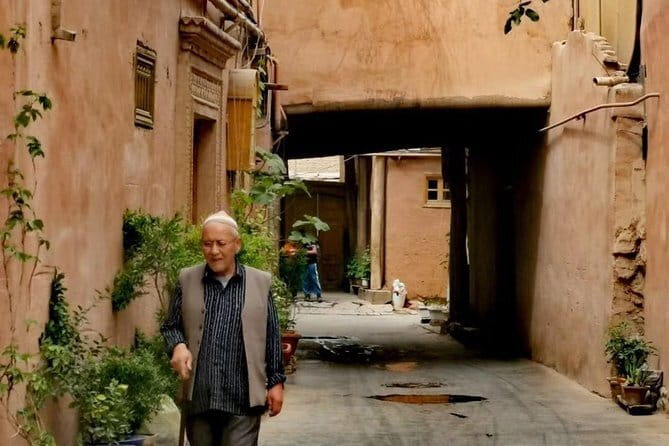
After that, the plan includes time in Kashgar old town, including the well-preserved residential area that people began settling in about 1,100 years ago. The walk is roughly 4 to 5 hours, and it is described as a place with old tea houses and strong local presence.
If you want one day that blends sacred sites with ordinary city life, Day 2 is the day.
Day 3 to Tashkurgan: lakes, sand dunes, and the high-mountain feel
This is the longest “step up” day. You leave Kashgar and drive the Karakoram Highway toward Tashkurgan, with scenic stops along the way.
The inclusions call out multiple environment types, from villages to grasslands, then to highland lakes. The most memorable stop is Karakul Lake, listed at about 3,600 m elevation and surrounded by high peaks like Muztagh Ata (7,546 m) and Konggur (listed around 7,649 m in the itinerary notes).
You get a roughly 2-hour window to hike around the lake, if timing allows. At 3,600 m, even a simple walk can feel like work, so keep the pace gentle and give yourself breaks.
The road stops that break up the drive
Along the way, there are stops designed to keep the day from feeling like one long bus ride.
- Opal Village and Upal Village are included as quick stops, with the idea that you see how settlements sit against the road
- Taheman Grassland is on the route, a change of scenery before the higher lakes
- Bulunkul, also described as the white sand mountain lake, is at about 3,200 m, and you can enjoy lake views plus sand and snow peaks around it
There is also a stop at Muztagh Ata on the way, plus the option to see the Konggur peaks from the route, with time allocated for photos. The itinerary notes this as about 30 minutes, so think of it as a viewpoint moment rather than a summit attempt.
Tashiku’erganzhen, stone forte, and Pamir grassland
As you head into Tashkurgan area, the plan includes Stone forte and Pamir grassland in Tashiku’erganzhen for about 1 hour.
This is a good example of how the itinerary tries to give you meaning behind the scenery. You are not just driving past mountains, you are stopping where the region’s cultural setting shows up through place names and local structures.
Day 4: Tashkurgan Fort, then the Dragon Road return toward Kashgar
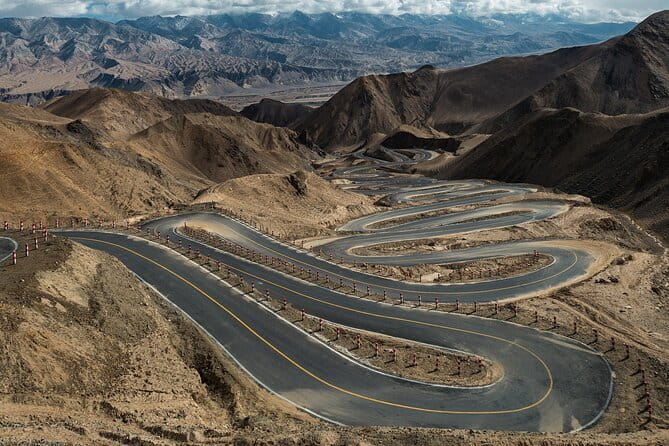
Day 4 mixes cultural stops with that classic switchback-road experience.
In the morning, you visit Tashkurgan Fort and also spend time on Pamir grassland and the downtown area of Tashkurgan for a few hours. This is one of those moments where the “western gateway to China” idea starts to feel real in your legs, you are seeing the far end of the Silk Road route as a living place, not just a map line.
Then you head back toward Kashgar by including the Panlong ancient route, often described as a zigzag road with a “dragon road” look from above. The schedule notes time to drive the section and keep going on the Karakoram Highway back.
There is also a stop related to the Dragon Road timing, after breakfast, with mention that it is one of the most popular roads in China. The way the schedule reads, you should expect you will see the switchbacks from both a driving perspective and at least one viewpoint-like moment.
If you get car sick, take it seriously here. This kind of road loves sharp turns, and even if you feel fine on flat highways, the switchbacks can change things.
Day 5: one last Kashgar stop and smooth departure

On the final day, the tour centers on an uncomplicated finish. Your guide and driver take you to the airport or train station based on your departure plans, and the time block is about 1 hour.
This makes a difference because it reduces end-of-trip stress. You do not end with a half-day city scramble, you end with a handoff you can actually rely on.
Price and value: what $925 really buys you
At $925 per person for about 5 days, this trip is priced like a logistics-heavy itinerary. You are paying for more than sightseeing tickets.
Here is what is included, based on the tour details:
- Hotel accommodation rated 3 to 4 star, with rooms shared by two people
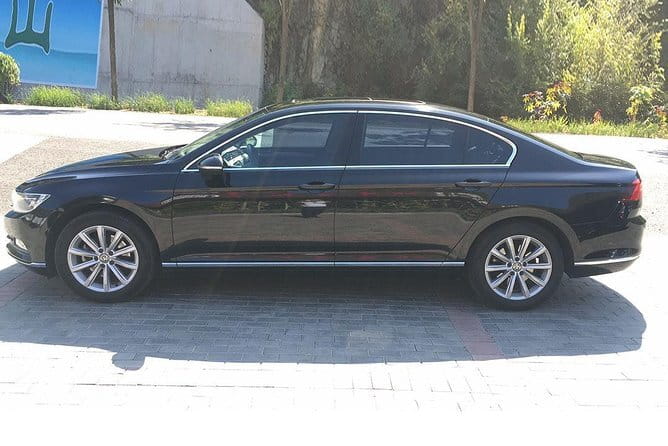
- Private tourist vehicle with driver
- Admission fees to the attractions listed in the plan
- Permits for traveling on the Karakoram Highway to Tashkurgan
- English-speaking guide
- Breakfast for 4 days
What is not included:
- Lunches, dinners, and tips
- Personal expenses
So the budgeting math is straightforward. If you eat at casual local places for lunch and plan to budget dinner, you should treat the $925 as the cost of the trip engine, road access, and guided stops, not as a complete all-in package for every meal.
Is it good value? For most people, yes, because the permit and route access piece is hard to DIY cleanly. The rest is standard costs like admissions and guide time.
Also worth noting: the tour lists a rating of 4.7 out of 5 based on three reports. That is not a massive sample size, but it aligns with what the included services are trying to do, keep things organized and human.
Guide support in the real world, not just on paper
This is where the tour can feel better than a rigid checklist.
The trip details highlight an English-speaking guide, and one guide named Waheed is singled out in past experiences for practical help when things went off track, including assisting with lost luggage that did not arrive in Kashgar and coordinating with airlines to retrieve an item left on a plane.
That tells me something important about the value of having a local operator with an active support mindset. In a region where plans can hinge on timing, a guide who can troubleshoot quickly saves energy and keeps the trip moving.
You should still run your own basics, keep key documents handy, and build a little margin for weather. But it helps to know the team behind the trip can handle bumps.
Who should book, and who should think twice
This tour fits best if you want:
- A road-focused Xinjiang experience with major scenery changes
- A balanced day mix of markets, mosques, tombs, and high-mountain stops
- Someone to manage the permit piece for Karakoram Highway travel
- Less planning, more looking out the window, then walking and photographing at stops
It might not be ideal if:
- You hate long drive days or you get motion sick on switchback roads
- You want a very relaxed pace with lots of free time
- You are going to be upset if a Sunday-only stop like the livestock market cannot happen on your date
Should you book this Best of Kashgar tour with Karakoram Highway?
If your priority is experiencing Kashgar plus the Karakoram Highway in a structured, permit-supported way, I think this is a strong booking. You get a real first day in Kashgar with a night market, a full Day 2 of major Uyghur architecture and old-town walking, and then three days that turn the drive into an actual mountain journey with Karakul Lake and the Tashkurgan area.
If you are okay with sitting through long stretches and making the most of scenic stops, you should feel rewarded. If you need constant handholding at every step, I would still say the tour is set up for that with an English-speaking guide and a private vehicle, but you will want to come with realistic expectations about road time.
FAQ
Where does the tour start and end?
The tour begins and ends in Kashgar.
How long is the Best of Kashgar tour?
It is listed as about 5 days.
Is pickup included?
Yes. Your guide and driver will pick you up from the train station or airport in Kashgar.
Is there an English-speaking guide?
Yes, an English-speaking guide is included.
Are admissions included?
Yes. Admission fees to the attractions named in the itinerary are included.
Are meals included besides breakfast?
Breakfast is included for 4 days. Lunches, dinners, and tips are not included.
Does the livestock market always happen?
No. The Kashgar livestock market is held only every Sunday, and it will not run on other days.
What kind of vehicle do you use?
You travel in a private tourist vehicle with a driver.
What is the hotel arrangement?
Hotel accommodation is 3 to 4 star, with each room shared by two people.
What if the weather is bad or the minimum number of travelers is not met?
The tour requires good weather. If it is canceled due to poor weather, you will be offered a different date or a full refund. If the minimum traveler requirement is not met, you will also be offered a different option or a full refund.
Final thought: is this the right mix for you?
Book it if you want the most practical way to connect Kashgar’s old-town experience with the mountain road adventure of the Karakoram Highway. Skip it only if you want lots of free time, or if you are very sensitive to long driving and high-altitude conditions.
Recently added around Silk Road
- 2-Day Zhangye Private Tour: Binggou Danxia, Zhangye Danxia Geo Park, Mati Temple Grottoes★ 5.0 · 3 reviews
- Private Day Tour: Horse Hoof Temple Grottoes and Zhangye Danxia Landform★ 5.0 · 3 reviews
- Private Full-day Xining City Tour with Lunch★ 4.5 · 3 reviews
- Full-Day Private Guided Tour to Heavenly Lake of Tianshan★ 5.0 · 3 reviews
- 3 Days Urumqi Heavenly Lake and Turpan Tour★ 5.0 · 4 reviews
- Lanzhou Private Day Tour: Binglingsi Grottoes and Liujiaxia Gorge★ 5.0 · 3 reviews
- 9 – Day Private Trip Gansu Exquisite Hexi Corridor from Lanzhou★ 5.0 · 3 reviews
- Xinjiang Best Classic Silk Road Tour with Locals★ 4.5 · 3 reviews
Silk Road Tours, compared.
8-Day Silk Road Trip of Dunhuang, Jiayuguan, Zhangye with Accommodation
Read our review →
3-Day Private Silk Road Tour of Dunhuang: Mogao Grottoes, Yulin Grottoes, Crescent Moon Pool
Read our review →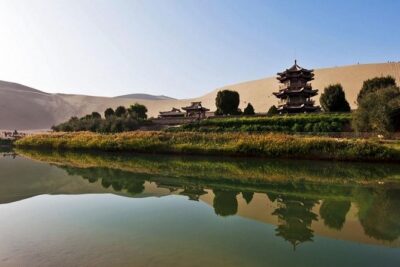
Dunhuang Private Silk Road Day Tour: Mogao Caves, Crescent Spring
Read our review →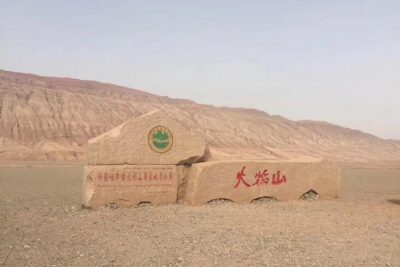
Private Day Trip to Turpan from Urumqi including Bezklik Grottoes
Read our review →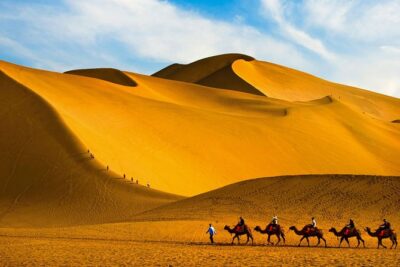
Dunhuang Private Day Tour Mogao Grottoes, Singing Dunes and Crescent Moon Spring
Read our review →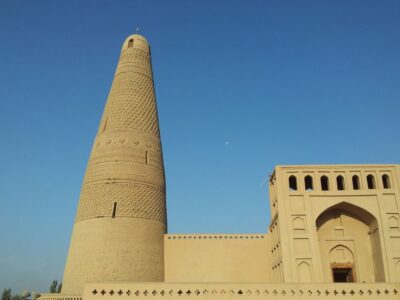
Dunhuang Day Tour: Mogao Grottoes, Singing Sand Dunes and The Silk Road Show
Read our review →
Browse the lists this tour appears in