
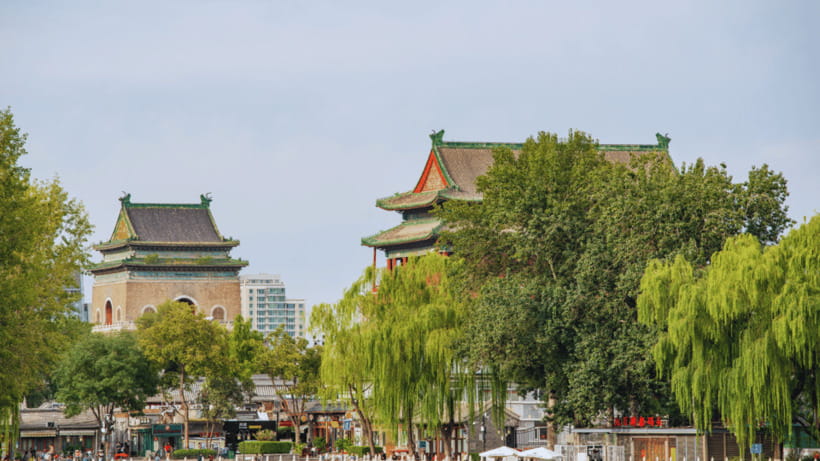
Reviewed · HISTORICAL TOURS
Beijing: Bell and Drum Towers Entry Ticket—Historic Landmark
Timekeeping gets physical here. In Beijing, the Bell and Drum Towers were built to mark the city’s daily rhythm, and now you can walk through that same imperial system in a few hours.
I love two things about this ticket. First, it gets you into both towers with an English PDF guidebook, so you can go at your pace and still understand what you’re seeing. Second, if you climb up to the top of the Drum Tower, you might catch a short drum performance, around five minutes.
The main drawback to plan around is timing: the drum show is not guaranteed, and the exact time can vary based on the onsite schedule.
In This Review
- Key things to know before you go
- Bell and Drum Towers, Beijing’s Original City Clock
- Your $13 Ticket Value: Two Towers Plus a Guide
- The 4-Hour Flow: What You’ll Do on a Self-Guided Visit
- Drum Tower: Start with the city’s percussion side
- Bell Tower: Shift to the massive bell and its purpose
- Climb Up: Drum Tower Top and the Five-Minute Performance Chance
- The Bell Tower’s 63-Ton Yongle Bell: King of Ancient Bells
- North-South Layout and Imperial Craftsmanship You Can Actually See
- Using the English PDF Guidebook Without Getting Stuck Reading
- Service and Communication That Made Entry Easier
- What to Bring and When It’s Worth Scheduling
- Who Should Book This Ticket, and Who Might Skip It
- Should You Book Bell and Drum Towers Entry?
- FAQ
- What is included with the Bell and Drum Towers entry ticket?
- How long should I plan for this experience?
- Do I get access to both the Bell Tower and the Drum Tower?
- Is the drum performance guaranteed?
- What should I bring to visit?
- Do I get a live tour guide?
- Can I cancel for a refund, and can I pay later?
Key things to know before you go
- Dusk drum, morning bell: these towers were the city’s old timekeepers.
- Yuan to Ming details: the complex mixes Yuan-era roots with Ming-era masterpieces.
- Drum Tower has 25 drums: you’re looking at a big, designed instrument collection.
- Climb the Drum Tower top: you may catch a brief drum performance.
- The Yongle-era bell weighs 63 tons: it earned the title King of Ancient Bells.
- English PDF guidebook included: self-guided, but you are not guessing.
Bell and Drum Towers, Beijing’s Original City Clock
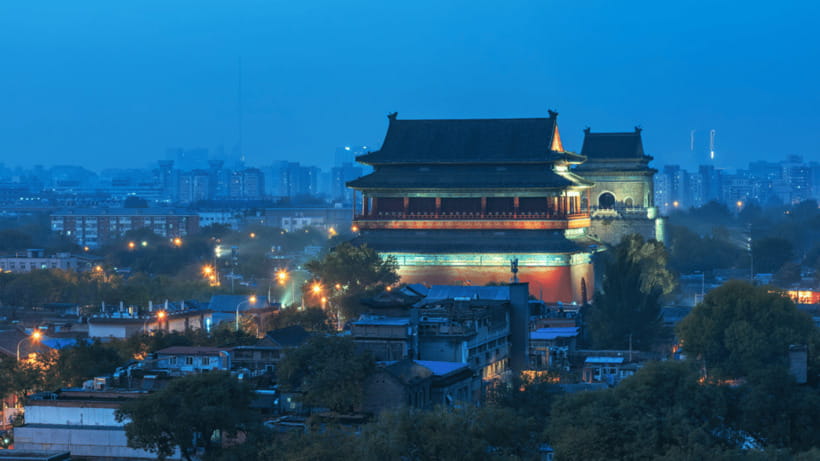
The Bell and Drum Towers sit at the northern end of Beijing’s central axis. That position matters, because this whole complex was meant to regulate the day, not just decorate the skyline. Centuries ago, people relied on a system summarized as a dusk drum and a morning bell.
When you tour both sites, you are basically stepping into how an imperial city ran on schedules. The complex is huge for its type, covering 12,597 square meters and protected as state architecture. It also has a north-south layout that gives it a distinct feel compared with other bell towers you might see elsewhere in China.
What I like most is that it is not only about one object. The Drum Tower and Bell Tower work as a pair, and you start to understand why both were built and maintained.
More history tours in Beijing:
- Beijing Historical Tour II including Summer Palace, Lama Temple & Panda Garden
★ 4.0 · 187 reviews - Beijing Historical Tour I – Forbidden City, Tiananmen Square & Temple of Heaven
★ 4.0 · 120 reviews - Beijing Historic City Guided Walking Tour + Calligraphy Creation
★ 5.0 · 59 reviews
Your $13 Ticket Value: Two Towers Plus a Guide

At about $13 per person for a 4-hour visit, the value is strong because you are not just buying entry to one building. You get tickets to both the Bell Tower and Drum Tower, plus an English PDF guidebook for the complex.
That matters because the towers are best when you know what you’re looking at. The Drum Tower is tied to a set of drums, and the Bell Tower is tied to a specific bell, including its famous weight and era. With the PDF guide, you can connect the physical space with the story instead of treating it like scenery.
Also, you can use the ticket to skip the ticket line. That sounds like a small perk, but in practice it helps you spend more time inside the towers and less time waiting outside.
The 4-Hour Flow: What You’ll Do on a Self-Guided Visit
This ticket is designed for a self-guided experience. That is good news if you like moving at your own speed, taking photos when the light is right, and reading only what catches your interest.
A sensible way to structure your time is to treat it like two halves: first the Drum Tower area, then the Bell Tower area. The order does not change the core experience, but it helps your brain organize what you see.
Drum Tower: Start with the city’s percussion side
You’ll begin with the Drum Tower, a key part of the timekeeping system. The Drum Tower is notable because it housed 25 drums, which tells you this was not a single prop. It was a real setup for controlling daily sound signals.
As you walk around and look for the display information, I suggest you focus on the logic: why multiple drums were needed, and how a fixed schedule would work in a pre-smartphone city. It makes the place feel practical, not just old.
A few more Beijing days worth comparing
- From Beijing: Mutianyu Great Wall Tours with Options
★ 4.9 · 9,216 reviews - Beijing: Forbidden City Tour(Group/Private)-Tickets Included
★ 4.8 · 7,974 reviews - Beijing: T-Square & Forbidden City Group or Private Tour
★ 4.8 · 4,446 reviews - Beijing: Mutianyu Great Wall Daily Tour with Ticket & Lunch
★ 5.0 · 3,056 reviews
Bell Tower: Shift to the massive bell and its purpose
Next, you’ll move to the Bell Tower. This is where you meet the highlight object people talk about: the Yongle-era bell from the Ming dynasty, which weighs 63 tons. You can feel the scale is the point, because such a bell had to be engineered for serious, reliable sound.
If you want the place to click, connect the bell to the morning side of the timekeeping story. A dusk drum and a morning bell makes much more sense when you see that one complex is built for the full daily cycle.
Climb Up: Drum Tower Top and the Five-Minute Performance Chance
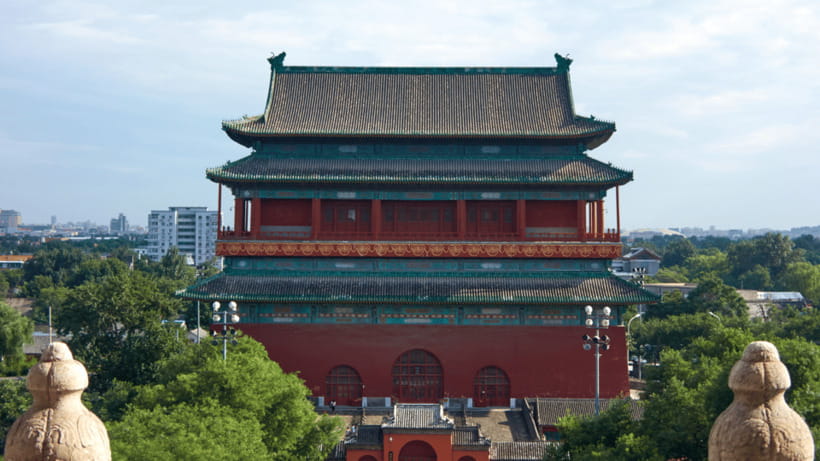
The ticket includes full access, and one of the standout experiences is the opportunity to climb to the top of the Drum Tower. The payoff, if you time it well, is a drum performance that can last about five minutes.
A key detail: you might see it, but the exact time can vary depending on the onsite schedule. So treat it like a bonus, not a promise. If catching the performance is your top priority, I’d plan to spend enough time at the Drum Tower rather than rushing through.
When the drumming happens, it is the moment the whole complex starts feeling alive. Without the sound, it can be easy to see the towers as just impressive buildings. With the performance, you get the idea of why the city invested so much in timing.
The Bell Tower’s 63-Ton Yongle Bell: King of Ancient Bells

At the Bell Tower, the main star is the bell associated with the Ming dynasty, Yongle era. This is the one called the King of Ancient Bells, largely because it weighs 63 tons.
That fact is the kind of detail that changes how you look at everything. Instead of thinking about the tower as a background, you start thinking about the entire construction as a support system for a massive instrument. The bell is not only impressive in size, it is impressive in the fact that it was designed to do a job.
I also like that the complex is described as one of Beijing’s largest and most well-preserved time-telling complexes. For photographers, that usually translates to more chances to capture different angles, and for history lovers it means more of the original purpose is still readable in the space.
North-South Layout and Imperial Craftsmanship You Can Actually See

The Bell and Drum Towers have a unique north-south layout, and that architectural choice supports the idea of time signals being heard across the city. You are not just walking between two random landmarks. You’re walking through two halves of a designed system.
What helps is the mix of historical layers. Built originally in the Yuan dynasty, the complex later connects strongly to Ming dynasty achievements, including the Yongle-era bell. That blend makes the towers feel like a living timeline, even though you’re seeing stone, wood, and historic design rather than daily action.
If you enjoy details you can verify with your eyes, spend a few extra minutes comparing how the two towers feel. One emphasizes the drum side of the schedule, and the other emphasizes the bell side. That physical contrast is easier than trying to imagine the system from a book.
Using the English PDF Guidebook Without Getting Stuck Reading

You get an English PDF guidebook as part of the ticket. That is great for a self-guided visit, especially if you want context for the drums, the bell, and the broader timekeeping role of the complex.
My practical advice: before you arrive, download the PDF so you can open it without fighting connectivity. Then use it in short bursts. Read one section while you’re in the right spot, then put it away and look again.
This helps you avoid the common mistake of reading everything like homework. The guide is there to help you notice what you might otherwise miss, like the fact that the Drum Tower included 25 drums, or why the Yongle-era bell’s weight matters.
Service and Communication That Made Entry Easier
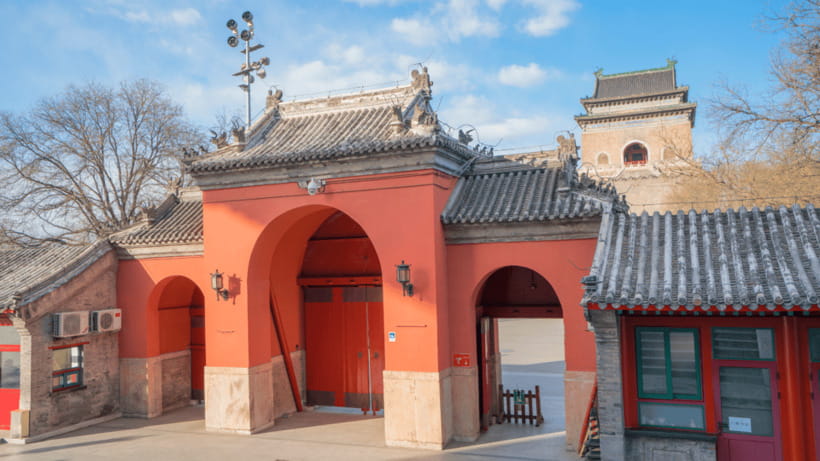
You’re buying this through PANDA HAPPY JOURNEY IN CHINA, and one of the practical perks people noted is easy ticket use and clear communication via WhatsApp. That kind of message support can be useful when you are trying to get your timing right in a big city.
Even if you are comfortable navigating on your own, it helps to know you can reach someone if you have a question about using your tickets. It is not the same thing as having a live guide in the moment, but it can reduce friction on the day.
What to Bring and When It’s Worth Scheduling

For what to bring, the ticket info is straightforward: bring your passport or ID card. That is especially important in China when venues or ticket validations require identity documents.
For timing, think in terms of your goal. If your goal is photos and understanding the objects, your 4 hours are plenty if you do both towers calmly. If your goal is catching the drum performance, give yourself more breathing room at the Drum Tower since the exact timing can vary.
Also, since the experience is self-guided, you control your pace. That is one of the reasons this works well as a culture stop in central Beijing.
Who Should Book This Ticket, and Who Might Skip It
This experience fits best if you like history that you can see in real structures, not just read about. It is also a solid match for photographers, because you are visiting major landmark towers with distinct architecture and recognizable timekeeping themes.
You should also consider it if you want something different from the usual palace-and-wall circuit. Bell and Drum Towers give you a cultural angle on daily life in imperial Beijing, focused on sound, schedules, and city order.
If you are in Beijing for a tight checklist and you already feel you have done everything else, this may feel like a niche stop. One review summed up the idea as acceptable if you have already covered other big sights and you still want to understand how the old city kept time. In other words, it is best when you choose it on purpose.
Should You Book Bell and Drum Towers Entry?
I think you should book this ticket if you want a calm, self-guided cultural visit where the payoff comes from understanding how the city worked. Two-tower access plus an English PDF guidebook is a good setup for value, especially if you like learning while you walk.
I would hold off or adjust expectations if catching the drum performance is the only reason you booked. The show can be great when it happens, but the exact timing is not fixed, so treat it as a chance rather than a guarantee.
If your ideal day includes a bit of old Beijing that feels practical, not just ceremonial, this is a strong half-day choice.
FAQ
What is included with the Bell and Drum Towers entry ticket?
Your ticket includes entry tickets to both the Bell Tower and Drum Tower, plus an English PDF guidebook.
How long should I plan for this experience?
Plan for about 4 hours.
Do I get access to both the Bell Tower and the Drum Tower?
Yes. The ticket provides full access to both towers.
Is the drum performance guaranteed?
It is not guaranteed. If you climb to the top of the Drum Tower, you might see a daily drum performance, but the exact time can vary based on the onsite schedule.
What should I bring to visit?
Bring your passport or ID card.
Do I get a live tour guide?
No. A live tour guide is not included.
Can I cancel for a refund, and can I pay later?
Yes. You can cancel up to 24 hours in advance for a full refund. You can also reserve now and pay later.
Recently added around Beijing
- Private Transfer to Mutianyu Great Wall with professional driver★ 5.0 · 19 reviews
- camp on the Great Wall overnight with sunrise and sunset on the wall★ 5.0 · 11 reviews
- Beijing: to Xi’an Terracotta Day Tour by Roundtrip Bullet Train★ 5.0 · 9 reviews
- Wild Great Wall Hikes★ 5.0 · 10 reviews
- Beijing Airport Layover Tour to Mutianyu Great Wall★ 5.0 · 4 reviews
- Private Wild Great Wall Hiking tour at Simatai (Challenging)★ 5.0 · 16 reviews
- Beijing: Mutianyu Great Wall and Tea House Private Tour★ 5.0 · 11 reviews
- Simatai Great Wall & Gubei Water Town Private Trip English Driver★ 5.0 · 7 reviews
Historical Tours, compared.

Beijing Historical Tour II including Summer Palace, Lama Temple & Panda Garden
Read our review →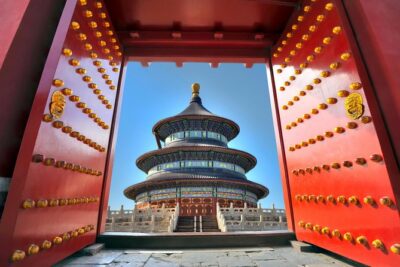
Beijing Historical Tour I – Forbidden City, Tiananmen Square & Temple of Heaven
Read our review →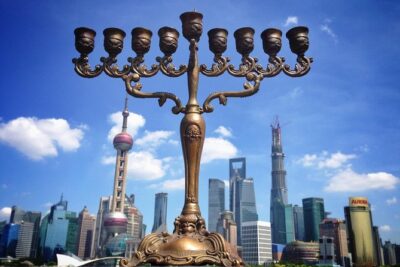
Tour of Jewish Shanghai led by a Jewish History Expert
Read our review →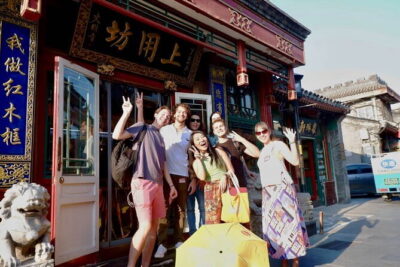
Beijing Historic City Guided Walking Tour + Calligraphy Creation
Read our review →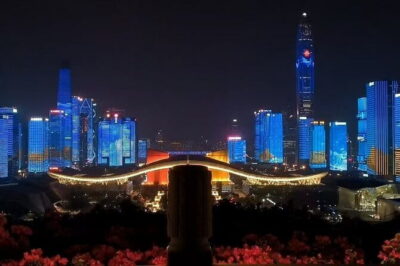
Shenzhen History , Culture & Scenic + (Drone Delivery) tour
Read our review →
Private Historical Tour: Guangzhou City Sightseeing Including Lunch
Read our review →
Tiananmen Square Entry Reservation – Iconic Landmark
Read our review →
UNESCO Watchtowers World Heritage Ancient Villages Private Tour
Read our review →Browse the lists this tour appears in