
Reviewed · HISTORICAL TOURS
UNESCO Watchtowers World Heritage Ancient Villages Private Tour
Watchtowers travel through time near Guangzhou. This private trip takes you about 2 hours out to the Kaiping area for UNESCO diaolou watchtowers and farmland villages tied to overseas Chinese migration. I love the fortress-like architecture you can walk around, and I love that the English-speaking guide explains what you are seeing in plain terms. One consideration: admission fees and lunch are not included, so your final cost will be a bit higher than the headline price.
You ride in a private, air-conditioned car with hotel pickup and drop-off in downtown Guangzhou, so you are not fighting transit on a long day. The trip runs about 5 to 11 hours depending on the route pace and how long you want at each village. On a weekday, it can feel calm, and one schedule came out to roughly an 8 hour day with plenty of quiet time in the countryside.
In This Review
- Key highlights you will feel fast
- Why Kaiping UNESCO diaolou hits differently than city sights
- Price and logistics, what you actually get for $255
- Your day starts in Guangzhou, then turns rural fast
- Stop 1: Zili and Majianglong diaolou clusters, plus Li Garden
- Stop 2: Zili Village watchtowers, Anheli, He’anli, and Yong’anli
- Stop 3: Jinjiangli Village diaolou cluster and its farmland paths
- Stop 4: Kaiping Garden, the Dream of the Red Chamber connection
- Stop 5: Ma-Xianglong Towers Group in Majianglong Village
- Stop 6: Chikan Movie Town, Qilou streets by the Tan River
- Who this private UNESCO Kaiping tour suits best
- Should you book this private tour, or choose something else?
- FAQ
- How long is the UNESCO Watchtowers World Heritage Ancient Villages private tour?
- What is included in the price?
- Are admission fees and lunch included?
- Do I need to buy tickets on my own?
- What stops will I visit during the day?
- Is this a private tour or a group tour?
- Will there be hotel pickup and drop-off?
- What if I need to cancel?
Key highlights you will feel fast
- UNESCO Kaiping diaolou clusters plus Li Garden in one day, without rushing between far-flung sites
- Private car and hotel pickup in downtown Guangzhou, with an English guide and full escort
- Watchtowers with a defensive, fortress look built by overseas Chinese workers in the late 1800s to early 1900s
- Village walking routes, farmland, and water channels that help you understand why these buildings were built here
- Chikan Old Town and Qilou streets as a change of scenery from the rural watchtower villages
- Mobile ticket option to help keep small logistics under control
Why Kaiping UNESCO diaolou hits differently than city sights
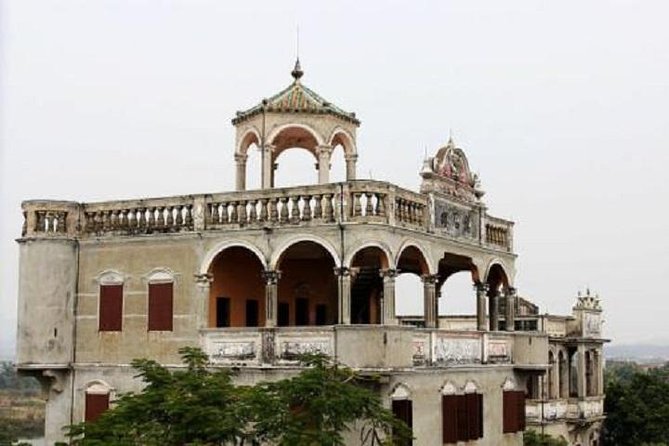
Guangzhou is big, busy, and loud. Kaiping is the opposite. This tour is built around architecture that looks like it belongs in a story, but it is also rooted in real life: farming communities, river channels, and families who rebuilt their homes and defenses after overseas migration.
The diaolou watchtowers are the main draw. They were built in the 1900s, with earlier roots in the Qing period, by overseas Chinese migrant workers. The result is a style that feels part residence, part stronghold. When you are standing in front of one, you start noticing the details: the height, the thick massing, and the way the towers dominate the village skyline.
I also like that you are not only staring at buildings. The route threads through villages and gardens, so the architecture makes sense in context. You see farmland, water features, and the paths people use to move between homes and fields, not just one isolated monument photo spot.
More history tours in Guangzhou:
- Private Historical Tour: Guangzhou City Sightseeing Including Lunch
★ 4.5 · 24 reviews - All Inclusive Kaiping Diaolou Heritage Private Day Trip from Guangzhou
★ 5.0 · 5 reviews - Guangzhou Historical Day Tour By Metro & Boat
★ 5.0 · 4 reviews
Price and logistics, what you actually get for $255
At $255 per person, this is not a budget bus tour. You are paying for a private car, a professional driver, and a local English-speaking guide with full escort, plus hotel pickup and drop-off in downtown Guangzhou. In practical terms, that reduces friction. You get a door-to-door start, a planned route, and someone to translate what matters.
Admissions and lunch are not included, though. That means your day will have two extra cost buckets you should plan for:
- Entrance tickets for the sites you visit
- Lunch for you and the guide
If you are traveling with friends or family, the private format can still feel like good value because you can keep a steady pace and avoid the dead time that comes with group logistics. And the tour is private, so only your group participates.
One more practical note: the Kaiping area is about 2 hours from Guangzhou by car. So even though this is a day trip, you should treat it like a full day outing. Comfortable shoes help, because diaolou villages mean lots of walking on uneven ground and along rural paths.
Your day starts in Guangzhou, then turns rural fast
The schedule depends on how long you linger at each stop, but expect a long-drive day. The payoff is that you leave the city early and arrive before the day fully heats up, especially if you go on a weekday.
Pickup is from downtown Guangzhou, and you get hotel drop-off back at the end. That is a big deal if you want to avoid taxis and navigation stress. You also travel in a private air-conditioned car, which matters because you will likely spend real time on the road.
A helpful way to think about timing: you are juggling two things at once.
1) Viewing UNESCO-style sites that often have ticketed areas
2) Moving through villages where you will naturally want to slow down for views and photos
The tour runs about 5 to 11 hours. One weekday schedule I noted was around 8 hours total, which is a nice sweet spot for first-time visitors who do not want to feel rushed.
Stop 1: Zili and Majianglong diaolou clusters, plus Li Garden
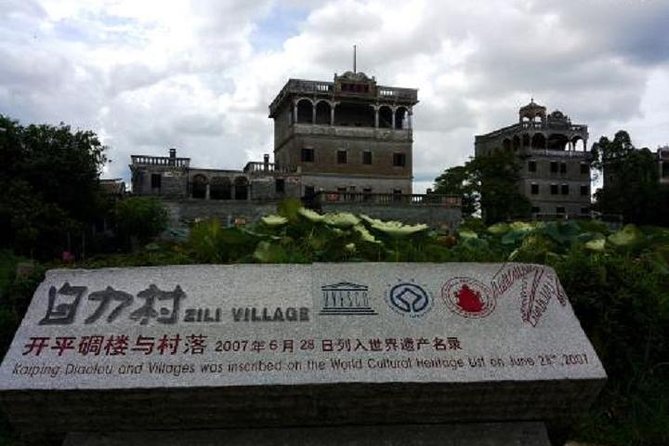
Your first major block is the diaolou clusters around Zili Village and the diaolou cluster in Majianglong Village. These watchtowers sit in a UNESCO World Cultural Heritage context, and they are part of Guangdong’s first World Cultural Heritage listing tied to the Kaiping/Taishan diaolou tradition.
Right after that, you shift into Li Garden, a garden known as a masterpiece of gardens built by overseas Chinese. This is important because it shows you another side of migration. Overseas work did not just fund fortified towers. It also funded artful home and garden design back in the home region.
What I like here is the sequence. You see the stronghold buildings first, then you see the refinement of a garden. The contrast helps you understand what migrants were bringing back: both protection and culture.
Possible drawback: this opening segment can be dense. If you are easily overwhelmed by too many entrances and walking loops, ask your guide to pace you. The tour is private, so you can usually adjust how long you spend on viewpoints and main tower areas.
A few more Guangzhou days worth comparing
- Guided Cycle Tour of Guangzhou
★ 5.0 · 164 reviews - Customised Private Guangzhou City Tour with Flexible Itinerary
★ 5.0 · 107 reviews - Gulong Gorge Skywalk Glass Bridge and Waterfall View Private Tour
★ 5.0 · 103 reviews - Private Guangzhou Full Day City Tour with Old and New Highlights
★ 5.0 · 62 reviews
Stop 2: Zili Village watchtowers, Anheli, He’anli, and Yong’anli
Next up is the Watchtower Group in Zili Village, a set of unincorporated villages linked by the Fang surname. The founding story goes back to the 17th year of Daoguang’s reign in the Qing Dynasty, which corresponds to 1837. That date matters because it frames these towers as a long-term community effort, not a single flashy construction project.
This stop is also about structure. The watchtower group includes Anheli, He’anli, and Yong’anli. When you move between the towers and their associated village pockets, you start to see how defensive planning and household life could overlap.
I also like this stop because it makes the architecture feel less like an object and more like a system. Towers, courtyards, and village layouts work together. You may not get a lecture that sounds like a textbook, but you will get a guided explanation that ties the towers to the village setting.
Practical tip: because admission is not included in the tour price, you will want to keep track of which areas are ticketed. Your guide can help point you to what is included in the day plan and what you need to buy on-site.
Stop 3: Jinjiangli Village diaolou cluster and its farmland paths
Jinjiangli Village Diaolou Cluster is surrounded by mountains, with farmland paths crossing through the countryside and a river flowing through. This stop is shorter, but it is a strong “understand the place” moment.
The description includes everyday rural imagery like water buffaloes and geese. Even if you do not see animals at that exact moment, the point stands: these towers were built where work happened, water moved, and people traveled along routes they already used.
This is where you learn the most practical lesson of diaolou architecture: height was useful. Height helped with visibility and protection, and it also signaled status within a community shaped by migration and risk.
Potential drawback: because it is a smaller time block, you may want to prioritize viewpoints. If you try to photograph everything equally, you can end up cutting your own time short. Pick one or two angles, then spend the rest of your time walking and observing.
Stop 4: Kaiping Garden, the Dream of the Red Chamber connection
Then you come to Kaiping Garden, known as Li Garden in the overall plan. The garden was built in the early 20th century by Xie Weili, a US-based Chinese. That international link adds another layer to the migration story, and it helps explain why overseas Chinese influence appears in both the towers and the garden design.
The garden is based on the Grand View Garden from the Dream of the Red Chamber. That is a fascinating literary bridge: you are in rural Kaiping, but the garden echoes a famous classic, with design ideas translated into local form.
What makes this stop enjoyable for real-world visitors is that gardens give your eyes a break. After tower views and village walks, you can slow down. You will still be looking, but the pace feels different. It is a chance to see how people used beauty, space, and planning to shape daily life.
Possible drawback: if you are visiting during peak sun or a hot season, gardens can feel like a long walk through open areas. Bring water, and if you get tired, step into shaded sections when you can.
Stop 5: Ma-Xianglong Towers Group in Majianglong Village
Majianglong Village is where the day really shifts again. The Ma-Xianglong Towers Group sits on the flatland on the eastern coast of the Tanjiang River. The setting matters because it changes how you read the towers. In flat terrain, towers can create a clear skyline marker and help you understand where defensive building would give maximum advantage.
The group is composed of several villages, including Yong’an and Nan’an village of the Huang family, along with other village components. As you move around, focus less on memorizing every name and more on noticing what the village layout does to the tower effect.
One of the best parts of a stop like this is that you are not only looking at one tower. You are seeing a collection. Clusters show you how communities coordinated construction, and how families built their vertical presence across a shared landscape.
Practical consideration: this stop can include some walking in open areas near the river. If it is windy or sunny, plan your photo time accordingly. Your guide can help you decide when to take breaks.
Stop 6: Chikan Movie Town, Qilou streets by the Tan River
To close the day, you visit Chikan Movie Town, a historic old town established in the early Qing Dynasty near the Tan River. This is a different style of place than the diaolou villages.
Chikan is famous for Cantonese-style Qilou street buildings, with Western touches mentioned in the site description. In practical terms, this means you get a streetscape feel, more like walking an old commercial corridor than standing in a rural watchtower cluster. It is a good final stop because it adds visual variety and a sense of everyday town life.
If you like photography, this is the time to slow down. Qilou streets often reward a careful stroll, with perspectives that change block by block. Also, movie town settings tend to have a “designed for viewing” layout, so you can take your time without feeling like you are wandering.
Possible drawback: the day can already be long by the time you reach Chikan. If you are tired, you might not want to sprint for every photo angle. Tell your guide you want a shorter wander and a couple of best-view streets, and keep the energy for enjoying the atmosphere.
Who this private UNESCO Kaiping tour suits best
This tour is a great match if you want more than one kind of cultural stop in a single day. You are not choosing between towers or gardens or old towns. You are getting all three, with a private car and guide to keep the day moving.
It is especially good if:
- You like architecture that has a clear purpose beyond aesthetics
- You want a migration story you can see in stone and layout
- You prefer countryside walking with a guide who can explain the why
- You want hotel pickup and fewer logistics headaches
It can also be a smart option for people visiting the Kaiping/Taishan region to reconnect with family roots. The tour provider says they can assist and arrange tours tied to ancestral homes, if you come back to visit and are looking for your ancestor’s house. If that is your goal, you should bring any family details you have, like village names or surnames, and ask the guide how to tailor the route.
Should you book this private tour, or choose something else?
I would book this if you want a structured, high-comfort day that still feels authentic. The combination of UNESCO watchtowers, Zili and Majianglong area stops, Li Garden, and a Qilou old-town finale gives you real variety, not a list of disconnected photo stops. The private format also helps you set a pace that fits you, and the guide support reduces the mental work of figuring things out on the fly.
I would skip it or adjust expectations if you are strict about staying within a single set budget, because admissions and lunch are not included. Also, if you hate long car days, the 2 hour drive each way may feel like too much.
If you decide to go, do one small thing that makes the day better: wear comfortable shoes and keep an eye on ticketed entrances so you are not scrambling mid-day.
FAQ
How long is the UNESCO Watchtowers World Heritage Ancient Villages private tour?
The tour duration is listed as approximately 5 to 11 hours, depending on the route pace and how long you spend at each stop.
What is included in the price?
The tour includes a local English-speaking tour guide with full escort, a private air-conditioned car, a professional driver, and hotel pickup and drop-off in downtown Guangzhou.
Are admission fees and lunch included?
No. Admission fees and lunch are not included for you and the guide.
Do I need to buy tickets on my own?
Admission tickets are not included, but the tour includes a mobile ticket feature. You will still need to handle any entrance fees that are not covered.
What stops will I visit during the day?
The plan includes Kaiping diaolou and villages, watchtower groups in Zili Village, Jinjiangli Village diaolou cluster, Li Garden (Kaiping Garden), the Ma-Xianglong Towers Group in Majianglong Village, and Chikan Movie Town.
Is this a private tour or a group tour?
This is a private tour/activity. Only your group will participate. Group discounts may be available.
Will there be hotel pickup and drop-off?
Yes. Hotel pickup and drop-off are offered in downtown Guangzhou.
What if I need to cancel?
This experience is non-refundable and cannot be changed for any reason. If you cancel or request an amendment, the amount paid will not be refunded.
Recently added around Guangzhou
- Big Buddha Mountain Martial Art Culture Countryside Private Tour★ 5.0 · 31 reviews
- Hong Kong One Day Private Tour from Guangzhou by Bullet Train★ 5.0 · 3 reviews
- Seven Star Crags Karst Cave Mirror Lake Bird Islands Private Tour★ 5.0 · 30 reviews
- Private Tour to Gulong Canyon with Glass Bridge and Water Falls from Guangzhou★ 5.0 · 20 reviews
- Seven Star Crag and Dinghu Mountain private day tour from Guangzhou★ 5.0 · 5 reviews
- Glass Bridge and Water Falls Private Car Service from Guangzou★ 4.5 · 3 reviews
- Buffet Dinner at Canton Tower Revolving Restaurant with Pearl River Night Cruise★ 3.0 · 5 reviews
- Private flexible Guangzhou City Sightseeing Tour with Dim-Sum Tasting★ 5.0 · 5 reviews
Historical Tours, compared.
Beijing Historical Tour II including Summer Palace, Lama Temple & Panda Garden
Read our review →
Beijing Historical Tour I – Forbidden City, Tiananmen Square & Temple of Heaven
Read our review →
Tour of Jewish Shanghai led by a Jewish History Expert
Read our review →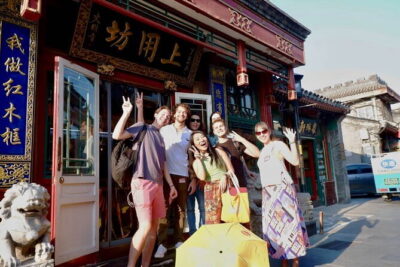
Beijing Historic City Guided Walking Tour + Calligraphy Creation
Read our review →
Shenzhen History , Culture & Scenic + (Drone Delivery) tour
Read our review →
Private Historical Tour: Guangzhou City Sightseeing Including Lunch
Read our review →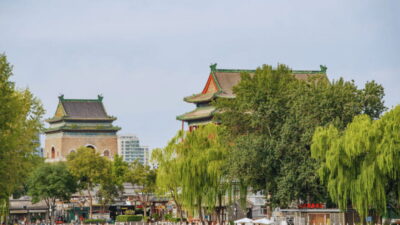
Bell and Drum Towers Entry Ticket—Historic Landmark
Read our review →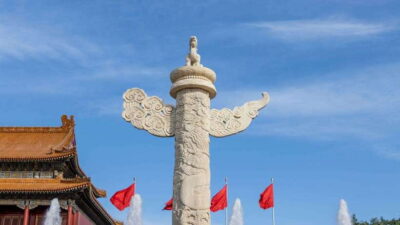
Tiananmen Square Entry Reservation – Iconic Landmark
Read our review →Browse the lists this tour appears in