
Reviewed · HISTORICAL TOURS
Tour of Jewish Shanghai led by a Jewish History Expert
Jewish Shanghai has one of those histories you do not expect. This half-day tour strings together the Shanghai Ghetto story, the Ohel Moishe Synagogue museum, and the WWII memorials in a way that makes the city feel human and close.
What I love most is the clear, on-the-ground story you get as you move through real neighborhoods, not just dates. I also like the stop at the Shanghai Jewish Refugees Museum, where the former synagogue setting adds weight.
One thing to consider: this is a 4-hour program with outdoor segments, and you are walking through back lanes in Hongkou. If you are heat sensitive or mobility limited, plan your day and pace yourself.
In This Review
- Key points to know before you go
- Meeting on the Bund: the Peace Hotel start sets the tone
- The Baghdadi-Jewish thread before WWII changes how you see Hongkou
- Entering the Shanghai Ghetto: Hongkou’s back lanes feel real
- Huoshan Park: a WWII monument and the memorial plaque moment
- Inside the Jewish Refugees Museum at the former Ohel Moishe Synagogue
- A former refugee home visit: you see daily life, not only big events
- How the 4-hour format actually works on your day
- Price and value: is $96 a smart use of time?
- Who this tour suits best, and who might want to choose another plan
- A simple booking decision: should you go?
- FAQ
- How long is the Tour of Jewish Shanghai?
- What is the meeting point for the tour?
- Where does the tour end?
- Does the tour include entrance fees?
- Is food and drink included?
- What kind of transportation is provided?
- Does it run in bad weather?
- How big is the group?
- What is the cancellation policy?
Key points to know before you go
- Peace Hotel meeting point on the Bund: you start with Shanghai skyline views and a strong historical setup.
- Hongkou on foot, with context: you learn how Jewish life in Shanghai fit into the wider city story.
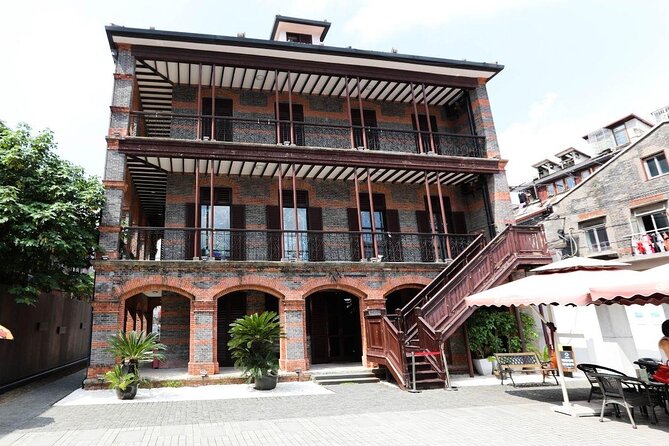
- Ohel Moishe Synagogue museum stop: the museum is housed in the former synagogue, so the architecture does part of the explaining.
- Huoshan Park memorial site: you see a WWII-era monument and memorial plaque tied to refugees.
- Small group feel (max 22): you should be able to hear your guide and ask questions.
- Air-conditioned vehicle included: comfort is built in between neighborhood walks.
Meeting on the Bund: the Peace Hotel start sets the tone
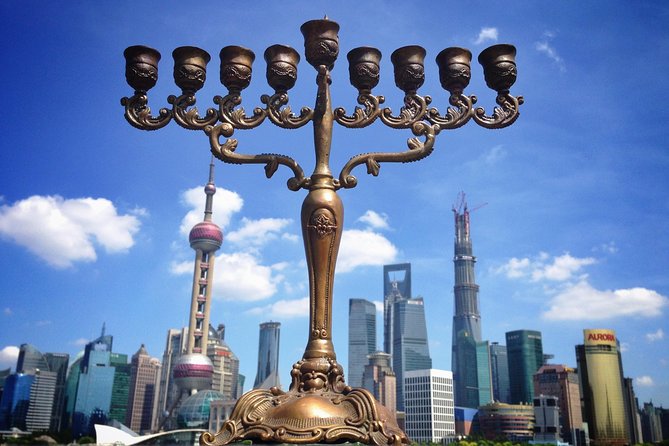
You begin at the Peace Hotel, formerly the Cathay Hotel. The Peace Hotel sits right on Shanghai’s Bund riverfront area, and that matters. The riverfront views act like a calm warm-up, then your guide pivots quickly into how Shanghai drew different Jewish communities over time.
You will hear about the Baghdadi-Jewish legacy of the city, and it is not just a name-drop. The Bund area is where you can feel how trade, money, and migration shaped Shanghai. In short: you get the “why this city mattered” before you step into the Hongkou story.
If your guide is Dvir, a name that comes up often in past group experiences, expect high-energy teaching and a lot of careful connection-making between Jewish life and Shanghai’s growth. If your guide is Andy or Anfisa, you can still expect the same core idea: clear facts delivered in a way that keeps moving.
More History Tours in Shanghai
- 4-Hour Private Shanghai Art and History Tour
★ 5.0 · 8 reviews - Shanghai: Natural History Museum Admission entry ticket
★ 4.7 · 6 reviews - Private Full Day Tour: Shanghai Colonial History Tour
★ 5.0 · 6 reviews
The Baghdadi-Jewish thread before WWII changes how you see Hongkou
Hongkou is the headline for the Jewish refugee story, but the tour is smart about setup. Before you get there, you learn about earlier Jewish immigration waves, including the Baghdadi community linked to Shanghai’s business history.
This matters because it prevents the “one chapter only” feeling. Shanghai’s Jewish story did not start in the 1940s and it did not end there. You get a bigger timeline, which helps you understand why the Hongkou experience during WWII had earlier roots in the city.
Also, it is a good way to handle the emotional weight of the subject without getting lost in it. Your guide keeps the focus on people and choices, then you transition into the areas where the refugee community lived.
Entering the Shanghai Ghetto: Hongkou’s back lanes feel real
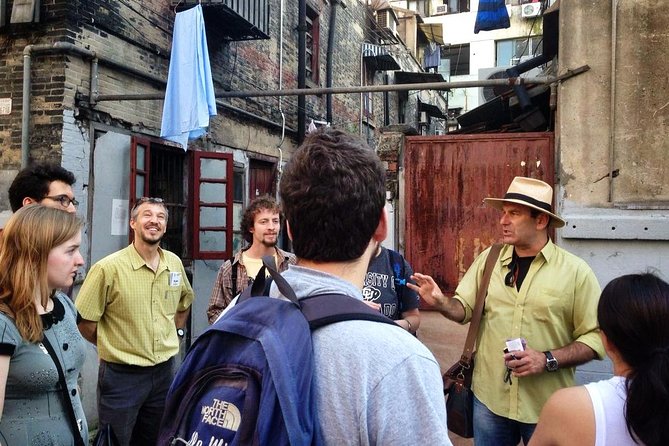
Once you head into Hongkou, you are in the part of Shanghai often called the Shanghai Ghetto, where thousands of Jewish refugees lived during World War II. The tour does not treat Hongkou like a closed museum zone. Instead, you move through the neighborhood’s streets and back lanes, in a lived-in setting.
That is the key value here. History can feel distant when it stays behind glass. When you walk the streets where people once lived, even briefly, you start to understand how survival depended on location, access, and community networks.
One practical detail: the tour includes private transportation and air-conditioned vehicle time. So even if it is described as a walking-style program, you should not feel like you are doing everything on foot. You will also have chances to pause during explanations, since the pace is built for listening.
Huoshan Park: a WWII monument and the memorial plaque moment
Huoshan Park is one of the tour stops where the story becomes visible. You will see a monument to the Jewish refugees of WWII, plus a memorial plaque. This is the kind of stop that benefits from a guide, because you are not just reading words on stone. You are being told who the memorial connects to and what the site represents.
I like this part of the tour because it gives you a controlled emotional beat. You have been learning about immigration patterns and community life. Then Huoshan Park gives you a specific anchor for the WWII refugee experience.
If you want to take photos, do it respectfully. This is a memorial space. Also, keep an eye on your footing. Parks and paths can be uneven depending on weather.
Same city, a very different kind of day:
- Authentic Local Food Tour in Central Shanghai
★ 5.0 · 1,382 reviews - Zhujiajiao Water Town and Shanghai City Private Day Tour
★ 5.0 · 1,016 reviews - Private Shanghai Full Day City Tour with Old and New Highlights
★ 5.0 · 995 reviews - Shanghai: 3-Hour Local Food Tasting Tour
★ 4.9 · 806 reviews
Inside the Jewish Refugees Museum at the former Ohel Moishe Synagogue
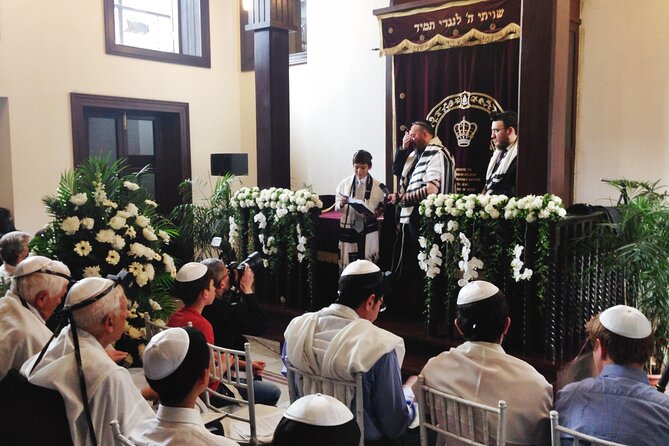
The highlight for many people is the visit to the Shanghai Jewish Refugees Museum. It is housed in the former Ohel Moishe Synagogue, and that setting adds power. You are not just learning about a community. You are stepping into a building that once served a real religious and social role.
The museum stop is where you typically expect deeper explanation. The tour includes admission, so you do not need to sort out tickets on the spot. That small detail saves time and reduces the stress of managing museum logistics while also trying to keep up with your guide’s story.
In past group experiences, the guide style is often “story plus specifics,” and that can include material that feels unusually concrete, like references to tombstones and where some were found. Even if your guide emphasizes different points, the museum visit is the best place to slow down and absorb.
Practical tip: museums are often cooler than outdoor streets, but you still might feel the walking earlier in the day. Bring a light layer so you are comfortable.
A former refugee home visit: you see daily life, not only big events
Another tour moment I appreciate is the visit to a Chinese home where Jewish refugees used to live. The purpose is not to turn private space into a spectacle. It is to show what “living there” meant, in a physical sense.
This stop changes the scale of the story. WWII refugee history can sound like a distant political event. A home visit brings it back to daily rhythms like cooking, sleeping, and making do.
Because the tour includes exploration of the back lanes, the home visit also helps you connect the dots between the streets you saw and the rooms where families likely navigated their new reality. It gives you a sense of how community life functioned on a neighborhood level.
How the 4-hour format actually works on your day
This is a half-day tour of about 4 hours. It starts at 9:30 am and returns to the meeting point. You also have the option of a morning or afternoon tour, and the morning is recommended because daylight constraints matter when you have a longer walking day.
Here is how I’d think about the schedule: the day is short enough that you do not need a giant commitment, but long enough for your guide to cover multiple immigration waves and then reach WWII refugee specifics. That mix is hard to pull off in a shorter program.
Group size is also part of the value. With a max of 22 travelers, your guide can often keep the pace without talking over everyone. If you are someone who likes questions, this size usually makes it easier.
Transportation helps too. You get private transportation and an air-conditioned vehicle. That matters in Shanghai’s heat and in humid weather. The tour runs in all weather conditions, so bring what you need for rain or strong sun, then focus on keeping your energy for the museum and memorial stops.
And yes, bring comfortable shoes. You are spending time in Hongkou lanes, and the trip is easier when your feet are happy.
Price and value: is $96 a smart use of time?
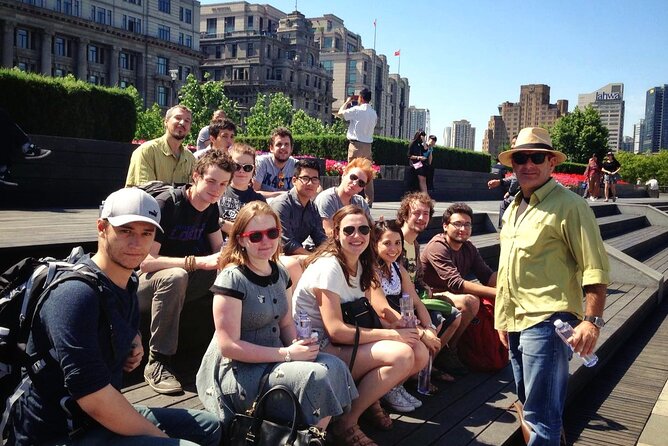
At $96 per person, you are paying for three things that often cost more when you try to piece them together yourself: an expert guide, museum admission included, and air-conditioned transportation.
If you tried to DIY this, you would likely spend time figuring out where to go, arranging entry, and then losing the “story thread” a good guide provides. Here, the guide connects the Bund setup, the Hongkou neighborhood walk, the Ohel Moishe Synagogue museum, and the memorial in Huoshan Park into one coherent narrative.
I also think the price makes sense because of the sensitivity and focus of the content. Jewish refugee history in WWII is not a casual sightseeing topic. You benefit from a guide who can handle context with care, explain migration waves clearly, and keep you oriented as you move between sites.
So my take on value is simple: if you want a short, guided hit of authentic local history, $96 is reasonable for what you get.
Who this tour suits best, and who might want to choose another plan
This tour is a strong fit if you:
- Want Jewish history in Shanghai that goes beyond the surface.
- Enjoy walking through real neighborhoods, even briefly.
- Prefer a guide who can connect immigration patterns, WWII context, and local landmarks.
- Like structured context, so you can leave with a clear mental timeline.
It may be less ideal if you:
- Are expecting a mostly indoor experience. There are outdoor walking segments.
- Want a hands-on activity workshop. This is mostly guided history with a few key site visits.
If you are traveling with family, the overall pace may work well, especially if your group can handle walking and museum time. The subject matter is heavy, though, so choose based on your group’s interest level and maturity.
A simple booking decision: should you go?
If you care about understanding Shanghai as an actual refuge corridor during WWII, this tour is one of the best ways to get oriented fast. The combination of the Bund meeting point, Hongkou neighborhood context, the Ohel Moishe Synagogue museum, and the Huoshan Park memorial gives you both story and place.
I’d book it when:
- You only have a half-day to spend and you want maximum meaning per hour.
- You want a guided explanation from a Jewish history expert who can handle the topic with sensitivity.
- You like small-group pacing and easy conversation without a huge crowd.
I would hesitate if:
- You are very limited on walking or you hate neighborhood wandering in heat or rain.
- You are not interested in historical context and only want casual sightseeing.
Bottom line: this is not a checklist tour. It is a focused, humane guided route through Jewish Shanghai sites that most visitors miss.
FAQ
How long is the Tour of Jewish Shanghai?
It is about 4 hours.
What is the meeting point for the tour?
You meet at the Peace Hotel area on the Bund riverfront (Peace Hotel, formerly the Cathay Hotel), in the Nanjing Road East area.
Where does the tour end?
The tour ends back at the meeting point.
Does the tour include entrance fees?
The Shanghai Jewish Refugees Museum admission is included.
Is food and drink included?
No. Food and drinks are not included.
What kind of transportation is provided?
The tour includes private transportation, and you travel in an air-conditioned vehicle.
Does it run in bad weather?
Yes, it operates in all weather conditions.
How big is the group?
The tour has a maximum of 22 travelers.
What is the cancellation policy?
You can cancel up to 24 hours in advance for a full refund. If you cancel less than 24 hours before the start time, the amount paid is not refunded.
Recently added around Shanghai
- Suzhou Private Guided Day Trip from Shanghai by Bullet Train★ 5.0 · 46 reviews
- Suzhou and Zhujiajiao Private Guided Day Trip from Shanghai★ 5.0 · 27 reviews
- Shanghai:Old Town, Yu Garden, Zhujiajiao Water Town Bus Tour★ 4.7 · 16 reviews
- Shanghai: Yu/Yuyuan Garden Entry Ticket–E ticket★ 4.4 · 24 reviews
- Shanghai: Zhujiajiao Water Town with Calligraphy Experience★ 5.0 · 17 reviews
- Shanghai: Yu Garden Entry Ticket with PDF Guidebook★ 4.1 · 45 reviews
- Shanghai: Yuyuan, City God Temple Old City Tour-Tip Based★ 5.0 · 10 reviews
- Shanghai: Wild Animal Park Ticket★ 4.9 · 43 reviews
Historical Tours, compared.
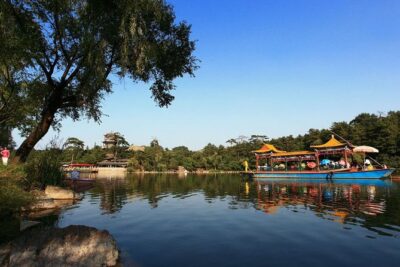
Beijing Historical Tour II including Summer Palace, Lama Temple & Panda Garden
Read our review →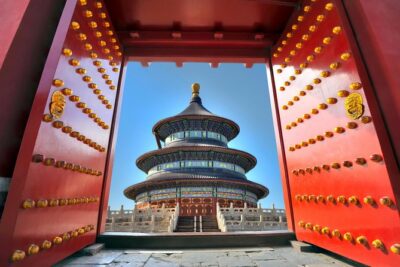
Beijing Historical Tour I – Forbidden City, Tiananmen Square & Temple of Heaven
Read our review →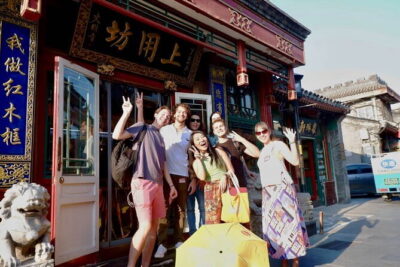
Beijing Historic City Guided Walking Tour + Calligraphy Creation
Read our review →
Shenzhen History , Culture & Scenic + (Drone Delivery) tour
Read our review →
Private Historical Tour: Guangzhou City Sightseeing Including Lunch
Read our review →
Bell and Drum Towers Entry Ticket—Historic Landmark
Read our review →
Tiananmen Square Entry Reservation – Iconic Landmark
Read our review →
UNESCO Watchtowers World Heritage Ancient Villages Private Tour
Read our review →Browse the lists this tour appears in