
Reviewed · FOOD & DRINK
Private Food Tour: Hong Kong Island
Four hours of Hong Kong flavor. This private Hong Kong Island route is a smart mix of local eats and neighborhood wandering, with a guide turning food stops into stories you can actually use. I especially like that you get tourist-trail distance without losing the ease of public transport.
Two highlights for me are the breakfast-style yum cha on a trolley and the finish at a bakery that’s been turning out egg tart for decades. The tasting lineup is the kind of variety you can rarely stitch together on your own in one morning to afternoon block.
One consideration: this is not a light snack tour, and it is not suitable for vegetarians, gluten-free diets, or people with seafood allergies.
In This Review
- Key things to know before you go
- Sheung Wan start: trolley dim sum and a neighborhood warm-up
- Yum cha on a trolley: how breakfast dim sum becomes a lesson
- Wonton noodles and milk tea: classic Cantonese, with British shadows
- Seafood Street, dried goods, and the “tonics” logic
- Central District, Graham Street Market, and the walk that keeps changing
- Mid-Levels Escalator and Tai Kwun: sightseeing that doesn’t feel random
- Ding Ding tram to Wan Chai and Qing dynasty roast meat
- Egg tart finale at a 60-year bakery on Hong Kong Hennessy Road
- Price and logistics for a four hour private food route
- FAQ
- How long is the Hong Kong Island private food tour?
- Where does the tour start and where does it end?
- What food is included?
- Is hotel pickup included?
- Is the Ding Ding tram ride included?
- Is this tour suitable for vegetarians or gluten-free diets?
- Should you book this Hong Kong Island private food tour?
Key things to know before you go
- Trolley dim sum breakfast in a tea house with a near century-long reputation
- Wonton noodles from a 1960s shop known for mastering something simple
- Milk tea with a British-rule backstory, tied to what Hong Kong kept
- Ding Ding tram ride (fare is on you) to reach classic roast meat
- Egg tart at a 60-year bakery connected to a former governor’s favorite
Sheung Wan start: trolley dim sum and a neighborhood warm-up
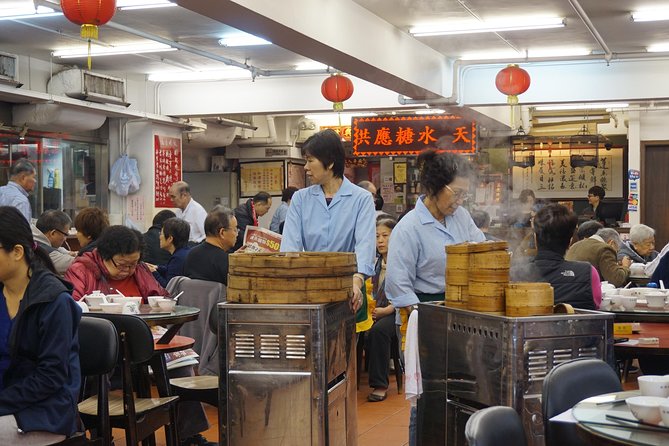
I love how this tour starts in Sheung Wan, because it’s a real starting point for getting oriented. You meet in the Sheung Wan area around Des Voeux Road West, then your guide steers you into side streets where food culture is the main event, not just background.
If you are tempted to “just grab something quick” before tours, fight that urge. The tour runs about four hours, and the instructions are clear for a reason, come hungry and skip breakfast. The idea is that you taste, then you learn, then you walk, then you taste again. That rhythm works best when your stomach is ready.
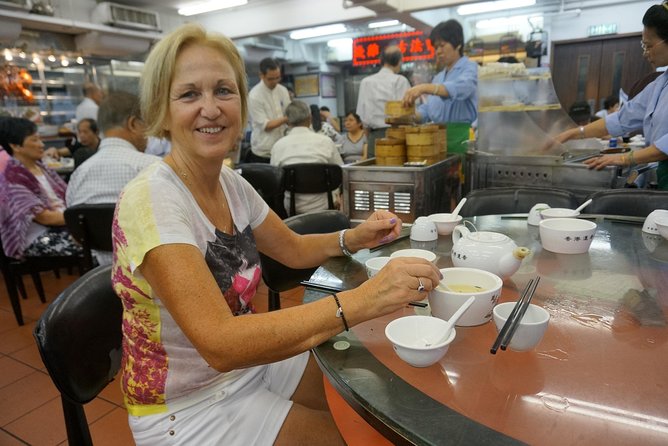
The first tasting is at a tea house for a traditional dim sum breakfast, served by trolley. That detail matters. Trolley service is part of the show, and it also slows the meal just enough that you pay attention to what’s being served and why locals order it. Expect a lively, popular atmosphere, and a sense that the place has been doing this for a long time, nearly 100 years.
Practical tip: bring a camera, but also look up between bites. The tour moves through old Hong Kong street layouts, where the buildings and storefronts do a lot of storytelling, even when you are focusing on food.
More Food Tours in Hong Kong
- Hong Kong’s Tin Hau Hidden Eats Food Tour with 7+ Local Tastings
★ 5.0 · 352 reviews - Small-Group Hong Kong Island Food Tour
★ 5.0 · 343 reviews - Hong Kong Food Tour: Central and Sheung Wan Districts
★ 5.0 · 333 reviews
Yum cha on a trolley: how breakfast dim sum becomes a lesson
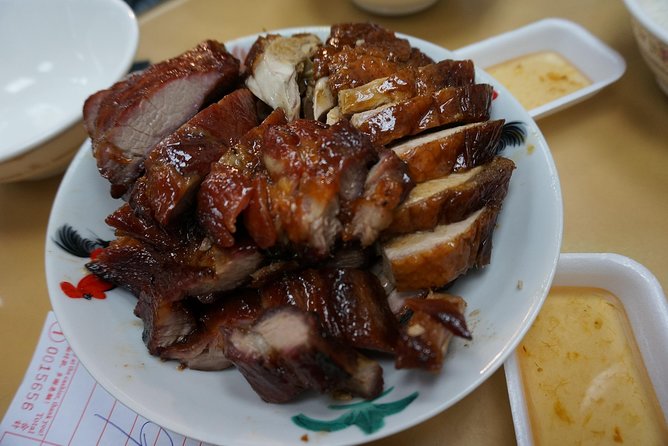
Dim sum can feel random if you go in without a plan. Here, the guide gives you a structure by leading you through a few key Hong Kong staples. You will sample a variety of dim sum as your first stop meal, and it is designed to feel like a proper Hong Kong breakfast rather than a single plate for tourists.
What I like about this setup is that it’s not just tasting, it’s learning how Hong Kong eats. You get insider facts and stories as you go, and your guide uses the food to explain habits, timing, and what makes certain dishes hold their ground even as the city changes.
You also get a sense of how Hong Kong balances speed and craft. Dim sum is fast enough for morning crowds, but it is still built on technique. That theme repeats later with wonton noodles and roast meats.
If you are going with older family members, this kind of food-focused pacing tends to land well. It gives you frequent stops, clear transitions, and a built-in reason to slow down and talk.
Wonton noodles and milk tea: classic Cantonese, with British shadows
After your trolley dim sum start, you head to a family-run shop from the 1960s that is recommended in the Michelin Guide. You are tasting wonton noodle soup, a Hong Kong specialty that can look simple on paper. That is exactly why it is worth doing with a guide. Great wonton noodles come down to the details, the texture, the seasoning balance, and the way everything stays consistent bowl after bowl.
This stop is also a good reality check for food travelers. In Hong Kong, the most memorable meals are often the ones that do not overcomplicate themselves. You taste, then you listen to how this dish got its reputation and what local refinement looks like.
Next comes milk tea. This is one of the most ever-present items on Hong Kong menus, and the tour frames it with a clear historical angle. Hong Kong milk tea is described as a leftover from days of British rule, and the tour uses that connection to show how the city’s cuisine absorbed influences without losing its Cantonese core.
You also get a break from savory eating with a stop at Kai Fat Tea, a shop tucked away on a narrow road in Sheung Wan. Here you can sample tea and assorted candies, including Chinese sweets made from fruits and other natural ingredients. It’s a small stop, but it gives you a taste of the sweet side of daily Hong Kong life.
Seafood Street, dried goods, and the “tonics” logic
One of the more interesting segments of this tour is Seafood Street, where dried seafood is clustered around a stretch of Des Voeux Road West in Sheung Wan. Dried seafood shows up in Chinese cooking and traditional tonics, and the tour explains why that ingredient is so common in Hong Kong kitchens.
Even if you do not plan to cook, this is a helpful cultural stop. You start to understand that many flavors here do not come from “one big secret sauce.” They come from what gets preserved, what gets dried, and what gets used to build depth over time.
Right around this area, the tour also includes other culinary venues such as a Chinese medicine shop and the city’s oldest wet market. The wet market piece is particularly useful because it gives you a real sense of Hong Kong’s food supply culture, where fresh ingredients are part of daily routines, not just special occasions.
The dried seafood and medicine shop stops can be a lot if you are squeamish about strong food smells. If you are sensitive, keep that in mind and lean on your guide to pace you through the sections you prefer.
More food tours in Hong Kong SAR:
- Hong Kong Street Food Tour with Locals – Dim Sum, Wonton & more
★ 5.0 · 226 reviews - Small Group Kowloon Michelin Rated Street Food and Culture Tour
★ 5.0 · 170 reviews - Hong Kong Food Tour: Sham Shui Po District
★ 5.0 · 167 reviews - The 10 Tastings of Hong Kong With Locals: Private Street Food Tour
★ 4.5 · 124 reviews
Central District, Graham Street Market, and the walk that keeps changing
The tour does more than eat. Between tastings, you get a slow, guided introduction to Hong Kong Island’s older layers, especially around Central and Western District. This part matters because it gives context for the food. Hong Kong’s culinary culture is shaped by neighborhoods, trade, and daily life, not just famous restaurants.
You will pass through areas known for sloped streets and narrow alleys, and you might catch glimpses of century-old temples along the way. It’s the kind of scenery that helps you understand why people in Hong Kong eat so in-step with their surroundings.
Two stops are especially visual:
- Graham Street Market, described as a sloped street flanked by food stalls selling everything from fresh vegetables to live seafood.
- Gough Street, sitting near where the European and Chinese communities once rubbed shoulders, with colonial-style chic, boutiques, and restaurants.
Those market and street stops add energy to the route. They also help you see how the city’s past keeps showing up in its present, even when the streets look “small” compared to bigger tourist zones.
If you like street life photography, this tour gives you enough variety to keep your camera busy without needing constant hustle.
Mid-Levels Escalator and Tai Kwun: sightseeing that doesn’t feel random
Then you hit the Mid-Levels Escalator, one of the longest outdoor escalators in the world, with a 15-minute ride. It covers about 800 meters, and it’s a great way to move through elevation without losing your focus on the day.
This segment works because it’s both transit and a viewpoint. You are not sitting on a bus staring out a window, you are watching neighborhoods change while staying in the flow of the walking route.
After that, you visit Tai Kwun, which is described as a restored and revitalised Central Police Station compound. It’s now home to heritage, contemporary art, and performing arts experiences. Even if you do not go inside for long, just knowing you are in a repurposed historic site helps connect today’s city to its layers.
You also pass Southorn Playground, which is described as a place where office workers and people looking for a quick break gather while sports crowds move by. It’s a small stop, but it gives you another angle on daily Hong Kong routines.
Ding Ding tram to Wan Chai and Qing dynasty roast meat
This is where the tour turns from “food and streets” into “food and transport,” and it’s one of the most Hong Kong moments in the whole plan. You board the Hong Kong Tramways (Ding Ding) for a ride of about 20 minutes.
Two details to know up front:
- The tour describes the tram fare as own expense.
- The tram system is historically tied to British rule, first operated in 1904, and the tram described here is the world’s largest operational double-decker tram.
You get history and a moving window into street life at the same time. You are also switching back into the Wan Chai side of the island, and the tour frames Wan Chai as a mix of old tenement buildings, hidden temples, and newer entertainment energy.
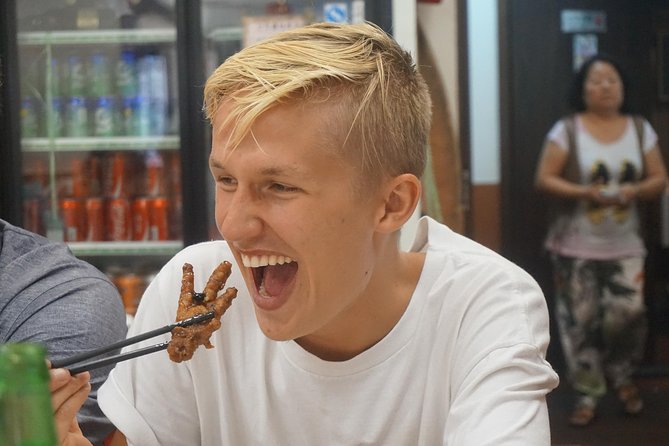
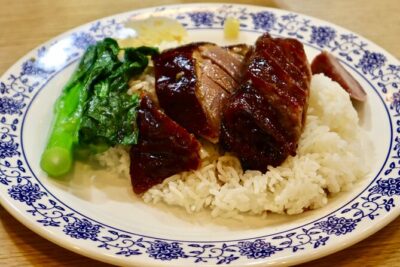
Then comes the savory payoff. Your tram ride leads you to a family-run restaurant known for English roast meat, specifically char siu, and the restaurant dates back to the Qing dynasty. Here, you sample a mixture of traditional roasted meats served with homemade sauces and rice.
This stop is a reminder that Hong Kong does fusion differently. It is not a modern gimmick. It is a result of influences and long-running local tastes. Char siu is famously tied to Cantonese cooking, and the guide’s explanation helps you see how an English-era label and Cantonese technique coexist on the same plate.
Egg tart finale at a 60-year bakery on Hong Kong Hennessy Road
You end with dessert at a bakery on Hong Kong Hennessy Road, a described personal favorite of a former Hong Kong governor. The bakery has about 60 years of history, and it is known for egg tart, or dan tat in Cantonese.
This final stop is included, and it is not treated like a token sweet. You are tasting the Chinese take on an English custard tart, which loops back to the tour’s big theme: Hong Kong cuisine carries British-era touches, but it still feels unmistakably local.
If you are wondering what to order, the honest answer is that you should trust the guide’s recommendation at this point. The point of the tour is that you are not trying to build your own tasting menu under time pressure. You finish with the one item that anchors the whole story.
Price and logistics for a four hour private food route
Let’s talk value, because the price is not casual. At $236.69 per person, this is clearly positioned as a premium experience. The good news is that you are paying for a private format, a professional guide, and a planned set of food stops that add up to more than a single meal.
You also get a few practical perks:
- Pickup offered is available, but the tour stays a walking route rather than a car-only experience.
- You travel using Hong Kong’s public transport for the parts that need it.
- You receive a mobile ticket.
- There are group discounts, which can make a meaningful difference if you are traveling with family or friends.
One logistics detail that matters: if you book hotel pickup, the guidance notes it is still a walking tour, not a car tour. That’s important for planning footwear and pacing. You are in-and-out of different neighborhoods and stops, so comfortable shoes are not optional.
Also note what is not included. Tram fare is described as your responsibility, and hotel pickup and drop-off is only included under a longer option, described as a five hour with pickup included plan. For this four hour private route, you should expect to rely mainly on the route and public transport.
Diet matters here. The tour is not suitable for vegetarians, gluten-free travelers, or people with seafood allergies. If any of those apply, you will have a much smoother time choosing a different food tour that fits your needs.
FAQ
How long is the Hong Kong Island private food tour?
The tour lasts about four hours.
Where does the tour start and where does it end?
It starts at 28號 Des Voeux Rd W in Sheung Wan and ends in Wan Chai.
What food is included?
The tour includes food such as variety of dim sum, milk tea, wonton noodle, BBQ meat, and egg tart. It also includes tasting assorted candies and local snacks.
Is hotel pickup included?
Pickup is offered, but the tour is still a walking tour, using public transport rather than a car. Hotel pickup and drop-off is noted as included only for a five hour option with pickup.
Is the Ding Ding tram ride included?
The tram ride is part of the plan, but the information provided says Ding Ding is an own expense.
Is this tour suitable for vegetarians or gluten-free diets?
No. It is not suitable for vegetarians, gluten-free travelers, or people with seafood allergies.
Should you book this Hong Kong Island private food tour?
Book it if you want a focused Hong Kong Island food day that mixes real neighborhoods with a clear tasting lineup, including dim sum yum cha, wonton noodles, milk tea, char siu, and egg tart. It’s a strong choice if you value a guide who can explain what you’re eating, not just hand you plates.
Skip it if dietary restrictions apply, especially vegetarian, gluten-free, or seafood allergies. Also consider it carefully if you hate walking, because even with pickup, this is still a walking route built around public transport and short transit hops.
Recently added around Hong Kong SAR
- Tai Mo Shan Waterfall Adventure Hike★ 5.0 · 16 reviews
- Small-Group Tour: Temples & Markets Discovering [PROMOTION]★ 5.0 · 6 reviews
- Small-Group Tour: The best bites of Hong Kong Island★ 5.0 · 3 reviews
- Small-Group Tour: Hidden Gems of Old Hong Kong island★ 4.5 · 3 reviews
- Hong Kong Pub Crawl at Lan Kwai Fong (LKF)★ 4.5 · 40 reviews
- Small Group Hiking Day Tour to Lamma Island Hong Kong★ 5.0 · 3 reviews
- Private tour of Hong Kong – First timers★ 5.0 · 10 reviews
- Private tour of Hong Kong – customized layover – 5 hours★ 5.0 · 8 reviews
Food & Drink, compared.
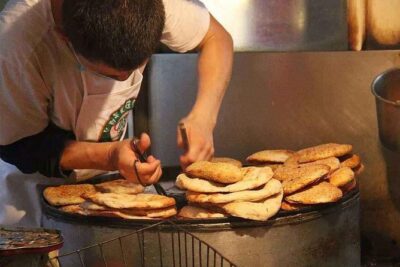
Authentic Local Food Tour in Central Shanghai
Read our review →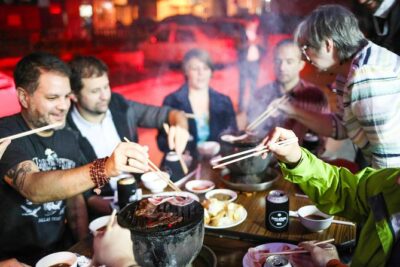
Beijing Hutong Walking Food and Beer Tour at Hidden Restaurants
Read our review →
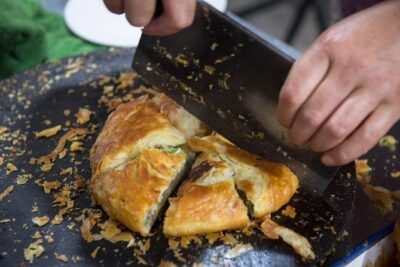
Hong Kong’s Tin Hau Hidden Eats Food Tour with 7+ Local Tastings
Read our review →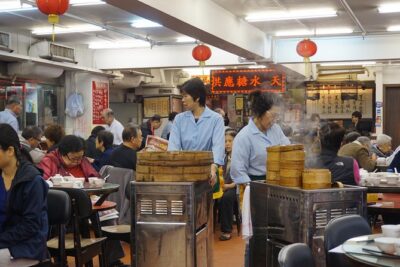
Browse the lists this tour appears in