
Reviewed · WALKING TOURS
Private Half-Day Walking Tour of the New Territories Region in Hong Kong
Walking here feels like Hong Kong’s quieter side.
This private half-day route follows the Ping Shan Heritage Trail, threading between old temples, ancestral halls, and one of Hong Kong’s oldest pagodas, the Tsui Shing Lau. I like that you get a real sequence of places you can actually connect on foot, and I also like that the guide’s stories land right where you’re standing, not in some classroom. The main drawback is simple, the walk is about 5 km and includes some steeper bits, so comfy shoes matter.
You also get the benefit of a private setup. I’m a fan of tours where you can choose your group size, and where the guide can slow down for your questions. One consideration: most stops are outdoors village lanes and steps, so you’ll want good weather, because the tour requires it.
In This Review
- Key highlights that make this tour worth your time
- Walking the Ping Shan Heritage Trail, one village lane at a time
- Tin Shui Wai pickup to Yuen Long dropoff, how the timing really feels
- Tsui Shing Lau Pagoda, the oldest anchor in the route
- The temples and ancestral halls, where the guide’s kindness matters
- Sheung Cheung Wai, passing through a 200-year-old walled village
- Earth God Shrine photo moments and the historic police station
- Private group size, guide commentary, and why 4 hours can feel longer
- Price and value, what you’re actually getting for $213.20 per person
- What to bring, walking tips, and when weather matters
- Should you book the Private Half-Day New Territories Walking Tour?
- FAQ
- What is the duration of the tour?
- Where does the tour start and end?
- What time does the tour begin?
- Is pickup available?
- How much walking is involved?
- What’s included in the tour price?
- Are food and drinks included?
- What happens if the weather is bad?
Key highlights that make this tour worth your time
- Ping Shan Heritage Trail first, with Hong Kong’s oldest pagoda as the anchor stop
- A guided walk through several villages, including Hang Tau Tsuen and Hang Mei Tsuen
- Multiple temple and hall visits in a short time window, with free entry at the included sights
- Sheung Cheung Wai, a 200-year-old walled village that you pass through on the way
- Earth God Shrine photo moments, plus a historic police station in the area
Walking the Ping Shan Heritage Trail, one village lane at a time
What makes this tour work is the structure. You start in Tin Shui Wai and head into the Yuen Long district, then you follow a heritage trail that’s designed for walking. The pace is not “spray and pray,” it’s a guided route where each stop helps explain the next one.
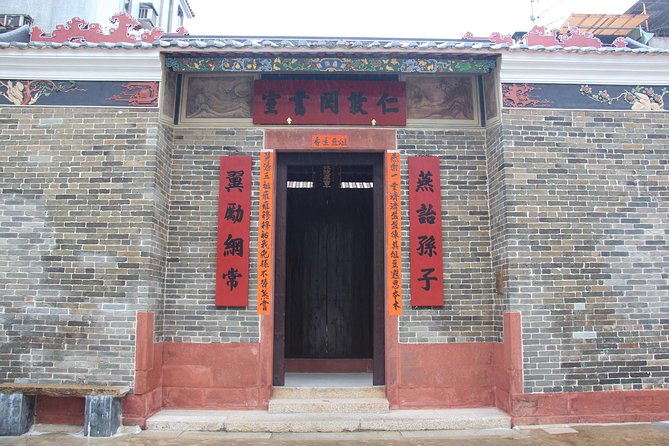
The big win for me is the mix of sacred and everyday space. You’ll see temples like Yeung Hau Temple and Hung Shing Temple, then ancestral halls and study buildings that show how families organized life over generations. In plain terms, it’s not just pretty structures, it’s a map of how communities kept order, remembered ancestors, and marked important beliefs.
More Walking Tours in Hong Kong
- Dark Side of Hong Kong – Kowloon Caged Homes Walking Tour
★ 5.0 · 418 reviews - Introduction to Hong Kong: Central Tip Based Walking Tour
★ 5.0 · 202 reviews - Full-Day Private Customized Walking Tour of Hong Kong
★ 5.0 · 106 reviews
Tin Shui Wai pickup to Yuen Long dropoff, how the timing really feels
This is listed as about 4 hours total, and in practice you should plan for a morning outing with a walking-heavy first stretch. The day begins at 10:00 am at Tin Shui Wai, or you can opt for hotel pickup if that’s available for you. When the tour ends, your guide leaves you at Yuen Long Railway Station.
The itinerary is set up so one portion takes the majority of the time. You spend roughly 3 hours on the Ping Shan Heritage Trail, then you stop at the main sights for short visits, often around 10 to 20 minutes each. That means you’re not stuck in long lines, but you are moving, so treat the time like a structured walk, not a series of long museum breaks.
Tsui Shing Lau Pagoda, the oldest anchor in the route
The tour begins with Tsui Shing Lau Pagoda, described as one of Hong Kong’s oldest pagodas. This is the kind of start that matters because it gives context fast. Before you hit the next village lanes, you understand why people built these places and why they still matter as community landmarks.
You’ll also move through parts of Hang Tau Tsuen and Hang Mei Tsuen. That’s where the trail stops feel more than a checklist. The route is paced so you can look around, then listen, then look again. If you care about details like signage, architectural rhythm, and the way temples sit in the village street grid, this is the section where you’ll notice them.
Practical note: the pagoda is outdoors and photo-friendly, but you may encounter steps and uneven surfaces. Bring shoes that handle short climbs without drama.
The temples and ancestral halls, where the guide’s kindness matters
The tour includes a cluster of sites along the trail, and this is where having a private licensed guide helps a lot. A kind, well-prepared guide makes a difference when you’re standing in front of buildings that have names you might not recognize. The guide can point out what to look for and explain why each hall or temple has its place in village life.
Here’s what you can expect from the major stops:
- Yeung Hau Temple: You’ll get time for a focused visit. This stop is part of the trail’s flow, so you can compare it to what you saw at the pagoda and what comes next.
- Hau Wong Tang (ancestral hall / Tang Hall): This is one of the family-structure buildings on the route. You’re not just looking at a façade, you’re learning what these halls represented in community organization.
- Kun Ting Study Hall: A quieter stop that helps balance out the temples. It’s useful if you want to see how education and lineage intersected with local beliefs and family identity.
- Ching Shu Hin: Another notable hall stop along the trail. Since it’s included, you’ll have just enough time to see it properly without feeling rushed.
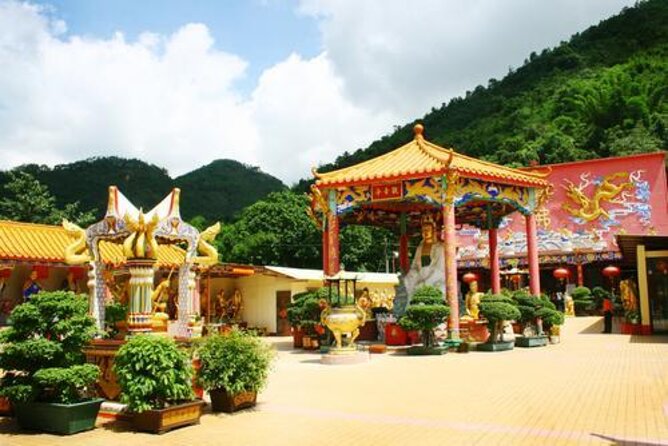
- Hung Shing Temple: This is one of the anchor temples for the area. It’s a good place to slow down for photos and to absorb the setting, because temple visits tend to be more than viewing objects, they’re about atmosphere.
Most of these are listed as part of the Ping Shan Heritage Trail with free admission at the included sites. That makes the cost feel more reasonable because you’re not paying an entry fee every time you turn a corner.
More walking tours in Hong Kong SAR:
- Hong Kong: Kowloon Street Market & Food Culture Walking Tour
★ 5.0 · 105 reviews - Organic Chinese Dumpling Class with Market Walk
★ 5.0 · 88 reviews - Private Half-Day Real Hong Kong Walking Tour
★ 5.0 · 70 reviews - Organic Xiao Long Bao Soup Dumpling Class & Market Walk
★ 5.0 · 62 reviews
Sheung Cheung Wai, passing through a 200-year-old walled village
One of the most distinctive moments on this walk is Sheung Cheung Wai, a 200-year-old walled village. You don’t just “read about it,” you pass through as part of the routing. That turns the concept of a walled settlement into something you can experience through streets, boundaries, and the physical sense of enclosure.
A walled village is a different kind of storytelling space than a temple courtyard. Instead of worship, it’s defense, privacy, and community boundaries. Even with a short stop, you’ll get a strong sense of why this form of settlement mattered.
This is also where the guide’s explanations tend to click. If you’re curious about how Hong Kong’s rural communities shaped their layout over time, Sheung Cheung Wai is the stop that most directly answers that question.
Earth God Shrine photo moments and the historic police station
The tour also includes a Shrine of the Earth God, seen along Tsui Sing Road. This is a great reminder that village spirituality isn’t only housed in big temples. These smaller sacred spots can be important in everyday life, especially in older settlement patterns.
You may also see a historic police station in the area. This doesn’t turn the tour into a history lecture, but it adds a useful angle. It helps you understand that village life wasn’t separate from administration and public order, even in places that feel remote today.
If you like taking photos, this section gives you more than just “temple shots.” It’s the kind of scenery where the details, doorways, and street-level elements often matter as much as the main structures.
Private group size, guide commentary, and why 4 hours can feel longer
This is a private tour, and you can choose your group size. That matters for a couple of reasons.
First, the route includes some steep slopes and moderate walking (about 5 km). With a private group, the pace can be adjusted. Second, this is not a “read-the-brochure” route. It depends on real commentary and local insights to make the names and buildings meaningful.
The pricing is set per person, but the private format is what you’re paying for: a licensed English-speaking guide, expert commentary, and a walking route that connects multiple villages without you needing to research every turn. The result is a smoother experience if you want your questions answered in real time.
And yes, a kind guide helps. Here, the guide’s tone matters because you’re navigating older streets where it’s easy to wonder what you’re looking at. A good guide keeps it friendly and clear.
Price and value, what you’re actually getting for $213.20 per person
At $213.20 per person for about 4 hours, the cost can look high at first glance. But the value comes from how the tour is built.
You’re paying for:
- a private licensed guide in English
- expert commentary and local insights
- a route that strings together multiple major stops on foot
- free admission at the included sites listed on the itinerary
What you’re not paying for includes food and drinks if any, plus personal expenses. The tour info suggests budgeting around $20 USD or $150 HKD for the duration. That’s a practical estimate, not a guarantee, but it’s a useful planning number.
How to think about the price: if you’re traveling with others, choosing your group size can make it feel more cost-effective, because you’re buying shared guidance time rather than museum-entry style add-ons.
What to bring, walking tips, and when weather matters
This tour requires good weather. That’s not a small detail here, because the route is mostly outdoors, and you’ll be out during morning hours. If it’s rainy or unpleasant, you’ll want to reschedule rather than force it.
Bring:
- comfortable walking shoes for some steep slopes
- a light layer, even in warmer months, because shaded temple lanes can feel cooler
- water and a small snack if you think you’ll want one, since food and drinks are not listed as included
- your camera, because the pagoda, shrine, and village walls are strong photo targets
Duration is about 4 hours, so plan to be ready to move without long breaks. If your walking tolerance is limited, you should still consider the private setup, but the route is designed for a moderate walk.
Should you book the Private Half-Day New Territories Walking Tour?
I’d book this if you want something real and specific. This is the right kind of Hong Kong tour for people who enjoy temples, ancestral buildings, and village streets, and who like understanding place names in context. It’s also a strong choice if you prefer a guide who can explain as you walk, because the route packs a lot into a half-day without turning into a sprint.
I would skip or rethink it if steep slopes and steps make you nervous, or if you want lots of indoor time. Also, the outing depends on weather, so if you’re in Hong Kong during a messy forecast window, you might wait to book until conditions look stable.
If you like the sound of walking the Ping Shan Heritage Trail from Tsui Shing Lau through temple stops and into Sheung Cheung Wai, this is a tidy, high-value way to see the New Territories beyond the usual city highlights.
FAQ
What is the duration of the tour?
The tour is about 4 hours (approx.).
Where does the tour start and end?
It starts at Tin Shui Wai, Hong Kong, and ends at Yuen Long Railway Station.
What time does the tour begin?
The start time is listed as 10:00 am.
Is pickup available?
You can opt for hotel pickup, or you can meet at Tin Shui Wai MTR station.
How much walking is involved?
The tour includes moderate walking of around 5 km, with some steep slopes.
What’s included in the tour price?
Included are expert commentary and local insights, an English-speaking licensed tour guide, a private tour, and the included sights on the itinerary have free admission.
Are food and drinks included?
Food and drinks are not included, and you should plan on personal expenses during the tour.
What happens if the weather is bad?
The experience requires good weather. If it’s canceled due to poor weather, you’ll be offered a different date or a full refund.
Recently added around Hong Kong SAR
- Tai Mo Shan Waterfall Adventure Hike★ 5.0 · 16 reviews
- Small-Group Tour: Temples & Markets Discovering [PROMOTION]★ 5.0 · 6 reviews
- Small-Group Tour: The best bites of Hong Kong Island★ 5.0 · 3 reviews
- Small-Group Tour: Hidden Gems of Old Hong Kong island★ 4.5 · 3 reviews
- Private tour of Hong Kong – First timers★ 5.0 · 10 reviews
- Hong Kong Pub Crawl at Lan Kwai Fong (LKF)★ 4.5 · 40 reviews
- Small Group Hiking Day Tour to Lamma Island Hong Kong★ 5.0 · 3 reviews
- Private tour of Hong Kong – customized layover – 5 hours★ 5.0 · 8 reviews
Walking Tours, compared.
Beijing Hutong Walking Food and Beer Tour at Hidden Restaurants
Read our review →
Private Beijing Walking Tour of the Forbidden City with 7 Options
Read our review →
Dark Side of Hong Kong – Kowloon Caged Homes Walking Tour
Read our review →
Forbidden City Private Walking Tour with Optional Sights
Read our review →
Introduction to Hong Kong: Central Tip Based Walking Tour
Read our review →
Shanghai Highlights Walking Tour With A Real Local
Read our review →Browse the lists this tour appears in