
Reviewed · WALKING TOURS
Shanghai French Concession Walking Tour-Tip Based
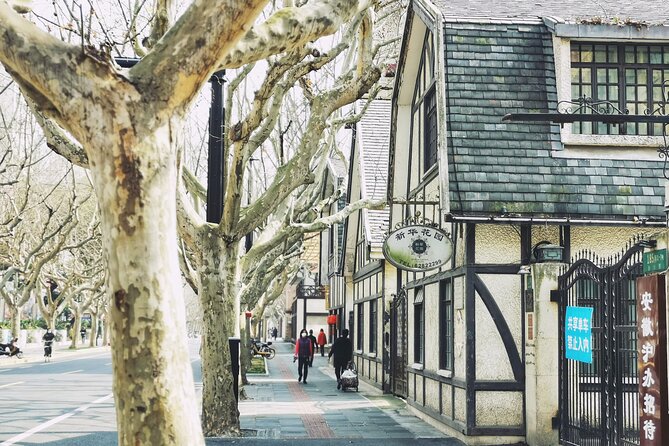
Shanghai’s French Concession still feels strangely European.
This walking tour threads together tree-lined streets, old houses, and the French imprint that lasted from 1849 to 1943, with a local storytelling style and a tip-based approach that keeps the upfront price low. You’ll also spot the details people miss, like wrought-iron fencing and stair railings that echo Paris more than you’d expect.
I especially like the way the guide blends big-picture context with street-level reality. Getting a native Shanghai perspective turns landmarks into lived history, and you also get time to sit, regroup, and take photos without feeling rushed.
One thing to plan for: it’s not a fixed-price guided tour. The $3.59 is mainly to reserve your spot, and tips at the end are part of how the tour works, with a recommended 150 to 300 yuan per person.
In This Review
- Key things to know before you go
- Why the French Concession still feels like a walk through time
- Starting at Okura Garden Hotel, then easing into the old French club world
- Jinjiang Hotel, diplomacy, and how Shanghai held global attention
- Cultur al Square and the old French racecourse memory
- Huaihaifang lanehouse compound: the everyday Shanghai layer
- Sinan Mansions: art-deco style buildings turned into modern venues
- Xintiandi: remodeled lanehouses and a great finish for food and shopping
- Price and tips: how this tour stays affordable, and how you should budget
- The guide style that makes the walk feel easy
- Who should book this French Concession walking tour
- Should you book Bill’s Fantastic Tour?
- FAQ
- How does the tip-based pricing work?
- How long is the walk, and where do you start and end?
- What is included in the price?
- Do I need a printed ticket?
- What if the weather is bad or I need to cancel?
- Is it suitable for most travelers, and are service animals allowed?
Key things to know before you go
- Tip-based at the end: $3.59 reserves the spot, then you pay the guide directly based on satisfaction.
- 2 hours 30 minutes: enough time for six stops without sprinting the whole way.
- Six free-entry stops: each location has free admission included during the visit.
- Native-style storytelling: expect personal anecdotes about how Shanghai changed over time.
- Ends in Xintiandi: easy follow-on plans for food, shopping, and strolling after the tour.
- Mobile ticket: you show it on your phone at the start.
Why the French Concession still feels like a walk through time
The French Concession is one of Shanghai’s best neighborhoods for understanding how the city absorbed outside influence and then made it its own. In the mid-1800s, the French government administered the area, and the visual signature stayed even after their control ended in 1943. That is why, when you’re walking these streets, you get that slightly cinematic feel of Paris of the East, minus the postcard flatness.
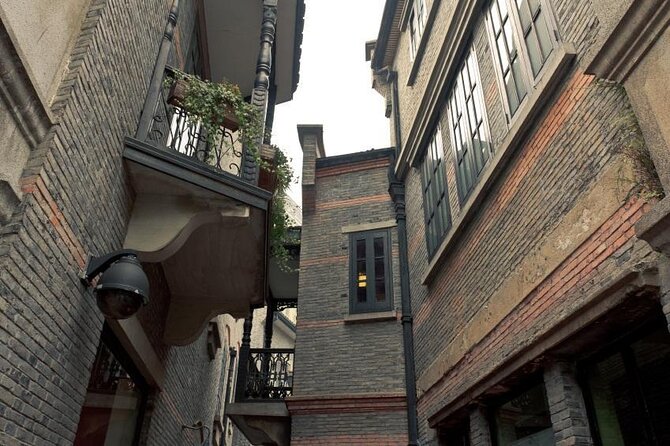
What makes the tour work is that it does not treat the neighborhood as a theme park. You’re guided past practical, real buildings and the kinds of street details you would normally miss on your own. The wrought-iron work, the railings, the planned streets that invite slower walking, all help you “read” the area like a map of design choices from another era.
And because the guide is local, you get more than dates. You get how people used these spaces, what felt formal versus everyday, and how old neighborhoods survive by changing shape instead of freezing in time. That is the kind of context that makes the French Concession more meaningful than a quick photo stop.
More Walking Tours in Shanghai
- Shanghai Highlights Walking Tour With A Real Local
★ 4.9 · 153 reviews - Shanghai Breakfast Walking Tour of Former French Concession
★ 5.0 · 139 reviews - Private Shanghai Evening Street Food Walking and Cruise Tour
★ 5.0 · 123 reviews
Starting at Okura Garden Hotel, then easing into the old French club world
The tour begins at Okura Garden Hotel Shanghai, 58 Mao Ming Nan Lu, in Huangpu District. This is a useful starting point because it sets the tone: you’re in an area where modern hotels and older structures sit close together, just like they do across much of the French Concession.
From there, you head to the first visit: the site of the Former French Club. The stop is short, around 20 minutes, and admission is free. Even if you don’t know the club’s full story before you arrive, the guide helps you understand why places like this mattered. Social clubs were not just about leisure. They were places where foreign residents gathered, built networks, and shaped how they related to the city around them.
This is also where you start learning the tour’s rhythm. You are not simply walking past plaques. The guide points out what to notice, then gives you enough context to make the building feel like part of a living city, not a decorative shell.
Practical tip: wear shoes that handle uneven sidewalk sections. With six stops spaced over about 2.5 hours, it is a steady walking experience. You will be fine if you’re comfortable walking at a relaxed pace, and the tour includes breaks to sit down during the route.
Jinjiang Hotel, diplomacy, and how Shanghai held global attention
Next up is Jinjiang Hotel, another major stop about 20 minutes, with free admission during the visit. Here, the focus is the oldest “modern” hotel in China and the location tied to a Sino-US joint declaration on normalizing relations.
This is a fascinating pivot point in the tour. The French Concession story could easily stay stuck in architecture and colonial-era nostalgia. Instead, you get a reminder that Shanghai was always plugged into international currents. A place that looks like classic city glamour can also hold turning points in modern diplomacy.
Even if you’re not a history buff, the setting helps. Hotels like this tend to be quiet observers of change. People pass through, business deals get made, and world events show up indirectly through the city’s guest lists. The guide’s commentary helps you connect that to Shanghai’s broader role in the 20th century.
What to look for here: think about the hotel as infrastructure, not just a pretty facade. It is a reminder that global politics often lands in everyday spaces first, then spreads outward into policies and public life.
Cultur al Square and the old French racecourse memory
Stop three is 文化广场 (Wenhua Square), tied to the former French racecourse. Again, this is about 20 minutes with free admission.
Racecourses sound specific, but they matter because they show what “entertainment” looked like in foreign-administered districts. The guide helps you understand how leisure spaces reflected social hierarchy, not just recreation. Who went, what rules governed, and how these events fit into city planning. It is history you can feel in the layout, because racecourse zones typically reshape a neighborhood around movement, viewing, and crowds.
This stop also breaks the tour into a different register. You shift from buildings and clubs to the open-space logic of where people gathered. That contrast keeps the walk interesting, especially if you get a bit architectural fatigue after too many facades.
If you like street history, this is one of the most satisfying stops because it connects a place name to a real earlier function. It is not just design nostalgia. It is how the area worked.
Same city, a very different kind of day:
- Authentic Local Food Tour in Central Shanghai
★ 5.0 · 1,382 reviews - Zhujiajiao Water Town and Shanghai City Private Day Tour
★ 5.0 · 1,016 reviews - Private Shanghai Full Day City Tour with Old and New Highlights
★ 5.0 · 995 reviews - Shanghai: 3-Hour Local Food Tasting Tour
★ 4.9 · 806 reviews
Huaihaifang lanehouse compound: the everyday Shanghai layer
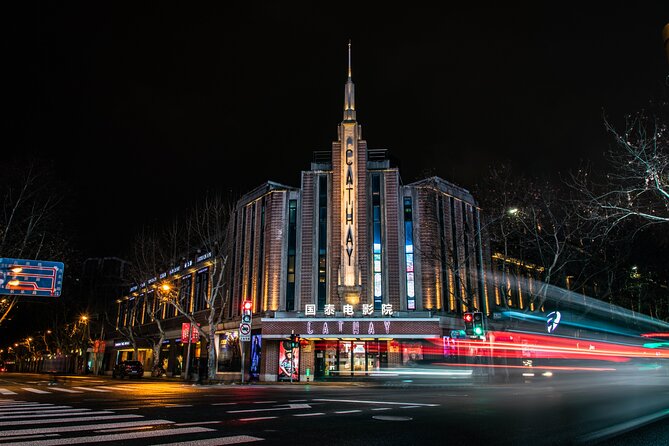
Stop four is Huaihaifang, described as a local lanehouse compound. This is where you begin to see how the French Concession was not only foreign-built and foreign-managed. It also contained spaces for ordinary life, and lanehouse compounds are a key part of that.
The tour’s value here is contrast. You go from the more formal, institutional vibe of clubs, hotels, and racecourse areas into a more residential, lived-in setting. That shift matters because it keeps you from assuming the whole neighborhood was uniform or exclusively “European.”
A lanehouse compound is also a great place to notice scale. Buildings and streets that look modest from the outside can feel surprisingly complex when you understand how people moved through them. The guide helps you see what makes these compounds distinctive, and why they became a symbol of Shanghai’s neighborhood character.
This stop is still around 20 minutes, but it feels like more, because it changes how you look at the city. You start thinking about community layout, not just architecture.
Sinan Mansions: art-deco style buildings turned into modern venues
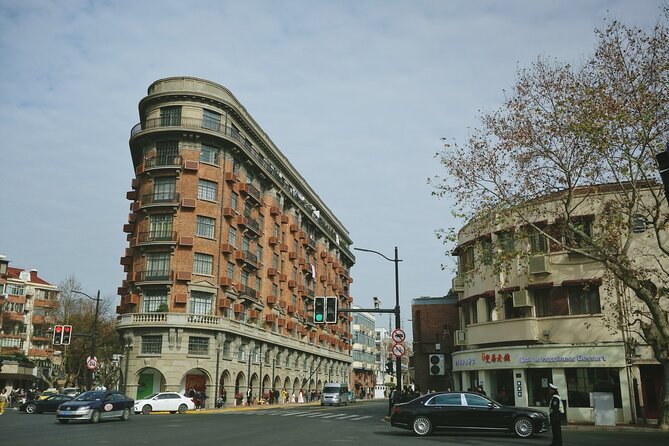
Stop five is Sinan Mansions, which the tour frames as a fashionable quarter of Shanghai. It is remodeled into an art-deco style residential block and repurposed into a compound of trendy venues with cool spaces.
This is where the tour earns points for balancing old and new. Sinan Mansions can be easy to treat as a shopping or dining zone if you stumble into it on your own. With a guide, you get the structural logic behind why it feels stylish. Repurposed spaces do not automatically preserve meaning. But when you understand the original design language and how people now use it, it becomes more than a storefront loop.
The “cool spaces” part matters too. You’ll be moving through a place designed for people to linger. In a two-and-a-half-hour tour, that matters because it gives you a mental reset between stops, and it’s where you can take photos without feeling like you’re just standing at the curb waiting for a signal.
If you care about how neighborhoods reinvent themselves, this stop is a highlight. It shows that preservation does not always mean freeze-frame. Sometimes it means translation.
Xintiandi: remodeled lanehouses and a great finish for food and shopping
The final stop is Xintiandi, a popular neighborhood made of cafes, souvenir stores, and galleries, remodeled from an older lane house area.
The tour ends at Xintiandi, 123 Madang Road, and you’re finished near the South Huangpi Road Subway station. That matters because it makes your next move easy. You can eat, shop, or keep strolling without needing extra planning.
What I like about ending here is that it turns the “French Concession lesson” into a practical payoff. You learn to see the neighborhood’s old form in the buildings, then you get to experience how the area works today. Xintiandi is busy, but it is not random busy. It is busy because it is built for visitors, and because the lanehouse concept still shapes the experience even after remodeling.
For your photo walk after the tour, focus on the street rhythm and doorways. In areas like this, one good detail shot often beats a wide skyline view.
Price and tips: how this tour stays affordable, and how you should budget
The listed price is $3.59 per person, which is shockingly low for a guided, English-language walking tour. The catch, and the key to understanding value, is that it is tip-based. That upfront amount is basically to reserve your spot. At the end of the tour, each person gives the guide an appropriate tip.
The recommended tip range is 150 to 300 yuan per person, roughly 20 to 40 USD or Euro, depending on satisfaction. Treat that as part of your real trip budget, not an afterthought.
So is it worth it? In my view, it can be, because you are paying for a local storyteller plus multiple short visits where admission is free. You’re also getting a guide who brings humor and personal anecdotes, which is one of the big reasons walking tours can outperform generic museum time. When your guide makes the streets feel like a narrative, you feel like you learned something, not just saw something.
If your budget is tight, you can still make the low reservation fee work for you, but only if you plan to tip in the recommended range. If you want a fixed-price tour with no extra end payment, this is not that kind of experience.
The guide style that makes the walk feel easy
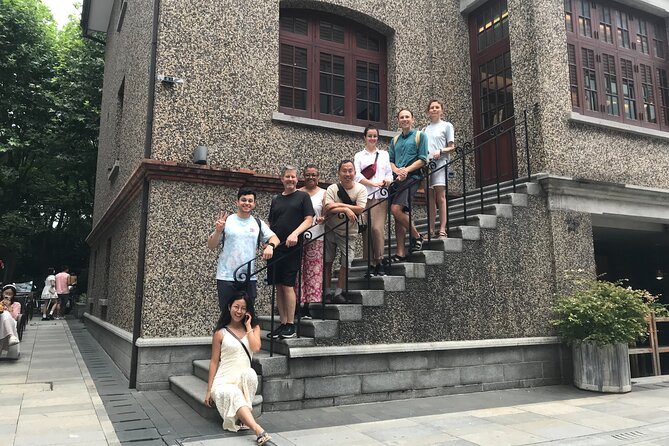
This tour stands or falls on guide delivery, and the tone here is consistently friendly, engaging, and built around real lived context. The guide is described as funny, patient, and willing to explain history in a way that sticks. There are also breaks to sit down, which helps a lot on a 2.5-hour walking format.
One practical benefit: the guide is good at pointing out photo-worthy angles and details, including the kind of ironwork and stair railings that look cool once someone tells you what to look for. That means you spend less time scrolling in place and more time photographing with a purpose.
Also, because the guide is an English-speaking professional and the group size can be up to 100, your best strategy is simple: listen closely at the key stops, then use the breaks to regroup. If you tend to get distracted by side streets, this kind of guided pacing is a safety net.
Who should book this French Concession walking tour
I think this tour is ideal if you want to:
- Get oriented in the French Concession fast, without doing solo research first
- Enjoy neighborhood history that connects buildings to how people lived
- Prefer walking tours with short, focused stops instead of long museum marathons
- End in a lively area like Xintiandi so you can continue your day
It might be less ideal if you want a strict, fixed-price experience with no end payment. It might also not be your best choice on a day when weather is rough, because the tour requires good weather.
If you’re traveling as a couple, a group of friends, or even solo, this format works because the stops are short enough to keep attention, and the guide’s stories give you common ground for conversation.
Should you book Bill’s Fantastic Tour?
Book it if you’re planning to spend a few hours in Shanghai and you want a guide to translate the French Concession into something you can understand and remember. The free-entry stops, the English-speaking guidance, and the chance to end in Xintiandi make it a smart use of time.
I would skip it if you hate tip-based systems or you want a fully fixed cost with no end payment. And if the day is forecasted to be bad, wait for better weather, since the experience requires it.
If you do book, budget for the recommended 150 to 300 yuan tip per person, bring comfortable shoes, and arrive ready to look at details. This tour rewards attention, and the French Concession is full of those small, interesting clues.
FAQ
How does the tip-based pricing work?
The $3.59 you pay when booking is to reserve your spot. At the end of the tour, you give the guide a gratuity you feel is appropriate. The recommended tip range is 150 to 300 yuan per person, depending on how much you enjoyed the tour.
How long is the walk, and where do you start and end?
The tour runs about 2 hours 30 minutes. It starts at Okura Garden Hotel Shanghai, 58 Mao Ming Nan Lu, and ends at Xintiandi, 123 Madang Road, near the South Huangpi Road Subway station.
What is included in the price?
The price includes a professional English speaking guide. The tour visits multiple sites where admission is listed as free during the stop.
Do I need a printed ticket?
No. The tour uses a mobile ticket, so you can have it on your phone.
What if the weather is bad or I need to cancel?
The tour requires good weather. If it is canceled due to poor weather, you will be offered a different date or a full refund. You can also cancel for a full refund if you cancel at least 24 hours in advance.
Is it suitable for most travelers, and are service animals allowed?
Most travelers can participate, and service animals are allowed. The tour is also near public transportation, which makes getting to the start easier.
If you want, tell me your travel dates and what else you plan to do in Shanghai that day, and I’ll suggest a simple before-and-after schedule around this ending at Xintiandi.
Recently added around Shanghai
- Zhujiajiao with Private Customized Shanghai City Highlights★ 5.0 · 14 reviews
- Zhujiajiao Water Village: Private Tour from Shanghai★ 4.9 · 43 reviews
- Zhujiajiao & Shanghai:Private Day Tour Water Town to Skyline★ 5.0 · 12 reviews
- Zhujiajiao Water Town Private Tour with Night River Cruise★ 5.0 · 9 reviews
- Zhujiajiao & Shanghai:Small Group Tour Water Town to Skyline★ 5.0 · 4 reviews
- Yu Garden Shanghai Entry Tickets Booking And Trip★ 3.6 · 9 reviews
- Shanghai: Xintiandi, CCP Museum and French Concession Tour★ 5.0 · 9 reviews
- Water Town Zhujiajiao Shanghai: Boat Ride,Sights,Bites&Sips★ 5.0 · 7 reviews
Walking Tours, compared.
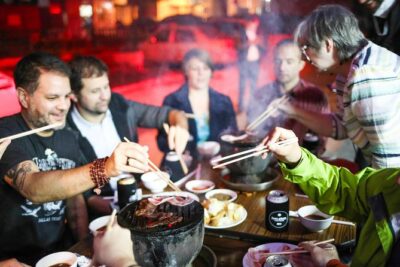
Beijing Hutong Walking Food and Beer Tour at Hidden Restaurants
Read our review →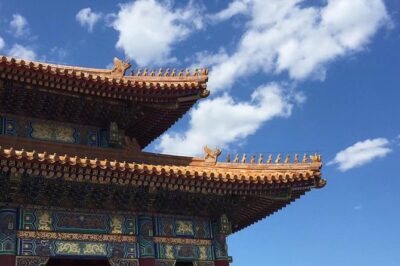
Private Beijing Walking Tour of the Forbidden City with 7 Options
Read our review →
Dark Side of Hong Kong – Kowloon Caged Homes Walking Tour
Read our review →
Forbidden City Private Walking Tour with Optional Sights
Read our review →
Introduction to Hong Kong: Central Tip Based Walking Tour
Read our review →
Shanghai Highlights Walking Tour With A Real Local
Read our review →Browse the lists this tour appears in