
Reviewed · FOOD & DRINK
Chengdu: City Walking Tour with Food and Culture Stops
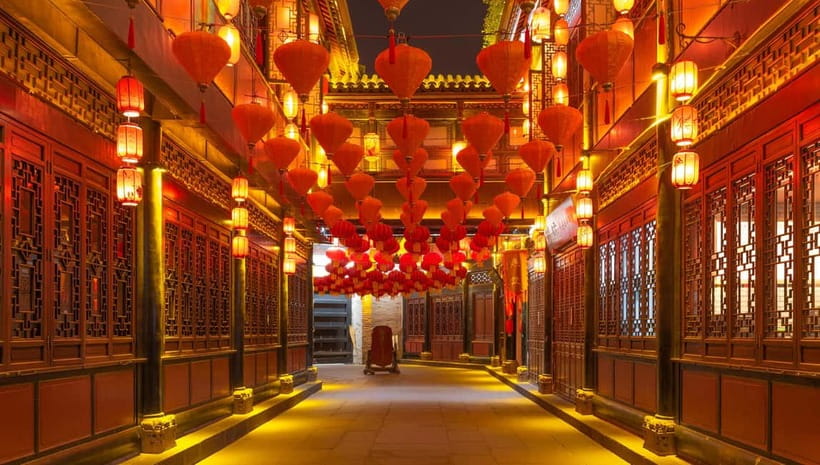
Chengdu changes its mood every block. I love how Kuanzhai Alleys blends old courtyard lanes with modern coffee and bookstores, and I also really like the hands-on Three Kingdoms shadow puppets at the Chengdu Museum. One catch is simple, it is a 4-hour walking tour, so you will want comfortable shoes and you should skip it if you have mobility limits or heart concerns.
I also like that it is a private group with a guide who speaks Chinese and English, and you meet at a clear subway point, Exit B of Kuanzhai Alleys Station on Line 4. On past departures, guides like Belinda and Teresa have been singled out for making the stops feel smooth and the food feel easy to try.
Food and style are part of the package, from Zhong’s Dumplings to a rice wine iced Americano, then you finish around Taikoo Li and Tangpa Street with the red-wall versus glass-facade contrast near Daci Temple.
In This Review
- Key things I’d circle before you go
- A 4-hour Chengdu route that actually connects the dots
- Kuanzhai Alleys: Wide Alley, Narrow Alley, and the courtyard gate details
- People’s Park: Tea routine, 采耳, and 相亲角 watching
- Chengdu Museum: From Qin-Han galleries to operating shadow puppets
- Taikoo Li and Tangpa Street: Red temple walls beside modern glass
- Food and coffee stops that feel local, not touristy
- Price and value: $109 for a private 4-hour city map in motion
- Practical tips that make the day easier (and more fun)
- Should you book this Chengdu walking tour?
- FAQ
- Where do we meet for the tour?
- How long is the tour, and what does it cost?
- Which places are included in the experience?
- What language will the tour guide speak?
- What should I bring with me?
- Is the tour suitable for everyone?
Key things I’d circle before you go
- Wide Alley vs Narrow Alley, plus the real meaning of width and narrowness
- People’s Park tea routine, including the bamboo chair and gaiwan tea set
- 相亲角 (Blind Date Corner) as a window into everyday Chengdu social life
- Hands-on shadow puppetry with Three Kingdoms themes
- Taikoo Li and Tangpa Street, with Daci Temple’s red walls beside modern architecture
- Local snacks and coffee culture, including Zhong’s Dumplings and rice wine iced Americano
A 4-hour Chengdu route that actually connects the dots
This tour is built like a short story, old neighborhoods first, then daily life, then culture in a museum, and finally modern Chengdu with a stylish edge. In four hours, you get a layered sense of the city, not just a photo list.
You are also traveling with a private in-person guide. That matters here because so much of what you will see is easier to understand with someone who can translate the little cultural cues, like why people gather in certain parks or what the alley names mean.
The pacing is walk-heavy, with multiple photo stops and short visits. If you want a relaxed hop-on hop-off day, you might feel rushed. If you like moving on foot and reading the city as you go, it fits.
More City Tours in Chengdu & Sichuan
- All Inclusive Private Day Tour of Chengdu Old Streets including City Top Attractions
★ 5.0 · 34 reviews - 1-Day Panda Breeding Center plus Chengdu City Tour
★ 5.0 · 18 reviews - 6-Hour Private Chengdu City Walking Tour with Tea Tasting
★ 4.5 · 10 reviews
Kuanzhai Alleys: Wide Alley, Narrow Alley, and the courtyard gate details
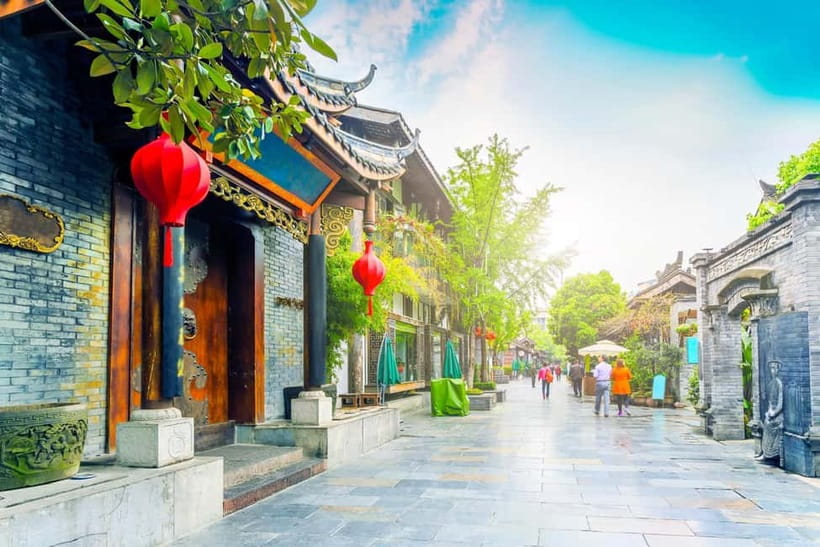
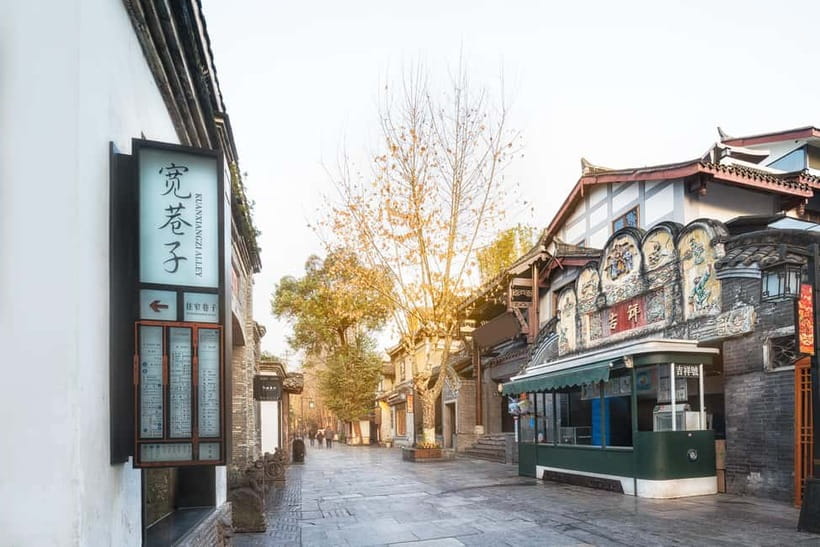
Your day starts where Chengdu still feels like Chengdu, in Kuanzhai Alleys. You begin by entering through the Wide Alley, where the atmosphere is calmer and the architecture leans traditional, especially around classic courtyard gate details.
Then your guide steers you toward the contrast. In Narrow Alley, the mood shifts into more modern Chengdu habits, sitting, reading, and grabbing coffee.
A few spots are worth paying attention to as you walk:
- You will see a specific courtyard-gate relief area referenced as a great example of a Western Sichuan style gate. The point is not just the carving, it shows how these lanes were built for everyday residence and social status.
- In the Narrow Alley area, you may stop around Sanlian Taofen Bookstore, where you can sit in bamboo chairs and browse English material, including a copy of Three Cities.
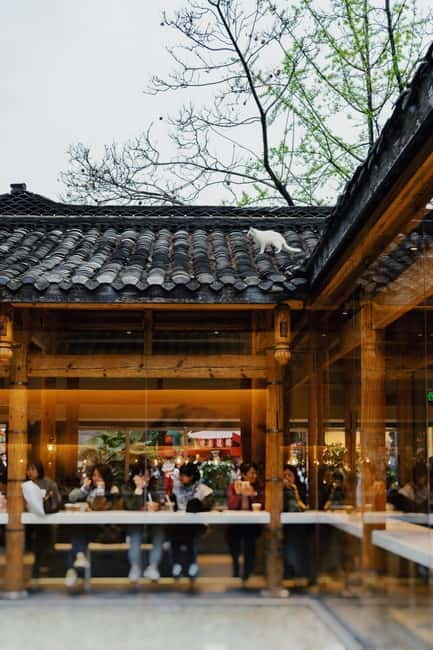
- You also get a coffee break at %Arabica, with blue-brick walls framing the modern cafe look. It is an easy way to spot the city’s old-meets-new rhythm without needing to force it.
One detail I really like is the lesson behind the alley names. The tour explains the idea of the philosophy of width & narrowness:
- Wide Alley was linked with officials
- Narrow Alley was for bannermen
- Well Alley (Jingxiangzi) served commoners
That context makes your walking more than sightseeing. You start noticing how the same street system can feel different depending on who it historically served.
There is also a fun photo-and-post moment, the Panda Post Office inside the alley. Even if you do not send anything, it is a playful way to anchor the memories.
People’s Park: Tea routine, 采耳, and 相亲角 watching

Next comes People’s Park, and this is one of those places where the point is less about monuments and more about the way the city lives. Your guide helps you step into that with small, practical activities.
One key stop is Heming Teahouse, where you can try the classic three-part setup: a bamboo chair, gaiwan tea, and 采耳 (ear cleaning). If you have never watched or tried 采耳, ask your guide what to expect first. It is a local practice, and understanding the etiquette makes it less awkward and more interesting.
Then you watch the social phenomenon of 相亲角 (Blind Date Corner). This is not a staged show, it is a real gathering where people look for potential matches. You do not need to participate to get the meaning. The value is that you learn what role public spaces can play in Chinese social life beyond eating or passing through.
You might also catch a couple of entertainment-style options while you are there, including long-spouted teapot tea art performances or learning simple mahjong rules. Even if you only watch, it adds texture, because you see how relaxation looks here.
A consideration: People’s Park is a public space with real locals doing real routines. If you want total quiet or zero cultural interaction, this part can feel lively. I think that is also exactly why it works. You see the social glue of Chengdu without needing a script.
Chengdu Museum: From Qin-Han galleries to operating shadow puppets
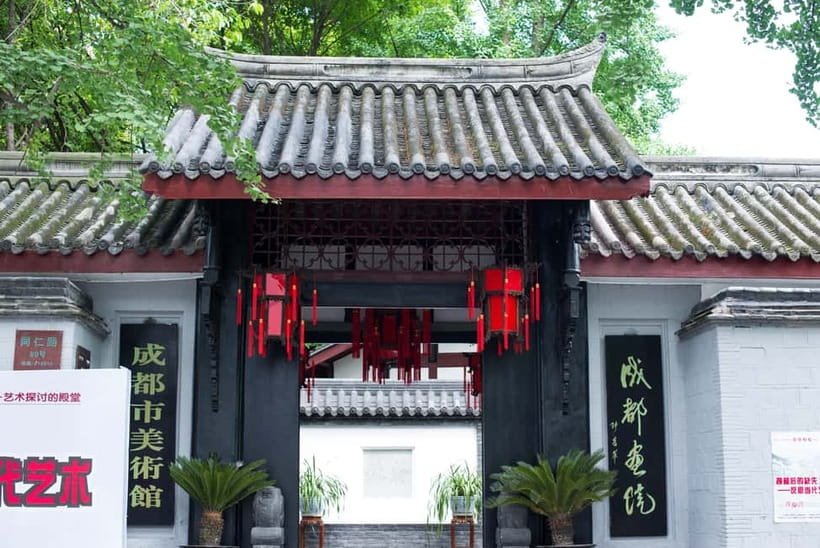
After the park, the tour shifts into structured culture at the Chengdu Museum. This is where the day gains depth.
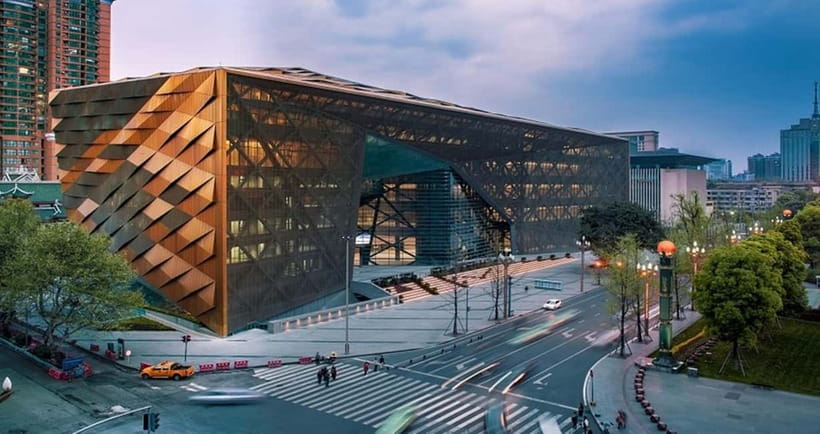
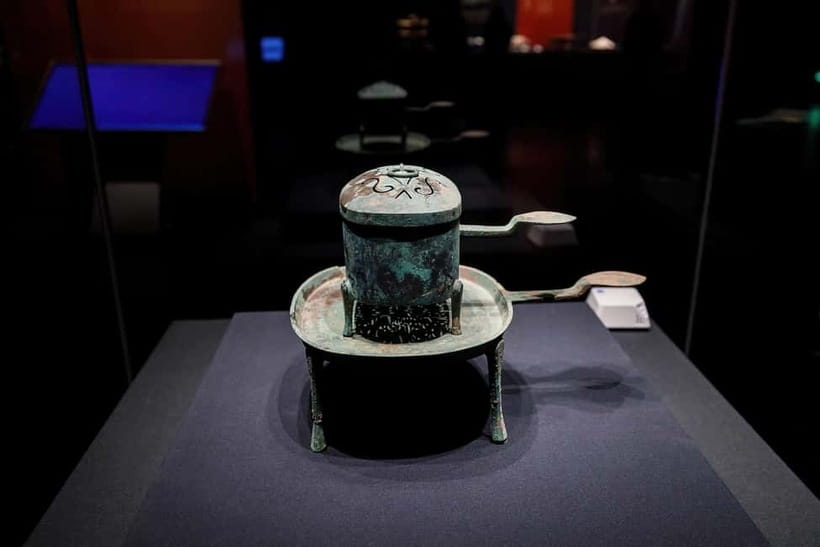
You are guided through several parts, including the Qin-Han Gallery and the Folk Culture Gallery. That combination matters because it gives you both timeline context and everyday life context, instead of just one type of display.
Then comes the part that is hardest to fake with photos: the Shadow Puppetry Exhibition. You do not just watch. You operate Three Kingdoms-themed shadow puppets and even shoot fun short videos. It is a hands-on workshop feel, and that is the difference between admiring an exhibit and actually understanding the craft.
Three Kingdoms themes are a smart choice for tourists, because the stories are widely known and easy to follow. But even if you only catch pieces, you still learn how the puppet world works, shapes, movement, and the stage effect.
If you are sensitive to crowds inside museums, go in with a calm mindset. Museums can get busy, and the exhibits take space. Also, plan for a bit more standing and looking up at displays.
That said, this is the strongest cultural payoff on the whole route because you leave with a memory that is active, not passive.
More Food Tours in Chengdu & Sichuan
- Tuktuk Food Tour Through Chengdu’s Local Eats
★ 5.0 · 435 reviews - Chengdu: Hidden Dishes and Beers UNESCO Food Evening Tour
★ 4.8 · 49 reviews - Private Leshan Giant Buddha and Local Food Tasting Trip
★ 5.0 · 46 reviews - Chengdu: Eat Like a Local! Food Tour in the Hidden Alleys
★ 4.7 · 15 reviews
Taikoo Li and Tangpa Street: Red temple walls beside modern glass
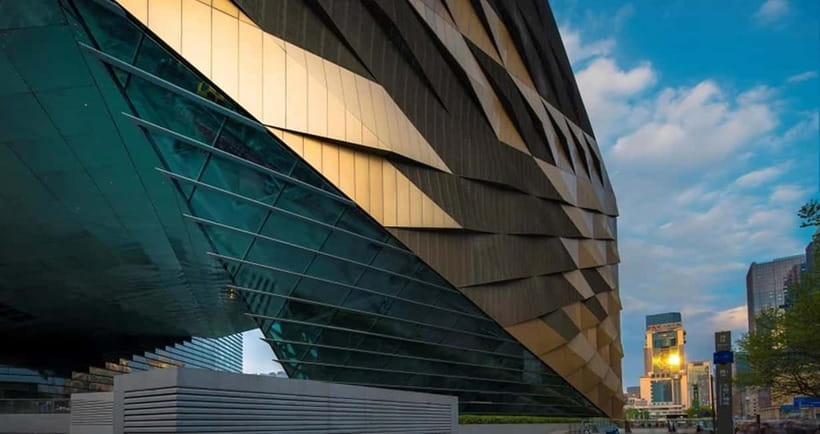
The final stretch is modern Chengdu, but it does not abandon the old textures. You move into Taikoo Li and Tangpa Street, an area known for its cool factor, ranked among the World’s 50 Coolest Neighborhoods in 2018.
This is where the city’s visual contrast becomes a real lesson. You get the striking scene near Daci Temple, where red walls sit alongside modern glass facades. It looks like a design statement, but it is also a reminder that Chengdu keeps layering eras rather than replacing them.
While you are in this zone, you can also check out:
- Fangsuo Bookstore, with English original books under a dome and Shu embroidery notebooks. The value here is practical, even if you are not buying, you can browse English titles and learn what local publishing looks like.
- A stop around 崇德里 Ruins Restaurant, where you can sip gaiwan coffee in a renovated historical space. It is a clever blend, you get coffee culture while still feeling the building history.
And yes, this is also where you should think about lunch if you want a meal break. You will have time to eat at Chaimen Fan’er, where the signature dish is Orange-Fragranced Cherry Pork. Since the tour pricing does not clearly include lunch, I treat it as a personal expense, but it is a strong local pick.
If you love modern shopping streets and design-forward spaces, this ending will feel like a reward. If you prefer purely traditional sights, you might wish there were one more park or museum stop instead. Still, the contrast is the point.
Food and coffee stops that feel local, not touristy
Food is woven through the route, not dumped at the end. That is why it feels useful, you snack while you walk, so the day stays enjoyable.
You can try Zhong’s Dumplings and also sample something that reads like a Chengdu-style coffee twist, a rice wine iced Americano. I cannot promise everyone loves the blend, but it is exactly the kind of local experiment that makes a food stop memorable beyond a single safe dish.
You also get coffee or tea moments tied to the neighborhood style, like the bookstore-and-cafe vibe in Kuanzhai Alleys and the tea culture in People’s Park. These stops help you understand why Chengdu is known for lingering. People sit because they want time, not because they have to rest.
One practical note: you will want cash on hand, because the tour list specifically asks for it. For metro rides and ride-hailing, you are also told to pre-bind international cards in the Alipay app. For purchases, the suggestion is to install WeChat Pay and Alipay. Even if you prefer one app, it is smart to have both ready.
Price and value: $109 for a private 4-hour city map in motion
At $109 per person for about 4 hours, the value comes from the mix and the guide help. This is not just walking through a single neighborhood. You get multiple distinct cultural zones, two major tea and park moments, museum galleries, a hands-on shadow puppetry activity, and a modern-neighborhood finish.
The tour includes a private in-person tour guide plus visits to key areas like Kuanzhai Alleys, People’s Park, Chengdu Museum, Taikoo Li, and Tangpa Street. That level of structure matters in Chengdu because so much of the meaning is local, like why certain parks function as social hubs.
Also, some food and drink tastings are included, not just sightseeing. You are not paying to be hungry all morning.
Your main extra cost is personal spending, especially if you decide to add lunch beyond what is covered by snacks and tastings. Transportation is not included, so budget for metro or taxi where you start from.
If you are someone who likes turning a day into a coherent story, I think the price makes sense. If you are just looking for a casual stroll and you can read English signs on your own, you might find cheaper options. But for getting the context and the hands-on museum moment, this is a solid use of time.
Practical tips that make the day easier (and more fun)
First, wear comfortable shoes. You are moving through alleys, park paths, and museum spaces. The tour is not designed for slow, stop-and-stare without walking.
Bring your basics:
- Camera (or just a charged smartphone)
- Sunscreen
- Cash
- A charged smartphone, because you will likely take photos and might need local payment apps
Cash matters even if you plan to use mobile payments.
Next, set up your payment apps before you arrive. You are advised to pre-bind cards to Alipay for metro rides or Didi taxi, then have WeChat Pay or Alipay for local purchases. That means you avoid the annoying scramble when you are thirsty or want a small souvenir.
On cultural comfort, a heads-up that pets are not allowed and smoking is not allowed. Also, food and drinks are not allowed in the vehicle, so rely on snack stops during walking breaks.
Finally, think about your pace. This tour is best for people who like to learn in short bursts, then move on.
If you are someone with mobility impairments or heart problems, the tour is listed as not suitable, so pick a different plan.
Should you book this Chengdu walking tour?
I would book it if you want a compact Chengdu day that mixes alley life, People’s Park tea culture, a museum you can participate in, and a finish in Taikoo Li and Tangpa Street. The best part is not any single landmark. It is how the guide connects them so you understand what each place was for and why it still matters.
Skip it if walking 4 hours sounds like too much, or if you need a more relaxed pace with fewer stops. Also, if you are only interested in one narrow theme, like temples only or shopping only, this tour spreads out your attention.
If your priority is getting local context fast, trying a few real snacks, and having at least one hands-on cultural memory, then $109 for a private, English-Chinese guided route feels like a fair deal.
FAQ
Where do we meet for the tour?
You meet at Exit B of Kuanzhai Alleys Station on Subway Line 4. The guide arrives about 15 minutes early to meet you.
How long is the tour, and what does it cost?
The tour is about 4 hours and costs $109 per person.
Which places are included in the experience?
The included stops are Kuanzhai Alleys, People’s Park, Chengdu Museum, Taikoo Li, and Tangpa Street.
What language will the tour guide speak?
The tour is led by a live guide who speaks Chinese and English.
What should I bring with me?
Bring comfortable shoes, a camera, sunscreen, cash, and a charged smartphone.
Is the tour suitable for everyone?
It is not suitable for people with mobility impairments or people with heart problems. Also, pets and smoking are not allowed, and food and drinks are not allowed in the vehicle.
More Walking Tours in Chengdu
- Half-Day Walking Tour with a Vegetarian Lunch at a Nunnery
★ 5.0 · 6 reviews - Private Beijing Walking Tour of the Forbidden City with 7 Options
★ 5.0 · 675 reviews - Dark Side of Hong Kong – Kowloon Caged Homes Walking Tour
★ 5.0 · 418 reviews - Forbidden City Private Walking Tour with Optional Sights
★ 5.0 · 400 reviews
More Food Tours in Chengdu
- Chengdu Evening Food Tour
★ 3.8 · 6 reviews - Authentic Local Food Tour in Central Shanghai
★ 5.0 · 1,382 reviews - Beijing Hutong Walking Food and Beer Tour at Hidden Restaurants
★ 5.0 · 1,132 reviews - Shanghai: 3-Hour Local Food Tasting Tour
★ 4.9 · 806 reviews
Recently added around Chengdu
- Visiting Chengdu Panda Base in a Half Day★ 5.0 · 4 reviews
- Classsic sichuan Opera at sichuan Provincial Theater★ 5.0 · 4 reviews
- Tea Village in lost Town and Buddha 1 day tour★ 5.0 · 32 reviews
- Skip the Line: Sichuan Opera Chengdu Ticket★ 4.0 · 8 reviews
- Sichuan Opera Show with Hotel Pickup★ 5.0 · 3 reviews
- Panda, Leshan, and Emei Mountain 2-day tour★ 5.0 · 4 reviews
- Private Half-Day Tour in Sichuan Culture Show with Hot Pot Dinner in Chengdu★ 4.5 · 15 reviews
- Sichuan Opera with face-changing at Sichuan opera theater★ 4.5 · 6 reviews
Food & Drink, compared.
Authentic Local Food Tour in Central Shanghai
Read our review →
Beijing Hutong Walking Food and Beer Tour at Hidden Restaurants
Read our review →
Hong Kong’s Tin Hau Hidden Eats Food Tour with 7+ Local Tastings
Read our review →
Browse the lists this tour appears in