
Reviewed · LHASA & TIBET TOURS
10 Days Tibet Everest Base Camp and Namtso Small Group Tour
Tibet at 5,200 meters changes your pace fast. This 10-day small-group trip strings together Lhasa’s key monasteries and temples, then swings out to Everest Base Camp and finishes at Lake Namtso, with permits and logistics handled. You get an English-speaking Tibetan guide and a minibus format that keeps things easier than full-on self-planning.
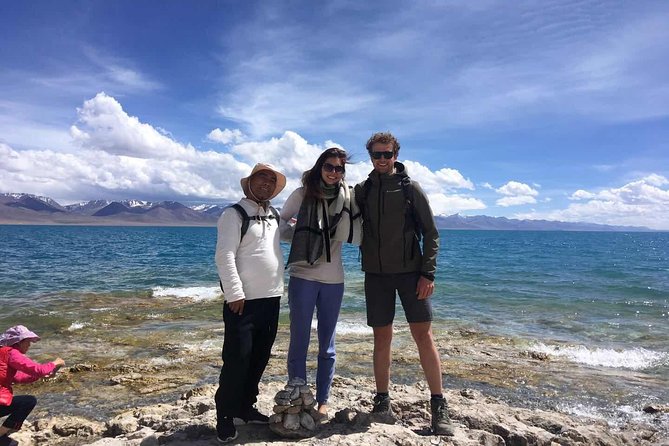
Two things I really liked: first, how much is included that usually turns into headaches in Tibet, especially permits, site entrance fees, and transport. Second, the trip is guided by people like Joy and Dickey, who are repeatedly described as calm, friendly, and practical, down to keeping you safe at altitude and helping you get better photos. Your experience should feel organized, not rushed.
One drawback to consider: it is not a low-altitude vacation. You will hit high passes and spend time around Everest Base Camp at roughly 5,200m, so you need a steady head, a moderate fitness level, and patience if weather or monastery access changes the plan.
In This Review
- Key highlights worth centering on
- Lhasa first day: easy acclimatization, then Potala and Jokhang
- Barkhor Street walks and tea-house breaks
- Potala and temple day two: how to avoid the common Lhasa mistake
- Dadong Village instead of the usual monastery rush
- Sera Monastery: why the debate time matters
- Gyantse, Shigatse, and the road that makes Everest possible
- Everest Base Camp day: what you should expect at 5,200m
- Rongbuk sunrise view: the morning you either love or respect
- Tashilunpo Monastery and the long drive back to Lhasa
- Lake Namtso: high-altitude walking and the Tashi Dor Island idea
- Chimelong Nunnery and Tsurphu Monastery: a calmer end before Lhasa
- Price and value check: what $1,299 buys you in real terms
- Who this tour fits best, and who should think twice
- Should you book the 10-day Everest Base Camp and Namtso small-group tour?
- FAQ
- What is the maximum group size, and what language is the guide?
- Does the tour include pickup in Lhasa?
- Are permits included?
- Is oxygen provided during the trip?
- Are entrance tickets included for the sights?
- What kind of accommodations are provided?
- What meals are included?
- How difficult is the trip physically?
- What is the cancellation policy?
Key highlights worth centering on
- Small-group size up to 12 with an English-speaking Tibetan guide you can actually ask questions of.
- Everest Base Camp access by road with a full day in the national reserve area, plus an optional sunset moment if conditions cooperate.
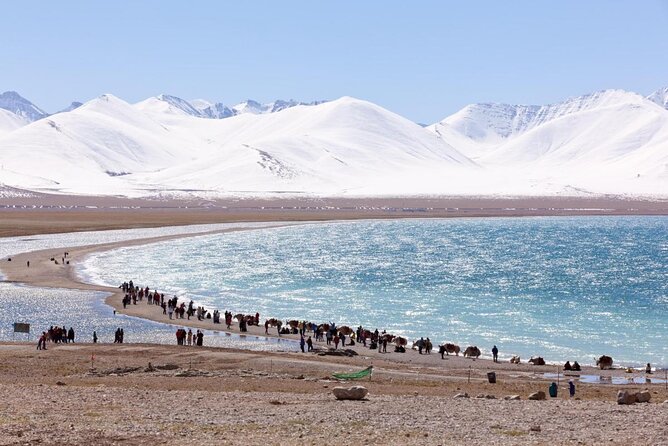
- Namtso Lake at high elevation with easy walking around Tashi Dor Island and shoreline viewpoints.
- Altitude support built in, including oxygen cylinders in the vehicle (4L or 7L).
- Old Lhasa plus real village time, including a visit to Dadong Village rather than a pure monastery marathon.
Lhasa first day: easy acclimatization, then Potala and Jokhang
I like tours that understand day one in Tibet is not about checking boxes. After you arrive in Lhasa, you’ll transfer to your reserved hotel and get time to rest. If you want a quick outing, the plan nudges you toward Potala Square for fountain views and photos, then tells you not to rush inside city sights.
Then the real intro begins. You’ll see Potala Palace, the winter palace tied to the Dalai Lama, plus highlights like gilded burial stupas of former Dalai Lamas and the meditation cave associated with an early Tibetan king. The entrance is listed as not included, so bring cash or confirm payment with your guide, and expect about 1.5 hours for a meaningful look.
After lunch, you head to Jokhang Temple, founded in the 7th century and still one of Tibet’s most intense spiritual magnets. Look for the Buddha Shakyamuni statue depicted at twelve years old, and watch pilgrims outside doing prostrations in a steady rhythm. Spend time here, even if you only understand part of what you see, because the atmosphere is the point.
Practical note: on an altitude-first day, the best strategy is simple. Sleep, sip water, move slowly, and save your big energy for the next day when you have a bit more oxygen in your system.
A few more Lhasa & Tibet days worth comparing
- Tibet Tour 8 Days Lhasa to Everest Base Camp Small Group Tour
★ 5.0 · 578 reviews - 7 Days Lhasa to Kathmandu Overland Small Group Tibet Tour via EBC
★ 5.0 · 188 reviews - Tibet Tour 15 Days Lhasa to Kailash Trekking Small Group via EBC
★ 5.0 · 104 reviews
Barkhor Street walks and tea-house breaks
Lhasa does not feel like a museum. It feels like a living spiritual center, and the best way to feel that is on foot.
Your route includes Barkhor Street, the path around Jokhang where you can do the kora, a religious walking circuit, with locals and pilgrims. This is also where you can shift from temple time to everyday life, including an old market atmosphere and chances to stop for Tibetan tea in tea houses.
There’s a “slow down” message hidden in this part of the day: walk, observe, and let the noise and movement teach you how Lhasa works. You’ll get better photos when you stop trying to sprint from viewpoint to viewpoint.
Potala and temple day two: how to avoid the common Lhasa mistake
If you’ve only planned for photos, Lhasa can disappoint. It will not disappoint you if you plan for contrast.
You’ll tour Potala Palace in the morning, then Jokhang Temple and Barkhor Street in the afternoon and early evening. The drawback is that it can be mentally heavy, especially at altitude, because you’re surrounded by constant religious focus and crowds.
So here’s what I suggest you do on this day: pick one main target for your attention. If you love architecture, spend extra time with Potala Palace details. If you want the human energy, focus on Jokhang and the pilgrims at Barkhor. You’ll enjoy it more than trying to memorize everything.
Also, since entrance tickets for these stops are listed as not included, confirm your payment method on arrival. That tiny step saves you from an awkward scramble.
Dadong Village instead of the usual monastery rush
On this itinerary, you actually get something that feels different from the typical monastery-and-more-monastery pattern. Day three swaps out Drepung Monastery for Dadong Village, about 25 kilometers southwest of Lhasa, in a valley setting with a well-protected ancient feel.
This is a big value add if you want Tibet beyond the famous postcard monuments. You’ll visit Nyimatang Monastery built in the 11th century, then take a light village walk and see rural daily life. The itinerary also includes a lunch with a local Tibetan family, which is usually where the trip becomes personal.
I like that the plan gives you time for conversation rather than just a photo stop. If you go, be ready for simple kindness and basic questions. Your guide can help you connect the dots.
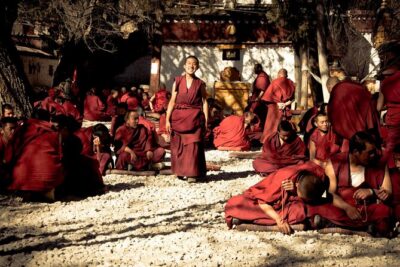
Then later, you pivot to Sera Monastery. This is one of the “great three” Gelug monasteries, and the main draw is the monks’ debate in the late afternoon (listed around 3 to 5). If you’ve never seen debate-style practice in a monastery setting, it is more alive than you might expect, with a rhythm you can watch even without language.
Same city, a very different kind of day:
- 8 Days Lhasa Gyantse Shigatse Mt Everest Group Tour
★ 5.0 · 52 reviews - 6 Days Central Tibet Culture Small Group Tour
★ 5.0 · 41 reviews - 4 Days Lhasa City Essential Group Tour
★ 5.0 · 25 reviews - 7 Days Overland Tour from Lhasa to Kathmandu
★ 5.0 · 20 reviews
Sera Monastery: why the debate time matters
Timing makes a difference at Sera. The debate is a scheduled performance practice, and the itinerary has it in the afternoon slot for a reason.
You’ll also get a look at a scripture printing house and see three sand mandalas and colorful Buddha rock paintings. These are the kinds of stops that work well with a guide because you’ll understand what you are looking at, not just that something is old and painted.
If you’re tired from the village day, Sera can feel intense. But the payoff is that debate turns spirituality into something you can observe with your own eyes. It is also one of those moments that tends to stick in your memory for years.
Gyantse, Shigatse, and the road that makes Everest possible
Days four through six are the drive days, and the drives are part of the experience. Tibet by road is not just transit. You see high passes, glaciers, and the kind of sky that makes you realize how small you are.
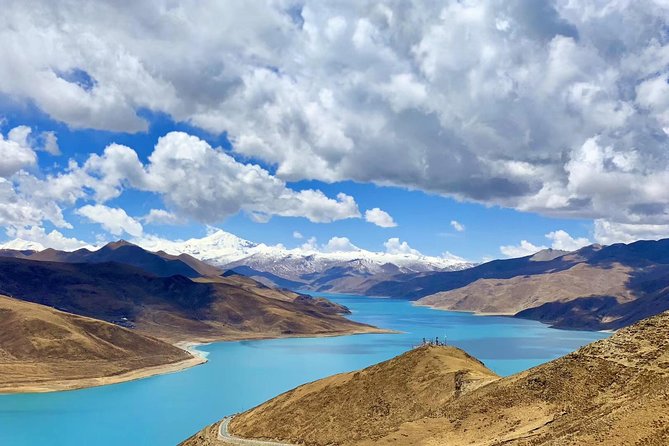
On day four, you travel from Lhasa toward Shigatse with stops along the way. You pass over Gampala Pass at 4,790m and get glimpses of Yamdrok-tso Lake around 4,400m, ringed by snow-capped mountains. You’ll also visit areas like Karo La Glacier and hang prayer flags at Simila Mountain Pass.
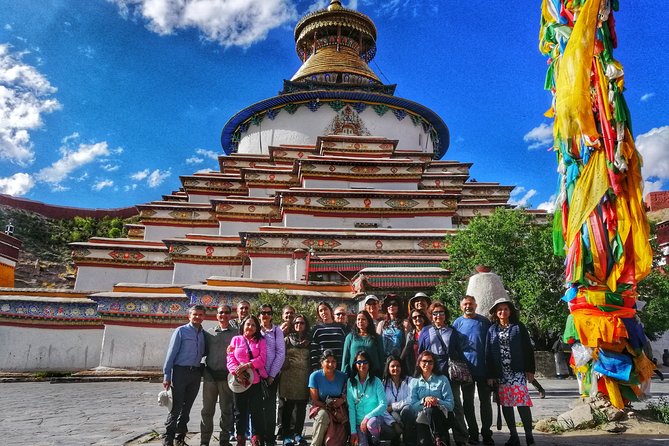
Then you reach Gyantse, historically Tibet’s third largest city, and you visit Pelkor Chode Monastery along with Gyantse Kumbum. If you want one reason this part is worth your time, it is because these sites feel less overwhelmed than the most famous Lhasa temples, while still carrying big spiritual weight.
You then continue to Shigatse for a possible short stop around traditional barley farming scenes. These are brief, but they help you connect the dots between plateau life and the monasteries you’ve been visiting.
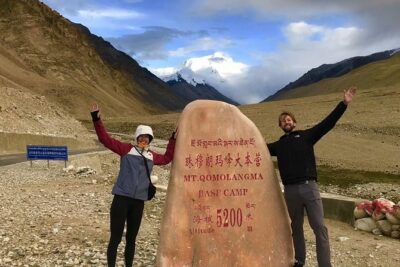
Day five pushes deeper into the Everest direction. You’ll get your Tibet “Alien’s” travel permit, then head toward Everest Base Camp via a route that includes Tsola Pass (4,600m) and Gyatsola Pass (5,248m). You’ll also cross Gawula Pass (5,198m) and enjoy a Himalayan panorama before traveling the New zigzag road toward Everest Base Camp around 5,200m.
Day five is also long, listed as about 12 hours. So for you, this is the day to treat like a summit push. Eat on schedule, drink water, and avoid overthinking.
Everest Base Camp day: what you should expect at 5,200m
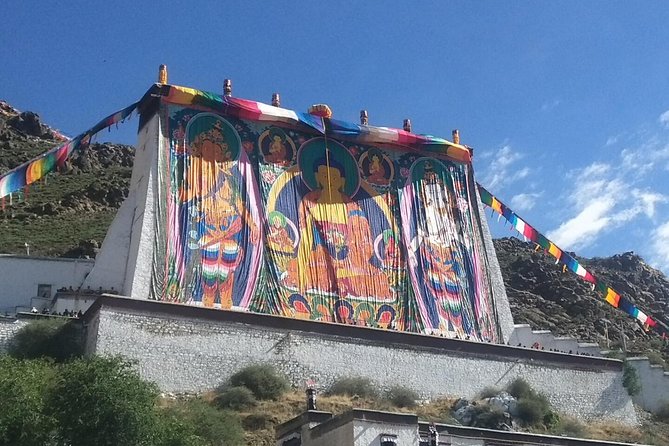
This is the day the trip earns its name.
You’ll be in Mt. Everest National Nature Reserve, which puts you in the bigger landscape of the mountain region even if you only come close by road. The itinerary frames it as getting closer to gazing at Everest’s peak, plus possible sunset timing at the lodging area if weather and time allow.
Rough weather is real up here, so don’t plan to only get one perfect photo. Look for multiple angles, including wide views from where you can see the area’s shape, then tighten in for close-up views when visibility is good.
Also, the “comfort” level here is relative. The trip includes oxygen cylinders in the vehicle, but you are still at high altitude on foot and in cold air. Wear warm layers, bring sun protection, and keep your pace steady.
Even if the summit is hidden behind cloud, Everest Base Camp still gives you that strong sense of scale. It is a place where the world feels huge and the details of the plateau feel sharp.
Rongbuk sunrise view: the morning you either love or respect
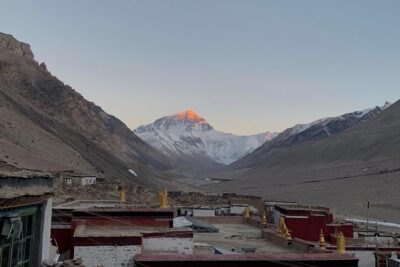
After Base Camp, you do a sunrise style morning at Rongbuk Monastery. The plan says you can watch sunrise appear over Everest and enjoy a full view from Rongpuk, described as a vantage point with Everest looking like a snow-capped pyramid in front of you.
Then you drive back to Shigatse, about 1 hour listed. This is another reminder that logistics here are tuned for speed and sightseeing efficiency, not comfort wandering.
If you are sensitive to early mornings, accept that Rongbuk is a “pay attention” day. Sunrise view is weather-dependent. If clouds move in, you may not get the exact look you hoped for, so stay open to the mood of what you do get.
Tashilunpo Monastery and the long drive back to Lhasa
On day seven, you visit Tashilunpo Monastery, seat of Tibet’s second highest incarnation, the Panchen Lama. This is a significant stop because it balances the Dalai Lama focus you saw earlier at Potala.
Then you return to Lhasa via Friendship Highway and follow the Yalong Valley. The itinerary lists about 6 hours of driving, roughly 175 miles (280km). This is where you settle into the “road trip after big sights” rhythm.
I like this structure because you do not just fling yourself from one wow moment to another without recovery. By the time you get back to Lhasa, you can feel the trip as a whole, not as a blur.
Lake Namtso: high-altitude walking and the Tashi Dor Island idea
Day eight goes to Lake Namtso, one of Tibet’s four holy lakes and the highest saline lake in the world. On the way, you see Nyenchen Thanglha Mountain Ranges and nomad tents with grazing yak and sheep, especially in summer as the itinerary notes.
You’ll also hit Lagenla Pass (5,190m), which gives stunning vista views over the lake. The plan includes a time to do a leisurely trek around Tashi Dor Island and along the lakeshore, with the note that lakeshore guesthouses near the water were closed by the government for environmental protection. You’ll stay overnight in Damxung instead.
Then there’s a separate stop around Zhaxi Peninsula, where you can see the islets within the lake. The itinerary highlights five holy islets, said to be the incarnations of the Five Buddhas, with Tashi Island being the largest and offering a panoramic view of Lake Namtso.
This is a great day if you like quiet. Temples are intense. Namtso is open space, clean air (when visibility is good), and a calmer kind of wonder. You get movement without having to do a hard hike.
Chimelong Nunnery and Tsurphu Monastery: a calmer end before Lhasa
Day nine is a blend of spiritual learning and quiet atmosphere. You start at Chimelong Nunnery (Phyirmil Lung Nunnery), where you can roam around the nunnery and get a sense of different Buddhist studies in Tibet. The itinerary also mentions you may spot a sky burial site in the distance.
Then you visit Tsurphu Monastery, seat of the Karmapa branch of the Kagyupa order. This is where you learn more about the Black Hats, the Karma Kagyupa school. In summer months (June to September), the plan says you might also go for a Linka outing, which is a Tibetan-style picnic, in the small village at the foot of Tsurphu.
You’ll then drive back to Lhasa and stay overnight. This end-of-trip pacing matters because it gives you a softer landing before the final day wrap-up.
Price and value check: what $1,299 buys you in real terms
At $1,299 per person, this tour competes in a niche market where permits and logistics can cost more than you expect. The price is partly attractive because you are not handling the heavy lifting yourself.
Here’s what’s clearly included from the package details:
- Tibet Travel Permit and necessary permits for Tibet, excluding the Chinese L visa
- An invitation letter for the China L visa if needed
- Transport by comfortable van or minibus with an experienced local driver, with gasoline included
- An English-speaking Tibetan guide
- Welcome dinner in Lhasa when the group meets
- Oxygen cylinder in the car (4L or 7L)
- Liability travel insurance
- Drinking water during the trip
- A Tibet handy map
- Airport or train station pickup and drop-off in Lhasa
- All accommodation on twin-sharing basis, plus breakfasts, with Rongpuk Guest House dorm bed
- Entrance ticket fees for sites listed in the itinerary, plus Everest Base Camp Echo bus and a platform service fee
What you should budget separately:
- Tips for the driver and tour guide
- Your Chinese L visa and flights or train tickets to Lhasa
- Anything listed as not included, like Potala Palace and Jokhang Temple entrances, since those are specifically labeled not included in the day-by-day notes
One more practical thing: the itinerary data has a mismatch where “lunches and dinners” appears both under Included and under Not Included. Before you lock it in, message your operator and ask you want written confirmation of exactly which meals are covered each day. It is a simple question that prevents surprise costs.
Who this tour fits best, and who should think twice
This route is best for you if you want:
- A small group experience with up to 12 people
- A structured way to see both Lhasa culture and Everest Base Camp by road
- A guide you can rely on for timing and altitude pacing
- Included oxygen and handled permits, so you can spend mental energy on the scenery and spiritual sites
It may not fit you if:
- You want a totally flexible, DIY schedule. This is a guided plan with day-by-day priorities.
- You struggle with long driving days. Day five is especially packed at roughly 12 hours.
- You need a highly cushy comfort level. Tibet is cold, high, and basic in places, including dorm-style lodging at Rongpuk Guest House.
One point of reassurance: multiple guide names show up in the feedback pattern, including Joy and Dickey, described as attentive, supportive, and good with photos and safety. That matters on a route where weather and altitude can test your patience.
Should you book the 10-day Everest Base Camp and Namtso small-group tour?
I’d say book it if Everest Base Camp and Namtso are non-negotiable for you, and you want a plan that handles the permits, transport, and site access so you can focus on the experience. The combination of Lhasa temples plus Dadong Village, then a drive-based Everest day, then the calmer open-space feeling of Namtso is a smart arc.
Before you click confirm, do three quick checks:
1) Ask for written clarity on meals, since the package notes conflict on lunch and dinner.
2) Plan your altitude approach seriously. Use the oxygen in the car, go slow on day one, and consider altitude advice from your doctor.
3) Pack for cold and sun. High elevation makes both stronger.
If you do those things, this tour has the right blend of structure and real moments.
FAQ
What is the maximum group size, and what language is the guide?
The group is limited to a maximum of 12 travelers, and the tour includes an English-speaking Tibetan guide.
Does the tour include pickup in Lhasa?
Yes. The package includes airport or train station to Lhasa city pick up/drop off, and pickup is offered.
Are permits included?
Yes. The tour includes a Tibet Travel Permit and other necessary permits for Tibet, excluding the Chinese L visa.
Is oxygen provided during the trip?
Yes. Oxygen cylinders are included in the car, listed as 4L or 7L.
Are entrance tickets included for the sights?
The package details say entrance ticket fees for the tourist sites listed in the itinerary are included. However, specific day notes mark some entrances like Potala Palace and Jokhang Temple as not included, so confirm before travel.
What kind of accommodations are provided?
Accommodation is based on twin-sharing hotels with breakfasts. At Rongpuk Guest House, the lodging is a dorm bed.
What meals are included?
The package details list Dinner and Lunch under included, but the separate section also states lunches and dinners are not included. Confirm the exact meal inclusions with the supplier before booking.
How difficult is the trip physically?
The tour advises a moderate physical fitness level. It includes long driving days and time at high altitude.
What is the cancellation policy?
You can cancel up to 6 days in advance of the experience for a full refund. Cancellation 2 to 6 days before the start time gets a 50 percent refund, and less than 2 days before the start time is not refunded.
Recently added around Lhasa & Tibet
- 7 Days Overland Tour from Lhasa to Kathmandu★ 5.0 · 20 reviews
- 6 Days Lhasa Gyantse Shigatse Group Tour★ 5.0 · 12 reviews
- 4 Days Lhasa City Essential Group Tour★ 5.0 · 25 reviews
- 6 Days Central Tibet Culture Small Group Tour★ 5.0 · 41 reviews
- 4-Day Tibet Tour With Everest Base Camp from Lhasa★ 4.5 · 18 reviews
- 8 Days Lhasa Gyantse Shigatse Mt Everest Group Tour★ 5.0 · 52 reviews
- Tibet Tour 15 Days Lhasa to Kailash Trekking Small Group via EBC★ 5.0 · 104 reviews
- 7 Days Lhasa to Kathmandu Overland Small Group Tibet Tour via EBC★ 5.0 · 188 reviews
Lhasa & Tibet Tours, compared.
Tibet Tour 8 Days Lhasa to Everest Base Camp Small Group Tour
Read our review →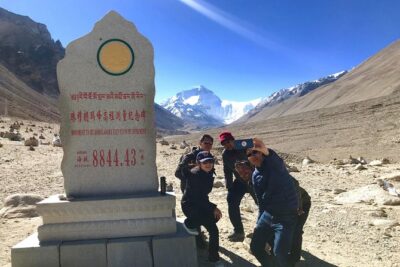
7 Days Lhasa to Kathmandu Overland Small Group Tibet Tour via EBC
Read our review →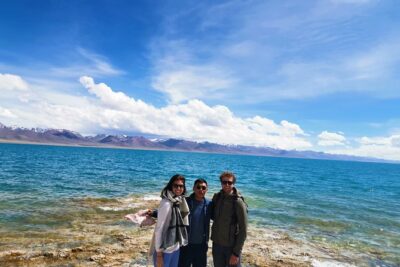
Tibet Tour 15 Days Lhasa to Kailash Trekking Small Group via EBC
Read our review →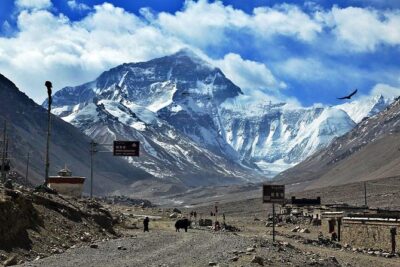
8 Days Lhasa Gyantse Shigatse Mt Everest Group Tour
Read our review →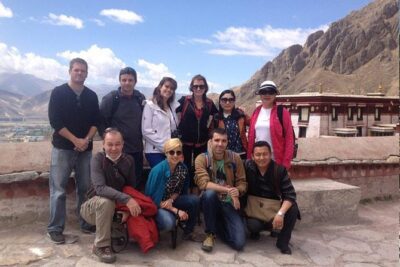
4-Day Tibet Tour With Everest Base Camp from Lhasa
Read our review →Browse the lists this tour appears in