
Reviewed · LHASA & TIBET TOURS
Tibet Tour 15 Days Lhasa to Kailash Trekking Small Group via EBC
Kailash trekking is a spiritual grind. This small-group 15-day Tibet trip strings together Lhasa culture, Everest-area sights via the eco-bus, and a real Kailash Kora trek over high passes, with permits and fees handled. I also like the English-speaking local guide approach, the kind that turns temple photos into actual meaning, plus practical touches like oxygen in the vehicle.
One thing to consider up front: this route is physically serious. You’ll hit very high elevations, including the Dromala Pass at 5,630m, and some logistics like yaks and porters are not included, so you need solid stamina and a plan for comfort.
In This Review
- Key Things I’d Watch Before You Go
- Lhasa First, Then the Big Route: How the Trip Pace Works
- Potala Palace, Jokhang Temple, and Barkhor Street: The Classic Loop, Done Efficiently
- Dadong Village, Sera Monastery, and the Timing of Monks’ Debate
- Shigatse and Gyantse Via Yamdrok Yumtso and High Pass Views
- Shigatse to the Everest Area: Passes, Passes, and More Passes
- Saga Valley and Manasarovar Wetland: When the Route Starts Feeling More Wild
- Mount Kailash Start Day: Eco-Bus, Yaks, and Meeting the Trek Team
- Kailash Kora Days 9 and 10: Dromala Pass at 5,630m and the Mani-Stone Trail
- The Kora Ends, Then You Drive: Saga to Sakya and Back Toward Lhasa
- Price and Logistics: Getting Value From the Permits, the Guides, and the Vehicle Support
- The Guides Make or Break It: Lhakpa Tenzin and Dickey as Real Examples
- Who Should Book This, and Who Might Want a Shorter Plan
- Should You Book This Lhasa to Kailash Small-Group Tour?
- FAQ
- What permits and fees are included in this Tibet trip?
- Does the trip include Everest Base Camp access?
- How many nights are spent in Lhasa and Namtso?
- Is oxygen support provided for altitude?
- Are yaks, horses, and porters included for the Kailash trek?
- What is the group size limit?
- What is the cancellation window for a full refund?
Key Things I’d Watch Before You Go
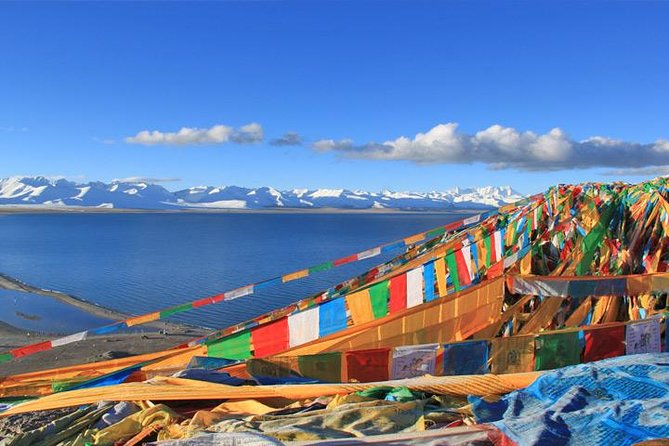
- Small group size (max 12) means you’re not lost in a crowd, especially helpful when the day is long and the altitude is real.
- Permits and entrance fees are listed as included, but a few key sites in the day-by-day notes show admission ticket not included, so confirm the final list of what you pay onsite.
- Oxygen cylinders in the car (4L or 7L) plus drinking water are built into the trip, not an afterthought.
- Everest Base Camp Echo bus is included, giving you a smoother way to reach the Everest area than driving just your group.
- Kailash Kora trekking includes major walking days, with yaks, horses, and porters available at the start but not included in the package.
- The drive-and-trek rhythm is balanced with overnight stays and rest points, like Lhasa nights and time around Lake Manasarovar.
Lhasa First, Then the Big Route: How the Trip Pace Works
I like that the program starts with Lhasa and gives you time to settle in. You get three nights in Lhasa, plus one night in Namtso as part of the flow. That matters because Tibet is high and your body needs a couple of days to stop feeling like it’s bargaining with gravity.
The trip also includes airport or train pick-up/drop-off in Lhasa. That’s not glamorous, but it saves you from the usual first-day scramble of finding the right transport while you’re still adjusting. Your tour start time is 9:00 am, and you’ll check in at your reserved hotel after arrival.
This is a route built for people who want a lot of Tibet without “months of wandering.” You cover major cities and holy sites along the way, then you pivot hard into the Kailash Kora trekking days.
More hikes near Lhasa & Tibet:
- From Beijing: Small Group Hike at Jinshanling Great Wall
★ 4.9 · 667 reviews - Beijing: Jingshanling Great Wall Trekking Tours with Options
★ 4.9 · 411 reviews - Small Group 6km hiking Jinshanling Great Wall EN speaking driver
★ 5.0 · 347 reviews
Potala Palace, Jokhang Temple, and Barkhor Street: The Classic Loop, Done Efficiently
Day 2 is a full cultural day in Lhasa, and it’s the kind of sequence that works well when you want context fast. You start with Potala Palace, presented as the winter palace of the Dalai Lama. Even if you’ve seen pictures before, the building works better in person, and the fact that a local guide explains what you’re looking at makes it much easier to connect the art and architecture to Tibetan life and religion.
After lunch, you head to Jokhang Temple, founded in the 7th century, with a focus on what’s inside and how the temple functions for worship. Then you wrap with Barkhor Street, where the kora loop happens with pilgrims and locals. This is where the trip becomes more than sightseeing. Barkhor is not just a market street, it’s a religious walkway. You’ll also get a chance to taste Tibetan tea with locals, which is a small moment, but it’s the kind of detail that makes the day feel lived-in.
Ticket note: Potala and Jokhang are listed with admission not included in the day-by-day notes. At the same time, the package overview says entrance fees are included. Don’t guess here, ask the operator which sites you’re pre-paid for before you arrive.
Dadong Village, Sera Monastery, and the Timing of Monks’ Debate
Day 3 gives you a second angle on Lhasa beyond the biggest icons. You visit Drepung Monastery (Zhebang Si) area time, and you also get Dadong Village, described as 25 km southwest of Lhasa, a well-protected ancient Tibetan village. This is a good breath between heavy temple days because you shift from big religious complexes to human-scale daily life.
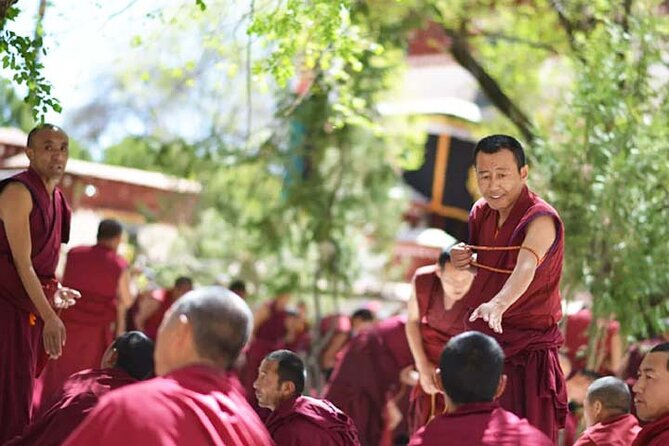
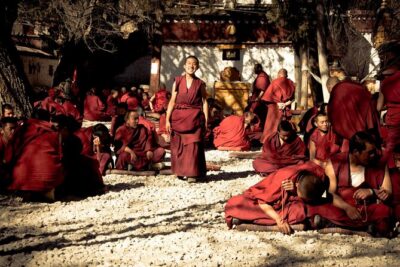
In the afternoon, you go to Sera Monastery, one of the “great three” Gelug monasteries. The highlight is the monks’ debate, timed around 3 to 5 pm. If you care about how Buddhism is taught in real life, this is one of those moments where you see learning as performance, not just study.
Why I think this is valuable for you: debate changes how you watch the scene. You stop thinking, I’m looking at robes and start thinking, I’m watching a teaching method. And because the trip is guided in English, it’s easier to follow without needing to memorize Tibetan terms.
Shigatse and Gyantse Via Yamdrok Yumtso and High Pass Views
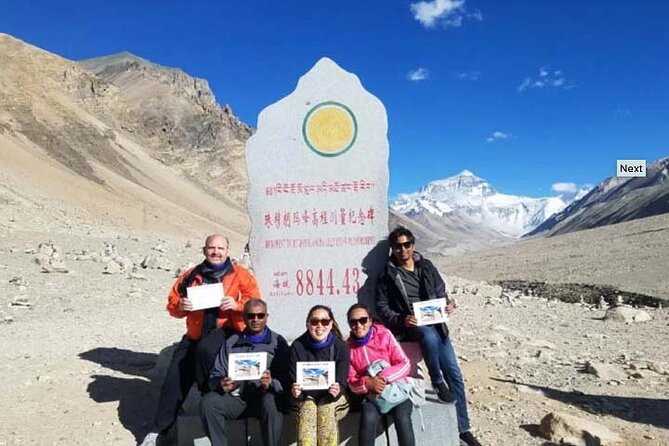
Day 4 turns into a road trip day with big-altitude thrills. You drive from Lhasa to Shigatse, and you pass over the Gampala Pass at 4,790m and look at Yamdrok-tso (around 4,400m). The route is planned so you get those famous lake viewpoints without having to manage your own timing.
You also stop for Karo La Glacier and pass by Manak Dam Lake and Simila Mountain Pass, with prayer flags to hang and watch. Then you continue to Gyantse, described as historically Tibet’s third largest city.
In Gyantse, you visit Pelkor Monastery and the Gyantse Kumbum, plus a far view of Gyantse Fortress. The Kumbum type of site is all about structure and levels, and the guide explanation matters because it changes how you read the building. Otherwise it can blur into “a tower with stairs.” With context, you start seeing why it was built that way and how it serves religious practice.
Altitude note: You’re repeatedly above 4,000m, and by the next days, the numbers climb further. If you have any history of altitude issues, take that seriously before you lock in your dates.
A few more Lhasa & Tibet days worth comparing
- Tibet Tour 8 Days Lhasa to Everest Base Camp Small Group Tour
★ 5.0 · 578 reviews - 7 Days Lhasa to Kathmandu Overland Small Group Tibet Tour via EBC
★ 5.0 · 188 reviews - 10 Days Tibet Everest Base Camp and Namtso Small Group Tour
★ 4.5 · 53 reviews - 8 Days Lhasa Gyantse Shigatse Mt Everest Group Tour
★ 5.0 · 52 reviews
Shigatse to the Everest Area: Passes, Passes, and More Passes
Day 5 starts with Tashilunpo Monastery, described as the home of the Panchan Lama. It’s a classic Shigatse stop because the monastery system there is tightly tied to Tibetan political and spiritual history. The tour also mentions getting your Aliens travel permit around this point. That’s one of the practical realities of the route: you’re not just touring, you’re also complying with the rules that keep travel possible across Tibet.
After that, you drive through the Qomolangma National Nature Reserve area. The schedule is long, about 12 hours, and includes dramatic pass crossings: Tsola Pass (4,600m), Gyatsola Pass (5,248m), and Gawula Pass (5,198m). You also gain access to Everest National Nature Reserve panoramas from a viewpoint stop.
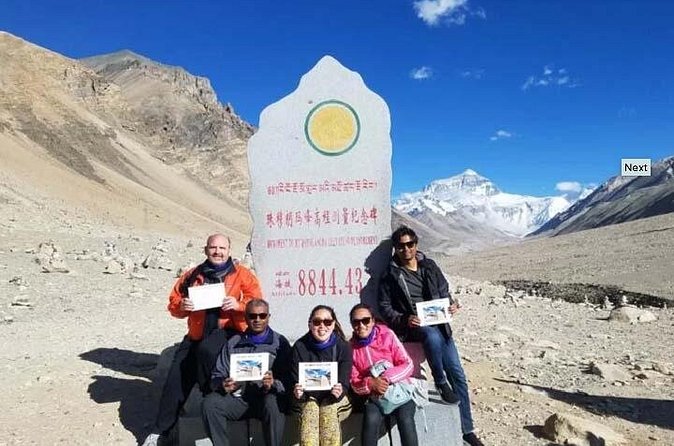
Then Day 6 brings you to Rongbuk Monastery, plus a shot at the sunrise of the Everest Peak if weather permits. The package frames Rongbuk as the unique highest monastery where nuns and monks live together, which is a specific detail and gives you a different way to understand why this place exists where it does.
Everest access note: the itinerary includes time tied to the Everest Base Camp area, and the package includes Everest Base Camp Echo bus. That’s a clue the route expects you to use that eco-bus system rather than doing a DIY drive.
And on the way toward Saga, you get views of Mt. Shishapangma and Pekutso Lake. Even if Everest is the headline, this part keeps the day from feeling like a single landmark repeat.
Saga Valley and Manasarovar Wetland: When the Route Starts Feeling More Wild
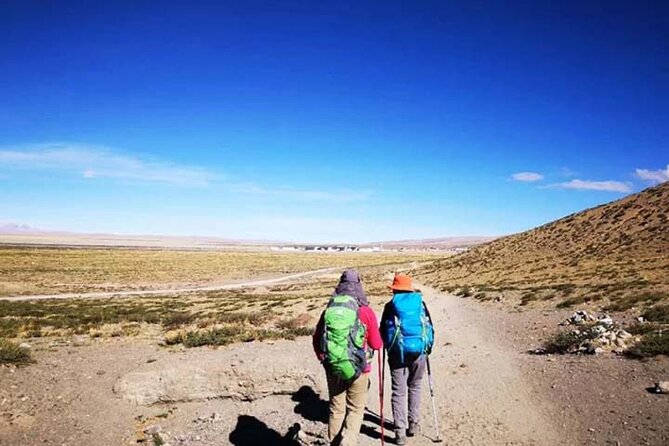
Day 7 is built around the Manasarovar Wetland and the Saga valley between the Gangdise Range and the Himalayan region. You’re on the road toward Darchen, with grassland and local village views mentioned along the way.
This is where the vibe changes for most people. Up to now, you’ve been bouncing between monasteries and cities. Now you’re spending more time staring out the window. Because the itinerary is clear about what to expect, you’re not wondering what the driver is doing. You know you’re lining up for the Manasarovar area and the start of the Kora logistics.
You also spend time at high elevation, so your pace matters. Slow down your thoughts, drink water, and avoid acting like you’re on a normal vacation.
Mount Kailash Start Day: Eco-Bus, Yaks, and Meeting the Trek Team
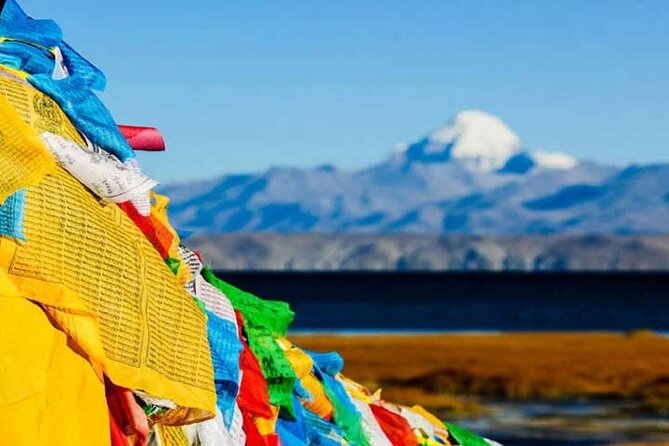
Day 8 is where the trip becomes a trek. You take an eco-bus from Darchen to Sarshung valley, then you meet yaks and porters at Sarshung village. Importantly, the itinerary says the cost for hiring yaks, horses, and porters is not included in the pack.
That one line matters. If you want to go easier on your legs, you need to plan budget and confirm arrangements early. If you’re trekking fully on foot with your own gear, you still need to be comfortable with long walking hours in altitude conditions.
The route from here follows the Kailash Kora rhythm: start early, walk in phases, and take rest breaks when they come.
Kailash Kora Days 9 and 10: Dromala Pass at 5,630m and the Mani-Stone Trail
Day 9 is the big walking day with the highest pass. You trek over Dromala Pass at 5,630m, described as the highest pass of the Kora. The itinerary mentions resting in a teahouse along the way, and you’ll see locals Tibetans prostrating in the Kora path. That detail changes the whole feel of the trail. You’re not just passing pilgrims, you’re sharing the same ritual space.
The walk is also described as passing Kadoe Lake. Even without naming every contour, the point is clear: you’re trekking through a sacred circuit with religious behavior visible everywhere, so keep your pace respectful and your attention on what you’re walking past.
Day 10 is another structured Kora day. You trek about 7 km to Zongto, then you take bus back to Darchen. Along the Kora, you’ll see piles of mani stones. The itinerary says the trek ends around noon, so you’re not spending the whole day walking until you drop.
Optional activity is listed, but it’s cut off in the info provided, so don’t count on a specific extra add-on unless the operator confirms for your departure dates.
Practical advice: bring layers even if the sun feels strong. High passes can still feel sharp, and the difference between sun and shade can be intense.
The Kora Ends, Then You Drive: Saga to Sakya and Back Toward Lhasa
After the trek, you shift back into driving mode.
Day 11 is a drive from Darchen to Saga via Lake Manasarovar. Day 12 drives Saga to Sakya. This part is not “fun” in the city sense, but it’s important. It’s your decompression window, time for legs to recover and sleep to happen without waking up to another pass.
Day 13 begins with Sakya Monastery, plus a tour of ancient Sakya town. The info highlights murals and a huge collection of scriptures and statues. You then drive from Sakya to Shigatse. If you like visual art tied to belief, this is a good day because it’s not only about architecture, it’s about what’s inside the collections.
Day 14 follows the Yalong Valley back toward Lhasa, with a viewing platform for the Yalong River bed and a stop tied to a water mill making Tibetan incense material in summer if time permits. Day 14 also mentions Nyemo County.
These are smaller stops compared with Potala or Kailash, but that’s the point. After the big highs of altitude and Kora walking, you want a route that gets you back to Lhasa without turning every day into another major exertion.
Day 15 is the wrap-up, with a statement that you’ve completed the 15-day journey of more than 2,000 km. The practical message is simple: you return to the meeting point.
Price and Logistics: Getting Value From the Permits, the Guides, and the Vehicle Support
The price is listed at $2,069 per person and based on double occupancy. There’s a note that single room supplements are subject to availability and additional charge, so if you’re traveling solo, expect that to change your total.
Now the big question, does it feel like value? In this case, it can, because the trip includes several cost items that are usually a hassle to price out:
- Tibet travel permits and necessary permits are included, excluding the Chinese L visa.
- English-speaking guide is included.
- Minibus or van transportation with an experienced driver is included, with gasoline covered.
- Oxygen cylinder is provided in the car (4L or 7L), plus drinking water.
- Accommodation is included with breakfasts, listed for twin-sharing in Lhasa and Shigatse.
But there are a couple of contradictions or at least “check this” points in the provided details:
- Meals: the included and not-included lists conflict about lunches and dinners. If you want clarity, confirm exactly which meals are included for your departure.
- Site tickets: the package summary says entrance fees are included, yet the day-by-day notes list admission ticket not included for places like Potala Palace and Jokhang Temple. Confirm what you need to pay onsite.
Also, the tour says it can be confirmed within 48 hours based on availability, and you’re asked to book at least 20 days in advance so the operator can secure your Tibet permit. You’ll need to provide passport photocopies and China L visa documents at least 20 days prior.
One more logistics tip: yaks, horses, and porters during the Kailash Kora are specifically called out as not included, so if you plan to use them, budget for it and ask about how they’re organized.
The Guides Make or Break It: Lhakpa Tenzin and Dickey as Real Examples
The tour is designed around an English-speaking Tibetan guide. In the strongest feedback about similar departures, Lhakpa Tenzin is praised for being organized, safe-minded, funny, and able to explain history and monuments clearly. That kind of guide can turn “temples and passes” into a story you actually remember.
Another highlighted guide in feedback is Dickey, praised for helping with the Kora experience and even supporting vegetarians with meal choices. That doesn’t mean every guide will handle meals the same way, but it’s a helpful signal for you: if food needs matter, ask during planning and be explicit.
Safety-wise, the tour includes oxygen support and a vehicle-based plan for a circuit with rest points. On altitude trips, that’s not optional, it’s a baseline you want.
Who Should Book This, and Who Might Want a Shorter Plan
You’ll likely enjoy this trip if:
- You want culture plus a serious trek, not just one or the other.
- You can handle long driving days and big altitude numbers.
- You prefer a small group (max 12) with an English guide instead of self-navigating.
You might want a different option if:
- You’re very sensitive to altitude and haven’t trained for high elevation walking.
- You hate long days on the road and want more rest time.
- You’re hoping the trek will be gentle. The Kora includes days over major passes like Dromala at 5,630m.
This is not a “relax and take it easy” itinerary. It’s an active, meaningful route. If you come with realistic expectations, it can be the kind of trip that sticks for years.
Should You Book This Lhasa to Kailash Small-Group Tour?
I’d tell you to book it if you want a structured way to see Tibet from Lhasa down through Shigatse and Sakya and then out into the Kailash Kora, with permits, guide support, and vehicle oxygen built in. The small group size is a big plus when days are long and you need the guide to keep things moving.
Before you pay, do two quick checks:
- Confirm which meals and site admissions are truly included for your departure.
- Confirm your plan for the Kailash trek support, especially the fact that yaks and porters are not included.
If you can say yes to both, you’ll probably get a trip that feels both efficient and genuinely sacred, with enough structure to keep you safe and enough walking to feel like you earned the views.
FAQ
What permits and fees are included in this Tibet trip?
The package lists Tibet travel permits and other necessary permits as included, excluding the Chinese L visa. It also says entrance ticket fee of all tourist sites listed in the itinerary is included, but the day-by-day stops for some major sites show admission ticket not included, so confirm your exact pre-paid list.
Does the trip include Everest Base Camp access?
Yes. The included features list Everest Base Camp Echo bus, and the itinerary includes time in the Everest area with a stop at Rongbuk Monastery and a possible sunrise view if weather permits.
How many nights are spent in Lhasa and Namtso?
You get three nights’ accommodation in Lhasa and one night in Namtso.
Is oxygen support provided for altitude?
Yes. The trip includes oxygen cylinder in the car (4L or 7L) and drinking water is provided during the trip.
Are yaks, horses, and porters included for the Kailash trek?
No. The itinerary notes that you meet yaks and porters at Sarshung village, and the cost of hiring yaks, horses, and porters is not included in the pack.
What is the group size limit?
The tour has a maximum of 12 travelers.
What is the cancellation window for a full refund?
You can cancel up to 6 days in advance of the experience start time for a full refund. Less than 6 days before start time follows the partial refund rules listed in the policy.
Recently added around Lhasa & Tibet
- 6 Days Lhasa Gyantse Shigatse Group Tour★ 5.0 · 12 reviews
- 7 Days Overland Tour from Lhasa to Kathmandu★ 5.0 · 20 reviews
- 4-Day Tibet Tour With Everest Base Camp from Lhasa★ 4.5 · 18 reviews
- 4 Days Lhasa City Essential Group Tour★ 5.0 · 25 reviews
- 6 Days Central Tibet Culture Small Group Tour★ 5.0 · 41 reviews
- 10 Days Tibet Everest Base Camp and Namtso Small Group Tour★ 4.5 · 53 reviews
- 8 Days Lhasa Gyantse Shigatse Mt Everest Group Tour★ 5.0 · 52 reviews
- 7 Days Lhasa to Kathmandu Overland Small Group Tibet Tour via EBC★ 5.0 · 188 reviews
Lhasa & Tibet Tours, compared.
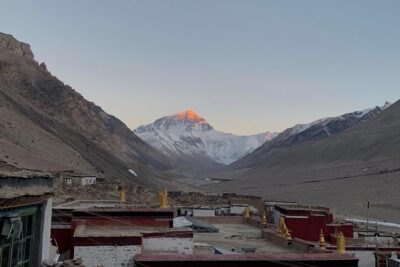
Tibet Tour 8 Days Lhasa to Everest Base Camp Small Group Tour
Read our review →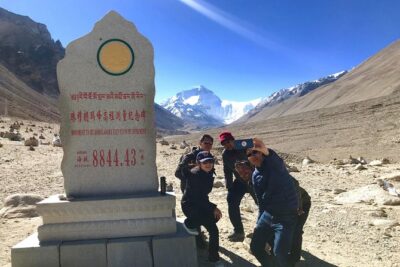
7 Days Lhasa to Kathmandu Overland Small Group Tibet Tour via EBC
Read our review →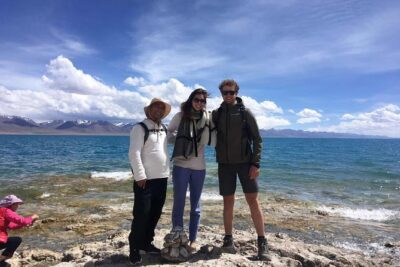
10 Days Tibet Everest Base Camp and Namtso Small Group Tour
Read our review →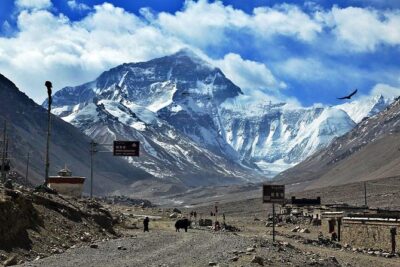
8 Days Lhasa Gyantse Shigatse Mt Everest Group Tour
Read our review →
4-Day Tibet Tour With Everest Base Camp from Lhasa
Read our review →Browse the lists this tour appears in