
Reviewed · 6-DAY EXPERIENCES
6 Days Central Tibet Culture Small Group Tour
Lhasa at 3,600 meters keeps your attention. This small-group tour threads major monasteries and temples with big views on high-altitude road days. I like the way the plan builds in acclimatization time on arrival, instead of forcing you straight into temples.
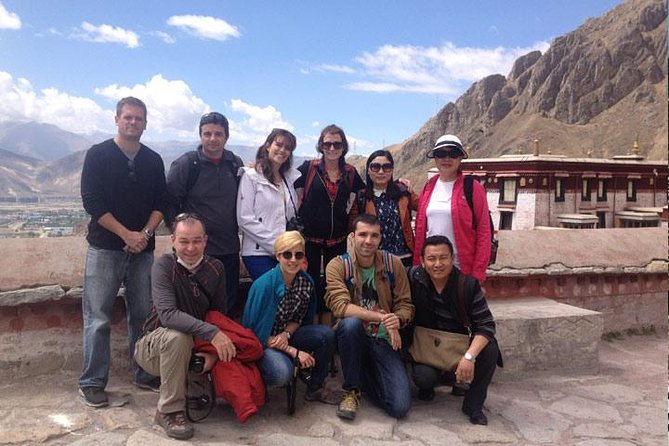
What I also like is the human scale. With a maximum group size around 12, you get real time with your English-speaking guide and you are not packed shoulder-to-shoulder at every stop. A potential drawback: the altitude is real, and the long drives between Lhasa and Shigatse mean you need a calm, flexible mindset on “high day” days.
One more thing to flag up front: meal and ticket inclusions look a bit inconsistent in the details I was given, so you should confirm what is included versus what is pay-as-you-go at each site before you go.
In This Review
- Key highlights worth caring about
- First day in Lhasa: acclimatize without wasting your trip
- Potala Palace, Jokhang Temple, and Barkhor Street kora
- City cycling and walking time that actually helps you understand Lhasa
- Dadong Village and Sera Monastery: rural calm plus debate energy
- Yamdrok Yumtso and Gampala Pass: the road day that gives you the wow-factor
- Gyantse and Shigatse: Pelkor Monastery, Kumbum Stupa, and barley fields
- Tashilunpo Monastery: the “future Buddha” focus in Shigatse
- Guides and small-group pace: why this setup works at altitude
- Price and value: how $829 earns its keep
- What to watch for: altitude timing, ticket confirmations, and energy budgeting
- Should you book this Central Tibet culture tour?
- FAQ
- Is Tibet permit paperwork included in this tour?
- How large is the group?
- Do I get airport pickup and drop-off in Lhasa?
- What time does the tour start?
- Are entrance fees included for the sites?
- Are meals included?
- Do I need to send passport copies in advance?
- What if I want to extend my stay in Tibet?
- Is the price based on a shared room?
Key highlights worth caring about
- Small-group size (up to about 12 people) with a minibus for easier pacing and more personal questions
- Acclimatization on Day 1 in Lhasa, so you can get your bearings before the big temple days
- Monastery debate timing at Sera, often scheduled for the afternoon window (around 3 to 5 pm)
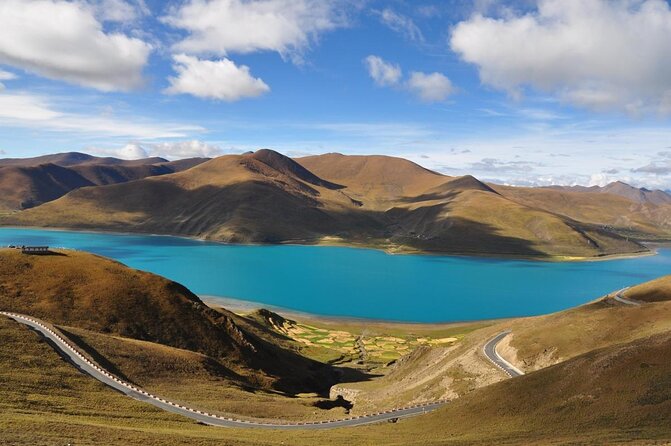
- Scenic road trip stops including Yamdrok Yumtso and high mountain passes
- Tibetan daily life moments, like visiting a local family and sharing lunch in the Dadong Village area
- Guides named in recent groups include Lha Dup, Ngawang, Kunchok, Phurbu Tsering, Tserina, and Dechen
First day in Lhasa: acclimatize without wasting your trip
Your start is simple: you land in Lhasa by flight or train, then you get transferred to GangGyan Lhasa Hotel or your reserved hotel and you report in once you are checked in. This matters because Lhasa is high, and the difference between feeling okay and feeling rough can be sleep, hydration, and pacing.
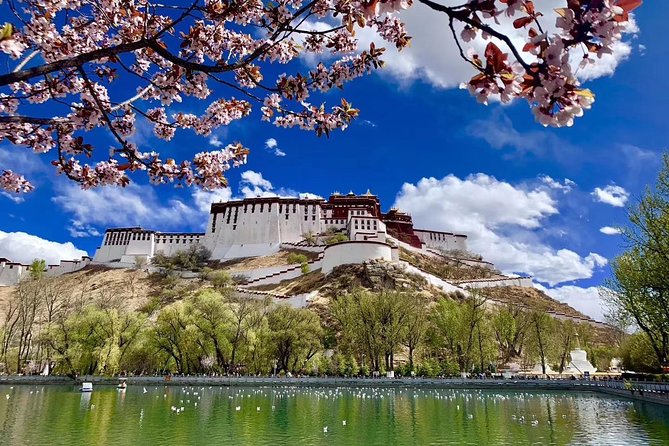
After a rest, the plan gives you a low-stress option: if you want photos, you can head to Potala Square for fountain views and quick picture chances of the Potala area. The key advice here is not to rush temple-hunting on Day 1. Let your body settle first, even if you are itching to go.
A few more Lhasa & Tibet days worth comparing
- Tibet Tour 8 Days Lhasa to Everest Base Camp Small Group Tour
★ 5.0 · 578 reviews - 7 Days Lhasa to Kathmandu Overland Small Group Tibet Tour via EBC
★ 5.0 · 188 reviews - Tibet Tour 15 Days Lhasa to Kailash Trekking Small Group via EBC
★ 5.0 · 104 reviews
Potala Palace, Jokhang Temple, and Barkhor Street kora
Lhasa’s spiritual center hits early on Day 2. You start with Potala Palace, described as the winter palace of the Dalai Lama, with important devotional spaces inside like gilded burial stupas of past Dalai Lamas. If you are the kind of person who likes stories behind stone and ritual, this is the day that turns buildings into meaning.
Next comes Jokhang Temple, one of Tibet’s best-known pilgrimage sites. The plan notes you can see the Buddha Sakyamuni statue in the temple’s context and also watch pilgrims doing prostrations outside. That mix, temple interior plus street-level devotion, is one of the reasons Jokhang feels alive.
Then you finish around Barkhor Street, the famous old-market loop around the temple area. This is where kora happens, meaning you can walk the religious circuit with pilgrims and locals. It is also a good moment for food and people-watching, including Tibetan tea in a tea house. If your guide offers tips on how locals move and why, pay attention. That is how you turn a walk into a real cultural experience.
City cycling and walking time that actually helps you understand Lhasa
The tour highlights call out time to cycle the city streets and to do a walking tour. In practice, that kind of movement is more than a fun add-on. Lhasa is compact in the old-core areas, and cycling plus walking helps you feel the city’s rhythm without spending every hour staring upward.
I like this approach because it balances the big landmarks. After you have seen Potala and Jokhang, you still need “between the highlights” time to notice daily life. That is where you catch the small details: the rhythm of prayer flags, the flow of pilgrims, the way markets sit beside sacred spaces. For first-timers, it also helps you orient yourself for later days.
Dadong Village and Sera Monastery: rural calm plus debate energy
Day 3 is a smart pivot. Instead of the Drepung Monastery stop, the plan shifts toward Dadong Village, about 25 kilometers southwest of Lhasa. You get a well-protected ancient village setting surrounded by valleys, plus the chance to visit Nyimatang Monastery (built in the 11th century).
What makes this special is the human side. You do a light walk in the village and you also visit a local Tibetan family, including lunch offered by the family. I treat moments like this as the cultural backbone of a Tibet trip, because monasteries are important, but everyday life is what keeps religion connected to real routines.
In the afternoon, you head to Sera Monastery, one of the “great three” Gelug monasteries. The standout here is the monks’ debate in the afternoon window (often about 3 to 5 pm). Even if you do not understand every word, watching the rhythm of debate shows you how study works here, not just how buildings look from the outside. The plan also includes time at a scripture printing house and you may see sand mandalas and colorful Buddhist rock painting details.
Practical note: debate days can feel visually intense. Bring patience. If you arrive early, you will often have an easier time finding a comfortable spot.
Same city, a very different kind of day:
- 10 Days Tibet Everest Base Camp and Namtso Small Group Tour
★ 4.5 · 53 reviews - 8 Days Lhasa Gyantse Shigatse Mt Everest Group Tour
★ 5.0 · 52 reviews - 4 Days Lhasa City Essential Group Tour
★ 5.0 · 25 reviews - 7 Days Overland Tour from Lhasa to Kathmandu
★ 5.0 · 20 reviews
Yamdrok Yumtso and Gampala Pass: the road day that gives you the wow-factor
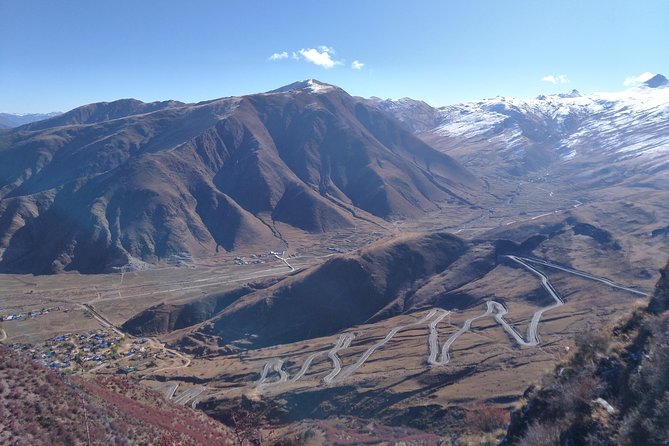
Day 4 is a drive day from Lhasa toward Shigatse, with scenic stops and high passes. You cross the Gampala pass at 4,790 meters, and along the way you get a glimpse of Yamdrok-tso at around 4,400 meters. The lake sits with snow-capped mountains around it, and you are also pointed toward distant views of Holy Mount Nyenchen Khangsar (7,191 meters).
This is one of the reasons to pick a multi-day central Tibet tour. You can only see these big view moments from roads that climb high, curve wide, and stop at the right viewpoints. The long day is worth it if you go in knowing it is about scenery and photo timing, not sitting in one museum for hours.
The plan also includes stops around Karo La Glacier on the roadside, plus Manak Dam Lake and hanging prayer flags at Simila Mountain Pass. Those are small moments, but they are meaningful, and they break the drive into segments you will remember.
Gyantse and Shigatse: Pelkor Monastery, Kumbum Stupa, and barley fields
On the way, the itinerary includes a major cultural detour in Gyantse, historically described as Tibet’s third-largest city. You visit Pelkor Monastery and Gyantse Kumbum Stupa, and you get far views of Gyantse Fortress.
Kumbum Stupa is a standout in Tibetan architecture, and the plan’s focus here is less about rushing and more about seeing the place as an artistic system. If you like photo angles, ask your guide where locals pause for the best viewpoints and why.
After that, you continue to Shigatse, described as Tibet’s second-largest city. The plan notes there may be an opportunity to view a traditional barley mill and, in summer, barley field scenery. This kind of stop matters because it grounds you. You are still in the region’s religious world, but now you also see how food and farming shape daily life.
Tashilunpo Monastery: the “future Buddha” focus in Shigatse
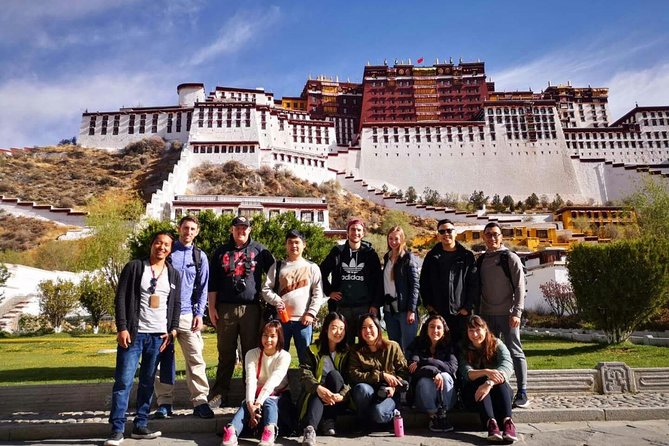
Day 5 centers on Tashilunpo Monastery. This is described as the home of the Panchan Lama, and you get to see the monastery’s well preserved largest statue of Jampa, the future god. You also learn that the monastery is the abiding place for successive Panchen Lamas.
I love monastery stops like this because they are not just about walls. They help you understand Tibetan Buddhism’s structure, hierarchy, and devotion through physical landmarks. If you come with at least a basic curiosity about what different figures and titles mean, you will get more out of the visit.
After Tashilunpo, you follow Yalong Valley back to Lhasa, and your guide handles the transfer back to your hotel. This return route is a long but useful reset day, because you get to see parts of the region from the road rather than from the inside of a courtyard.
Guides and small-group pace: why this setup works at altitude
Most of the excitement in the feedback you shared centers on guides who make sites feel understandable, with clear explanations and patient answers. Names that show up include Lha Dup, Ngawang, Kunchok, Phurbu Tsering, Tserina, and Dechen. Some descriptions emphasize friendly care and a pace that feels balanced, not pushy.
That matters because Tibet travel punishes rushed itineraries. When you are at high elevation, you cannot “power through” discomfort the way you can in lower places. A guide who keeps timing realistic, helps you manage energy, and explains what you are seeing turns the whole day smoother.
The logistics also support this. You travel by comfortable van or minibus with an experienced local driver, and the tour runs as a small group, listed with a maximum of 12 travelers. Fewer people also makes stops more flexible, especially if someone needs a slower moment for photos or acclimatization.
Price and value: how $829 earns its keep
At $829 per person (double occupancy basis), you are not just paying for sightseeing. You are paying for the hard parts of Tibet travel that can otherwise be a headache: transportation, permits, and on-the-ground coordination.
The included items list says you get your Tibet travel permit and other necessary permits, plus airport pickup and drop-off in Lhasa, English-speaking Tibetan guidance, and hotels based on twin-sharing with breakfast. It also lists drinking water during the trip and liability travel insurance. Entrance tickets and site fees are described in the inclusions, but the day-by-day stop notes also show some admission tickets as not included. That contradiction is exactly why I recommend you confirm which tickets you will pay on arrival versus which are handled in advance.
Also, the tour is built around fewer days with more “big hits.” You get Lhasa staples like Potala and Jokhang, a monastery pairing on Day 3, and a Shigatse day with Tashilunpo. For many people, that is the value: you leave with the sense that Tibet’s core culture is covered, not just one city.
What to watch for: altitude timing, ticket confirmations, and energy budgeting
Before you go, plan for altitude and keep your schedule mentally light.
Day 1 explicitly gives you acclimatization time. I’d treat that as non-negotiable. If you try to cram extra sightseeing early, you can pay for it later, especially when the trip adds long drives and high passes.
Second, check details on admissions and meals. The included list suggests lunches and dinner are included, but the not-included section says all lunches and dinners are not included. Similarly, some stop notes list admission tickets not included, while the inclusions mention site entrance fees. You can avoid surprises with one simple move: ask your operator to confirm which specific meals and entrance tickets are covered for your group.
Third, remember the tour ends with departure from Tibet by air or flight because the Tibet permit is limited for this tour. If your goal is to linger longer in Tibet, plan a follow-on tour rather than assuming you can extend the trip casually.
Should you book this Central Tibet culture tour?
I think this is a strong choice if you want a focused central Tibet experience: Lhasa plus Shigatse, big monastery culture, and at least one major high-altitude scenery road day. The small group size, guide attention, and the pacing that includes an acclimatization-friendly Day 1 all fit well for most visitors.
I would hold off or ask extra questions before booking if you have strict expectations about what meals are included, or if you are very sensitive to long drive time. Also confirm the exact ticket handling for Potala Palace, Jokhang Temple, and other monasteries, since the details you were given show conflicting inclusion notes.
If you want a trip that feels organized and culturally grounded, without trying to do everything at once, this is the kind of itinerary that can feel satisfying at the end of day six.
FAQ
Is Tibet permit paperwork included in this tour?
Yes. The tour includes a Tibet travel permit and other necessary permits needed for the trip.
How large is the group?
The tour is listed as a maximum of 12 travelers.
Do I get airport pickup and drop-off in Lhasa?
Yes. Airport pick up and drop off in Lhasa is included.
What time does the tour start?
The start time is listed as 9:00 am.
Are entrance fees included for the sites?
The inclusions say entrance ticket fees for tourist sites listed in the itinerary are included, but some stop details also show admission tickets as not included. It is smart to confirm what you pay on-site versus what is already covered.
Are meals included?
The information includes some meals under inclusions and also lists all lunches and dinners under not included. Before you go, confirm which meals are covered for your departure.
Do I need to send passport copies in advance?
Yes. You are required to provide photocopies of passports and China L visas at least 20 days prior to travel.
What if I want to extend my stay in Tibet?
Your Tibet permit is limited for this tour, so you must leave by air or flight at the end. If you want to stay longer, the info says you can book another tour and contact the provider for help arranging airport or railway drop-off service.
Is the price based on a shared room?
Yes. The price is based on double occupancy. A single room supplement is subject to availability and additional charge.
Recently added around Lhasa & Tibet
- 6 Days Lhasa Gyantse Shigatse Group Tour★ 5.0 · 12 reviews
- 7 Days Overland Tour from Lhasa to Kathmandu★ 5.0 · 20 reviews
- 4-Day Tibet Tour With Everest Base Camp from Lhasa★ 4.5 · 18 reviews
- 4 Days Lhasa City Essential Group Tour★ 5.0 · 25 reviews
- 10 Days Tibet Everest Base Camp and Namtso Small Group Tour★ 4.5 · 53 reviews
- 8 Days Lhasa Gyantse Shigatse Mt Everest Group Tour★ 5.0 · 52 reviews
- Tibet Tour 15 Days Lhasa to Kailash Trekking Small Group via EBC★ 5.0 · 104 reviews
- 7 Days Lhasa to Kathmandu Overland Small Group Tibet Tour via EBC★ 5.0 · 188 reviews
6-Day Experiences, compared.
6-Day Go Beyond Shangrila for Wine & Tibetan Culture of Yunnan
Read our review →
6 Days Guilin to Fenghuang & Zhangjiajie Private tour
Read our review →Browse the lists this tour appears in