
Reviewed · 6-DAY EXPERIENCES
6-Day Private Tibet Tour: Lhasa, Gyangtse, and Shigatse
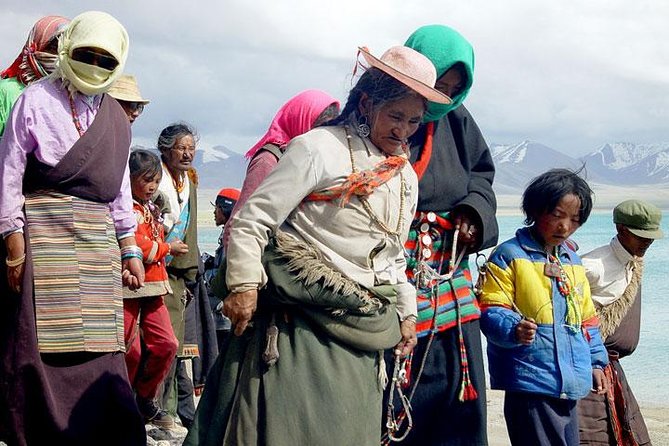
Monasteries, lakes, and big views, on one route. This private trip strings together Potala Palace and Lhasa’s key temples, then adds the stunning stop at Yamdrok Yumtso Lake, before finishing in Shigatse. You get a real guide experience, not just bus-seat sightseeing, with a steady pace built around altitude and travel time.
The main drawback to consider is the altitude. You’ll start in Lhasa at nearly 12,000 feet (3,650 m), and you also pass through higher ground like Yamdrok Lake at 4,441 m, so the trip really expects you to take the first day easy and move at a moderate pace.
In This Review
- Key things I’d circle in this Tibet plan
- A private Tibet route that actually makes sense
- First day in Lhasa: airport pickup and the altitude reality check
- Drepung, Norbulingka, and Sera: Lhasa’s monastery day with variety
- Potala Palace, Jokhang Temple, and Barkhor Street in one tight arc
- The drive to Gyantse with a sacred lake stop that’s worth the altitude
- Gyantse Old Street and Pelkor Chode Monastery, where art meets devotion
- Pala Manor on the way to Shigatse: aristocratic Tibet in preserved rooms
- Shigatse’s Tashilhunpo Monastery and the Panchen summer palace
- Lhasa again, then airport drop: keeping the ending easy
- Price and logistics: what you actually get for $1,799
- Your readiness checklist
- Who this Tibet private tour is best for
- Should you book this 6-day private Tibet tour?
- FAQ
- How long is the private Tibet tour?
- Where does the tour start and how do I meet the guide?
- Is this tour really private?
- What’s included in the tour price?
- Are any admission tickets included?
- How far in advance should I book to get the Tibet permit?
- What if my Chinese visa is not an L tourist visa?
- How do I receive the Tibet permit if I arrive from mainland China?
- What if I enter Tibet from Kathmandu, Nepal?
- Can I change or get a refund if my plans change?
- Is there a minimum number of people required?
- What should I do on day 1 due to altitude?
Key things I’d circle in this Tibet plan
- Private guide and driver, so your days run on your schedule
- Altitude-aware first day in Lhasa, with advice to avoid overdoing it
- A monastery lineup with different flavors, from debate traditions to pilgrimage sites
- Yamdrok Yumtso Lake stop, including scenic glacier views on the drive
- Gyantse and Shigatse temples, including Pelkor Chode and Tashilhunpo Monastery
- Price includes the big essentials, like Tibet travel permit, 5 nights lodging, and airport transfers
A private Tibet route that actually makes sense
This is a smart way to see Tibet without turning your trip into a constant check-in marathon. You’re based in Lhasa, then you travel onward to Gyantse and Shigatse, with private car transport throughout.
What I like most is that the sightseeing is organized around meaningful places, not random stops. You’ll get major religious sites in Lhasa, then you’ll shift to highland scenery and regional culture, and finally you’ll end with Shigatse’s heavyweight monastery experience.
A few more Lhasa days worth comparing
- Tibet Tour 8 Days Lhasa to Everest Base Camp Small Group Tour
★ 5.0 · 578 reviews - Tibet Tour 15 Days Lhasa to Kailash Trekking Small Group via EBC
★ 5.0 · 104 reviews - 10 Days Tibet Everest Base Camp and Namtso Small Group Tour
★ 4.5 · 53 reviews
First day in Lhasa: airport pickup and the altitude reality check
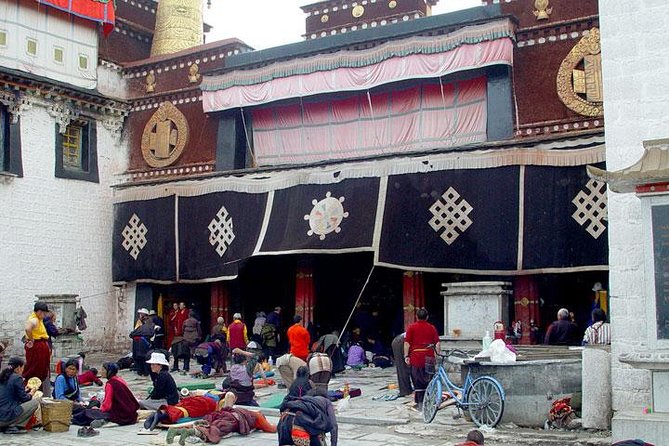
Your guide meets you at Lhasa Gonggar Airport outside the baggage claim area, then you’re driven to your hotel. With the altitude close to 12,000 feet (3,650 m), the plan is clear: you should rest and avoid vigorous activity on arrival day.
That advice is not optional-feeling busywork. If you show up and immediately try to power through sightseeing, altitude can hit harder. This itinerary builds in that gentle start, and it helps you get ready for longer temple days later.
Drepung, Norbulingka, and Sera: Lhasa’s monastery day with variety
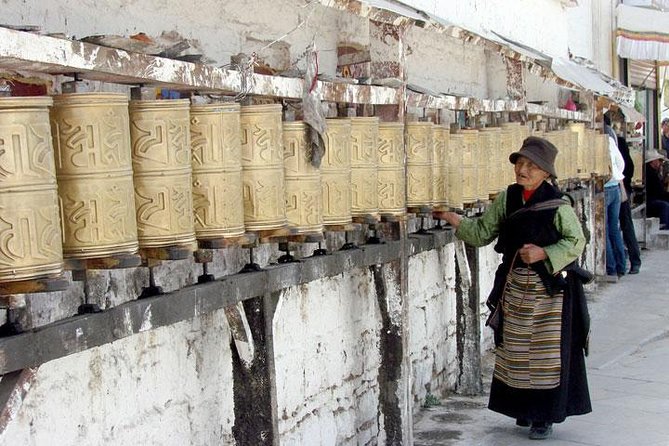
Day 2 focuses on two major monasteries plus Norbulingka Park, so you see different sides of Tibetan Buddhist life.
Drepung Monastery is one of the Three Great Monasteries and described as the largest in Tibetan Buddhism. From a distance it looks like layered white buildings, like a heap of rice, and that visual cue helps you get your bearings fast when you arrive.
Next comes Norbulingka, the Precious Stone Garden, and it’s more than just a pretty park stop. It used to be the summer palace of religious leaders, so it’s a place where power, religion, and leisure overlap. It’s also a good pacing tool in the middle of monastery-heavy days.
Sera Monastery finishes the day, and it’s especially known for debate traditions. If you want a Tibet that feels active and human, not only silent and historic, this is the kind of place where the culture of teaching matters.
Practical note: monastery visits usually mean lots of walking on stone paths. Take it slow, sip water, and let your breathing settle, especially if you still feel altitude effects from Day 1.
Potala Palace, Jokhang Temple, and Barkhor Street in one tight arc
Day 3 is the biggest emotional and visual stretch in Lhasa: Potala, Jokhang, and then the streets around Barkhor.
Potala Palace is scheduled in the morning, and it’s hard to summarize its impact in a sentence. Historically it moved from early imperial construction to later reconstruction, and it became the political and religious center of Tibet. Even if you’ve seen pictures, being there in person is different, because the scale hits you before you even understand the details.
After lunch, you move to Jokhang Temple, built around 1370 years ago and treated as the ultimate pilgrimage destination for Tibetan pilgrims. This is where you see devotion up close and learn how loyal believers experience the site in daily practice.
Then comes Barkhor Street, where you stroll past old buildings and handicrafts along the stone road. The route also includes time near a nunnery, which shifts the focus from grand monuments to the lived rhythm of religious life.
A small strategy that helps here: don’t rush your photos. Put your attention on the details your guide points out, then return to sightseeing once you feel oriented. This day is a lot, but it’s also well placed in the trip so you’re less likely to feel worn out too early.
Same city, a very different kind of day:
- 8 Days Lhasa Gyantse Shigatse Mt Everest Group Tour
★ 5.0 · 52 reviews - 6 Days Central Tibet Culture Small Group Tour
★ 5.0 · 41 reviews - 13 Day Lhasa, Mt. Everest, Mt. Kailash to Kathmandu Adventure
★ 5.0 · 33 reviews - 4 Days Lhasa City Essential Group Tour
★ 5.0 · 25 reviews
The drive to Gyantse with a sacred lake stop that’s worth the altitude
By Day 4, you leave Lhasa and start heading toward Gyantse. Before the famous scenery, you stop at a local family, which is a useful reality check on everyday life.
Then you reach Yamdrok Yumtso Lake, one of Tibet’s three sacred lakes. It sits at 4,441 m, and it’s known for its pure water winding through mountains, which gives it nickname-like names such as Coral Lake and Green Jade Lake. On the drive you’ll also enjoy views of the Karola Glacier, so this isn’t only a static photo stop.
Even if the weather shifts, the lake area tends to feel powerful because it’s both spiritual and remote. It also helps that the itinerary gives you a dedicated block of time, so you’re not just stepping out for five minutes and getting back on the road.
Gyantse Old Street and Pelkor Chode Monastery, where art meets devotion
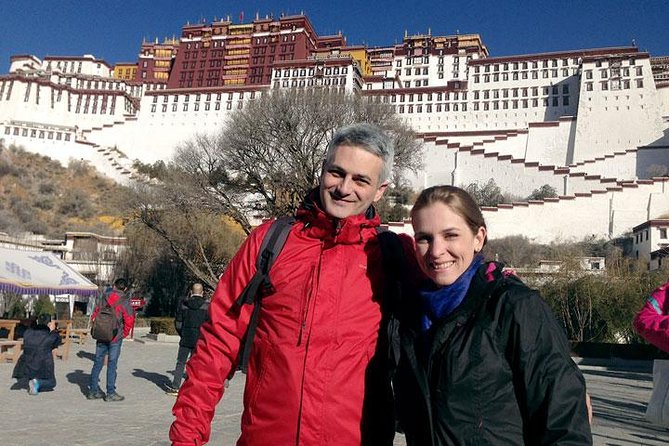
When you arrive in Gyantse, you check in and take a short rest. Then you walk through Gyantse Old Street, a chance to slow down and absorb local pace in a place that feels less like a checklist.
After that, you visit Pelkor Chode Monastery, known as a center of Tibetan Buddhism. The highlight here is Kumbum Stupa, famous for collecting murals and statues made in materials like clay, copper, and gold. The plan even includes time where you can climb inside the stupa to appreciate the artistry from within.
This is a great day for anyone who wants Tibet to feel textured, not only monumental. You’ll likely come away thinking about how religious art functions as instruction, decoration, and devotion all at once.
Pala Manor on the way to Shigatse: aristocratic Tibet in preserved rooms
Still on Day 4, you head toward Shigatse and stop at Pala Manor, the main estate of the Pala family. It’s listed as one of the well-preserved manors of Tibetan aristocrats, and it preserves 57 rooms with exquisite murals, plus some original furniture remaining.
This is the kind of stop that quietly improves your understanding of Tibet’s social layers. Temples explain religion. Manors explain politics, status, and daily life in a different era. If you’ve only been thinking in religious terms, this adds balance.
Then you continue driving to Shigatse and check in at a local hotel.
Shigatse’s Tashilhunpo Monastery and the Panchen summer palace
Day 5 is built around Shigatse’s major spiritual anchor: Tashilhunpo Monastery. It’s described as the largest temple in the Shigatse area, with a huge footprint, covering about 150,000 square meters. The monastery is also said to be around 570 years old, and it’s known for buildings and murals tied to Tibetan Buddhist tradition.
Your trip is also presented as including the New Palace of the Panchen (also called the Summer Palace of the Panchen Lamas). Even when you’re not focused on dates, the Panchen association matters, because it connects you to an important thread in Tibetan religious leadership.
After those visits, the plan drives you back to Lhasa for your final night, with time along the way to enjoy natural scenery. That return drive keeps your trip compact and helps you avoid extra hotel nights in another city.
Lhasa again, then airport drop: keeping the ending easy
The final morning is straightforward. After breakfast, your guide transfers you to Lhasa Gonggar Airport for your departure flight on time.
This matters more than it sounds. After days of temples and travel, you don’t want your last hours to feel chaotic. Here, the itinerary closes the loop with airport drop-off built into the plan.
Price and logistics: what you actually get for $1,799
At $1,799 per person, this isn’t a budget-only tour, but it also isn’t paying extra for empty add-ons. The included package covers the big line items that usually complicate independent travel in Tibet.
Here’s what’s included that you should count as real value:
- 5 nights of accommodation on twin-sharing basis
- Tibet travel permit
- Private guide and driver, plus private air-conditioned vehicle
- Airport pickup and drop-off
- Two bottled waters per person per day
- Meals: breakfast (5) and lunch (4)
What’s not included is the China visa fee. That’s a common line item, but it’s worth planning for so you don’t get surprised.
The other logistical value is the permit process itself. Tibet requires permits, and the trip notes that booking should happen at least 30 days in advance, with passport and Chinese visa copies sent right after booking for permit application. If you’re trying to assemble this on your own, the paperwork and timing can become the hardest part.
Your readiness checklist
This tour asks for a moderate physical fitness level. It also strongly advises you on arrival day to avoid vigorous activity like walking fast, running, or swimming, and to avoid bathing and smoking.
For me, that points to a practical truth: this tour expects you to manage altitude and not treat every stop like a sprint. If you do that, the pacing feels manageable instead of overwhelming.
Who this Tibet private tour is best for
This fits well if you want a private experience with an expert guide, but you also want structure. The stops cover Lhasa’s top religious sites, plus Gyantse’s monastery and streets, then Shigatse’s major monastery experience.
It’s also a good choice for first-time Tibet visitors, because the itinerary includes high-priority places like Potala Palace and Jokhang Temple, not just one city’s highlights.
Finally, it suits travelers who appreciate having tickets, meals, and transfers handled. If you’d rather spend your energy on understanding what you’re seeing, rather than sorting logistics, this is the right style.
Should you book this 6-day private Tibet tour?
If you want Lhasa plus the Gyantse and Shigatse contrast, and you’re okay with altitude and long drives, I’d lean yes. The price packs in the hardest parts, mainly the permit and private transport with a guide, and it covers major sites across multiple days.
I’d hesitate only if you’re very sensitive to altitude or if you hate slow acclimation. The itinerary makes it clear you should rest on arrival day and move at a moderate pace, and that approach is essential for comfort here.
If you’re ready for a temple-forward trip with one standout nature stop at Yamdrok Yumtso Lake, this is a solid, efficient way to experience Tibet without wasting time.
FAQ
How long is the private Tibet tour?
The tour is listed as 6 days (approx.), including 5 nights of accommodations.
Where does the tour start and how do I meet the guide?
Your guide meets you at Lhasa Gonggar Airport outside the baggage claim area, and the meeting/start time is 9:00 am.
Is this tour really private?
Yes. It is a private tour/activity, and only your group participates.
What’s included in the tour price?
Included items are 5 nights of accommodation (twin-sharing), Tibet travel permit, two bottled waters per person per day, a professional private guide and driver, private air-conditioned vehicle transport, breakfast (5), and lunch (4).
Are any admission tickets included?
Yes. Admission tickets are included for several major stops such as Drepung Monastery, Norbulingka, Sera Monastery, Potala Palace, Jokhang Temple, Yamdrok Yumtso Lake, Pelkor Chode Monastery, and Tashilhunpo Monastery. Some parts like Barkhor Street are listed as admission ticket free.
How far in advance should I book to get the Tibet permit?
You should book at least 30 days in advance. After booking, copies of all travelers’ passports and Chinese visas must be sent immediately to apply for the permit in time.
What if my Chinese visa is not an L tourist visa?
If your Chinese visa is not an L tourist visa, you need to provide supplementary letters from your sponsored organization. You should contact the local operator for more details.
How do I receive the Tibet permit if I arrive from mainland China?
If you fly into Tibet from mainland China, you need the original copy of the Tibet travel permit. The local tour operator will send it to your hotel in mainland China, so you must provide hotel details and reservation information. If you take a train, you only need a printed copy sent by email.
What if I enter Tibet from Kathmandu, Nepal?
If you fly into Tibet from Kathmandu, Nepal, you do not need a China visa for this, but you do need a Tibet Group Visa from the Chinese Embassy in Kathmandu. The local agent can help, and the group visa fee is not included in the tour price.
Can I change or get a refund if my plans change?
No. The experience is non-refundable and cannot be changed for any reason.
Is there a minimum number of people required?
Yes. A minimum of 2 people per booking is required.
What should I do on day 1 due to altitude?
On your first day of arrival, avoid vigorous activities such as walking fast, running, and swimming. Bathing and smoking are also not recommended.
Recently added around Lhasa
- Panorama Multi Day Tour in Tibet★ 5.0 · 3 reviews
- Private Guided Day Tour Potala Palace and Sera Monastery★ 5.0 · 22 reviews
- 8 Day Tibet Classic Tour★ 5.0 · 5 reviews
- 13 Day Lhasa, Mt. Everest, Mt. Kailash to Kathmandu Adventure★ 5.0 · 33 reviews
- 15 Days Mt Everest and Mt Kailash Kora Pilgrimage Group Tour★ 4.5 · 17 reviews
- 7 Days Overland Tour from Lhasa to Kathmandu★ 5.0 · 20 reviews
- 4 Days Lhasa City Essential Group Tour★ 5.0 · 25 reviews
- 6 Days Central Tibet Culture Small Group Tour★ 5.0 · 41 reviews
6-Day Experiences, compared.
6-Day Go Beyond Shangrila for Wine & Tibetan Culture of Yunnan
Read our review →
6 Days Guilin to Fenghuang & Zhangjiajie Private tour
Read our review →Browse the lists this tour appears in